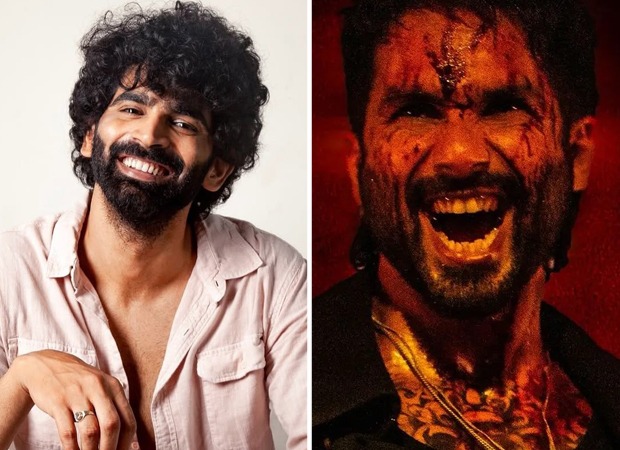
 by
by In an industry often driven by spectacle, visibility, and rapid fame cycles, there exists another quieter journey — one shaped by auditions, patience, observation, and craft. Actor Nitin Rao belongs firmly to that second path.
With a growing body of work across films and digital platforms, Nitin has been steadily building a reputation as a performer who prioritizes substance over speed. Now, with O’Romeo — directed by Vishal Bhardwaj and starring Shahid Kapoor and Triptii Dimri — set for theatrical release on February 13, 2026, Rao stands at an important inflection point in his career.
While he remains guarded about the specifics of his character, his reflections on the filmmaking process — particularly his experience working alongside Shahid Kapoor — reveal much about the discipline, humility, and artistic hunger that define him.
“Working with Shahid Kapoor is inspiring in itself,” Nitin says. “His focus, discipline, and generosity as a co-actor naturally push everyone around him to be more present and truthful in their performances.”
Behind that statement lies a larger story — about preparation, artistic ecosystems, mentorship through observation, and what it truly means to grow within Indian cinema today.
The Significance of
O’Romeo
: More Than Just Another Film
In an actor’s career, certain projects become milestones — not merely because of scale, but because of the creative forces involved.
O’Romeo carries weight for multiple reasons:
- It is directed by Vishal Bhardwaj, a filmmaker known for layered storytelling and emotional complexity.
- It stars Shahid Kapoor, whose collaborations with Bhardwaj have previously produced critically acclaimed performances.
- It features Triptii Dimri, an actor celebrated for emotional intensity and nuance.
- It is positioned as a theatrical release, emphasizing cinematic scale.
For Nitin Rao, this isn’t just another credit — it is a convergence of artistic opportunity and professional validation.
Being cast in a Vishal Bhardwaj project signals trust. Bhardwaj’s cinema is rarely superficial; his characters are often morally complex, emotionally vulnerable, and psychologically layered. Actors in his films are required to inhabit depth rather than deliver surface-level performances.
That alone makes O’Romeo a significant stepping stone.
The Vishal Bhardwaj School of Cinema
To understand the weight of O’Romeo, one must understand the director behind it.
Vishal Bhardwaj’s films are known for:
- Shakespearean adaptations with Indian political and social contexts
- Poetic dialogue
- Moral ambiguity
- Emotional intensity
- Atmospheric storytelling
Working under such a director requires more than memorizing lines. It demands immersion.
For a rising actor like Nitin Rao, the opportunity to be guided in such a cinematic universe is invaluable. Bhardwaj’s sets are known to emphasize character psychology, internal motivations, and tonal consistency.
In such an environment, growth becomes inevitable — provided the actor is willing to absorb.
Shahid Kapoor: Discipline as an Artistic Language
Nitin’s comments about Shahid Kapoor are not casual compliments; they reflect an observation of process.
“His focus and discipline push you to do better.”
What does that mean in practical terms?
On a film set, especially one led by a star of Shahid’s stature, behavior sets tone. Discipline influences energy. Preparedness impacts rhythm.
Shahid Kapoor has, over the years, evolved from a romantic lead into a performer associated with intense, physically and emotionally demanding roles. Such transformation does not happen without rigorous self-discipline.
Focus on set translates into:
- Staying in character between takes
- Rehearsing extensively
- Maintaining emotional continuity
- Respecting co-actors’ space
- Elevating scenes through responsiveness
When a lead actor brings this level of commitment, it influences everyone around them. Acting is collaborative. Energy transfers.
For someone like Nitin — still expanding his cinematic vocabulary — being in such an environment becomes a masterclass without a classroom.
The Power of Generosity in Acting
Nitin also uses an important word: generosity.
In performance art, generosity refers to:
- Allowing co-actors space to shine
- Reacting authentically rather than overpowering
- Elevating scenes rather than dominating them
- Sharing emotional weight
When senior actors create collaborative space, they build confidence in younger performers. This dynamic fosters risk-taking — a necessary ingredient for authentic acting.
It appears that O’Romeo offered precisely that ecosystem.
Guarded About His Role — And Why That Matters
Nitin has chosen not to disclose details about his character, stating that it plays an important role in shaping the narrative and significantly influences the emotional journey of Triptii Dimri’s character.
This suggests several possibilities:
- He may serve as a catalyst in the storyline.
- His character could represent emotional conflict.
- He might be pivotal to a turning point.
The restraint in revealing details demonstrates professional discipline. In today’s publicity-driven culture, oversharing is common. Choosing subtlety indicates seriousness about storytelling.
Sometimes, the actors who say the least publicly are the ones most invested in the craft privately.
The Self-Tape That Changed Things
Perhaps the most telling part of Nitin’s journey with O’Romeo is how he got the role.
There was no shortcut. No recommendation. No legacy advantage.
“The project came to me through a self-tape audition called for by Mukesh Chhabra’s casting team, and I was selected purely on the strength of the audition.”
This detail matters.
Mukesh Chhabra’s casting ecosystem is known for its merit-driven approach. Self-tape auditions have democratized access to major projects. Talent can now be evaluated on performance alone.
For Nitin, being selected “purely on the strength of the audition” is validation of ability — not network.
In an industry where conversations around nepotism often dominate, such stories reinforce that persistence and craft still hold value.
Building a Career Brick by Brick
Nitin Rao’s filmography may not yet be headlined by blockbuster dominance, but it is diverse and steadily expanding.
His work includes:
- Samrat Prithviraj
- Darbar
- Bajao
- Netflix’s Taskaree
- Space Gen: Chandrayaan
This range reflects versatility across genres — historical drama, commercial cinema, digital storytelling, and science-driven narratives.
Such diversity prevents typecasting. It allows experimentation. It expands skill sets.
Rather than chasing quick fame through formulaic roles, Nitin appears to be constructing a layered portfolio.
The Quiet Grind vs. Overnight Fame
The entertainment industry often celebrates overnight sensations. However, longevity is rarely built overnight.
There are generally two trajectories:
- Rapid visibility followed by fluctuating relevance.
- Slow accumulation of craft leading to sustained growth.
Nitin’s journey aligns with the latter.
Choosing roles based on growth rather than mere screen time reflects strategic maturity. Actors who focus on learning rather than limelight tend to build stronger foundations.
What Working with Shahid Kapoor Teaches a Rising Actor
Observational learning plays a powerful role in artistic development.
From Shahid Kapoor, an actor in Nitin’s position can absorb:
- Physical commitment to roles
- Emotional immersion
- Script analysis discipline
- Scene rhythm awareness
- Camera presence control
Such exposure accelerates growth.
When senior actors model professionalism, it reshapes how younger actors approach their own preparation.
Triptii Dimri’s Emotional Landscape
Although Nitin refrains from detailing his role, he mentions that his character significantly influences Triptii Dimri’s emotional journey.
Triptii is known for layered, internalized performances. Influencing her character arc suggests narrative importance.
Supporting roles in emotionally driven films often demand subtlety. They require:
- Listening more than speaking
- Reacting truthfully
- Carrying emotional undercurrents
Such roles test an actor’s restraint — often harder than dramatic monologues.
The Changing Landscape of Indian Cinema
Projects like O’Romeo represent a shift.
Modern Indian audiences increasingly demand:
- Emotional authenticity
- Strong character arcs
- Narrative experimentation
- Blending of mainstream appeal with artistic depth
Actors like Nitin Rao emerging within this ecosystem benefit from an industry evolving toward performance-driven storytelling.
Auditions as Equalizers
The mention of a self-tape audition is more than a casting anecdote. It reflects structural change.
Earlier, access to major filmmakers was limited to insiders or established names. Digital auditions have disrupted that model.
Self-tapes:
- Remove geographic barriers
- Allow actors to experiment privately
- Enable casting directors to evaluate raw talent
- Reduce bias through performance-first screening
Nitin’s selection through this process reinforces faith in meritocratic spaces.
Process Over Publicity
One striking aspect of Nitin’s reflection is the absence of sensationalism.
He does not speak of red carpets or scale.
He does not emphasize box office expectations.
He does not reveal dramatic plot twists.
Instead, he talks about:
- Discipline
- Focus
- Learning
- Collaboration
This signals an actor oriented toward longevity rather than hype.
February 13, 2026: A Career Marker
The theatrical release date is significant.
In the streaming era, theatrical releases carry prestige. They demand scale, marketing investment, and audience turnout.
For Nitin, O’Romeo represents:
- Visibility in mainstream cinema
- Association with a respected filmmaker
- Shared screen space with established stars
- A potential breakthrough moment
Whether it becomes a box office success or critical darling, its placement in his career timeline will matter.
The Emotional Intelligence of a Growing Actor
Actors who evolve successfully often display emotional intelligence:
- Awareness of their strengths
- Openness to learning
- Comfort with incremental growth
- Respect for collaboration
Nitin’s reflections suggest these qualities.
He acknowledges influence.
He appreciates learning.
He values process.
Such mindset fosters resilience — crucial in an industry marked by unpredictability.
Mentorship Without Formal Mentorship
In cinema, mentorship often occurs informally.
Observing how a senior actor approaches a scene can reshape one’s own preparation style.
If Shahid Kapoor’s discipline creates an atmosphere of intensity, that atmosphere becomes contagious.
In creative spaces, energy is ecosystemic.
Expanding Presence Across Formats
Nitin’s work across films and digital platforms reflects adaptability.
The modern actor must navigate:
- Theatrical cinema
- Streaming series
- Short-form digital narratives
- Regional crossovers
Versatility ensures sustainability.
Actors unwilling to diversify risk stagnation. Nitin’s varied portfolio positions him well in a rapidly transforming industry.
Why Supporting Roles Matter
Often, audiences underestimate the importance of supporting characters.
But narratives rely on them.
Supporting roles:
- Propel protagonists forward
- Introduce conflict
- Anchor emotional arcs
- Provide contrast
If Nitin’s character significantly shapes Triptii’s emotional journey, his performance could quietly become one of the film’s structural pillars.
Craft as a Long-Term Investment
Choosing growth-oriented roles reflects long-term thinking.
Acting is cumulative. Each project builds technique.
Exposure to directors like Vishal Bhardwaj expands interpretative depth. Exposure to disciplined actors like Shahid Kapoor sharpens professionalism.
These are investments invisible to audiences but transformative internally.
The Culture of Learning on Set
Film sets are educational spaces.
You learn:
- Blocking techniques
- Camera framing awareness
- Emotional pacing
- Reaction timing
- Script revision dynamics
For a rising actor, absorbing this information can be as valuable as formal training.
Staying Grounded Amid Momentum
As anticipation builds around O’Romeo, maintaining perspective becomes essential.
Actors who remain grounded often sustain momentum better than those who chase validation.
Nitin’s guarded optimism suggests awareness of this balance.
A Glimpse Into the Future
Beyond O’Romeo, Nitin Rao appears committed to:
- Character-driven roles
- Artistic exploration
- Slow but steady expansion
Rather than headline-chasing, he seems to prioritize craft refinement.
This approach may not guarantee overnight fame, but it often yields durability.
Conclusion: Growth in the Shadow of Greatness
Nitin Rao’s reflections on working with Shahid Kapoor and being part of O’Romeo reveal something rare in entertainment interviews — sincerity centered on process rather than publicity.
“His focus and discipline push you to do better.”
That statement encapsulates the essence of collaborative art. When surrounded by excellence, you either rise or retreat. Nitin appears determined to rise.
As O’Romeo prepares for its February 13, 2026 release, audiences will judge performances on screen. But behind those performances lies a quieter story — of self-tapes, auditions, learning curves, disciplined co-actors, and the humility to grow.
For Nitin Rao, O’Romeo may not just be another project. It may be the chapter where preparation meets opportunity.
And in cinema, that intersection often defines a career.