 by
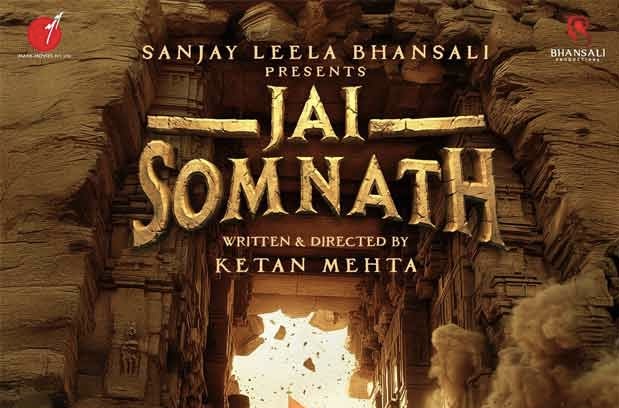
by On the auspicious occasion of Maha Shivratri 2026, Indian cinema witnessed a momentous announcement that has already reverberated across the film fraternity and among history enthusiasts alike. The first poster of Jai Somnath — an epic historical drama — was officially unveiled by Sanjay Leela Bhansali and Ketan Mehta, signaling the birth of one of the most ambitious cinematic projects of the decade. Slated for release in 2027, Jai Somnath promises to be much more than a film — it is poised to become a cultural landmark that revisits a pivotal chapter in India’s spiritual and civilizational history.
Revisiting a Defining Chapter: The Story of Somnath
To understand the immense significance of Jai Somnath, one must first dive deep into the historical context that inspires it. The story centers on the legendary Somnath Temple, one of the most revered pilgrimage sites in India and considered the first of the twelve Jyotirlingas — sacred shrines of Lord Shiva. This temple’s history is intertwined with a thousand years of conflict, destruction, faith, resilience, and reconstruction.
In 1025–1026 CE, the temple was famously attacked by Mahmud of Ghazni, a Turkic ruler whose invasions into the Indian subcontinent are among the most studied and debated events in medieval history. Ghazni’s army reached the temple at Somnath (in present‑day Gujarat), looted its treasures, and razed parts of the structure, an episode often referred to as the Sack of Somnath. The attack has been interpreted in multiple historical narratives as both a devastating cultural loss and a defining moment of resistance, ultimately contributing to the temple’s repeated rebuildings as symbols of unbroken faith and endurance.
This year marks roughly 1000 years since that fateful episode — and Jai Somnath arrives on the threshold of this millennial milestone, offering a cinematic retelling of what many consider one of India’s most emotionally resonant historical sagas.
A Collaboration of Cinematic Titans
What truly elevates Jai Somnath into a potential cinematic institution is not just its subject matter, but the partnership behind it.
Sanjay Leela Bhansali — The Visionary Auteur
Bhansali’s name is synonymous with larger‑than‑life cinema, textured world‑building, and epic storytelling. Over a celebrated career spanning decades, he has brought to life films such as Bajirao Mastani, Padmaavat, Devdas, and Gangubai Kathiawadi — each a testament to his flair for immersive visuals, profound emotional arcs, and musical storytelling. His films are characterized by sumptuous production design, rich cultural backdrops, and narratives that balance grand spectacle with intimate human drama.
Ketan Mehta — The Historian Filmmaker
Mehta, on the other hand, occupies a distinct niche in Indian cinema as a filmmaker of historical depth and social consciousness. His work includes films like Mirch Masala, Mangal Pandey: The Rising, Manjhi: The Mountain Man, and Holi — stories that unearth layers of society, politics, and individual resilience. Mehta’s sensibilities often root cinematic narratives in profound cultural and emotional authenticity.
Their collaboration for Jai Somnath thus represents a rare and exciting convergence: Bhansali’s flair for cinematic grandeur paired with Mehta’s grounded, historically insightful storytelling. Together, they are set to bring a chapter of Indian history to audiences with both emotional resonance and cinematic scale.
Unveiling the Poster: Symbolism and Significance
The announcement of Jai Somnath came on Maha Shivratri — a festival dedicated to Lord Shiva, celebrating his cosmic dance and spiritual significance. Choosing this day to reveal the first poster was not merely symbolic; it reflected a deeper intention to align the project’s narrative with the timeless spiritual ethos that the Somnath Temple represents.
The poster, shared on social media platforms by Bhansali Productions, carried a powerful tagline:
“A temple can be broken, not the faith.”
This simple yet profound line distills the emotional core of the story. It evokes the idea that physical structures can succumb to violent blows, but the spirit of belief, cultural identity, and communal resilience remains unshaken. In a world where histories are often contested, narratives like these remind audiences of the enduring power of faith and collective memory.
Cultural Context: Why Jai Somnath Matters
India’s civilizational narrative is rich with stories of cultural synthesis, resistance, and rebirth. Yet, few stories capture the imagination as powerfully as that of Somnath — a temple that has faced repeated attacks and yet remained a central symbol of spiritual continuity.
The Somnath Temple’s history extends beyond the Ghaznavid invasion. It has been destroyed and rebuilt multiple times over the centuries, each reconstruction reaffirming the narrative that physical devastation cannot erase spiritual resolve. By focusing on this story, Jai Somnath is not just revisiting ancient history — it is also engaging with themes that resonate deeply in present‑day Indian consciousness: resilience, identity, collective memory, and the relationship between past and present.
In cinematic terms, such a narrative offers both emotional weight and dramatic depth. It places human courage against the backdrop of turbulent historical forces, allowing filmmakers and audiences alike to explore what it means to uphold faith in the face of overwhelming odds.
Historical and Cinematic Challenges
Depicting a millennium‑old chapter of history on film is neither simple nor straightforward. There are inherent challenges and responsibilities:
1. Balancing Fact and Interpretation
Historical events — especially those wrapped in centuries of storytelling and ideological readings — often lack singular, uncontested interpretations. The story of Mahmud of Ghazni’s attack on Somnath, for instance, is woven from a combination of historical records, archaeological interpretations, oral traditions, and cultural memories. How filmmakers choose to present these events significantly shapes audience understanding and emotional reception.
2. Respectful Representation
When dealing with religious sites and cultural icons, filmmakers must navigate varied sensibilities with care — honoring the emotional investments of believers while also maintaining artistic authenticity. Jai Somnath enters this terrain with immense cultural reverence but also with the weight of responsibility to portray deeply felt histories with integrity.
3. Cinematic Scale and Research
Creating an authentic period setting — from set design to costume to linguistic representation — requires extensive research. Bhansali’s track record suggests that Jai Somnath will embrace meticulous craftsmanship, potentially involving historians, cultural experts, language consultants, and technical advisors to bring this world to life.
Interpreting the Collaboration: What It Means for India’s Cinema
The partnership between Bhansali and Mehta goes beyond a simple director/producer credit — it represents a fusion of two cinematic philosophies:
- Bhansali brings theatrical vision, operatic storytelling, and a focus on emotional spectacle.
- Mehta contributes historical depth, sociocultural insight, and narrative gravity.
This fusion has the potential to create a film that honors both cinematic grandeur and historical truth.
If executed with nuance, Jai Somnath could be part of a new wave of cinema that embraces large‑scale storytelling without losing the subtlety of historical texture — a rare achievement in any film industry.
Looking Ahead: Expectations and Anticipation
With its release slated for 2027, audiences and critics alike are already abuzz with speculation and anticipation. What cast will bring these historical figures to life? How will the narrative balance spectacle with historical authenticity? What will the film’s music, dialogues, and cinematography contribute to the emotional tapestry?
Given Bhansali’s reputation for memorable soundtracks and visual poetry, as well as Mehta’s grounding in social and historical narratives, expectations are that Jai Somnath will not just be a period drama, but a cultural experience that resonates across generations.
Filmmakers have kept details like casting, specific plot arcs, and production timelines under wraps. But even this strategic restraint — releasing only the first poster and a powerful tagline — has generated substantial curiosity, suggesting that the film’s unveiling strategy has succeeded in building early momentum.
As the countdown to 2027 begins, Jai Somnath stands not just as a movie, but as a cinematic event — a cultural conversation piece about history, identity, and the narratives we choose to cherish.
Conclusion: A Film of Civilizational Resonance
Jai Somnath is more than an upcoming film — it is a cultural landmark in the making. By bringing together two of Indian cinema’s greatest storytellers to revisit one of its most evocative historical sagas, the project embodies both the artistic ambition and cultural introspection that define Indian cinematic tradition.
The first poster’s unveiling on Maha Shivratri serves as a symbolic bridge between ancient spiritual reverence and modern cultural reinterpretation. With a timeless message — “A temple can be broken, not the faith” — the film aims to resonate not just with viewers, but with the collective memory of a civilization that has nurtured millennia‑old faith, art, and storytelling.
As Jai Somnath gears up for its 2027 release, it invites audiences to witness an epic tale of faith, resilience, and unyielding spirit — a story that is historical, cinematic, and deeply human.