 by
by The Indian OTT ecosystem reached a new level of maturity in 2025. What once began as an experimental alternative to cinema and television has now evolved into a fully realised creative universe—one where long-form storytelling thrives, genres blend seamlessly, and audiences demand substance as much as spectacle. At the heart of this transformation stood Prime Video, a platform that not only understood the pulse of Indian viewers but also anticipated their evolving tastes.
From nerve-wracking crime dramas and socially grounded horror to heartwarming rural comedies and politically charged espionage thrillers, Prime Video’s 2025 slate demonstrated remarkable range. The platform didn’t rely solely on novelty; instead, it invested in story continuity, delivering new seasons of beloved franchises while simultaneously backing bold, experimental narratives.
As the year draws to a close, it becomes evident that Prime Video didn’t just release content in 2025—it curated experiences. Each title sparked conversations, shaped cultural discourse, and reinforced the idea that Indian OTT storytelling has come of age.
Let’s take a closer look at the standout Prime Video titles that defined 2025 and why they mattered.
Paatal Lok Season 2: A Darker, Deeper Descent into India’s Moral Underbelly
When Paatal Lok first premiered, it redefined the crime thriller genre in India. Its unflinching portrayal of systemic rot, caste realities, political manipulation, and moral ambiguity struck a chord with audiences and critics alike. Naturally, expectations for Season 2 were sky-high—and yet, the series managed not only to meet them but surpass them.
Season 2 returned with heightened stakes, a more layered investigation, and a darker psychological tone. Jaideep Ahlawat once again delivered a powerhouse performance as Inspector Hathiram Chaudhary, a character who has now become one of the most iconic law enforcement figures in Indian streaming history. This time, Hathiram wasn’t just solving a case—he was grappling with the emotional cost of his profession and the erosion of his own moral compass.
The new case introduced in Season 2 expanded the show’s universe, weaving together politics, media manipulation, organised crime, and personal vendettas. Ishwak Singh’s Imran Ansari continued to evolve as a character, embodying the tensions of idealism versus institutional reality. Gul Panag’s Renu Chaudhary, meanwhile, brought emotional grounding to the narrative, reflecting the personal toll such a life takes on families.
What truly set Paatal Lok Season 2 apart was its refusal to simplify. The show didn’t offer easy villains or heroic resolutions. Instead, it forced viewers to confront uncomfortable truths about power, privilege, and justice in contemporary India. Critics widely praised the season for its writing, performances, and uncompromising worldview—many even calling it superior to the first.
In a year crowded with thrillers, Paatal Lok Season 2 stood tall as a benchmark for intelligent, socially conscious storytelling.
Khauf: Redefining Horror with Social Consciousness
Horror has often been an underserved genre in Indian mainstream storytelling, frequently reduced to jump scares or mythological tropes. Khauf changed that narrative entirely. With this series, Prime Video delivered a horror thriller that was as unsettling psychologically as it was atmospherically.
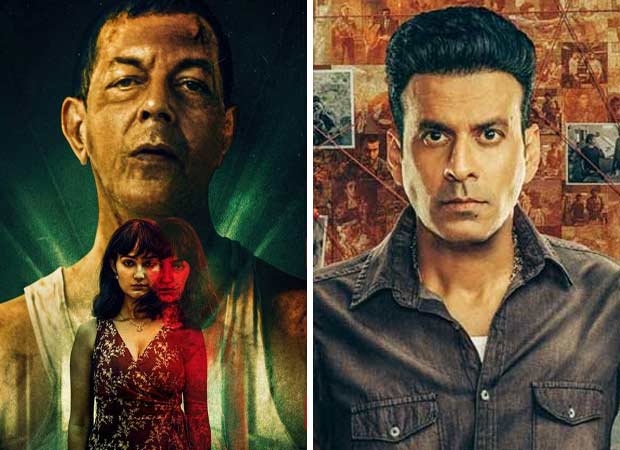
Featuring an impressive ensemble cast including Monika Panwar, Rajat Kapoor, Abhishek Chauhan, Geetanjali Kulkarni, and Shilpa Shukla, Khauf leaned heavily into mood, character psychology, and real-world anxieties. The show proved that horror doesn’t need excess—it needs intent.
What made Khauf particularly impactful was its ability to intertwine social realities with supernatural dread. The horror elements never felt gratuitous; instead, they served as metaphors for deeper fears rooted in trauma, power dynamics, and societal neglect. Without becoming preachy, the series addressed issues that are often brushed under the carpet, allowing the horror to emerge organically from human experiences.
The direction maintained a slow-burn pace, letting tension simmer rather than explode. The performances, especially from the lead cast, grounded the supernatural aspects in emotional authenticity. Viewers weren’t just scared—they were disturbed, reflective, and deeply invested.
Audiences and critics alike lauded Khauf for restoring credibility to the horror genre on Indian OTT platforms. It wasn’t just a show—it was an experience, one that lingered long after the screen went dark.
Stolen: A Haunting Mirror to Society’s Darkest Instincts
While much of Prime Video’s 2025 success came from series, Stolen stood out as a powerful reminder of the platform’s commitment to meaningful cinema. Having already made waves at international film festivals, the film found a much wider audience upon its digital release—and the response was overwhelmingly positive.
Stolen is not an easy watch, nor does it attempt to be. The film plunges viewers into a grim, unsettling world where law enforcement, mob mentality, and societal apathy intersect in devastating ways. At its core, the film explores the exploitation of authority and the terrifying speed with which collective psychology can spiral into violence.
The performances were widely praised for their restraint and realism. Rather than relying on dramatic flourishes, the cast allowed the story’s inherent tension to do the heavy lifting. Indian critics particularly appreciated the film’s raw depiction of class divides, moral cowardice, and the fragile nature of conscience in crisis situations.
What elevated Stolen was its refusal to offer comfort. There are no neat resolutions, no clear heroes—only questions that linger. By choosing to stream a film like this, Prime Video reaffirmed its role as a platform willing to back bold, socially reflective narratives that challenge audiences rather than pacify them.
Panchayat Season 4: Comfort Viewing with Emotional Depth
In a year dominated by intense themes and high-stakes drama, Panchayat Season 4 arrived like a breath of fresh air. After three immensely successful seasons, the series had already cemented its place as one of India’s most beloved shows. Yet, Season 4 proved that familiarity doesn’t mean stagnation.
Set once again in the fictional village of Phulera, the show brought back its iconic characters and signature humour while introducing fresh conflicts and emotional arcs. What Panchayat does exceptionally well—and continued to do in Season 4—is finding profundity in simplicity.
The season explored evolving relationships, shifting power structures within the village, and the quiet resilience of rural life. The humour remained organic, never forced, while the emotional beats felt earned. Unexpected twists kept viewers engaged without compromising the show’s grounded tone.
Audiences connected deeply with the characters because they felt real—flawed, hopeful, stubborn, and kind. Season 4 was widely appreciated for maintaining the delicate balance between laughter and introspection, proving once again that meaningful storytelling doesn’t always require grand spectacle.
In a year of experimentation, Panchayat Season 4 stood as a reminder that authenticity, when done right, never goes out of style.
The Family Man Season 3: Espionage, Emotion, and Escalating Stakes
Few Indian OTT shows enjoy the level of anticipation that The Family Man commands. By the time Season 3 arrived, expectations were immense—and the series delivered with confidence and complexity.
Picking up from the explosive cliffhanger of Season 2, the new season transported viewers to India’s Northeast, introducing a fresh geopolitical backdrop that added both visual richness and narrative depth. Manoj Bajpayee once again excelled as Srikant Tiwari, seamlessly balancing global conspiracies with the everyday chaos of family life.
Season 3 leaned heavily into intensified geopolitical tension, introducing new antagonists and moral dilemmas that blurred the lines between patriotism and personal ethics. At the same time, the show didn’t lose sight of its emotional core. Srikant’s struggles as a husband and father remained central, grounding the high-octane espionage in relatable human conflict.
All seven episodes dropping at once allowed audiences to fully immerse themselves in the narrative, resulting in widespread binge-watching and online discourse. Critics praised the season for its writing, performances, and ability to evolve without losing its identity.
By the end of Season 3, The Family Man had firmly established itself not just as an entertaining thriller, but as one of the most sophisticated long-running series in Indian OTT history.
Prime Video in 2025: A Platform That Understood the Moment
What truly set Prime Video apart in 2025 was its strategic clarity. The platform didn’t chase trends blindly; instead, it invested in stories that resonated across demographics and genres. Whether it was the social realism of Paatal Lok, the genre-defying horror of Khauf, the moral urgency of Stolen, the warmth of Panchayat, or the high-stakes drama of The Family Man, each title contributed to a diverse yet cohesive content identity.
Prime Video recognised that Indian audiences are no longer passive consumers—they are discerning viewers who appreciate layered narratives, strong performances, and cultural relevance. By delivering both fresh concepts and beloved continuations, the platform struck a rare balance between innovation and familiarity.
Conclusion: A Defining Year for Indian Streaming
As 2025 comes to an end, it’s clear that Prime Video didn’t just participate in India’s OTT boom—it helped define it. The platform’s standout titles sparked conversations, shaped viewing habits, and set new benchmarks for quality and ambition.
From the chilling depths of Khauf to the global stakes of The Family Man Season 3, Prime Video offered something for everyone—without compromising on storytelling integrity. In doing so, it reaffirmed the power of long-form narratives and the growing confidence of Indian creators.
If 2025 was any indication, Prime Video’s journey is far from over. And for audiences hungry for stories that challenge, comfort, and captivate, the future looks promising.