 by
by Indian cinema is no stranger to controversy, but few disputes strike as deeply as those that blur the thin line between artistic freedom and the portrayal of real people—especially when those portrayals involve national heroes, sensitive geopolitical narratives, or religious sentiments. The latest uproar surrounding Dhurandhar, the 2025 action-drama featuring Ranveer Singh and Sanjay Dutt, is a vivid example of how quickly the spillover between reel and real worlds can ignite.
The film—directed by Aditya Dhar and loosely inspired by the Karachi-based Operation Lyari—has been riding a massive commercial wave. But as the box office numbers soar, so do the objections. One of the loudest voices emerged from across the border: Noreen Chaudhary, widow of the late Pakistani police officer SP Chaudhary Aslam, whose legacy continues to command reverence in Pakistan’s law enforcement narrative.
In an interview on a Dialogue Pakistan podcast, Noreen expressed strong criticism of a dialogue from the Dhurandhar trailer. In the clip, a character refers to Aslam as “the offspring of the devil and a jinn.” The phrase was meant as a hyperbolic expression of fear—or admiration—for a fierce cop character, but it landed with a thud among those who knew Aslam personally.
For Noreen, this was not merely poor taste; it was a direct affront to Aslam’s legacy, their Muslim faith, and the dignity of Aslam’s mother.
“We are Muslims, and such words are disrespectful not only to Aslam but to his mother, who was a simple, honest woman,” she stated.
“If I see my husband being portrayed wrongly or any propaganda against him in the film, I will definitely take all the legal steps I can.”
As cinematic liberties collide with personal pain, a larger debate emerges—one that encompasses ethics, nationalism, religion, and the politics of storytelling.
Who Was Chaudhary Aslam? The Man Behind the Controversy
To understand why Noreen’s objections resonate, it is essential to understand the legacy of SP Chaudhary Aslam Khan, one of Pakistan’s most recognizable anti-terror and anti-gang officers.
From ASI to Karachi’s Most Feared Crime-Fighter
Aslam joined Sindh Police in the 1980s as an Assistant Sub-Inspector (ASI). By the early 2000s, his reputation had skyrocketed. His command of the Lyari Task Force made him central to Karachi’s crackdown against:
- Rehman Dakait’s gang
- Lyari’s entrenched criminal networks
- Militant outfits
- Target killers and extortion mafias
Aslam embodied the persona of a fearless, often unyielding officer who survived multiple assassination attempts. His confrontational approach earned him both admiration and opposition. But even critics acknowledged his instrumental role in reshaping Karachi’s law-and-order environment.
A State Symbol
When Aslam was killed in a Taliban-claimed suicide attack in 2014, tributes poured in from across the country. His death marked the loss of a security figure whose methods were controversial but whose commitment was undeniable.
For many Pakistanis, Aslam was not just a police officer—he was a symbol of resistance in one of the world’s most violent metropolitan ecosystems.
This contextual weight is what makes Dhurandhar’s portrayal so sensitive.
The Trailer Dialogue That Sparked Outrage
The contentious line from the trailer—describing Aslam as “the offspring of the devil and a jinn”—was likely meant to emphasize the intense fear that criminals felt in his presence. In South Asian cinematic tradition, such exaggerated metaphors are common for dramatic effect.
But for Noreen, the descriptor crossed religious boundaries. Islam holds deep reverence for lineage, parentage, and motherhood. Associating someone’s birth with demonic entities can be perceived as an insult, not only to the individual but to their entire family.
Why It Stung So Deeply
- Religious sensitivity: In Islam, linking an individual’s origin to Satan or jinns is considered highly disrespectful.
- Insult to Aslam’s mother: Noreen emphasized that Aslam’s mother was a dignified woman who raised her son with honesty and discipline.
- Legacy distortion: Aslam’s heroism, according to his family, should not be sensationalized through distortions that may alter how younger generations view him.
- Cross-border representation: The portrayal of Pakistani figures in Indian cinema often becomes politically charged.
Thus, what might seem like an innocuous cinematic dialogue becomes, through this lens, a distortion with cultural, religious, and emotional implications.
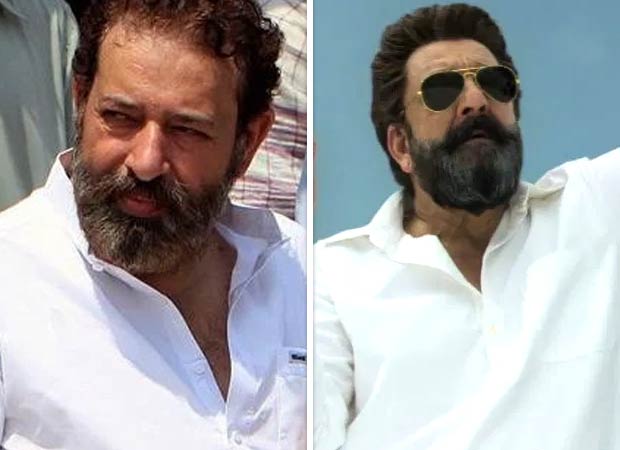
Sanjay Dutt as Chaudhary Aslam: Casting & Criticism
Casting Sanjay Dutt—a massively popular Bollywood figure known for his rugged, intense performances—was a strategic move. Dutt has a large fan base in Pakistan, and Noreen herself acknowledged that Aslam admired Dutt, particularly for his performance in Khalnayak.
But admiration does not override accuracy.
Noreen argued that if Dutt’s portrayal ends up distorting Aslam’s actions or intentions—or adds unnecessary anti-Pakistan lines—she would not hesitate to pursue legal avenues.
Her concerns include:
- Misrepresentation of Aslam as corrupt or malicious
- Any narrative framing him as anti-Indian villain
- Scenes that sensationalize or fictionalize aspects of his life for dramatic flair
- Religious or cultural mischaracterization
- Fiction that frames Pakistan negatively
Her remarks reflect long-standing grievances about how Bollywood sometimes frames Pakistan through a monolithic or adversarial lens.
“Indian Filmmakers Find No Other Subjects but to Malign Pakistan” — A Loaded Statement
Noreen’s statement, bold and sweeping, stems from a history of Bollywood projects that link Pakistan with terrorism, espionage, or violence.
The broader context
Indian and Pakistani media industries often mirror political dynamics. During periods of tension, films on both sides resort to:
- Nationalism
- Heroic portrayals of their own institutions
- Dramatic antagonism of the opposing side
Films like Uri, Ek Tha Tiger, and Phantom have previously sparked debate over how Pakistan is depicted.
Noreen’s critique, therefore, is not isolated. It echoes:
- The Pakistani public’s frustration
- Concerns over cinema reinforcing stereotypes
- Anxiety that real individuals may be misused for political messaging
Her remarks highlight a recurring question:
Can genuine artistic freedom coexist with responsible storytelling when dealing with real people—from rival nations—with sensitive legacies?
Legal Action: What Can Noreen Actually Do?
Noreen stated clearly:
“If I see my husband being portrayed wrongly… I will take all the legal steps I can.”
But what does that mean practically?
Potential Legal Options
- Defamation Lawsuits (Pakistan)
She can pursue legal action under Pakistani defamation laws if the film is screened or distributed in Pakistan. - Cross-border Representation Complaints
While complex, families can file objections through diplomatic channels if the portrayal damages reputation. - Global Digital Distribution Challenges
If Dhurandhar is released on streaming platforms globally, she can challenge objectionable content on the grounds of personal rights and misrepresentation. - Moral Rights Claims
Some jurisdictions allow claims regarding unauthorized portrayal of real individuals—though India’s stance is more flexible for creative works.
Realistically, direct influence on Indian cinema through Pakistani courts is limited. But public pressure and diplomatic noise can create reputational impact, forcing filmmakers to add disclaimers or modify content.
This Is Not the First Controversy for Dhurandhar
Before the Chaudhary Aslam dispute, the film had already encountered turbulence.
Major Mohit Sharma Controversy
The family of Major Mohit Sharma (Ashoka Chakra awardee) accused the filmmakers of using his story without permission. His parents previously filed a plea in the Delhi High Court seeking a stay.
On December 1, 2025, the Delhi High Court ruled:
- Concerns must be addressed by the CBFC
- But release will not be stopped
This allowed Dhurandhar to move forward, but it also raised red flags about the film’s approach to real-life inspirations.
When multiple families linked to unrelated real-life figures express outrage, it suggests a recurring pattern: the film may be mixing fact and fiction too liberally.
Operation Lyari: Cinema vs Reality
The film is inspired by Operation Lyari, one of Karachi’s most violent anti-gang crackdowns. But “inspiration” can be interpreted very loosely in cinema.
What Actually Happened in Lyari
Between 2005–2013, Lyari became synonymous with:
- Turf wars
- Gang-police shootouts
- Political patronage networks
- Extortion mafias
- Militancy leaks into organized crime
Chaudhary Aslam’s team aggressively targeted gangsters like Rehman Dakait, intensifying the conflict. This period reshaped Karachi’s criminal landscape.
What the Film Shows
Because Dhurandhar blends fiction with real events, there is anxiety that:
- The motivations of gangs or police will be simplified
- Pakistani agencies will be depicted through an Indian nationalist lens
- Real officers (like Aslam) will be exaggerated for dramatic spectacle
- Political complexity will be replaced with black-and-white heroism
For families who lived through these events, losing nuance is losing truth.
Religious Sensitivity: Why This Matters Deeply
Using metaphors like “devil” and “jinn” carries symbolic meaning in South Asian society.
For Muslims:
- Humans are considered noble creations
- Associating lineage with Satan is intensely offensive
- Mothers hold supreme respect in Islamic culture
- Implying a mother gave birth to a demonic figure is deeply hurtful
Noreen’s emotional response reflects how such language touches:
- Her faith
- Her dignity as a widow
- Her responsibility to protect Aslam’s legacy
- Cultural honor values in Pakistan
Thus, what Bollywood sees as “creative hyperbole” is received as “religious disrespect.”
Dhurandhar’s Box Office Triumph—Despite the Debate
Interestingly, controversies have not hampered the film’s commercial run.
Box Office Success
Dhurandhar opened with a staggering $3.83 million overseas in its first weekend—making it:
- The third-biggest Bollywood opener of 2025
- A major global hit
- A breakout success for its ensemble cast
This success indicates three things:
- Audience appetite for action-political dramas remains high
- Controversy may have boosted curiosity
- The global Indian diaspora continues to support patriotic or conflict-driven storylines
It also sparks an uncomfortable but important question:
Does box office success overshadow ethical responsibilities in storytelling?
Artistic Liberty vs Ethical Sensitivity: A Long-Standing Debate
Filmmakers often argue that dramatization is essential. Families counter that misrepresentation distorts lived reality.
The Filmmakers’ Likely Perspective
- “Inspired-by” means the story is not a documentary
- Creative freedom allows fictional exaggeration
- Characters may be composites
- Hyperbolic dialogue enhances mass appeal
The Family’s Perspective
- Using a real person’s name or identity requires respect
- Fiction cannot override the emotional trauma of those involved
- Religious disrespect is unacceptable
- National narratives must avoid demonizing individuals
Both perspectives carry legitimacy—but one side has emotional stakes.
Cross-Border Politics: Why Pakistan Reacts Strongly
For Pakistanis, representation in Indian cinema is rarely neutral.
Why There’s Suspicion
- Frequent portrayals of Pakistan as antagonistic
- Films used as soft-power political messaging
- Historical tensions amplified through entertainment
- Characters often portrayed without cultural nuance
Thus, when Chaudhary Aslam—a domestic hero—is linked to a narrative shaped by Indian filmmakers, anxieties escalate.
Sanjay Dutt’s Image & Its Impact
Sanjay Dutt is a complex figure:
- Loved for his charisma
- Admired for his raw performance style
- Yet associated with his own legal controversies
- Often cast in gritty, morally grey roles
For Noreen, this contrast creates discomfort:
Her husband was known for integrity and patriotism; portraying him through a sensationalized lens may overshadow his virtues.
But paradoxically, Aslam himself reportedly admired Dutt—a reminder that personal fandom does not shield one from misrepresentation.
The Larger Issue: Who Owns a Legacy?
When real individuals become cinematic characters, ownership of their legacy becomes contested.
Stakeholders include:
- Families who lived through the events
- Police institutions
- Filmmakers
- Audiences
- Cultural critics
- Political groups
Each claims a different “truth.”
But for families, the stakes are personal, profound, and painful.