 by
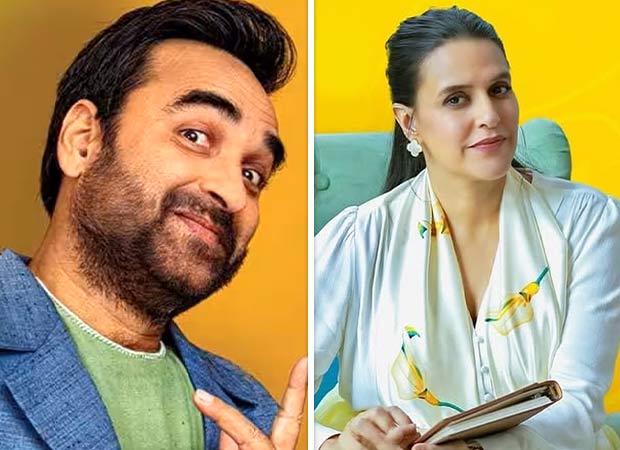
by Few actors in Indian cinema today command the kind of respect that Pankaj Tripathi does. Known for his understated brilliance, earthy wisdom, and an unwavering commitment to authenticity, Tripathi has built a career that values substance over spectacle. Now, with Perfect Family, he takes a significant step forward—not just as an actor, but as a producer, and one who is consciously choosing an unconventional path.
In an exclusive conversation with Bollywood Hungama, Pankaj Tripathi opened up about his decision to debut as a producer, the nervousness that comes with new responsibility, and why he deliberately chose YouTube over mainstream OTT platforms for Perfect Family. His insights offer a rare look into the evolving digital ecosystem, creative freedom, and the importance of trusting storytellers—especially first-time creators.
A New Role, A New Kind of Nervousness
Pankaj Tripathi has portrayed countless characters across film, television, and digital platforms, often slipping into roles with remarkable ease. But stepping into the shoes of a producer has brought with it a different emotional landscape altogether.
“I am a bit of a quiet person anyway,” Tripathi said with his characteristic calm. “I neither get too excited nor too discouraged. But yes, this responsibility is new to me, and that’s why I am feeling a little nervous—like a producer.”
For an actor who has always focused on performance rather than numbers, algorithms, or viewership metrics, production marks a shift in perspective.
“As an actor, I never thought much about viewership or feedback at the platform level,” he explained. “My job was to act honestly and leave the rest to destiny. But when you are producing something, you suddenly start thinking about everything—how people will receive it, how the platform works, how the audience thinks.”
That awareness, he admits, is both exciting and unsettling.
Why Perfect Family Is Special
Perfect Family is not just another project for Pankaj Tripathi—it represents a belief system. The series has been produced by Ajay Rai, a filmmaker Tripathi shares a long-standing family-like bond with.
“Ajay and I have a very old association,” Tripathi shared. “Our families know each other. There is a deep level of trust.”
Rai’s body of work speaks for itself, with critically acclaimed films such as Gangs of Wasseypur, Chillar Party, Gurgaon, and Nil Battey Sannata under his belt. Tripathi had complete faith in Rai’s creative instincts.
“He has always supported good content,” Tripathi said. “When someone like that tells you he wants to try something new, you listen.”
What makes Perfect Family particularly noteworthy is its release model. It is the first web series to premiere directly on YouTube in a paid format, positioning itself as a bold experiment in India’s digital content space.
Supporting New Creators: Trusting the Writer’s Vision
Another defining aspect of Perfect Family is that it marks the debut of writer Palak Bhambri. For Tripathi, this was not a risk but a necessity.
“Generally, people know the characters of the Mahabharata, but they do not know Ved Vyas,” he explained thoughtfully. “Palak Bhambri—she is the creator. The story is the product of her mind.”
Tripathi’s analogy underlines a key belief: creators must be acknowledged and protected.
“If this format succeeds,” he said, “it will open doors for many young writers and creators. They can think of creating large-scale content for YouTube without depending entirely on big platforms.”
In an industry often dominated by star power and market calculations, Tripathi’s stance highlights a refreshing emphasis on authorship and originality.
Why YouTube and Not Traditional OTT Platforms?
One of the most intriguing aspects of Perfect Family is its platform choice. At a time when OTT platforms dominate the digital entertainment space, opting for YouTube is both unconventional and deliberate.
Tripathi explained the reasoning with striking clarity.
“Because of the digital world, a democratic world has been created,” he said. “But many times when you join any platform, your creativity gets a little constrained.”
While OTT platforms offer scale and visibility, they also come with guidelines, expectations, and commercial considerations that can shape—or limit—creative expression.
“So, it’s complete freedom here,” Tripathi added, referring to YouTube. “No one is telling you to change the ending, reduce a character, or adjust something for market reasons.”
For Tripathi and his team, preserving the integrity of the story mattered more than chasing conventional success metrics.
Creative Freedom Over Creative Control
Tripathi believes that once a creator has committed to a story, their vision deserves respect.
He recalled an incident from his theatre days to explain his philosophy.
“I once told someone, ‘I will watch it, but I won’t give my opinions. It’s your vision. You have made it, so I won’t criticize it.’”
This approach shaped how Perfect Family was developed.
“There was no interference in the writing or production,” he emphasized. “We trusted the creator.”
In an era where creative notes often come from multiple directions, Tripathi’s producer mindset stands out as one rooted in trust rather than control.
The Paid YouTube Experiment: A New Viewing Model
The release strategy for Perfect Family reflects both courage and confidence. The team decided to make the first two episodes free, allowing viewers to sample the content before deciding whether to pay Rs. 59 to watch the remaining episodes.
“Taking the risk of trusting the content—that’s why we are showing two episodes for free,” Tripathi said. “We are giving freedom to the viewers.”
According to him, Ajay Rai had complete faith in the strength of the series.
“He wanted freedom and wanted to try this experiment,” Tripathi added. “That confidence came from the content.”
While paid viewership on YouTube is still relatively new in India, it has proven successful in Western markets. Perfect Family aims to test whether Indian audiences are ready for this shift.
Understanding Indian Audiences and Risk-Taking
Tripathi acknowledges that paid digital content is still evolving in India.
“Yes, paid viewership is limited in our country,” he admitted. “But in the West, it’s very common.”
Rather than seeing this as a limitation, he views it as an opportunity.
“If this works,” he said, “it will shape many similar projects in the future.”
Paid Viewership in India: A Cultural Shift
Tripathi is realistic about the challenges.
“Paid viewership is still limited in India,” he admits. “But in the West, it is quite popular.”
India’s digital audience has been conditioned to expect content either free or bundled within OTT subscriptions. Asking viewers to pay directly for a single series requires trust—in the content and the creators.
“With this series, we wanted to make the first significant attempt,” he says. “Whatever outcome comes from this experiment will shape similar projects in the future.”
Whether the experiment succeeds commercially or not, Tripathi believes it will generate important learnings for the industry.
⸻
What Perfect Family Represents Beyond Entertainment
At its core, Perfect Family is not just a series—it is a statement.
It represents:
• Trust in storytelling
• Respect for writers
• Belief in audience intelligence
• Courage to challenge platform dependency
Tripathi’s decision to associate his first production with such an experiment speaks volumes about his priorities.
“I believe in creative independence,” he says quietly
From Actor to Enabler
Unlike many actor-producers who step into production to build personal brands, Tripathi views his role as that of an enabler.
“I am learning,” he admits candidly. “This is new for me.”
But his learning curve is guided by humility rather than ego.
“When you support new voices, you have to step aside sometimes,” he says. “Otherwise, what is the point?”
This mindset is rare in an industry often driven by hierarchy.
The Larger Implication for the Digital Landscape
If Perfect Family succeeds—even modestly—it could have far-reaching consequences.
- Writers may explore YouTube as a serious storytelling platform
- Independent producers may bypass traditional OTT gatekeepers
- Audiences may become more willing to pay for content they believe in
Tripathi understands that every industry shift begins with risk.
“Someone has to take the first step,” he says.
A Career Built on Trust, Not Trends
Pankaj Tripathi’s career has never followed trends. From theatre to cinema to OTT, he has consistently chosen roles that align with his values rather than market formulas.
His move into production reflects the same philosophy.
“This is not about competition,” he clarifies. “It is about coexistence.”
OTT platforms will continue to thrive, he believes—but there must also be space for alternative models.
Calm Confidence in Uncertain Territory
Despite the risks, Tripathi remains characteristically calm.
“I am neither too excited nor too discouraged,” he repeats with a smile.
That calm is perhaps his greatest strength—allowing him to navigate uncertainty with patience and perspective.
Conclusion: A Thoughtful Step Toward Creative Freedom
With Perfect Family, Pankaj Tripathi has not merely debuted as a producer—he has initiated a conversation about creative ownership, platform power, and the future of digital storytelling.
By choosing YouTube over conventional OTT platforms, embracing a paid yet audience-first model, and prioritizing the creator’s vision above all else, Tripathi has reinforced what he has always stood for—honesty, independence, and respect for craft.
Whether Perfect Family becomes a commercial benchmark or remains a brave experiment, its intent is already clear. In an industry often driven by algorithms and constraints, Pankaj Tripathi has chosen the path of trust—trust in content, trust in creators, and most importantly, trust in the audience.
And sometimes, that trust itself is the most powerful story of all.