 by
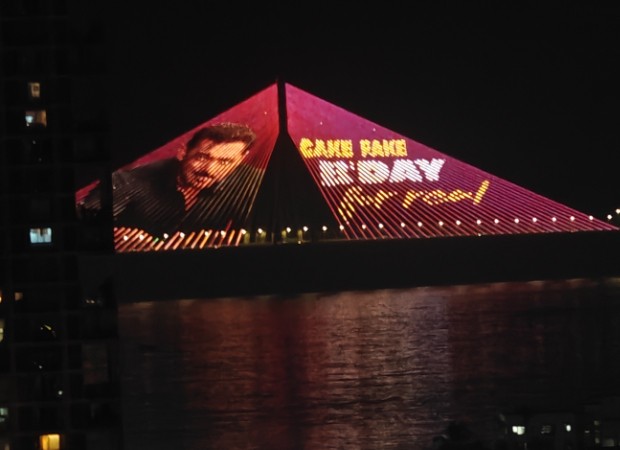
by Mumbai doesn’t celebrate birthdays the way other cities do. It doesn’t pause traffic, dim its skyline, or slow its pace for sentiment alone. This is a city that moves relentlessly forward, indifferent to nostalgia unless that nostalgia has shaped its very identity. And yet, on the eve of December 27, as Salman Khan prepares to turn 60, Mumbai does something extraordinary. The Bandra–Worli Sea Link — one of the city’s most iconic, most visible, and most symbolically loaded landmarks — glows with a tribute from Being Human.
It is not just a birthday greeting. It is not merely a brand activation. It is a moment of cultural recognition — a statement that transcends fandom and ventures into the realm of legacy.
Because Mumbai does not hand out its biggest respect signals casually.
The Sea Link: More Than Steel, More Than a Bridge
To understand the magnitude of this gesture, one must first understand the Sea Link itself.
The Bandra–Worli Sea Link is not just infrastructure. It is Mumbai’s postcard — photographed, filmed, and romanticized endlessly. It connects the old city to the new, the heritage neighborhoods to the corporate corridors. For millions of commuters, it is a daily passage; for filmmakers, a cinematic shorthand for ambition and scale; for the city, a symbol of progress and pride.
Messages displayed here are rare. Tributes here are rarer still.
The Sea Link is not rented out for routine brand visibility. It is reserved — curated — and protected as a visual statement meant to resonate with the entire city. When something appears here, it carries weight. It demands attention. It invites conversation.
So when Being Human lights up this iconic stretch to mark Salman Khan’s 60th birthday, it signals something deeper than celebration. It signals acknowledgment.
Salman Khan at 60: A Milestone That Feels Unreal
In an industry obsessed with youth, reinvention, and weekend box office numbers, longevity is elusive. Reinvention is celebrated, but endurance is quietly rare. Salman Khan reaching 60 feels almost surreal — not because of denial, but because his presence has never receded.
For over three decades, Salman Khan has been a constant in Indian popular culture. His films have defined eras. His songs have played at weddings, roadside stalls, gyms, and festivals. His dialogues have slipped into everyday language. His persona — equal parts superstar, protector, rebel, and mass icon — has evolved without ever disappearing.
Few stars in Indian cinema have remained this visible, this discussed, and this culturally embedded for so long.
Turning 60, therefore, is not merely about age. It is about scale — the scale of influence, of memory, of reach.
And Mumbai, the city that made him and was shaped by him in return, acknowledges that scale in the grandest way possible.
Being Human: When Stardom Meets Social Identity
The tribute at the Sea Link carries another layer of significance because it comes from Being Human — the philanthropic brand Salman Khan founded and has consistently associated himself with.
Being Human is not just a clothing label. Over the years, it has evolved into a symbol of social responsibility tied directly to celebrity capital. Education for underprivileged children, healthcare initiatives, disaster relief efforts — Being Human has functioned as an extension of Salman Khan’s public identity beyond cinema.
This Sea Link moment beautifully blends the two worlds Salman Khan inhabits:
- The superstar, whose name alone commands attention.
- The public figure, whose brand has been linked to giving back.
The billboard doesn’t scream excess. It communicates respect. It reminds viewers that the man being celebrated is not only a box office force but also someone whose influence has extended into social work, aspiration, and community impact.
In a city that often questions celebrity sincerity, this fusion of stardom and social branding lands with authenticity.
Why This Honour Is Reserved for the Rare Few
Mumbai is home to countless icons — industrialists, cricketers, filmmakers, political leaders, and artists. Yet, not everyone receives this level of public, city-wide recognition.
The Sea Link tribute is not about popularity alone. It is about cultural permanence.
Salman Khan belongs to a tiny group of figures who transcend professional categories. He is not just a film star; he is a reference point. His career has intersected with:
- The single-screen era
- The multiplex boom
- Satellite television dominance
- The streaming and social media age
Across each shift, he has remained relevant — sometimes controversial, sometimes adored, but never ignorable.
This tribute acknowledges that Salman Khan is not merely a product of the industry’s past. He is part of its continuing present.
A City, A Skyline, A Shared Memory
What makes this moment especially powerful is its visibility.
Thousands of commuters crossing the Sea Link will see it.
Drivers stuck in traffic will glance up at it.
Passengers will photograph it.
Social media will amplify it.
The skyline itself becomes a canvas.
This is not a private celebration behind closed doors. It is public, collective, and democratic.
Mumbai, in its own wordless way, is saying: This man belongs to all of us.
For fans who grew up watching Maine Pyar Kiya, Hum Aapke Hain Koun, Tere Naam, Dabangg, Bajrangi Bhaijaan, and Tiger Zinda Hai, the sight is emotional. For younger audiences who know him through Bigg Boss, social media clips, and recent films, it is a reminder of the journey that preceded them.
The billboard bridges generations — much like Salman Khan himself has done for decades.
Longevity That Feels Personal
One of the most remarkable aspects of Salman Khan’s career is how personal his stardom feels.
Unlike many global celebrities whose fame exists at a distance, Salman Khan has always felt accessible — flawed, human, intensely emotional, and deeply loyal to his fan base. His fans don’t just admire him; they defend him, grow up with him, and see him as part of their lives.
This personal connection is what makes the Sea Link tribute resonate beyond spectacle. It is not perceived as corporate excess or empty grandeur. It feels earned.
Mumbai’s skyline does not celebrate everyone. It celebrates those who have stayed, survived, stumbled, risen, and remained.
The Timing: A Perfect Cultural Convergence
The tribute arrives on the eve of Salman Khan’s 60th birthday — December 27 — a date that now carries layered significance.
Not only does it mark a major personal milestone, but it also coincides with growing anticipation around his next big-screen venture: Battle Of Galwan.
Industry buzz strongly suggests that the teaser for the film is expected to drop on his birthday, turning December 27 into more than just a celebratory moment. It could become a strategic announcement date — a reminder that even at 60, Salman Khan is not slowing down. He is gearing up.
If the teaser does arrive as expected, the symbolism will be striking:
- Mumbai’s skyline honours the man.
- The man responds by unveiling what lies ahead.
It would be a perfect one-two punch — celebration and continuation.
Battle Of Galwan: Why the Stakes Feel Higher Than Ever
Battle Of Galwan is not just another project in Salman Khan’s filmography. It carries weight — national, emotional, and cinematic.
The Galwan Valley clash remains a sensitive and significant chapter in recent Indian history. A film based on it demands restraint, intensity, and gravitas. Salman Khan headlining such a project signals a deliberate shift toward roles that lean into authority, maturity, and emotional depth.
At 60, this choice feels intentional. It reflects a superstar aware of his legacy, willing to engage with stories that demand more than spectacle.
If the teaser does drop on December 27, it will further cement this birthday as a defining moment — not a pause, but a pivot.
From Friday Openings to Cultural Endurance
The Indian film industry is famously unforgiving. Careers rise and fall with Friday box office numbers. Social media verdicts arrive before films have time to breathe. Reinvention is expected every few years.
Salman Khan has navigated all of this — sometimes dominating it, sometimes resisting it, sometimes absorbing criticism and moving forward regardless.
That is what makes his endurance remarkable.
He has outlived trends.
He has adapted to formats.
He has remained central even when cinema itself has changed.
The Sea Link tribute doesn’t celebrate a single film or performance. It celebrates survival — and relevance — across eras.
A Skyline That Speaks
There is something deeply poetic about a city honouring one of its most enduring stars through light.
Light travels far. It cuts through darkness. It draws the eye without shouting.
As Being Human lights up the Sea Link, it transforms the nightly skyline into a quiet celebration — not loud, not aggressive, but unmistakable.
It says:
This matters.
This moment counts.
This journey is worth acknowledging.
And in a city as restless as Mumbai, that is perhaps the highest form of respect.
What This Moment Really Represents
At its core, this tribute is about more than Salman Khan’s birthday.
It represents:
- The power of cultural longevity
- The rare alignment of stardom and social identity
- The city’s recognition of those who have shaped its collective memory
It reminds us that while films release and fade, certain figures become permanent fixtures in the cultural landscape.
Salman Khan is one of them.
At 60, Not an Ending — A Continuation
Turning 60 is often framed as a closing chapter. For Salman Khan, it feels like a recalibration.
The Sea Link tribute does not suggest farewell. It suggests acknowledgment — a pause to look back before moving forward again.
With Battle Of Galwan on the horizon, with his public presence intact, and with a brand like Being Human reinforcing his social footprint, Salman Khan at 60 feels less like a star nearing the sunset and more like a cultural institution continuing its run.
Mumbai’s Verdict, Written in Light
Cities don’t speak. They signal.
And on this December night, Mumbai signals loudly — through light, scale, and visibility — that Salman Khan’s journey matters.
Not everyone gets their birthday written across the city’s most iconic bridge.
Not everyone earns a place in the skyline.
Not everyone becomes part of the city’s visual memory.
Salman Khan has.
At 60, he isn’t just being wished.
He is being showcased.
He is being acknowledged.
He is being honoured — on Mumbai’s biggest canvas.
And that, in itself, is an achievement reserved for the rare few.