 by
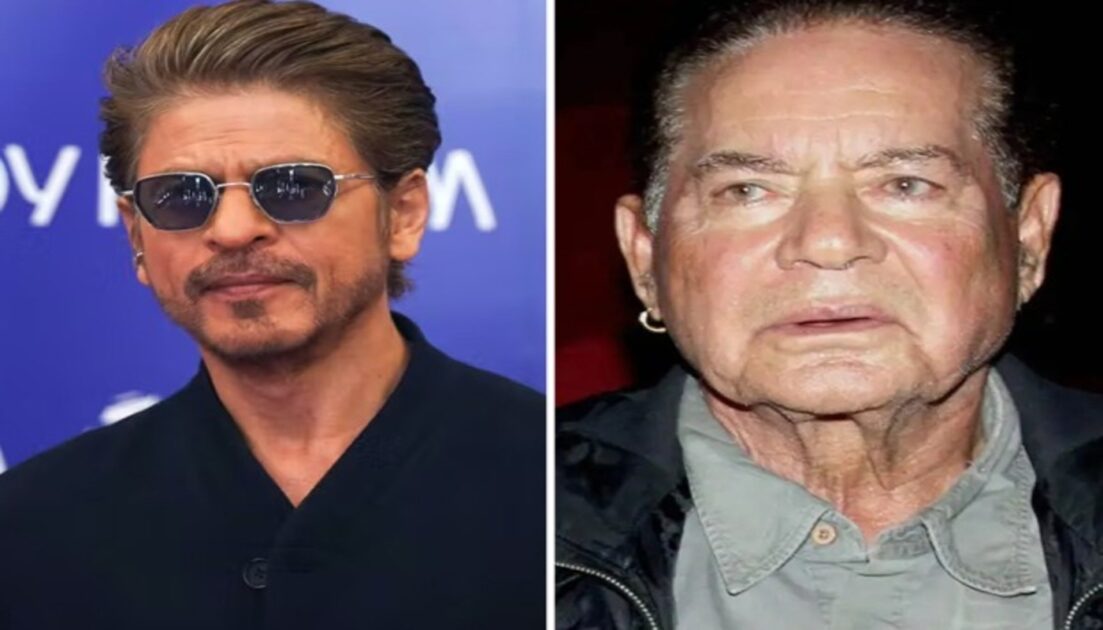
by In an industry often fueled by spectacle, competition, and public narratives of rivalry, moments of quiet solidarity tend to resonate more deeply than red-carpet appearances. That is precisely what unfolded when Shah Rukh Khan was spotted visiting veteran screenwriter Salim Khan at Lilavati Hospital late at night, days after the latter was admitted following a health scare.
Videos of Shah Rukh Khan’s discreet arrival at the hospital quickly surfaced online. In a matter of hours, social media platforms were flooded with clips, commentary, and messages of appreciation. While the superstar did not stop to address the press, his presence alone spoke volumes—about loyalty, gratitude, and the enduring bonds that define Bollywood beyond the camera.
This was not just a celebrity hospital visit. It was a reminder of history, mentorship, legacy, and the emotional architecture of Hindi cinema.
The Health Scare: What Happened to Salim Khan?
On the morning of February 17, 2026, 90-year-old Salim Khan was admitted to Lilavati Hospital in Mumbai after reportedly experiencing a minor brain haemorrhage accompanied by a sudden spike in blood pressure. Initial reports suggested that he had been placed on ventilator support as a precautionary measure—an update that understandably caused concern among fans and the film fraternity.
However, his treating physician, Dr. Jalil Parkar, soon clarified the situation. According to official updates, Salim Khan was hemodynamically stable. On February 18, doctors provided further details, explaining that a Digital Subtraction Angiography (DSA) procedure had been successfully performed by a neurosurgeon. The procedure was precautionary and diagnostic in nature.
Crucially, doctors emphasized that there was no need for surgery. The minor brain haemorrhage had been managed effectively. He was conscious upon admission, stable after the procedure, and moved to the ICU for observation. By the following day, plans were in place to remove ventilator support.
In medical crises, especially involving someone of advanced age, clarity is vital. The transparency in updates helped calm widespread speculation.
Yet, beyond medical bulletins, what drew attention was the human response from those close to him.
Shah Rukh Khan’s Late-Night Visit: A Gesture of Respect
While members of the Khan family were regularly seen at the hospital, Shah Rukh Khan’s visit stood out because of what it symbolized.
In viral videos circulating online, SRK was seen arriving at Lilavati Hospital discreetly. Dressed simply, moving with quiet purpose, he briefly acknowledged the paparazzi before heading inside. There was no dramatic statement, no orchestrated press interaction—just a silent show of support.
In today’s hyper-visible celebrity culture, silence can often speak louder than words.
Fans across platforms praised the gesture. Many noted that relationships in Bollywood have often been misrepresented as fragile or competitive. Yet this visit reaffirmed the depth of camaraderie between Shah Rukh Khan and the Khan family.
The Salim Khan Legacy: A Pillar of Hindi Cinema
To understand why this visit carries emotional weight, one must understand who Salim Khan is.
As one half of the iconic screenwriting duo Salim-Javed, he revolutionized Hindi cinema in the 1970s. Alongside Javed Akhtar, Salim Khan crafted narratives that reshaped the Indian film hero—from romantic idealist to the brooding, justice-seeking “angry young man.”
Their collaborations include genre-defining films that altered the grammar of mainstream storytelling. The duo’s work laid the foundation for larger-than-life protagonists and layered antagonists, setting the stage for future generations of actors and filmmakers.
The ripple effects of their writing extended across decades, influencing scripts, character arcs, and even audience expectations.
In many ways, Salim Khan’s storytelling blueprint became part of Bollywood’s DNA.
A Bond Forged in Brotherhood: Shah Rukh and Salman
Shah Rukh Khan’s connection to Salim Khan cannot be separated from his long and sometimes turbulent journey with Salman Khan.
Over the years, Shah Rukh and Salman have experienced phases of deep friendship, public fallout, and eventual reconciliation. Their bond, often described as brotherly, has weathered industry politics and personal misunderstandings.
What makes this relationship compelling is its authenticity. Unlike curated friendships designed for publicity, their camaraderie feels organic—sometimes messy, always emotional.
Salim Khan, as the patriarch of the Khan family, occupies a position of immense respect in this dynamic. Shah Rukh’s visit to him during a health scare was not merely a courtesy call; it was an act rooted in longstanding familial warmth.
In interviews over the years, both Shah Rukh and Salman have spoken about their mutual respect and how they stand by each other in times of need. This late-night hospital visit was a living testament to those words.
Lilavati Hospital: The Nerve Center of Bollywood Health Crises
Lilavati Hospital in Mumbai has long been associated with high-profile medical cases involving film stars, politicians, and public figures. Located in Bandra, it is known for its advanced facilities and specialized care.
Over the decades, it has become a recurring backdrop in Bollywood headlines—where moments of crisis unfold away from film sets and red carpets.
The sight of luxury cars arriving late at night, security personnel stationed discreetly, and media vans parked outside has become part of the city’s cinematic reality.
Shah Rukh Khan’s arrival at Lilavati was yet another moment in this ongoing narrative—where stardom intersects with vulnerability.
The Viral Video Culture: When Empathy Goes Digital
Within hours of Shah Rukh’s visit, clips began circulating across social media platforms. Hashtags trended. Fan accounts amplified the visuals. News portals picked up the footage.
But what was striking was the tone of public reaction.
Instead of sensationalism, there was overwhelming appreciation. Comments ranged from “True friendship” to “Respect for SRK” to “This is what brotherhood looks like.”
In an age where celebrity news often thrives on controversy, this was a rare instance where empathy became the headline.
The video’s virality underscores how audiences are increasingly drawn to authenticity. They respond not only to glamour but also to gestures of humanity.
Age, Legacy, and the Fragility of Icons
At 90, Salim Khan represents an era of cinema that predates multiplexes and streaming platforms. His health scare served as a sobering reminder of time’s inevitability.
For fans who grew up watching films shaped by his storytelling, the news felt personal. His scripts were not just entertainment—they were cultural landmarks.
When icons age, they become living bridges to history. Their health crises evoke collective nostalgia and concern.
Shah Rukh Khan’s visit resonated because it acknowledged that legacy. It reflected an understanding that mentorship and influence transcend generations.
The Emotional Economy of Bollywood
Bollywood is often described as a “family.” While that metaphor can sometimes feel exaggerated, moments like this validate it.
The industry thrives on networks of collaboration—writers, directors, actors, producers, technicians. Bonds formed on set often extend beyond professional boundaries.
Salim Khan’s contributions influenced countless careers, directly or indirectly. Even those who never worked with him have benefited from the storytelling conventions he helped establish.
In that context, Shah Rukh’s visit was also symbolic of generational gratitude.
Professional Respect Beyond Box Office Rivalry
The Shah Rukh–Salman equation has often been framed as rivalry by tabloids. Box office comparisons, fan wars, and media speculation have amplified narratives of competition.
Yet both actors have repeatedly emphasized mutual respect.
Their recent on-screen collaborations and public appearances have further cemented their reconciliation. The hospital visit adds another chapter to that narrative—one grounded not in commerce but compassion.
In an industry driven by numbers, such gestures recalibrate the focus toward relationships.
The Medical Update: Stability and Hope
As per the latest update, Salim Khan remains under observation in the ICU and is reported to be stable. Doctors have reiterated that the minor brain haemorrhage has been managed successfully.
The DSA procedure, conducted to evaluate blood vessels in the brain, was precautionary. The absence of surgical intervention is reassuring.
While age remains a factor in recovery, the medical team’s confidence provides hope.
For fans and well-wishers, stability is the most comforting word in such circumstances.
A Study in Public Conduct
Shah Rukh Khan’s conduct during the visit is worth noting.
He did not seek attention. He did not issue statements. He acknowledged the media briefly and proceeded inside.
In an era where visibility often equates to relevance, this understated approach stands out.
It reinforces the idea that genuine support does not require performance.
The Broader Cultural Impact
Moments like this ripple beyond immediate headlines.
They:
- Reinforce narratives of unity within the film fraternity
- Humanize larger-than-life celebrities
- Shift social media discourse toward empathy
- Remind audiences of shared cultural heritage
Salim Khan’s scripts once shaped cinematic archetypes of loyalty and honor. In a poetic twist, the real-life loyalty displayed by Shah Rukh Khan mirrors those very themes.
Intergenerational Continuity
The Hindi film industry thrives on continuity—stories retold, themes revisited, legacies inherited.
Salim Khan’s influence extended to shaping archetypes that later actors embodied. Shah Rukh Khan, in his own way, redefined romance and heroism for a new era.
The meeting of these two figures in a hospital corridor represents more than concern—it symbolizes continuity between eras.
It is a reminder that cinema is a relay race, with each generation carrying forward the baton of storytelling.
Why This Moment Matters
In the grand scheme of global news, a celebrity hospital visit may appear minor. Yet within India’s cultural landscape, such moments carry emotional resonance.
They remind us that behind superstardom lie friendships, mentors, and shared histories.
They humanize icons who are otherwise seen only through curated public images.
They reinforce the idea that empathy remains central—even in industries built on spectacle.
Waiting for Recovery, Holding on to Legacy
As Salim Khan remains under observation, fans await further updates. Prayers, messages, and tributes continue to pour in.
For Shah Rukh Khan, the visit may have been a private act of solidarity. For millions watching online, it became a symbol of enduring respect.
The viral videos will eventually fade from trending lists. But the sentiment they captured—loyalty, gratitude, quiet support—will linger.
Conclusion: Brotherhood Beyond the Spotlight
The image of Shah Rukh Khan walking into Lilavati Hospital late at night is likely to be remembered not for drama but for dignity.
It encapsulated:
- A tribute to a legendary writer’s legacy
- A reaffirmation of bonds within the Khan family
- A moment of humanity in a spectacle-driven industry
- A reminder that behind every superstar is a network of relationships
As Salim Khan recovers under medical supervision, the film fraternity—and fans worldwide—remain hopeful.
In cinema, heroes are written on paper. In real life, they are revealed through actions.
On a quiet February night in Mumbai, one such action spoke louder than dialogue ever could.