 by
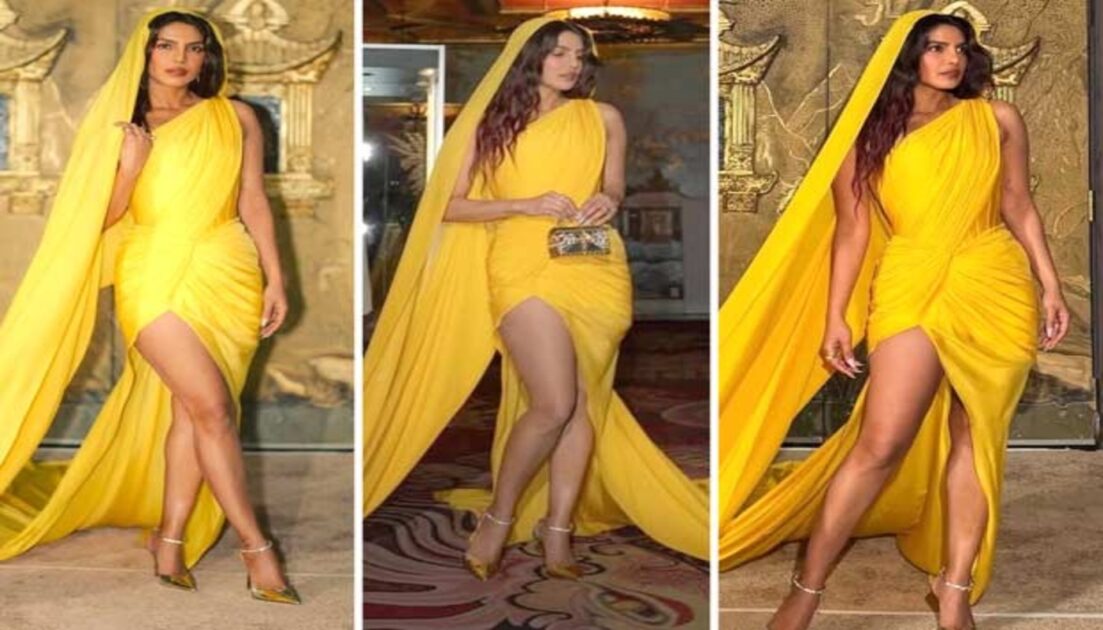
by When Priyanka Chopra stepped out to promote her upcoming film The Bluff, she wasn’t just attending a press event — she was extending a story. Dressed in a striking saffron couture creation by Gaurav Gupta, she described the ensemble as “a saree with a modern twist.” But this was more than a fashion statement. It was a deliberate tribute to the character she portrays in the film — Ercell “Bloody Mary” Bodden.
Set to premiere on Amazon Prime Video on February 25, 2026, The Bluff marks another powerful global chapter in Priyanka’s career. Yet what made this promotional appearance unforgettable was how seamlessly she connected fashion, identity, and narrative into one visual moment.
This was not just couture. It was character storytelling in motion.
A Look Inspired by Ercell Bodden
In sharing photographs from the event, Priyanka revealed that her outfit was an ode to Ercell Bodden, the former pirate she plays in The Bluff. She referenced a key detail from the film’s opening — Ercell appears with a dupatta draped over her head, a quiet yet meaningful symbol of identity and strength.
Rather than selecting a typical red-carpet gown, Priyanka chose a silhouette that echoed that imagery. The flowing veil extension of her couture piece mirrored the cinematic dupatta. The structured bodice reflected resilience. The fluid fall of the fabric suggested grace and depth.
By doing so, she carried her character beyond the screen and into the promotional space. It was an immersive gesture — one that blurred the boundary between actor and role.
The Golden Arc: A Saree Reimagined
The ensemble, titled “Golden Arc,” comes from Gaurav Gupta’s Divine Androgyne Spring Summer ’26 couture collection, first showcased in Paris. Crafted in fluid chiffon, the design features a sculpted wrap bodice, corseted structure, softly pleated drape, and an extended veil that cascades behind.
At first glance, it appears to be a gown. But its essence unmistakably echoes the saree — one of India’s most iconic and enduring garments.
The saree has survived centuries of transformation without losing its core identity. It is fluid, adaptable, and timeless. Gupta’s design honors that spirit while introducing architectural precision. The corset adds structure. The pleats maintain movement. The veil references tradition.
The result is not fusion for spectacle — it is evolution with respect.
Priyanka shared that when she first saw the piece walk down the couture runway, she felt an immediate connection. It felt like a saree reimagined for a global moment.
The Meaning Behind the Saffron Hue
Color carries narrative weight — and the saffron tone of the gown was deeply intentional.
In Indian culture, saffron symbolizes courage, sacrifice, vitality, and spirituality. It is associated with strength as much as serenity. It carries warmth and power simultaneously.
For Ercell Bodden, a woman who has left behind a violent pirate past in search of peace, the color feels symbolic. She embodies fire restrained. She holds power quietly. The saffron glow captures both intensity and composure.
Priyanka described the hue as reflective of India’s vibrant palette — a reminder that Indian design speaks boldly in color without apology. In this moment, saffron was not loud. It was luminous.
The Story of The Bluff
Directed by Frank E. Flowers and co-written with Joe Ballarini, The Bluff is a high-stakes action thriller set in the late 19th-century Caribbean. The film follows Ercell “Bloody Mary” Bodden, a former pirate who has built a peaceful life with her family in the Cayman Islands.
Her fragile stability is disrupted when her ruthless former captain, Captain Connor — played by Karl Urban — returns seeking revenge. What follows is a gripping narrative filled with sword fights, betrayal, emotional reckoning, and survival.
At its heart, the film explores redemption. Can someone truly escape their past? Or does history always return to test you?
The layered emotional arc of Ercell is reflected in Priyanka’s fashion choice. The corseted bodice resembles armor. The pleated drape softens the silhouette. The veil trails like memory.
It is rare to see promotional fashion so thoughtfully aligned with character psychology.
The Dupatta as Identity and Strength
One of the most meaningful elements Priyanka referenced was the dupatta seen in the film’s opening scene. In many Western interpretations, head coverings are often misunderstood. But within South Asian contexts, a dupatta can symbolize dignity, protection, heritage, and quiet strength.
By echoing that imagery through couture, Priyanka subtly reframed the symbolism. The extended veil in her gown was not restrictive — it flowed freely, moving with her.
This choice challenges simplistic ideas about tradition. Strength does not always need to be loud or aggressive. Sometimes, it rests in stillness and self-assurance.
Indian Couture on the Global Stage
For years, Indian fashion was often boxed into bridal or “ethnic” categories in global markets. Today, designers like Gaurav Gupta are reshaping that perception.
Gupta’s Divine Androgyne collection explores sculptural forms and fluid identity. His work is conceptual, architectural, and internationally relevant. By presenting couture in Paris and dressing global stars, he reinforces that Indian fashion belongs in the highest echelons of global design conversations.
Priyanka’s decision to wear this piece at a major Hollywood promotional event sends a clear message: Indian couture is not niche. It is innovative. It is contemporary. It is powerful.
She did not wear it as cultural tokenism. She wore it as high fashion.
Priyanka Chopra: A Cultural Bridge
Priyanka’s career uniquely positions her at the intersection of industries and identities. From Bollywood icon to Hollywood lead, she has navigated multiple worlds without abandoning her roots.
Her fashion choices consistently reflect that balance. She often integrates Indian silhouettes and designers into international appearances, reinforcing that cultural pride and global relevance can coexist.
At the Los Angeles premiere of The Bluff, she was joined by her husband, Nick Jonas — a visual representation of her global life. Yet her couture choice ensured that her Indian identity remained front and center.
This is not compromise. It is confidence.
Quiet Power in Simplicity
Priyanka described the gown as embodying “a quiet power in its simplicity.” That phrase captures the essence of the look.
In an era dominated by heavily embellished red carpets, restraint feels refreshing. The Golden Arc did not rely on excessive ornamentation. Its impact came from silhouette, tailoring, and color.
The precision of the corset and the softness of the chiffon created balance. It commanded attention without overwhelming the viewer.
Much like Ercell herself — powerful, but controlled.
Couture as Emotional Armor
The corseted structure deserves special attention. While historically associated with restriction, modern couture corsetry often functions as support and sculptural foundation.
On Priyanka, the corset appeared protective — almost like armor beneath silk. For a character with a violent past, that metaphor feels fitting.
The sculpted wrap bodice suggested containment — as if holding history close to the body. Meanwhile, the pleated fall softened the overall silhouette, reflecting vulnerability beneath strength.
The design told a layered story without a single spoken word.
The Evolution of the Saree
Perhaps the most powerful takeaway from this moment is how it reframes the evolution of the saree.
Modernity often pressures traditional garments to conform to Western structures. But this design does not erase the saree’s identity. It honors it while reinterpreting its construction.
The drape remains central. The fluidity remains intact. The reference to a head covering remains visible. What changes is tailoring and architectural detail.
This suggests a future for Indian fashion that is evolutionary rather than reactionary — modern without erasure.
Fashion as Narrative Strategy
Red-carpet dressing is often dismissed as superficial. But moments like this reveal its deeper potential.
Promotional fashion can foreshadow themes. It can amplify storytelling. It can create emotional continuity between actor and audience.
By aligning her outfit with her character’s identity, Priyanka transformed a press appearance into narrative extension. She invited viewers to understand Ercell not just through dialogue, but through silhouette and color.
This is strategic, artistic, and deeply intentional.
A Global Story Told Through Cultural Pride
At first glance, a Caribbean pirate thriller and Indian couture may seem worlds apart. Yet storytelling transcends geography. Themes of survival, reinvention, and identity are universal.
By wearing a saree-inspired couture piece while promoting The Bluff, Priyanka bridged continents. She reminded audiences that global cinema does not require cultural dilution.
An Indian actor can lead a Caribbean narrative in Hollywood while wearing couture rooted in South Asian heritage.
That multiplicity is the future of entertainment.
A Moment That Resonates Beyond Fashion
What makes this appearance truly impactful is its authenticity. Priyanka did not frame the gown as simply glamorous. She framed it as meaningful — as an ode.
Actors often form emotional bonds with their characters, especially those shaped by trauma and transformation. Ercell Bodden is layered, fierce, maternal, and morally complex.
The Golden Arc captures that complexity through contrast — structured yet fluid, bold yet restrained, traditional yet forward-thinking.
Conclusion: When Style Becomes Story
As The Bluff prepares for its streaming debut, audiences anticipate action, drama, and emotional intensity. But even before the film reaches screens, Priyanka Chopra has already offered a glimpse into its spirit.
Through saffron chiffon, sculpted tailoring, and a veil that speaks of identity, she honored her character with grace.
Her look was not about spectacle. It was about symbolism. Not about trend, but tribute.
In choosing to wear a saree reimagined for the modern world, Priyanka reinforced a powerful message: heritage and global ambition are not opposing forces. They are threads in the same fabric.
And when woven thoughtfully, they create something unforgettable.