 by
by In an era dominated by fast-paced lives, fleeting relationships, and digital connections, certain stories arrive like a comforting home-cooked meal—slow, nourishing, and deeply emotional. One such moment unfolded recently when Madhuri Dixit, one of Indian cinema’s most beloved and graceful icons, opened her heart to share an intimate family memory that resonated far beyond celebrity culture. Appearing on Kunal Vijaykar’s YouTube show Khaane Mein Kya Hai?, Madhuri spoke candidly about food, love, marriage, and a cherished lesson passed down by her late mother, Snehlata Dixit. Her words were simple yet profound: “Food is love.”
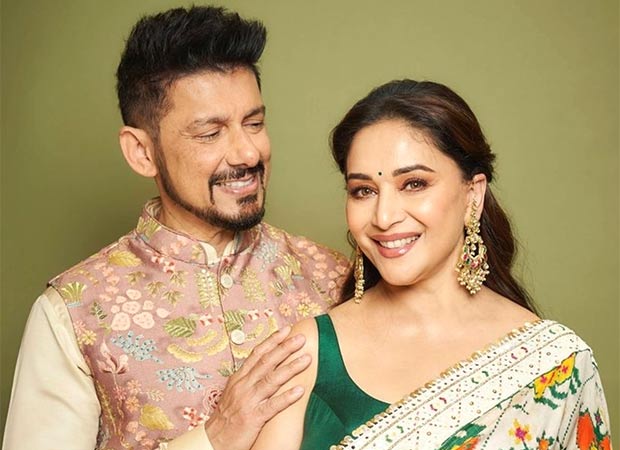
The conversation, peppered with nostalgia, warmth, and gentle humor, offered audiences a rare glimpse into Madhuri’s private world—a space shaped not just by fame and artistry, but by deeply rooted Indian values, maternal wisdom, and the quiet power of shared meals. At its heart was a touching anecdote about her mother teaching her husband, Dr. Shriram Nene, how to cook—a moment that beautifully bridged cultures, generations, and philosophies of life.
Food as an Emotional Language in Indian Homes
For Madhuri Dixit, food has never been merely about sustenance. It has always been a language of affection, care, and emotional bonding—something many Indians instinctively understand. Speaking on the show, Madhuri reflected on how Indian mothers and grandmothers pour love into every dish they prepare, often without realizing the depth of the legacy they are creating.
“I always feel food is love,” Madhuri said, her voice carrying both conviction and nostalgia. “Our mothers, our grandmothers, they make food with so much love.”
In Indian households, the kitchen is often the emotional center of the home. Recipes are not written down but passed through observation, intuition, and years of lived experience. A pinch of spice here, a handful of lentils there—measurements guided by instinct rather than precision. For Madhuri, this philosophy was personified by her mother, Snehlata Dixit, whose approach to cooking mirrored her approach to life: intuitive, generous, and deeply nurturing.
When Cultures Met Over the Kitchen Counter
One of the most endearing parts of Madhuri’s recollection was the dynamic between her mother and her husband, Dr. Shriram Nene. A cardiovascular surgeon trained in the United States, Dr. Nene represents a world of scientific accuracy, structured thinking, and exact measurements. When he expressed interest in learning how to cook Indian food, he approached it like a recipe-driven experiment—asking for teaspoons, tablespoons, and precise quantities.
But Madhuri’s mother had an entirely different philosophy.
“My mom used to say, ‘Put a handful of this, put a pinch of that,’” Madhuri recalled with a smile. “He used to say, one teaspoon or half a teaspoon, and she always responded saying, ‘Not like this. Put it according to your instinct.’”
The anecdote may seem lighthearted on the surface, but it carries a deeper cultural truth. Indian cooking, especially in traditional households, is rarely about rigid formulas. It’s about feeling the food, understanding its rhythm, and trusting one’s senses. In many ways, Snehlata Dixit wasn’t just teaching her son-in-law how to cook—she was introducing him to an Indian way of living, where intuition often takes precedence over instruction.
A Mother’s Love That Transcended Roles
What made the moment even more special was the fact that Snehlata Dixit embraced her son-in-law’s curiosity with openness and warmth. Rather than dismissing his structured approach, she gently guided him toward instinct-based cooking, allowing space for learning, mistakes, and growth.
This interaction speaks volumes about the kind of woman Snehlata Dixit was—welcoming, patient, and deeply loving. She wasn’t merely a mother to Madhuri; she was a cultural anchor, a silent teacher, and a nurturing presence who understood that love is best expressed through everyday acts.
By sharing this memory, Madhuri inadvertently highlighted a truth many often overlook: it is in these ordinary, domestic moments that the strongest emotional bonds are formed. Teaching someone to cook, sharing meals, and passing down culinary traditions are all acts of profound emotional generosity.
Remembering Snehlata Dixit: A Quiet Pillar of Strength
Madhuri Dixit’s mother, Snehlata Dixit, passed away in March 2023 at the age of 90. Her passing marked the end of an era for the Dixit family, but her values, lessons, and love continue to live on through memories like these.
Though she largely stayed away from the limelight, Snehlata Dixit was known to be a grounding force in Madhuri’s life. Even as her daughter rose to unparalleled stardom in the 1990s, she remained deeply connected to her family roots—a trait she often credits to her upbringing.
The memory shared on Khaane Mein Kya Hai? was not just a nostalgic recollection; it was a tribute. A tribute to a mother who believed that feeding someone was one of the purest forms of love, and that teaching was best done through patience rather than instruction.
Food, Family, and Feminine Wisdom
There is something profoundly feminist about Snehlata Dixit’s approach to food and teaching. She didn’t position cooking as a gendered responsibility but as a life skill—something anyone willing to learn could master. By teaching her son-in-law, she quietly dismantled traditional stereotypes without making a statement.
Madhuri’s recounting of this memory also subtly reinforces the idea that food is emotional labor—often performed by women, frequently unacknowledged, yet deeply impactful. In sharing this story on a public platform, Madhuri elevated these everyday acts into moments worthy of reflection and respect.
A Rare Glimpse into Madhuri Dixit’s Private World
Celebrities often curate their public personas carefully, but moments like these allow audiences to see the human behind the icon. Madhuri Dixit, often celebrated for her elegance, dance prowess, and cinematic brilliance, appeared as a daughter reminiscing about her mother, a wife smiling at her husband’s earnestness, and a woman rooted in her cultural values.
The warmth of her storytelling resonated deeply with viewers, many of whom saw reflections of their own homes, mothers, and kitchens in her words. In a time when public conversations are often dominated by controversy and spectacle, this gentle, heartfelt memory felt refreshingly real.
From Home Kitchens to Dark Characters: A Professional Contrast
While Madhuri’s personal anecdotes evoked warmth and comfort, her professional journey currently stands at a fascinating crossroads. The actor is presently headlining Mrs Deshpande, a JioHotstar web series that marks one of the most daring departures of her career.
In the series, Madhuri portrays a serial killer—a role far removed from her traditionally graceful and emotionally expressive screen image. Speaking earlier to Bollywood Hungama, Madhuri acknowledged the challenge and risk involved in taking on such a role, admitting that it was director Nagesh Kukunoor’s vision that ultimately convinced her.
Trusting the Director’s Vision
“He is a fantastic filmmaker,” Madhuri said, praising Kukunoor. “I have seen his films, I have seen his series, and I’m very impressed with his work.”
For an actor of Madhuri’s stature, choosing a role isn’t merely about novelty—it’s about trust. She explained that Kukunoor’s clarity of vision and methodical approach gave her the confidence to explore unfamiliar territory.
“I think he works very doggedly,” she added. “His vision is very clear when he makes a film.”
This clarity was crucial in helping Madhuri overcome her initial hesitation. Portraying a serial killer required her to tap into darker psychological spaces—an area she hadn’t explored extensively before.
Saying Yes to the Unknown
Reflecting on her decision-making process, Madhuri revealed that she initially agreed to hear the narration out of curiosity. But once she understood the depth and sensitivity with which the story would be handled, she felt reassured.
“It’s such a different role for me to play that I first of all said yes to hearing the narration,” she said. “And once I heard their vision, I was assured that it will be made in a very good way and I’ll be presented the way it should be done.”
This willingness to embrace discomfort and evolve as an artist speaks volumes about Madhuri’s commitment to her craft. Even after decades in the industry, she continues to challenge herself—proving that reinvention has no age limit.
Balancing Legacy and Reinvention
What makes Madhuri Dixit’s journey particularly compelling is her ability to balance legacy with reinvention. On one hand, she cherishes memories of her mother teaching life lessons through cooking. On the other, she is unafraid to explore morally complex, unconventional characters on screen.
Both aspects stem from the same foundation: a strong sense of self shaped by family, discipline, and emotional intelligence. Whether she is talking about instinct-driven cooking or instinct-driven acting choices, Madhuri’s philosophy remains consistent—trust the process, respect the craft, and stay rooted.
Why This Story Resonates So Deeply
The reason Madhuri Dixit’s anecdote struck such a chord lies in its universality. Almost everyone has a memory of a mother or grandmother standing over a stove, explaining recipes in vague but loving terms—“thoda sa,” “ek chutki,” “jab tak khushboo aaye.”
These moments are about more than food. They are about care, patience, and the passing down of values that cannot be quantified. By sharing her memory, Madhuri reminded audiences that love often lives in the smallest, quietest gestures.
A Gentle Reminder in a Noisy World
In today’s world of viral headlines and performative storytelling, Madhuri Dixit’s simple declaration—“Food is love”—feels almost revolutionary. It reminds us to slow down, to honor our roots, and to recognize the emotional labor that sustains families.
Her story is not just about a mother teaching a son-in-law how to cook. It’s about how love is taught, how cultures blend, how instincts matter, and how memories become legacies.
Conclusion: Love Served Warm
Madhuri Dixit’s warm recollection of her mother and husband in the kitchen serves as a powerful metaphor for life itself. Love, like food, doesn’t always follow exact measurements. It requires intuition, patience, and a willingness to give without expecting anything in return.
As Madhuri continues to explore new creative heights with Mrs Deshpande, her grounding in family values remains unchanged. And perhaps that is her greatest strength—the ability to move forward while carrying the warmth of home within her.
In the end, long after the applause fades and the screens go dark, it is these stories—of mothers, kitchens, and shared meals—that linger. Because food is not just food. Food is love.