 by
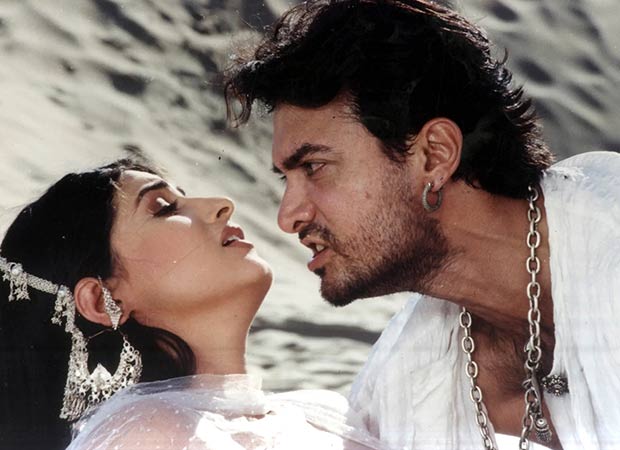
by In Bollywood, where careers are built on carefully chosen scripts and calculated risks, Aamir Khan has always stood apart. Known for his selective approach and deep involvement in every project he undertakes, Aamir earned the reputation of being a perfectionist long before the term became fashionable. His filmography is often cited as one of the most disciplined among mainstream Hindi film actors. Yet, even the most carefully curated careers have their exceptions. One such exception is Mela, a film that completed twenty five years on January 7.
Unlike most of his films, Mela was not driven by creative ambition or a desire to push cinematic boundaries. Instead, it was rooted in something far more personal. Aamir Khan has openly admitted that he agreed to do Mela for one reason only, to help launch his younger brother Faisal Khan in Bollywood. This revelation adds a deeply human layer to a film that was otherwise dismissed as a loud, outdated and unsuccessful venture.
At the time Mela was conceived, Aamir Khan was already a major star. He had proven his ability to balance commercial success with meaningful cinema. His choices reflected a clear understanding of his brand as an actor who valued quality over quantity. That is precisely why Mela came as a surprise to many. The film did not align with the image Aamir had so carefully built. However, family loyalty outweighed professional caution.
Mela was designed as a mass entertainer, borrowing heavily from the template of classic Hindi action dramas. Many critics later described it as an exaggerated reworking of Sholay. Aamir played a flamboyant, talkative character meant to echo Dharmendra’s Veeru, while Faisal was cast in a serious, tightly controlled role inspired by Amitabh Bachchan’s iconic Jai. The intention was clear. Aamir’s star power would draw audiences, while Faisal would be positioned as a strong, brooding hero capable of carrying future projects.
Unfortunately, the execution did not match the ambition. By the time Mela released in 2000, audience tastes had evolved. Viewers were moving toward more grounded storytelling, and the film’s exaggerated performances and dated narrative failed to connect. Critics were harsh, and the box office response was even harsher. Mela was declared a commercial failure within weeks of its release.
For Aamir Khan, the failure of Mela was not just another professional setback. He has repeatedly spoken about how deeply every film affects him. Unlike actors who move quickly from one project to another, Aamir invests emotionally in his work. When Mela did not perform as expected, the disappointment was profound.
He later acknowledged that the film’s failure affected both him and his brother. While Faisal bore the brunt of the professional fallout, Aamir too felt the weight of unmet expectations. The entire team had worked hard, and the collective sense of loss was difficult to ignore. For an actor who takes pride in ensuring that his films achieve their full potential, Mela represented an uncomfortable reminder that intention alone cannot guarantee success.
The years following Mela proved to be even more painful. Faisal Khan struggled to establish himself in the industry. His career failed to gain momentum, and personal challenges began to surface. In a shocking turn of events, Faisal later accused Aamir Khan of serious misconduct, including illegal confinement and deliberate attempts to sabotage his career. These allegations stunned the industry and deeply saddened fans who admired Aamir not only as an actor but also as a family-oriented individual.
Aamir’s response to these accusations was marked by restraint and sorrow rather than anger. He expressed a sense of helplessness, acknowledging that conflicts within a family are often the most painful to endure. His statement, in which he remarked that one can fight the world but not one’s own family, revealed a vulnerability rarely seen in public figures of his stature.
The controversy surrounding the brothers inevitably changed how Mela was viewed in retrospect. What was once considered merely a failed film began to symbolize a fractured family relationship and the emotional risks of mixing personal bonds with professional decisions. In many ways, Mela became a cautionary tale about the complexities of nepotism, not as a privilege but as a burden.
In the current era, where discussions around nepotism dominate conversations about Bollywood, Mela offers a different perspective. Aamir did not attempt to manufacture stardom for his brother through repeated opportunities or industry pressure. He made a single, high-stakes decision driven by brotherly responsibility. When that decision failed, the consequences were severe and long-lasting.
Despite everything that followed, Aamir Khan has maintained that he does not regret doing Mela. This admission is significant. For someone as self-critical as Aamir, the absence of regret does not imply satisfaction with the outcome. Instead, it reflects his belief that standing by family was the right thing to do at the time. In his value system, personal integrity holds more weight than professional perfection.
Looking back, Mela also appears to have reinforced Aamir Khan’s already strict approach to filmmaking. After the film’s release, he became even more cautious about script selection. His post Mela filmography reflects a renewed commitment to strong storytelling and meaningful cinema. Each project was chosen with greater care, ensuring that emotional impulse would never again override creative judgment.
From a purely cinematic standpoint, Mela has not undergone any major re-evaluation. It is neither celebrated nor rediscovered as an underrated classic. Its flaws remain evident, and its shortcomings are widely acknowledged. Yet, its importance lies not in its artistic merit but in what it reveals about the man behind the star image.
Twenty five years later, Mela stands as a reminder that even the most disciplined actors make decisions driven by emotion. It shows that failure does not always stem from arrogance or miscalculation. Sometimes, it comes from love, loyalty and hope. In an industry that often prioritizes self-interest, Aamir Khan’s decision to risk his reputation for his brother remains a rare example of personal sacrifice.
The story of Mela also humanizes Aamir Khan in a way few of his successful films do. It strips away the image of the flawless strategist and reveals a brother willing to take a professional hit for family. That vulnerability adds depth to his legacy, reminding audiences that behind the accolades and achievements is a man shaped by relationships, responsibilities and regret.
As Mela completes twenty five years, its legacy remains complicated. It is remembered as a commercial failure, a critical misfire and a turning point in a fractured sibling relationship. At the same time, it stands as evidence of Aamir Khan’s willingness to choose family over career at a crucial moment in his life.
One often overlooked aspect of Mela is the emotional pressure Aamir Khan faced while promoting the film. Known for being honest in interviews, he still carried the responsibility of standing by the project publicly, even when criticism poured in. For an actor who values credibility, defending a film he internally knew had flaws was not easy. Yet, he never distanced himself from Mela during its release. This silent endurance reflected his commitment to the people involved, especially his brother. It also revealed how professional dignity sometimes requires standing firm even when outcomes are disappointing.
Another significant element of Mela’s journey is how it influenced audience expectations from Aamir Khan. Until then, viewers had begun associating him with intelligent, content-driven cinema. Mela disrupted that trust momentarily, creating a visible disconnect between the actor’s image and the film’s tone. However, this temporary setback also sharpened Aamir’s understanding of his audience. He realized that viewers did not merely watch his films for entertainment but trusted him as a curator of quality. This realization later played a crucial role in shaping his landmark projects in the years that followed.
The music of Mela, though often overshadowed by the film’s failure, deserves separate mention. Composed by Anu Malik, the soundtrack had moments of popularity, especially among rural audiences. Songs like the title track captured the earthy spirit the filmmakers aimed for. However, even a successful album could not compensate for weak storytelling. This contrast highlighted a recurring truth in cinema that individual strengths cannot rescue a film lacking narrative cohesion. For Aamir, this reinforced the importance of holistic filmmaking rather than relying on isolated commercial elements.
Mela also marked one of the earliest instances where Aamir Khan openly discussed failure without defensiveness. At a time when stars rarely acknowledged misjudgments, his candid reflections stood out. He did not blame the audience, critics, or circumstances. Instead, he accepted responsibility and spoke about disappointment with maturity. This approach strengthened his credibility rather than weakening it. Over time, fans began to appreciate his transparency, recognizing that occasional failure did not diminish his integrity but enhanced his authenticity as an artist.
From an industry perspective, Mela became a reference point for discussions around launching family members. Producers and actors often cite it as an example of how even strong backing cannot guarantee success. Talent, timing, and audience connection remain irreplaceable factors. The film subtly shifted how insiders approached such launches, encouraging more cautious planning. In that sense, Mela’s impact extended beyond its runtime. It influenced conversations about responsibility, realism, and the risks associated with emotional decision-making in a competitive industry.
Finally, Mela’s twenty five year milestone invites a broader reflection on how time reshapes narratives. What once seemed like a simple box office failure now reads as a layered story of ambition, loyalty, and unintended consequences. With distance, judgment softens and understanding deepens. The film is no longer viewed in isolation but as part of Aamir Khan’s evolving journey. It reminds audiences that careers are not defined by perfection alone, but by how individuals respond to missteps, remain accountable, and continue moving forward with clarity and purpose
In the end, Mela may not be a film Aamir Khan is proud of artistically, but it is one he stands by emotionally. And perhaps that is what makes its story worth revisiting after all these years. Some films succeed at the box office, others fail. But a few leave behind stories that reveal far more than numbers ever could.