 by
by In a cinematic landscape often dominated by formulaic comedies and predictable thrillers, Happy Patel: Khatarnak Jasoos arrives as a daring attempt to blend espionage, absurd humor, and a personal journey of self-discovery. Directed by Vir Das and Kavi Shastri, the film thrives on quirky characters, madcap situations, and over-the-top comedy that sometimes hits brilliantly and occasionally falters. With its unique mix of slapstick, adult humor, and Bollywood references, it is a movie that dares to be different—even if it only appeals to a niche audience.
Movie Synopsis: A Rookie Spy’s Chaotic Adventure
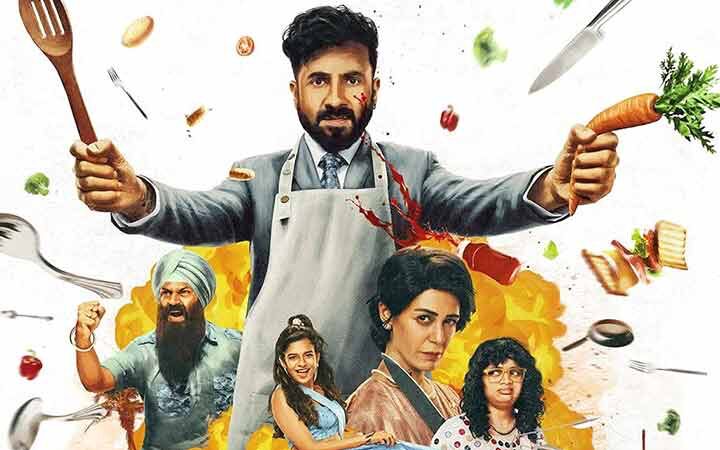
At the center of this narrative is Happy Smith Waisley, played by Vir Das, a young and eager cook living in Tunbridge Wells, England. Happy lives with his adopted fathers, Roger (Andrew Sloman) and Sebastian (Simon Fielder), who are both professional spies. Despite his repeated applications to MI-7, the British intelligence agency, Happy fails to secure a position—seven failed attempts later, his optimism and enthusiasm remain intact, giving the audience both sympathy and laughter.
The plot takes a turn when MI-7 chief Kenneth Mole (Benedict Garrett) learns about the disappearance of a British citizen, Beatrice Faufferbaum (Maya Rachel McManus), from Goa, India. Mole, for reasons blending professional duty with personal intrigue, decides to entrust the mission to Happy. Excited by the opportunity, Happy prepares to embark on what he expects to be a routine spy mission.
However, Happy’s world is upended when his fathers reveal a shocking truth: he was adopted from Panjor, Goa, in 1991 after his mother, Sakhubai Patel (Sumukhi Suresh), was killed in a crossfire. This revelation transforms his journey from a professional assignment into a deeply personal quest, as he discovers his Indian roots and adopts the name “Happy Patel.”
Armed with spy training, Happy travels to Panjor, a seemingly quiet town with more than its fair share of eccentricities. The town is under the rule of Mama (Mona Singh), a dangerous and unpredictable woman who quickly becomes Happy’s nemesis. Fortunately, Happy is not entirely alone; he is assisted by three local allies: Geet (Sharib Hashmi), a restaurateur with comedic undertones; Roxy (Srushti Tawde), a tech expert; and Rupa (Mithila Palkar), a vivacious dancer. Together, this motley crew navigates Panjor’s oddities, confronts Mama’s wrath, and unravels the mystery of Beatrice’s disappearance, all while generating chaos and laughter in equal measure.
Story and Screenplay: Madcap Humor with Occasional Misfires
The story, co-written by Vir Das and Amogh Ranadive, is wacky, unpredictable, and deliberately over-the-top. The screenplay thrives on chaotic sequences, absurd twists, and slapstick comedy, keeping audiences on their toes. While some sequences are brilliantly executed, others feel slightly forced, creating an uneven rhythm in storytelling.
The dialogue is one of the film’s strongest elements. Clever one-liners, witty exchanges, and organically inserted adult humor give the film a distinct flavor. Unlike many Indian comedies that rely on overused punchlines or slapstick alone, Happy Patel finds its humor in character interactions and absurd situations. While some jokes land perfectly, others miss the mark, demonstrating the inherent challenge of balancing madcap comedy with narrative cohesion.
The film also uses meta-cinematic references to enhance entertainment value. References to Bollywood classics and Delhi Belly (2011), in which Vir Das was associated, add an additional layer of enjoyment for cinephiles. These references are seamlessly woven into the story rather than feeling like forced cameos, enriching the overall cinematic experience.
The film’s climax—a dance face-off between Happy and Mama—is emblematic of the movie’s chaotic charm. Over-the-top, visually flamboyant, and humorously absurd, the sequence is a spectacle that encapsulates the film’s energy. However, certain subplots, such as Happy’s viral video or Mama’s peculiar obsession with serving a cutlet, feel underdeveloped, which slightly detracts from narrative cohesion.
Direction: Vir Das and Kavi Shastri’s Vision
Co-directors Vir Das and Kavi Shastri bring a unique and experimental sensibility to the film. Their direction ensures that the chaotic narrative remains engaging rather than overwhelming. The balance between humor, action, and character development is carefully maintained, although minor lapses in pacing and scene execution are noticeable.
The directors handle action sequences with a stylistic approach rather than excessive violence, which is a pleasant surprise given the current trend in adult comedies to rely on gore for shock value. They also emphasize character-driven comedy, allowing humor to emerge organically from interactions rather than purely situational setups.
The portrayal of Panjor—a sleepy yet quirky town—is visually captivating. Colorful streets, eccentric residents, and odd customs contribute to a cinematic world that feels both believable and absurd. The directors’ handling of comic timing, chaotic chases, and zany confrontations is largely effective, demonstrating a clear understanding of what keeps an audience entertained in a madcap comedy.
Performances: A Strong Ensemble Cast
The performances in Happy Patel: Khatarnak Jasoos are a major highlight. Vir Das, despite juggling writing and directing responsibilities, shines as Happy. His blend of innocence, clumsiness, and wit makes the character endearing. His comedic timing, particularly with adult humor, is flawless, showcasing his versatility as an actor.
Mona Singh, as the formidable Mama, delivers a commanding and memorable performance. Her portrayal balances menace and charisma, making her a villain worth rooting against. Mithila Palkar, playing Rupa, impresses with her charm, energy, and subtle emotional depth. Sharib Hashmi as Geet contributes warmth and humor, despite limitations in character writing, while Srushti Tawde makes a lasting impact as the tech-savvy Roxy.
The supporting cast—including Andrew Sloman, Simon Fielder, Benedict Garrett, and Maya Rachel McManus—provides consistent performances that enrich the narrative. Bacchan Panchera’s role as an old waiter delivers comedic relief, while cameo appearances by Aamir Khan and Imran Khan offer delightful surprises. Sumukhi Suresh, Meiyang Chang, and Sanjeev Kapoor add texture and variety to the ensemble, creating a multi-layered cast that keeps the film engaging.
Music and Background Score: Hits and Misses
The film’s music, though intended to be a standout element, delivers mixed results. Unlike Delhi Belly, whose soundtrack achieved cult status, Happy Patel struggles to create long-lasting musical impressions. Songs like “Alpha Male,” “Banda Tere Liye,” and “Chaanta Tera” stand out due to their visual appeal and choreography, but tracks like “Phukt Apan,” “Cous Cous,” “Goa Aaja,” and “Hindustani Hoon” are largely forgettable.
The background score, composed by Shalom Benjamin, Nirmit Shah, and Parth Pandya, complements the film’s madcap tone, enhancing tension, action, and comedy. While the score is functional and supports the narrative, it does not reach the innovative heights of similar genre-defining films.
Cinematography and Technical Aspects
Himman Dhamija, along with Siddharth Vasani, Tanveer Mir, and Nagaraj Rathinam, delivers cinematography that is bright, playful, and visually appealing. The camera work effectively captures chaotic chase sequences, comedic moments, and the colorful yet peculiar world of Panjor.
Action choreography by R. P. Yadav is restrained, avoiding unnecessary gore while maintaining excitement. Production design by Tapas Paren Singha, supported by Yashika Gor and Parth Varshney, is imaginative and visually engaging. Costumes by Parakriti Rajpurohit effectively distinguish characters and enhance the film’s quirky tone. Editing by Daanish Shastri ensures brisk pacing, although some sequences could benefit from tighter cuts to maintain comedic impact.
Strengths of the Film
- Engaging Humor: Sharp one-liners, slapstick, and absurd sequences ensure consistent entertainment.
- Memorable Characters: Each character is distinct and adds depth to the narrative.
- Meta References: Clever Bollywood nods enrich the viewing experience for cinephiles.
- Unique Genre Blend: Combining spy narrative with comedy creates a novel cinematic experience.
- Strong Performances: The cast’s charm and talent elevate the material, making even weaker scenes enjoyable.
Weaknesses and Limitations
- Inconsistent Humor: Certain jokes fail to land, creating minor disruptions in pacing.
- Underwhelming Music: Soundtrack lacks memorable songs, reducing long-term appeal.
- Niche Appeal: The adult-centric, quirky humor may not resonate with a mainstream audience.
- Underdeveloped Subplots: Some storylines, such as Happy’s viral video or Mama’s cutlet obsession, feel disconnected.
- Limited Box Office Potential: Low pre-release traction and niche content may constrain commercial success.
Comparative Analysis: Positioning in Indian Cinema
Happy Patel: Khatarnak Jasoos occupies a unique position in contemporary Indian cinema. By blending elements from classic spy comedies like The Pink Panther with a distinctly Indian sensibility, it creates a refreshing departure from formulaic Bollywood comedies. Its irreverence, absurd humor, and unpredictable narrative evoke memories of Delhi Belly (2011), a film also known for its chaotic humor and adult comedy.
The protagonist’s journey—from an incompetent, clumsy spy aspirant to a young man embracing his heritage and personal growth—adds depth rarely seen in similar comedies. This balance of humor and heart differentiates the film from other slapstick-heavy, one-note comedies.
Audience Takeaways
For viewers, Happy Patel: Khatarnak Jasoos promises a chaotic yet entertaining ride. Its humor, quirky characters, and unpredictable plotlines ensure that audiences remain engaged. Emotional moments, particularly Happy’s journey of self-discovery, provide balance to the madcap chaos.
However, the film’s niche humor and adult-centric comedy may not appeal to all viewers. Those seeking conventional narrative structures, musical hits, or universally accessible humor may find some elements lacking. Ultimately, the film rewards audiences willing to embrace its eccentricity and over-the-top comedic charm.
Conclusion: A Quirky, Endearing, and Hilarious Spy Comedy
Happy Patel: Khatarnak Jasoos exemplifies Indian cinema’s growing willingness to experiment with genre, narrative, and humor. While it is not without flaws—such as inconsistent humor, underwhelming music, and underdeveloped subplots—it delivers a memorable experience through its chaotic charm, unique characters, and laugh-out-loud moments.
The film’s strengths lie in its performances, particularly Vir Das’s lovable portrayal of Happy, Mona Singh’s formidable Mama, and Mithila Palkar’s vivacious Rupa. The combination of slapstick, adult humor, and Bollywood references ensures that the film is both entertaining and memorable for audiences who appreciate unconventional comedies.
In a market dominated by formulaic storytelling, Happy Patel: Khatarnak Jasoos dares to be different. It celebrates quirky characters, embraces absurdity, and tells a story about identity, heritage, and personal growth. For cinephiles and comedy lovers willing to embrace chaos, this film offers a uniquely hilarious spy adventure that is both entertaining and refreshingly unpredictable.