 by
by A light‑hearted clip of Bollywood star Varun Dhawan goofing around inside a Mumbai Metro train has sparked far more than laughter online — it prompted a public safety advisory and a legal warning from the Maha Mumbai Metro Operation Corporation Ltd (MMMOCL). What may have started as simple playful antics during the actor’s promotional tour for Border 2 rapidly turned into a bigger conversation around public safety, celebrity influence, legal responsibility, and commuter norms.
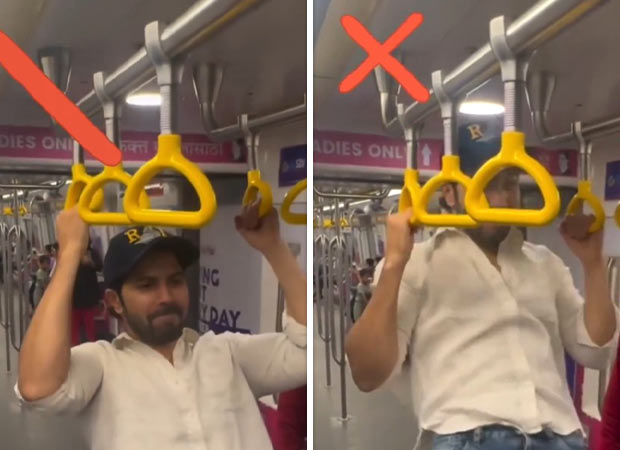
On January 26, 2026, social media users widely shared a video showing Dhawan riding a metro coach, where he was filmed hanging from the overhead grab handles — fixtures designed strictly for steadying standing passengers — and even attempting pull‑ups as the train moved. The video quickly went viral across X (formerly Twitter), Instagram and other platforms, drawing both amusement and sharp criticism.
However, what caught public attention wasn’t only the actor’s playful behaviour, but MMMOCL’s strongly worded advisory that followed, emphasising that such actions not only violate safety protocols but could also lead to legal penalties under the Metro Railways (Operations and Maintenance) Act, 2002.
The Viral Clip That Triggered a Safety Advisory
The series of events began innocuously. Varun Dhawan, riding high on the box‑office success of Border 2, chose Mumbai Metro for a commute during his promotional activities — an unplanned and candid mode of travel that made for a perfect social media story. He initially posted an Instagram story inviting fans to guess which theatre he was heading to.
But soon, other clips started circulating that showed the actor holding onto a vertical rod and grab handles, and playfully hanging or even attempting pull‑ups inside the moving train. The scene — initially appearing light‑hearted — took a serious turn when authorities weighed in.
Mumbai Metro’s response was swift and pointed. On its official social media profile, the corporation shared the clip with a message that mixed caution with tongue‑in‑cheek humour, calling out Dhawan directly:
“This video should have come with a disclaimer like the ones in your action movies, @Varun_dvn — Do Not Try This On Maha Mumbai Metro. We get it, it is cool to hang out with friends inside our metros but those grab handles are not for hanging… Acts like these are punishable…”
The post concluded with a clear call to action for all commuters: “So folks, hang out, but don’t hang in there. Travel responsibly on Maha Mumbai Metro.”
Metro Railways Act, 2002 — What the Law Says
While the advisory’s humorous tone made it instantly shareable, the underlying message was serious. The Metro Railways (Operations and Maintenance) Act, 2002 governs conduct within metro properties across India and outlines penalties for actions that cause nuisance, damage to property, or compromise safety.
According to the MMMOCL’s directive, hanging from handles and encouraging others to do so — even in a light‑hearted context — could be interpreted as causing nuisance or risk to public infrastructure. The advisory explicitly noted that such behaviour may attract penalties and even imprisonment, depending on the gravity of the offence.
Metro grab handles and vertical bars aren’t engineered to withstand the entire weight of a hanging passenger or the forces exerted during pull‑ups — these supports are meant to help standing commuters maintain balance during movement. Excessive stress on them could weaken fixtures over time or lead to breakage, potentially injuring others nearby.
By invoking legal provisions, MMMOCL’s response served not only as a specific warning but also as a general reminder that public transport infrastructure has safety standards that must be respected by all users, celebrity or not.
Celebrity Influence and Public Behaviour
What makes this incident notable is not just the act itself, but what it reveals about celebrity influence on public behaviour. When a public figure like Varun Dhawan — with millions of followers — engages in a seemingly harmless stunt, fans and especially younger audiences may be tempted to imitate it without grasping the safety implications.
Some social media users pointed out that if stars are shown pulling stunts in public transport, it might inadvertently encourage fans to do the same, potentially leading to accidents or unsafe travel behaviour. Others emphasised fairness, questioning whether the actor would face any consequences if regular commuters behaved similarly.
The broader conversation taps into larger questions:
- Do celebrities have extra responsibility in how they behave in public spaces?
- Should public figures be held to the same standards — or higher — when it comes to safety norms?
- Does social media visibility amplify risky behaviour if not addressed properly?
While opinions vary widely online, it’s clear that the metro advisory struck a chord because it applied established law to a widely shared visual moment, reminding audiences that nobody is above public safety rules and legal conduct.
Role of Public Transport Authorities in Ensuring Safety
The MMMOCL’s public warning underscores the vital role that transport authorities play in keeping commuters safe. Public transport systems like the Mumbai Metro are designed with strict safety protocols — not merely as guidelines, but as enforceable standards that protect thousands of daily riders.
By reposting the video and appending a legal advisory, MMMOCL effectively used a trending online moment to reinforce its safety messaging. Instead of allowing the clip to circulate without context, the authority turned it into a teachable moment for the public.
The message — that metro passengers can socialize and enjoy their commute, but must travel responsibly — reflects a broader social contract: public infrastructure is shared and governed by rules that ensure everyone’s safety and dignity. Handling rail property with care isn’t just a legal obligation, but a civic one.
Celebrity Publicity vs Public Safety: Where’s the Line?
While many fans enjoyed the viral clip as a humorous behind‑the‑scenes moment of Dhawan’s Border 2 promo, authorities and some commuters saw deeper implications.
This incident highlights a tension often seen in viral celebrity content: the fine balance between publicity and responsibility.
Varun Dhawan’s use of the metro system — a space normally associated with everyday commuters — humanised the star and likely drew positive reactions for intentionally travelling like a regular rider. Yet, when that relaxed, candid vibe tipped into unsafe behaviour, reaction turned critical.
Celebrities have increasingly blurred boundaries between performance and everyday life, especially through social media. A casual metro ride might seem unrehearsed, but once shared with millions, it becomes a form of influence — with all the responsibilities that come with it.
Public figures don’t surrender their agency when they enter public spaces; in fact, their conduct signals norms to others. Whether it’s road safety, decorum in shared spaces, or use of public infrastructure, celebrity behavior can set patterns that fans might adopt — willingly or unknowingly.
Public Reaction: Support, Criticism, and Debate
The reaction online was mixed and robust. Many praised the metro authority for being firm and fair, arguing that rules should apply equally to everyone — including high‑profile personalities. Some netizens pointed out that actors shouldn’t be exempt from standards of conduct, and that public safety isn’t optional.
Others expressed curiosity about whether a fine or disciplinary action would actually be enforced, questioning if celebrities receive preferential treatment compared to ordinary citizens who might face immediate penalties for similar behaviour.
Yet another segment of commentators used humour to underscore the advisory’s memorable warning — “Hang out, but don’t hang there” — likening it to sarcastic safety messages seen in action films or public service announcements. Many appreciated the playful-yet‑serious tone that made the warning both memorable and informative.
Overall, the incident spurred broader discussion about celebrity conduct, public safety messaging, and how authorities can leverage viral moments to reinforce civic norms without alienating commuters or fans.
Varun Dhawan’s Silence So Far
As of now, Varun Dhawan has not publicly responded to the advisory or issued a statement regarding the viral video or the Mumbai Metro warning. His social media activity has been largely focused on Border 2 promotions and engagement with fans about the film’s box office momentum.
Whether the actor chooses to address the metro incident directly remains to be seen. A response could range from a light‑hearted clarification to a more serious acknowledgment of safety concerns — but his silence so far suggests a possible strategy of letting the advisory and public discussions speak for themselves.
If Dhawan does respond in the future, it will likely draw even more attention to the interaction between celebrity influence and public safety expectations.
Border 2 and the Context of the Incident
It’s worth noting that this incident unfolded during a pivotal moment for Varun Dhawan’s career — the release and promotion of Border 2, a sequel to the iconic 1997 war drama Border. The film, starring a lineup of prominent actors including Sunny Deol, Diljit Dosanjh, and Ahan Shetty alongside Dhawan, has been performing strongly at the box office, crossing significant revenue milestones.
His choice to take the metro — ostensibly to beat traffic en route to a surprise visit to a theatre screening — reflects both a spontaneous promotional tactic and a relatable public gesture. However, the unexpected turn into controversy shows how an ordinary act can become extraordinary when amplified by social media and celebrity status.
Safety First: A Broader Message for Commuters
At its core, the metro advisory does more than caution one actor; it reinforces a broader public safety message: —
✔ Metro infrastructure is designed with specific safety purposes.
✔ Actions that compromise passenger safety or damage property are not trivial, even if light‑hearted.
✔ Legal consequences can follow from behaviour that causes nuisance or risk.
✔ Public transport spaces must be respected by all, regardless of social status or fame.
As MMMOCL reminded passengers, it’s perfectly fine to enjoy your commute, interact with friends, or use the metro as a social space — but dangerous stunts or inappropriate actions are never acceptable.
By publicly addressing the viral clip, the authority not only educated commuters about legal and safety norms, but also sent a message that accountability applies uniformly — from everyday riders to high‑profile personalities. This approach can help curb imitative risky behaviour often seen when viral content spreads without context or caution.
Lessons from a Viral Moment
What initially seemed like a light celebrity moment ultimately became a catalyst for discourse on public safety, laws, and social influence. Several lessons emerge:
1. Public Behaviour Has Consequences
Even innocuous actions on shared infrastructure can attract legal and safety implications if they breach established norms.
2. Celebrity Conduct Matters
Stars with large followings inadvertently shape public behaviour — and when they act in public spaces, the impact goes far beyond a single moment on camera.
3. Authorities Can Leverage Virality Responsibly
Instead of ignoring the viral post, MMMOCL used it as an opportunity to remind riders of safety protocols — blending humour with seriousness for maximum impact.
4. Public Awareness Is Key to Safer Commutes
Educating commuters about what is safe and what isn’t helps create a culture of responsibility — where rules aren’t just enforced, but understood and respected.
Conclusion: Accountability, Safety, and Shared Responsibility
The viral video of Varun Dhawan hanging inside a Mumbai Metro coach may have begun as a playful moment, but its aftermath has brought attention to the responsibilities associated with public conduct in shared spaces. Through its advisory, Maha Mumbai Metro Operation Corporation Ltd sent a firm message that safety and legal norms apply to everyone — celebrities included — and that public transport infrastructure exists to be used correctly and safely.
As the conversation continues online, this episode may well become a case study in how viral content intersects with civic responsibility — and how authorities, influencers, and the public can engage with safety norms constructively. After all, urban public transit is a shared lifeline for millions, and maintaining its safety helps ensure a comfortable, secure commute for all.