 by
by In an industry often dazzled by volume—bigger sets, louder dialogues, grander gestures—Vicky Kaushal has done something quietly radical. He has built a career on trust. Trust that when he appears on screen, the performance will be honest. Trust that the character will be fully lived-in rather than performed. Trust that the emotion will emerge organically, without shortcuts or theatrics. And with Chhaava, that trust crystallizes into something even more formidable: a leading man who commands epic scale without sacrificing inner truth.
Vicky Kaushal’s rise has never followed the conventional Bollywood arc. There were no overnight stardom moments, no carefully manufactured image of invincibility. Instead, there has been a steady accumulation of credibility—role by role, choice by choice—until today, where his presence alone reassures audiences that they are in capable hands. Chhaava is not just another milestone in his filmography; it is a culmination of years spent refining craft, discipline, and restraint.
The Anti-Showoff Star
What makes Vicky Kaushal especially compelling in the contemporary star ecosystem is his resistance to spectacle-driven acting. In an era where leading men are often defined by slow-motion entries and punchline-heavy heroism, Kaushal opts for something far more difficult: emotional specificity. His performances rarely announce themselves. They unfold.
In Chhaava, a film that could easily tempt chest-thumping bravado and declamatory dialogue delivery, Kaushal chooses internalisation over amplification. His authority is not imposed—it is felt. His power comes not from swagger but from gravity. Even when the camera frames him against massive sets and sweeping visuals, his performance remains rooted, almost intimate. He allows the audience to lean in rather than pushing them back with volume.
This is a performer who understands that true dominance on screen doesn’t require constant assertion. Sometimes, it is the stillest presence in the room that commands the most attention.
Building Characters from the Inside Out
One of Kaushal’s defining strengths is his method of character construction. He does not rely on surface-level markers—costume, accent, posture alone—to establish identity. Instead, he begins internally: motivation, moral conflict, emotional history. The physicality follows.
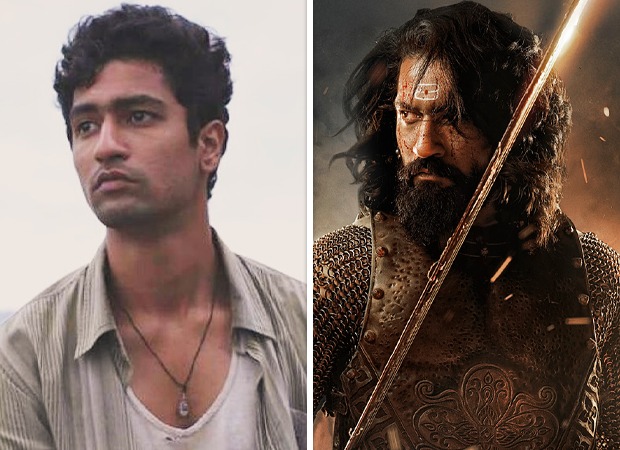
In Chhaava, this approach is unmistakable. His eyes often carry more narrative weight than his dialogue. A glance can suggest decades of inherited responsibility. A pause can convey strategic calculation or emotional doubt. His voice modulates between firmness and warmth, revealing a leader who understands that command and compassion are not mutually exclusive.
His body language is especially telling. The measured gait, the controlled gestures, the grounded stance—everything communicates a man shaped by legacy and obligation. Even in moments of aggression, there is restraint, as though the character is acutely aware of the consequences of excess. Kaushal doesn’t play rage as an explosion; he plays it as pressure building behind the eyes.
Resisting the Obvious Choice
Historical and period dramas often fall into predictable traps: exaggerated masculinity, declamatory speeches, heroic posturing designed to elicit applause. Kaushal consciously resists these impulses. In Chhaava, he chooses emotional truth over performative grandeur.
His silences are particularly striking. They are not empty pauses but active spaces—filled with doubt, strategy, grief, and reflection. When he withholds expression, it feels intentional rather than evasive. When he finally releases emotion, it lands with multiplied impact.
This restraint is what makes his portrayal muscular yet deeply humane. He plays a leader, but he never forgets that the leader is also a son shaped by inheritance, a husband shaped by intimacy, and a man shaped by impossible circumstances. The humanity never gets subsumed by the myth.
The Masaan Blueprint: Vulnerability Without Sentimentality
To understand why Chhaava feels like such a natural progression for Vicky Kaushal, one must return to Masaan—the film that first announced his arrival not as a star, but as a serious actor.
As Deepak, Kaushal delivered a performance steeped in quiet vulnerability. There was no pleading for sympathy, no melodrama. His grief unfolded in small, devastating increments. He understood that pain does not always scream; sometimes, it simply sits heavy in the chest.
That same philosophy echoes through his later work. Whether the emotional register is heartbreak, rage, patriotism, or leadership, Kaushal consistently avoids emotional shortcuts. He allows scenes to breathe, trusting the audience to meet him halfway.
From Steel to Softness:
URI
and Controlled Intensity
URI: The Surgical Strike could have easily reduced its protagonist to a symbol—an emblem of military might and national pride. Kaushal, however, infused the role with nuance. His Major Vihaan Singh Shergill was precise, disciplined, and resolute, but never mechanical.
What elevated the performance was his ability to let tenderness seep through the tough exterior. Small moments—concern for family, camaraderie with soldiers, quiet reflection—prevented the character from becoming a slogan. Even at peak intensity, Kaushal’s performance remained grounded in human stakes.
This balance between steel and softness has become one of his trademarks. He understands that strength on screen is most convincing when it coexists with vulnerability.
Manmarziyaan
: Chaos with a Pulse
If URI showcased discipline, Manmarziyaan revealed chaos. As Vicky Sandhu, Kaushal embodied recklessness, impulsiveness, and youthful bravado—but crucially, he never glamorised it without critique.
Behind the swagger lay insecurity. Behind the confidence lay fear of abandonment. Kaushal located the emotional wound beneath the character’s erratic behavior, making him frustrating yet painfully real. It was a performance that demanded tonal dexterity—romantic charm one moment, emotional volatility the next—and Kaushal navigated these shifts with instinctive ease.
The common thread, once again, was his refusal to play caricatures.
Mastery of Emotional Rhythm
What truly distinguishes Vicky Kaushal from many of his contemporaries is his understanding of emotional rhythm. He knows when to underplay and when to erupt. He senses when a scene demands restraint rather than release.
This instinct for modulation is what makes his performances feel seamless rather than showy. He doesn’t chase moments; he allows them to arrive. A broken voice often replaces a loud outburst. A lingering look often replaces a monologue.
In Chhaava, this rhythmic intelligence reaches a new level. Kaushal is not just performing within the film; he is anchoring its tonal spine. When his character tightens, the film tightens. When he softens, the narrative breathes. That degree of control is rare—and earned.
Carrying the Weight of Scale Without Being Crushed by It
Large-scale period films often overwhelm actors, reducing them to components within a grand visual design. Kaushal, however, remains the emotional axis of Chhaava. The scale enhances his performance rather than eclipsing it.
He understands that spectacle works best when grounded in character. The battles matter because the man fighting them matters. The stakes resonate because they are personal before they are political.
This ability to carry scale without being consumed by it is what makes him so dependable in ambitious projects. Filmmakers trust him not just to perform, but to stabilize the emotional architecture of the film.
Consistency Without Repetition
Across genres—indie dramas, patriotic thrillers, romantic chaos, biopics, and now a sweeping historical saga—Kaushal has achieved something few actors manage: consistency without sameness.
Each role introduces new physicality, new emotional textures, and new ideas of masculinity. He never appears to be coasting on past successes. Instead, every performance feels like a fresh inquiry into human behavior under pressure.
This is not an actor interested in branding himself through repetition. It is an actor invested in evolution.
Redefining Masculinity on Screen
Perhaps one of Kaushal’s most significant contributions to contemporary Hindi cinema is his redefinition of masculinity. His characters are strong without being emotionally constipated. They lead without dehumanizing those around them. They break without losing dignity.
In Chhaava, this nuanced masculinity becomes particularly powerful. His leader does not roar for dominance; he listens, absorbs, and decides. His compassion is not framed as weakness but as wisdom. His restraint is not indecision but moral clarity.
This portrayal feels especially resonant in a cinematic climate that often confuses loudness with authority.
The Trust Factor
Today, audiences walk into a Vicky Kaushal film with a sense of assurance. Even if they don’t know the genre, even if the scale varies, there is confidence that the performance will be thoughtful, committed, and sincere.
That trust is not accidental. It has been earned through years of disciplined choices and a refusal to dilute craft for convenience. Kaushal doesn’t chase virality; he builds legacy.
It is why Chhaava feels less like a surprise triumph and more like an inevitable one.
A National Award Trajectory
With a National Award already to his name, Kaushal operates in rarefied territory. Yet what makes his trajectory remarkable is that accolades never appear to be the end goal. They are by-products of integrity.
Many will inevitably view Chhaava as another awards-worthy high point, but what truly matters is how seamlessly it fits into his larger body of work. It doesn’t disrupt his artistic identity; it strengthens it.
Honesty as His Loudest Special Effect
In a cinematic landscape increasingly driven by noise, Vicky Kaushal stands out by making honesty his most powerful tool. He doesn’t overwhelm scenes; he inhabits them. He doesn’t impose emotion; he uncovers it.
From Masaan to Chhaava, his journey is a masterclass in patience, precision, and respect for the audience’s intelligence. He proves that you don’t need to shout to be heard, and you don’t need excess to be impactful.
As Bollywood continues to search for its next dependable leading men, Vicky Kaushal has quietly positioned himself as something rarer: an actor whose name guarantees not spectacle, but substance. And in the long run, that may be the most powerful star quality of all.