 by
by In an industry saturated with formulaic romances and spectacle-driven storytelling, certain announcements arrive with a quiet intensity—offering not just another film, but the promise of an emotional experience rooted in something deeper, more human, and more fragile. The unveiling of Ishqnama, a romantic drama headlined by Shehnaaz Gill, belongs firmly to that category. More than a cinematic release, it signals a thoughtful return to storytelling that dares to place love in the midst of conflict, history, and lived realities.
Set against the volatile and emotionally charged backdrop of India-Pakistan relations, Ishqnama appears to be a film that does not merely tell a love story—it interrogates it. What does it mean to love in a world divided by borders? Can intimacy survive when identities are politicized? And perhaps most poignantly, can love itself become a form of resistance?
With its first poster already stirring intrigue, the film hints at a narrative that blends tenderness with trauma, longing with loss, and devotion with danger.
A Defining Moment in Shehnaaz Gill’s Career
Shehnaaz Gill’s journey from regional fame to national recognition has been anything but conventional. Known initially for her vibrant personality and strong presence in Punjabi entertainment, she gradually transformed into a widely recognized face with emotional depth and relatability. However, Ishqnama could mark a defining pivot—one that positions her not just as a beloved public figure, but as a serious actor willing to embrace complex narratives.
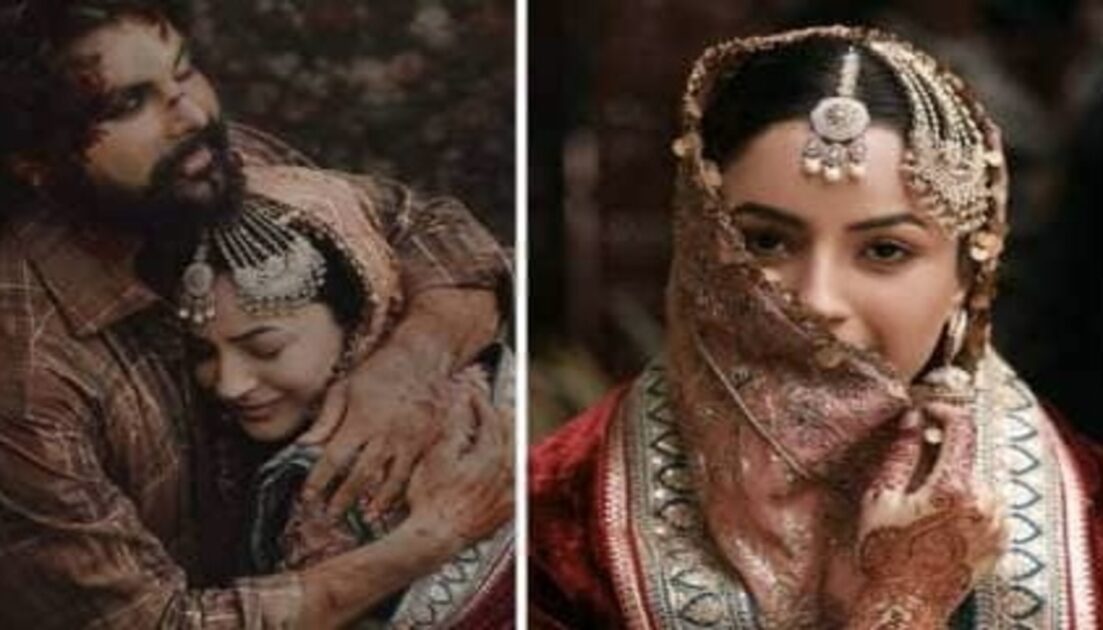
The glimpses from the film’s poster reveal a version of Shehnaaz that audiences have only partially seen before. In one frame, she clutches an injured man, her face etched with anguish and determination. In another, she appears as a bride, embodying grace and cultural rootedness, yet her expression suggests a story far from celebratory simplicity.
These visuals indicate a layered character—someone navigating love not as an abstract ideal, but as a lived, often painful reality shaped by circumstances beyond her control. For an actor, such a role demands not just performance, but emotional immersion.
Romance Beyond Escapism
Modern romantic cinema often leans toward escapism, offering audiences a temporary reprieve from reality. Grand gestures, picturesque locations, and idealized relationships dominate the genre. While such films have their place, Ishqnama seems to deliberately move in the opposite direction.
Here, romance is not insulated from the world—it is shaped by it.
By situating its narrative within the fraught context of India-Pakistan relations, the film introduces stakes that go beyond personal conflict. Love becomes intertwined with history, politics, and identity. Every moment of connection carries the weight of separation; every promise of togetherness is shadowed by the possibility of loss.
This approach transforms the love story into something far more profound. It asks viewers not just to feel, but to reflect.
The Power of a Borderland Narrative
Stories set against the India-Pakistan backdrop carry a unique emotional resonance. The shared history, cultural similarities, and painful divisions between the two nations create a fertile ground for storytelling that is both intimate and expansive.
In Ishqnama, this setting appears to be more than a backdrop—it is a character in itself.
The border represents not just a physical divide, but an emotional one. It stands as a symbol of longing, separation, and unresolved histories. For the characters within the film, love is not simply a matter of personal choice—it is a negotiation with forces much larger than themselves.
Such narratives often draw from real-life accounts, where relationships are tested by circumstances that neither love nor determination can easily overcome. The mention of the story being rooted in true events adds another layer of gravity, suggesting that the film may echo real experiences of individuals whose lives have been shaped by similar tensions.
Visual Storytelling: A Language of Emotion
The first poster of Ishqnama offers a compelling introduction to its visual language. The imagery is rich with symbolism, inviting viewers to read between the lines.
The image of Shehnaaz embracing an injured man is particularly striking. It encapsulates the central tension of the film—love in the face of vulnerability and violence. The physical injury becomes a metaphor for the emotional wounds inflicted by conflict, while her embrace signifies resilience and unwavering devotion.
In contrast, the bridal imagery introduces a different emotional register. Weddings in South Asian culture are often associated with joy, celebration, and the promise of a new beginning. Yet here, the visual seems tinged with melancholy, suggesting that this union may come at a cost.
Together, these images create a narrative of contrasts—love and loss, hope and despair, union and separation.
The Role of Memory and Nostalgia
Another intriguing aspect hinted at in the film’s aesthetic is its connection to traditional Punjabi culture. The bridal look, described as rooted in an older aesthetic, evokes a sense of nostalgia—a longing for a time when identities were perhaps less rigidly defined by political boundaries.
This interplay between past and present can serve as a powerful narrative device. By invoking cultural continuity, the film may highlight the shared heritage that exists despite geopolitical divisions. In doing so, it subtly challenges the notion of “otherness,” reminding audiences of the deep connections that transcend borders.
Memory, in this context, becomes both a refuge and a source of pain. It preserves what has been lost, even as it underscores the impossibility of reclaiming it fully.
Love as Resistance
At its core, Ishqnama appears to frame love as an act of resistance. In a world where divisions are enforced and identities are policed, choosing to love becomes a defiant act.
This theme resonates strongly in contemporary times, where personal relationships are often influenced by broader social and political dynamics. The idea that love can challenge systems of division is both idealistic and deeply human.
However, the film seems poised to avoid romanticizing this struggle. Instead, it acknowledges the cost of such resistance—the sacrifices, the uncertainties, and the emotional toll it takes on those who dare to defy boundaries.
The Emotional Weight of “True Events”
The claim that Ishqnama is rooted in true events adds a layer of authenticity that can significantly impact audience engagement. Stories inspired by real experiences often carry a different kind of emotional weight. They remind viewers that the narrative unfolding on screen is not purely fictional—it echoes realities that people have lived through.
This connection to real-life experiences can make the film more impactful, but it also raises expectations. Audiences may look for nuance, sensitivity, and a respectful portrayal of complex issues.
If handled thoughtfully, this aspect could elevate Ishqnama beyond conventional storytelling, transforming it into a cinematic exploration of love, identity, and resilience.
The Evolution of Female-Led Narratives
Another noteworthy aspect of Ishqnama is its positioning as a female-led romantic drama. While romance has traditionally been a genre centered on mutual relationships, the narrative focus here appears to lean strongly toward the female protagonist’s perspective.
This shift is significant. It allows for a more introspective exploration of love—one that considers not just the dynamics between two individuals, but also the internal journey of the protagonist.
Shehnaaz’s character, as suggested by the visuals, seems to embody strength and vulnerability in equal measure. Her story is not just about loving someone else, but about navigating her own emotions, choices, and identity in a challenging environment.
Anticipation and Audience Expectations
The announcement of Ishqnama has already generated considerable curiosity. The combination of a popular lead actor, a compelling premise, and visually evocative promotional material creates a strong foundation for audience interest.
However, with such anticipation comes expectation. Viewers will likely look for a narrative that does justice to its themes, avoiding clichés while delivering emotional depth.
The success of the film will depend not just on its story, but on its execution—how it balances romance with realism, how it portrays conflict without oversimplification, and how it connects with audiences on an emotional level.
A Story for Our Times
In many ways, Ishqnama feels like a story that is particularly relevant to the present moment. In a world where divisions—whether political, cultural, or ideological—often dominate discourse, narratives that emphasize connection and empathy hold special significance.
By placing love at the center of such a divided landscape, the film offers a counter-narrative—one that highlights the enduring human desire for connection.
At the same time, it does not shy away from the realities that complicate this desire. Instead, it embraces them, creating a story that is as challenging as it is hopeful.
Conclusion: The Promise of
Ishqnama
The announcement of Ishqnama marks the beginning of what could be a deeply impactful cinematic journey. With its focus on love shaped by conflict, its grounding in real events, and its emphasis on emotional authenticity, the film holds the potential to resonate with audiences on multiple levels.
For Shehnaaz Gill, it represents an opportunity to redefine her artistic identity, stepping into a role that demands both nuance and intensity. For audiences, it offers the promise of a story that goes beyond surface-level romance, delving into the complexities of human connection in a divided world.
Ultimately, Ishqnama is not just about two people in love. It is about the spaces between them—the borders, the histories, the silences, and the sacrifices that define their journey. It is about the courage to hold on to love even when everything else seems determined to pull it apart.
And perhaps, in telling such a story, the film reminds us of something essential: that even in the most fractured of worlds, the human heart continues to seek connection, understanding, and belonging.