 by
by Indian cinema has long been fascinated with stories of conflict, espionage, and covert operations. But once in a while comes a film that doesn’t simply recreate the familiar tropes of the spy genre—it elevates them. Aditya Dhar’s Dhurandhar, positioned as an ambitious political thriller inspired by true events, sets out to deliver something far bigger than a standard action spectacle. Armed with a massive cast, a multi-layered narrative, and an astonishing runtime of 214 minutes, the film attempts to push the boundaries of mainstream Hindi cinema in both form and intensity.
While Dhar already proved his command over military storytelling with URI: The Surgical Strike (2019), Dhurandhar is a significant leap in scale, ambition, and narrative risk. Divided into chapters, blending creative text-on-screen techniques, and adopting a gritty, immersive style, the film aims to be a complete theatrical experience—dark, dense, political, emotional, and unapologetically grand.
At its core, Dhurandhar is the story of a mysterious Indian operative infiltrating Pakistan—an operation born from the trauma of real-life attacks and executed through relentless personal sacrifice. Packed with political power games, gang wars, intelligence maneuvers, and layered relationships, the film tries to be more than just a spy thriller. It becomes a story about identity, loyalty, and the cost of patriotism.
And while the film succeeds on many fronts—particularly its performances and technical craft—it also stumbles due to its length, occasional dryness, and an uneven romantic subplot. Yet, despite its flaws, Dhurandhar emerges as a compelling cinematic chapter in India’s espionage cinema.
A High-Stakes Story Rooted in Real Events
The story opens by grounding viewers in some of the most defining traumas in recent Indian history—the 1999 Air India hijack and the December 13, 2001 Parliament attack. These events weigh heavily on Ajay Sanyal (R. Madhavan), the hard-hitting Chief of the Intelligence Bureau, who believes that the only way to prevent future tragedies is to strike deeply at the root: the anti-India networks operating from within Pakistan.
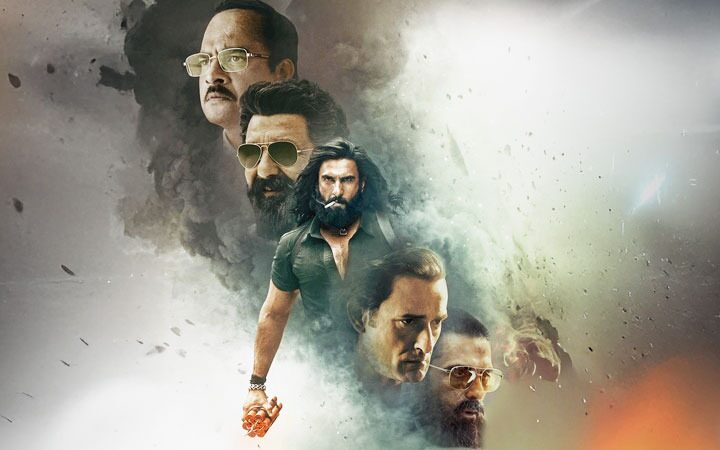
This leads to the conception of Operation Dhurandhar, an audacious plan approved by External Affairs Minister Devarat Kapoor (Akash Khurana). After years of preparation, an unnamed Indian spy—played by Ranveer Singh in one of the strongest performances of his career—embeds himself in Pakistan’s volatile and politically charged Lyari district under the alias Hamza Ali Mazari.
Working at a local juice shop in Lyari, Hamza quickly becomes familiar with the battleground he has stepped into. Lyari isn’t just a neighborhood—it’s a complex system controlled by violent gangs, political brokers, and shadow interactions with the ISI. The two dominant forces—Babu Dakait and Rehman Balochi (Akshaye Khanna)—are constantly at war with each other.
Hamza strategically aligns himself with Rehman after saving his son during a brutal attack. This not only grants him access to Rehman’s inner circle but also to influential political players such as Jameel Jamali (Rakesh Bedi) and the dangerous yet charismatic Major Iqbal (Arjun Rampal) of ISI.
And as Hamza dives deeper into this world—gathering intel, playing power games, and fighting to stay alive—he unexpectedly falls in love with Yalina (Sara Arjun), Jameel’s daughter, complicating an already dangerous mission.
With each passing chapter, the threats intensify, loyalties blur, and Hamza’s survival becomes as uncertain as the outcome of his operation.
Story & Screenplay: Gritty, Ambitious, and Occasionally Overextended
Aditya Dhar’s story—supported by Shivkumar V Panicker and Ojas Gautam—stands out for its ambition and its attempt to differentiate itself from other espionage dramas.
What Works:
- The narrative avoids the typical “cross-border operation” clichés.
- It focuses deeply on the internal gang politics of Lyari—an underexplored setting in Indian cinema.
- Hamza’s infiltration feels organic, methodical, and believable.
- The chapter-wise structure creates episodes that feel like mini-films within a larger universe.
- Texts, visuals, on-screen chapter markers, and real conversation inserts add freshness.
The use of actual audio clips of terrorist-handler communication, played over a stark blood-red screen, is one of the most chilling and inventive storytelling devices in recent Hindi cinema.
Where It Falters:
The biggest challenge is length. At 214 minutes, the film demands unwavering patience. The interval arrives after two hours, making it feel like two separate films. Some sections—especially those exploring political back-and-forth—feel stretched, and the romantic track suffers from weak writing.
The film tries to do justice to every subplot, but not all of them justify the space they occupy. For a story intended to thrill, prolonged dry stretches interrupt the emotional and narrative pacing.
Direction: Aditya Dhar’s Vision Is Clear, Bold, and Uncompromising
Aditya Dhar’s direction is unquestionably one of the film’s strongest pillars.
He takes several cinematic risks:
- Blending documentary-like realism with stylized storytelling
- Using visual symbolism such as color-washed screen transitions
- Integrating real-world references and files into fictional sequences
- Showing violence in disturbing, almost non-glamorous ways
- Building tension through silence, pauses, and texture rather than constant action
His command over staging, emotion, and scale is evident in standout sequences:
Unforgettable Moments
- The wedding attack on Rehman’s son
- The tense, excellently choreographed elimination of Babu’s entire gang
- Hamza’s near-self-destructive attempts to save his boss
- The finale, where hand-to-hand combat becomes both intimate and unsettling
However, Dhar’s commitment to his vision comes at a cost—mainstream audiences expecting a fast-paced masala spy thriller might feel overwhelmed by the tonality and runtime.
Performances: A Powerhouse Ensemble with Ranveer Singh Leading the Charge
Ranveer Singh as Hamza Ali Mazari / Indian Agent
Ranveer delivers an astonishingly measured, mature, and layered performance. This is not the flamboyant Ranveer audiences often associate with high-energy roles. Instead, he internalizes fear, trauma, patriotism, and deception.
- His vulnerability during emotional breakdown scenes is haunting.
- His transformation from a fruit-juice seller to a gang insider feels seamless.
- His body language changes episode by episode, reflecting Hamza’s moral decline and emotional wear.
This is easily among the finest performances of his career.
Akshaye Khanna as Rehman Balochi
Akshaye is magnetic. He conveys:
- menace through minimal dialogue
- power through calmness
- fatherly affection through silent glances
His expressive eyes alone carry entire scenes. His presence elevates the emotional weight of the film.
Sanjay Dutt as Chaudhary Aslam
Though a special appearance, Dutt’s rugged persona fits perfectly. He brings gravitas and a startling sense of realism to his scenes, especially those involving gang clean-ups.
Arjun Rampal as Major Iqbal
Rampal’s limited screen time is used effectively. He embodies the cold, strategic, ruthless intelligence officer with eerie ease.
R. Madhavan as Ajay Sanyal
Madhavan leaves a massive impact. His restrained frustration, leadership, and emotional connection to the operation form the backbone of the film.
Sara Arjun as Yalina
While her role suffers from underdeveloped writing, she showcases remarkable screen presence and potential for future bigger roles.
Supporting Performers
- Rakesh Bedi surprises with a strong performance.
- Gaurav Gera, Naveen Kaushik, and Danish Pandor shine in memorable supporting roles.
- Saumya Tandon, Manav Gohil, and others add depth without overshadowing the leads.
Across the board, the ensemble is consistent and impactful.
Music, Sound, and Technical Brilliance
Music
Shashwat Sachdev provides a soundtrack that supports—rather than dominates—the narrative.
- Title track – electrifying and already a public favorite
- Ishq Jalakar – Karvaan – best in emotional placement
- Gehra Hua – melodious but not standout
- Run Down The City – Monica – strong visual impact
- Shararat & Ez Ez – average additions
The background score, however, is a standout—heavy, unsettling, and deeply atmospheric. It enhances the madness and intensity of Lyari’s criminal world.
Cinematography & Visuals
Vikash Nowlakha’s cinematography is nothing short of breathtaking. The camera captures:
- Lyari’s claustrophobic chaos
- Karachi’s shifting moods
- Dusty alleys
- Brutally violent encounters
- High-stakes political and intelligence corridors
Every frame is composed with intent. Night shots are particularly stunning, blending neon, shadows, and emotional intensity.
Action
The action choreography by Aejaz Gulab, Sea Young Oh, Yannick Ben, and Ramazan Bulut is:
- disturbing
- raw
- intimate
- often hard to watch
This isn’t stylish action—it’s realistic brutality. Bones break, blood spills, and
Concluding Note
Dhurandhar ultimately stands as one of the most daring and unapologetically ambitious films to emerge from contemporary Indian cinema—one that refuses to dilute its vision for the sake of convenience or commercial predictability. It is a film crafted with an immense sense of purpose, blending political commentary, emotional depth, and espionage intrigue into a sprawling narrative that unfolds with patience and intensity. Through its richly textured world-building, meticulously detailed production design, and immersive cinematography, the film transports the audience into the heart of Pakistan’s volatile Lyari district, making them feel the suffocation, the unpredictability, and the pervasive danger of the environment that the protagonist navigates every day. Aditya Dhar’s direction ensures that Dhurandhar never loses sight of its emotional spine—Hamza’s personal turmoil, his divided loyalties, and the heavy psychological cost of living multiple identities.
Despite its imperfections, particularly its overstretched runtime, occasional dryness, and a romance that feels rushed and underdeveloped, the film remains remarkably gripping because of its performances and the gravity of its themes. Ranveer Singh’s role as Hamza is a masterclass in controlled intensity and emotional modulation. He plays the character not as a conventional hero but as a wounded, complex human being driven by duty yet constantly battling inner demons. Equally striking is Akshaye Khanna, whose quiet menace and nuanced emotional presence give the film some of its most memorable moments. R. Madhavan, Arjun Rampal, and Sanjay Dutt add remarkable heft, making the ensemble one of the strongest in recent years.
What makes Dhurandhar truly resonate is the way it blurs the line between fiction and the real-world geopolitical anxieties that continue to shape the subcontinent. By anchoring the story in true events, and by presenting espionage not as a glamorous adventure but as a psychologically punishing mission of endurance, isolation, and sacrifice, the film challenges the viewer to rethink what patriotism means—and what it costs. It highlights the complexities of intelligence work, the brutality of gang-controlled territories, the murky intersections of politics and crime, and the very real human beings caught in the crossfire.
In the end, Dhurandhar is not merely a film to be watched—it is a cinematic experience to be absorbed, debated, and remembered. It may test your patience with its length and density, but for those willing to commit to its world, it offers an emotionally rich, visually stunning, and thematically powerful journey. It is a testament to bold filmmaking—flawed, yes, but unforgettable.