 by
by When cinema honors a star’s legacy, it often celebrates milestones — box office triumphs, awards, iconic roles. But sometimes, the truest tribute comes not from applause in auditoriums, but from love spoken in vulnerable, heartfelt words.
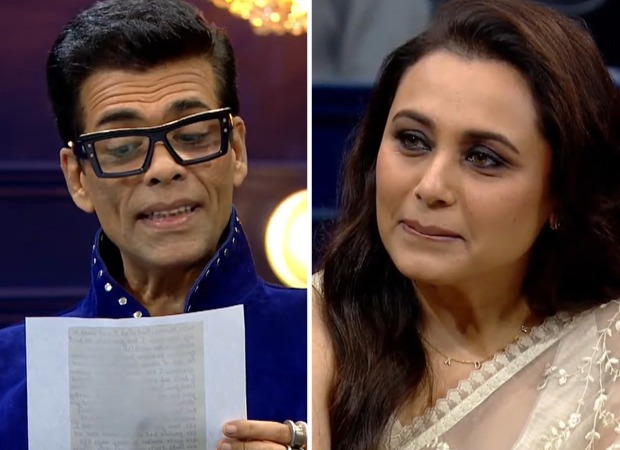
Recently, Yash Raj Films hosted a remarkable celebration in honor of Rani Mukerji’s 30‑year journey in Hindi cinema — a career that spans generations, broke stereotypes, redefined versatility, and etched countless memorable performances into the collective consciousness of Indian filmgoers. While the evening was rich with nostalgia, humor, and insider reflections from filmmaker Karan Johar, one moment stood apart in its emotional depth: the reading of a letter written by Rani’s daughter, Adira.
Karan Johar described that note as something likely being heard publicly for the first time — and indeed, the words that followed were not merely a tribute, but an intimate glimpse into the precious mother‑daughter bond behind the glamour of reel life.
This article explores the celebration in full, delves into the emotional weight of Adira’s message, reflects on the personal and professional dimensions of Rani Mukerji’s life, and examines why this moment resonated so deeply with audiences everywhere.
A Night of Reflection, Laughter, and Legacy
The tribute evening — an 84‑minute conversation between Karan Johar and Rani Mukerji — was held as part of the lead‑up to Mardaani 3, her much‑awaited return to the franchise that marked one of her most intense and critically acclaimed performances.
Far from being a perfunctory interview, the event was a rich tapestry of memory, insight, and emotion. It ranged from anecdotes about Rani’s beginnings in the industry to thoughtful reflections on how both cinema and she herself have evolved over three decades.
Yet what made this evening exceptional was its blend of the personal and the professional — a rare space where a superstar’s inner world was given as much attention as her outer triumphs.
Karan Johar — whose own career arc has intersected with Rani’s legacy on numerous occasions — guided the conversation with warmth, respect, and a palpable sense of admiration. Their exchanges were heartfelt, humorous, reflective, and steeped in shared histories of craft, friendship, challenge, and discovery.
But the evening’s emotional apex came not from reminiscence or accolades — it came from a daughter’s declaration of love.
Introducing the Letter: A Moment of Real Heart
When Karan introduced the letter written by Adira, he noted that it was likely the first time anyone outside their family was hearing it. The air in the room shifted. This was no longer a celebration confined to industry circles — it was a human moment, raw and sincere.
As he read, listeners quickly realized that this was not a perfunctory note of gratitude. It was an honest testimony of love, admiration, growth, and genuine emotional connection.
Adira began simply:
“Hello, Mama. First of all, I just want to say how much I love you. You’re the best mother in the world.”
These opening words — so ordinary yet so powerful — immediately grounded the letter in everyday humanity. This wasn’t a public message crafted for headlines; it was a daughter talking to her mother, unabashedly and with purity.
From that opening, the letter unfolded as a beautiful mosaic of shared memories, self‑reflection, and heartfelt affection.
Shared Memories: Joy, Tears, and Laughter
Adira did not shy away from acknowledging the full spectrum of experiences they had shared:
“We have shared countless memories together. Joyful, tearful, and of course, funny.”
In these few words, she honored the complexity of real relationships — those shaped not just by perfect moments, but by vulnerability, conflict, resolution, laughter, and tears. It was a nuanced tribute, not saccharine.
This segment of the letter was important because it acknowledged depth instead of distance. Too often, public tributes to celebrities focus only on perfection, glossing over the hard, unpolished experiences that make relationships real.
But Adira did something different: she honored beauty in complexity.
Admiration, Honesty, and Inheritance
Perhaps one of the most captivating parts of the letter was when Adira reflected on the qualities she admires in her mother — and those she’s inherited.
She wrote:
“There are some qualities I like about you, some qualities I don’t, and some qualities I’ve inherited from you.”
What makes this so poignant is not just transparency, but maturity. In a culture that often discourages honesty toward those we love, Adira’s words were refreshingly candid. She didn’t shy away from acknowledging differences or imperfections.
She continued:
“Some qualities I’ve got from you are my acting, dancing, and painting skills.”
Here, Adira credited her mother for nurturing not just her love for creative expression, but the confidence to own her artistic instincts. This moment highlighted something profound — that Rani’s influence extends far beyond scripted performance. It’s living, breathing, and being expressed in the next generation.
Then came a line that drew laughter and nods of recognition:
“One quality I don’t like about you, but have got from you, is your short temper.”
In that simple sentence was the balanced container of love and truth — a sweet joke wrapped in sincere introspection. The audience smiled not because it was humorous, but because it was real. This was not flattery; this was connection.
And real connection always resonates.
Similar Yet Different: Recognizing Individuality
Adira didn’t stop there.
She acknowledged that she and her mother share similarities, but also highlighted their differences:
“We might be a bit different, like how you like bold colours, and I like pastels. But at the same time, we’re quite similar in many ways.”
In these words lies a universal truth about relationships: identity is not extinguished in closeness. It is shaped by it. Adira’s letter wasn’t a mimicry of her mother’s voice; it was its own voice — shaped by admiration, but still distinct.
This delicate balance — loving someone deeply while recognizing one’s individuality — is a mature expression of relational understanding. It revealed that Adira’s love was formed not in blind imitation, but in conscious appreciation.
Not Just Her Mother’s Daughter — Her Own Person
One of the most insightful parts of the letter came when Adira spoke about her own strengths that are uniquely hers:
“There are also some qualities that I have, but you don’t have, like my school math skills.”
This line, playful yet empowering, highlighted an important emotional truth: filial affection need not erase personal identity. Adira loves her mother — deeply — but she also recognizes her own unique talents.
This sheds light on two things:
- A healthy relationship is not about unison of identity but connection of individuals.
- Admiration does not mean absorption.
In these simple lines, Adira revealed not only her affection but her own ecosystem of self — something every reader, young or old, can resonate with.
Values for the Future: Aspirations Inspired by Love
The letter ventured beyond the past to the future:
“When I grow up, I hope to be kind, confident, loving, intelligent, and stylish, just like you.”
Here, Adira articulated not only admiration but aspiration. The qualities she hopes to carry forward are not superficial; they are values that reflect character, empathy, intelligence, and strength.
What this reveals is not just fidelity to a mother, but intention toward becoming a human being of substance.
Through her own youthful voice, Adira distilled something timeless: that children don’t simply inherit traits — they inherit values, modeled through consistency, compassion, discipline, and presence.
And in that aspiration lies Rani Mukerji’s most enduring legacy — not only as a performer but as a person.
The Heart of Every Story: Love and Unbreakable Bonds
Adira’s letter culminated in words that echoed with warmth and permanence:
“Setting everything aside, we are of the same blood. We are mother and daughter, and we’ll have an everlasting bond forever. I love you so much, mama.”
It’s striking how simple words can carry immense power when spoken from the heart. There were no grand declarations of celebrity. No references to fame or recognition. There were no crafted metaphors. There was simply authentic love — expressed with innocence, honesty, and devotion.
This moment — more than any anecdote or accolade from the celebration — became the emotional core of the evening.
Why?
Because it reminded every viewer that behind the camera lights, behind the decades of cinematic triumphs, behind iconic roles and glittering celebrations, was a mother loved by her child.
That is a universal experience — and it’s why Adira’s letter resonated with audiences far beyond industry followers or film aficionados.
Why This Moment Mattered So Much
The appeal of Adira’s letter lies in its humanity.
In a world where celebrity narratives are often filtered through PR statements, sound bites, and staged events, this single moment was unscripted, vulnerable, and real.
It was a rare glimpse into the private life of a star — not as a headline, but as a human being with relationships, memories, flaws, laughter, and enduring affection.
Here’s what made that moment exceptional:
1. Authentic Emotional Expression
Adira’s words were not crafted for show. They came from the heart, unguarded, and honest. That authenticity cut through the usual formality of public tributes.
2. Balanced Honesty
She spoke praise and critique with ease — embodying real relational dynamics rather than idealized versions of love. This balance resonated because real love is never one‑dimensional.
3. Individuality Within Connection
The letter didn’t merely merge identities — it celebrated them. Adira acknowledged her mother while asserting her own unique qualities, which made the tribute mature and reflective.
4. A Universal Narrative
Though Rani Mukerji is a Bollywood icon, the emotional content of this moment was universal — something anyone with a parent or child could understand and feel in their own lives.
5. A New Dimension to a Public Persona
Celebrities are often seen through their work, accolades, or scandals. But this fleeting moment revealed Rani Mukerji the mother, not just the movie star — and that dimension touched hearts in ways few award speeches ever do.
Rani Mukerji: Beyond the Silver Screen
Rani’s career has spanned three decades — an era marked by diverse roles, fearless choices, dramatic transformations, and sheer commitment to craft.
From girl‑next‑door roles to powerful dramatic performances, from commercial hits to experimental cinema, her versatility has been admired by critics and audiences alike. She’s not just acted — she’s inhabited characters, challenged typecasting, and reshaped the contours of feminine strength in mainstream Indian cinema.
Yet beyond all this professional brilliance lies a private world shaped by love, resilience, imperfection, and deep human connection — precisely what Adira’s letter illuminated.
This deep, multifaceted life — one that blends artistic mastery with family intimacy — is perhaps the richest tribute any celebration could offer.
Reflections from the Celebration
As the letter was read, something remarkable happened in the room. The tone shifted from celebratory to sacred. It wasn’t applause that defined the moment — it was connection.
And that connection extended beyond the walls of the venue. Moments like these remind us that while cinema captures stories on celluloid, it’s the stories of real human hearts that linger longest in memory.
Rani’s journey — celebrated for its cinematic impact — was, in that instant, celebrated for its emotional legacy as well.
What made that letter unforgettable wasn’t the brilliance of a child’s prose — it was its honesty, its dignity, and its love.
Conclusion: A Legacy Illuminated by Love
Thirty years in cinema is a milestone few achieve. But 30 years of being loved — by one’s child, for who one is beyond art — is a legacy of a different order.
The evening hosted by Yash Raj Films was not just a tribute to decades of acting brilliance. It was, through Adira’s words, an affirmation of human depth behind celebrity sheen.
Love, honesty, individuality, admiration, imperfections, shared memories — these were the true colors of that celebration.
And in that space, we didn’t just see Rani Mukerji the star. We saw Rani Mukerji the mother. Rani Mukerji the human. Rani Mukerji the beloved.
As Adira wrote, “We’ll have an everlasting bond forever.”
If a career of three decades is a story of art and achievement, that line — spoken softly, honestly, from daughter to mother — is the story of the heart.