 by
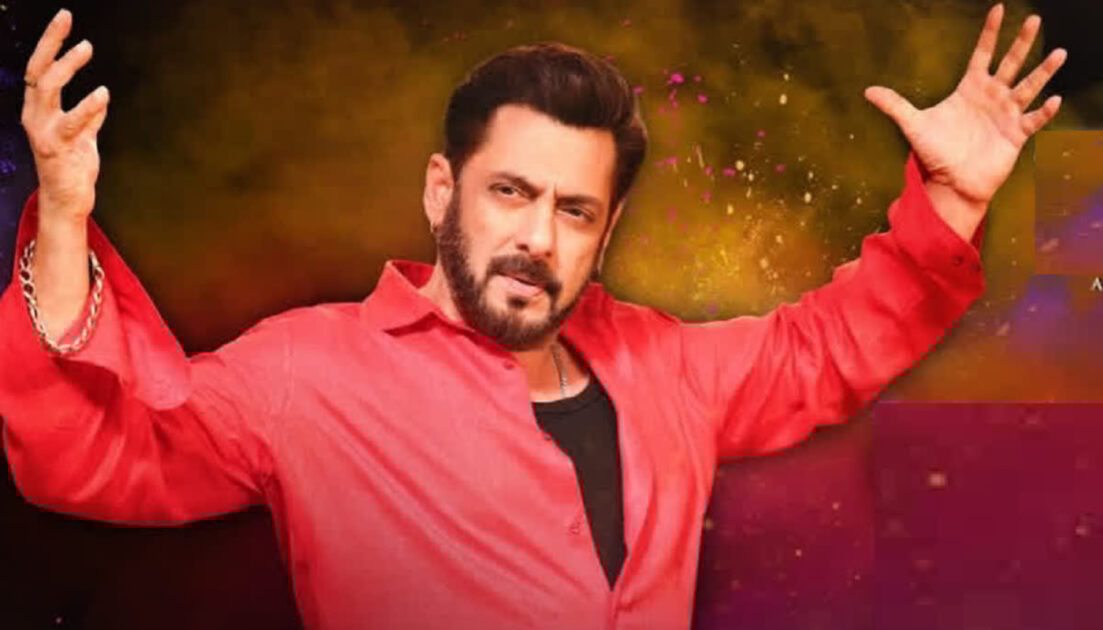
by The announcement of Salman Khan beginning work on a new action thriller with director Vamshi Paidipally has once again sparked curiosity around one of the most fascinating patterns in his long and eventful career—his collaborations with South Indian filmmakers. As the film goes on floors in Mumbai, with a large-scale vision and multi-location shoot reportedly planned across India, it signals not just another project, but potentially another turning point.
Salman Khan’s cinematic journey has never been linear. Over more than three decades, he has experienced towering highs, unexpected slumps, reinventions, and comebacks. Interestingly, a significant portion of this journey intersects with filmmakers from the South Indian film industries—directors known for their strong command over mass storytelling, emotional drama, and high-octane action.
But this relationship has been anything but predictable.
While some collaborations have redefined Salman’s career and cemented his status as a mass entertainer, others have failed to resonate with audiences, despite high expectations. As he steps into yet another such collaboration, it is worth revisiting this unique track record—one that reflects both the risks and rewards of cross-industry creative partnerships.
The Beginning: Early Experiments and Missed Momentum
Salman Khan’s association with South filmmakers dates back to the early 1990s, a time when he was still carving his identity in Bollywood. His first collaboration came in 1991 with Love, directed by Suresh Krissna. The film was a remake of a Telugu hit and followed a template that was already proven in another language.
However, remakes, while seemingly safe, come with their own challenges. Translating regional sensibilities into a Hindi-speaking audience requires more than just replicating a script—it demands cultural adaptation. Love managed to gain attention for its music but failed to make a strong impact at the box office.
The following year, Salman reunited with the same director for Jaagruti. Unfortunately, this project also failed to resonate with audiences. These early setbacks indicated that simply collaborating across industries did not guarantee success. At the time, Salman was still evolving as an actor, and perhaps the synergy between star persona and storytelling style had not yet fully aligned.
The Late 90s: First Signs of Success
After a series of underwhelming collaborations, Salman finally found some success with Bandhan in 1998, directed by K. Murali Mohana Rao. The film, a remake of a Tamil story, connected with audiences through its emotional narrative and family-centric themes.
This success was important—not just commercially, but strategically. It demonstrated that when the emotional core of a South-origin story was effectively adapted for a Hindi audience, it could work. It also hinted at Salman’s potential as a star who could thrive in such narratives.
A few years later, Hum Tumhare Hain Sanam (2002), though not directed by a mainstream South commercial filmmaker in the typical sense, also reflected a blend of storytelling sensibilities and performed well commercially.
Yet, consistency remained elusive.
The Mid-2000s: A Phase of Instability
The period between 2000 and 2007 was one of the most unpredictable phases in Salman Khan’s career. While he delivered major hits like Tere Naam, Mujhse Shaadi Karogi, No Entry, and Partner, there were also numerous underperformers.
When it came to collaborations with South filmmakers during this time, the results were largely disappointing. Films like Kyon Ki (2005), directed by Priyadarshan, and Shaadi Karke Phas Gaya Yaar (2006) failed to make a mark at the box office.
This phase highlighted a key issue: inconsistency in script selection and execution. While South filmmakers brought strong narratives, not all of them translated effectively into Salman’s evolving screen persona.
At this stage, Salman was still seen as a bankable star, but not necessarily a consistently successful one. His identity as a mass action hero—the image that would later define him—had not yet fully crystallized.
2009: The Turning Point That Changed Everything
If there is one collaboration that completely altered the trajectory of Salman Khan’s career, it is Wanted (2009), directed by Prabhu Deva.
A remake of a Telugu blockbuster, Wanted was not just a film—it was a reinvention. It presented Salman in a rugged, action-heavy avatar that audiences had not seen before at this scale. The film’s stylized action, punchy dialogues, and unapologetic mass appeal struck a chord with viewers across India.
More importantly, it aligned perfectly with Salman’s screen presence. For the first time, the synergy between a South-style mass narrative and Salman’s charisma felt complete.
The success of Wanted marked the beginning of what many consider Salman Khan’s “second innings”—a phase dominated by larger-than-life roles, high-energy action, and massive box office numbers.
Building the Mass Hero Image
Following Wanted, Salman continued to collaborate with South filmmakers, and this time, the results were far more favorable.
Bodyguard (2011), directed by Siddique, was another remake that performed exceptionally well. It combined action, romance, and emotional drama—elements that resonated strongly with audiences.
During this phase, Salman’s brand as a “mass entertainer” became firmly established. His films were no longer just movies—they were events. The influence of South Indian storytelling, with its emphasis on heroism, emotional highs, and dramatic action sequences, played a crucial role in shaping this image.
This period also coincided with the rise of pan-Indian cinema, where regional storytelling styles began influencing mainstream Bollywood more prominently.
The Dabangg Effect and Franchise Fatigue
While Dabangg (2010), directed by Abhinav Kashyap, was not a South filmmaker collaboration, its stylistic elements—larger-than-life heroism, stylized action, and mass appeal—echoed South cinema influences.
The film became a massive hit and spawned a successful sequel, Dabangg 2 (2012). However, the third installment, Dabangg 3 (2019), directed by Prabhu Deva, failed to live up to expectations.
This marked an important shift. It suggested that the formula that once guaranteed success was beginning to lose its novelty. Audiences were evolving, and repetition without innovation was no longer enough.
The Challenges of Repetition
One of the key reasons behind the mixed results of Salman Khan’s collaborations with South filmmakers lies in repetition. While the mass-action formula worked brilliantly in films like Wanted and Bodyguard, its overuse eventually led to fatigue.
Audiences began to expect more nuanced storytelling, stronger scripts, and fresher narratives. Simply relying on star power and formulaic action was no longer sufficient.
This shift reflects a broader change in Indian cinema, where content-driven films have started gaining more prominence alongside big-budget spectacles.
Recent Setbacks and Changing Audience Expectations
Salman’s more recent collaboration with a South filmmaker, Sikandar (2025), directed by AR Murugadoss, did not perform well at the box office. Despite high expectations, the film failed to connect with audiences.
This underperformance highlights the growing challenge for stars like Salman: staying relevant in an industry that is rapidly evolving. Today’s audiences are more discerning, more exposed to diverse content, and less forgiving of weak storytelling.
The success of South Indian films in the pan-India market has also raised the bar. Filmmakers are now expected to deliver not just scale, but substance.
Enter Vamshi Paidipally: A New Chapter Begins
Against this backdrop, Salman Khan’s collaboration with Vamshi Paidipally becomes particularly significant.
Known for his ability to blend emotional storytelling with commercial elements, Paidipally brings a different sensibility to the table. His films often focus on character-driven narratives, layered emotions, and strong dramatic arcs.
This could potentially mark a shift from the purely action-driven roles that Salman has been associated with in recent years.
The involvement of producer Dil Raju further adds to the project’s credibility. Known for backing successful and well-crafted films, his presence suggests that the project may prioritize storytelling alongside scale.
The Kerala Factor and Visual Expansion
The decision to shoot the film across multiple locations, including Kerala, indicates an emphasis on visual richness and geographical diversity.
In recent years, Indian cinema has increasingly embraced varied landscapes to enhance storytelling. Kerala, with its lush greenery and unique aesthetic, offers a refreshing departure from the urban settings often seen in Bollywood films.
This could add a new dimension to Salman’s on-screen presence, placing him in a setting that feels both visually distinct and narratively engaging.
Why This Collaboration Matters
At this stage in his career, every project Salman Khan chooses carries significant weight. His collaboration with Vamshi Paidipally is not just another film—it is an opportunity to redefine his cinematic identity once again.
If successful, it could signal a new phase—one that balances mass appeal with meaningful storytelling. If not, it may reinforce the challenges he currently faces in adapting to changing audience preferences.
Either way, the stakes are high.
The Larger Picture: Bollywood Meets South Cinema
Salman Khan’s journey with South filmmakers is also a reflection of a larger trend in Indian cinema—the increasing collaboration between Bollywood and regional industries.
This cross-pollination has led to the rise of pan-Indian films, where stories transcend linguistic and cultural boundaries. It has also created opportunities for actors and filmmakers to experiment with new styles and narratives.
However, as Salman’s track record shows, success in such collaborations is not guaranteed. It requires the right combination of script, direction, performance, and timing.
Lessons from the Past
Looking back at Salman Khan’s collaborations with South filmmakers, a few key lessons emerge:
- Alignment of Persona and Narrative Matters
The success of Wanted was largely due to how well the story aligned with Salman’s screen presence. - Adaptation is Key
Remakes must be culturally adapted, not just translated. - Innovation is Essential
Repeating a successful formula without evolution leads to diminishing returns. - Audience Expectations Are Changing
Today’s viewers demand more than just star power—they want compelling stories.
The Road Ahead
As Salman Khan begins shooting for his new film, there is a sense of anticipation—not just among fans, but within the industry.
Will this collaboration mark another turning point?
Will it redefine his image once again?
Or will it become another addition to the list of missed opportunities?
The answers will unfold in time.
Conclusion: A Career Defined by Reinvention
Salman Khan’s journey with South Indian filmmakers is a story of experimentation, failure, success, and reinvention. It reflects the unpredictable nature of cinema, where even the biggest stars must constantly evolve to stay relevant.
From early setbacks to career-defining hits, from formula fatigue to new beginnings, this journey encapsulates the highs and lows of a superstar navigating an ever-changing industry.
As the cameras roll on his latest project, one thing remains certain: Salman Khan’s story is far from over. And if history is any indication, his next collaboration might just surprise everyone.
Because in cinema, as in life, the most compelling stories are the ones that refuse to follow a predictable script.