 by
by Fashion has always been more than fabric stitched together. It is identity, rebellion, storytelling, and transformation woven into wearable art. In a world increasingly driven by fast trends and mass production, some designers stand out because they create from emotion rather than industry formulas. One such creator is Avnee, also known as Akasha Mithaiwala, the visionary founder behind Namaslay — a Los Angeles-based fashion brand that has carved a unique space between South Asian tradition, festival culture, feminine empowerment, and spiritual self-expression.
What began as a young girl experimenting with her mother’s saris eventually evolved into one of the most recognizable goddess-inspired brands within the American festival scene. From Burning Man-inspired aesthetics to reimagined Indian textiles, Namaslay represents more than clothing. It represents transformation.
Avnee’s journey is particularly fascinating because it did not begin inside fashion schools, luxury ateliers, or corporate showrooms. Instead, it emerged from cultural disconnect, self-teaching, financial struggle, creativity, and the desire to redefine how traditional South Asian clothing could exist in modern spaces.
Today, Namaslay has become synonymous with goddess energy, bohemian glamour, and contemporary South Asian-inspired fashion in Downtown Los Angeles and beyond.
A Childhood Rooted in Cultural Expression
For many children of immigrant families, traditional clothing often becomes tied to cultural ceremonies rather than personal style. Saris, lehengas, and embroidered garments are worn during weddings, religious functions, and celebrations — admired for their beauty but sometimes perceived as distant from everyday identity.
For Avnee, however, those garments became something more imaginative.
As a child, she spent time playing dress-up with her mother’s saris, experimenting with colors, textures, draping styles, and aesthetics long before she understood fashion as a business. Those moments were not simply playful childhood memories; they became the foundation of her creative vision.
Like many second-generation South Asians growing up in the West, she existed between two worlds — the traditional expectations of cultural fashion and the freedom of contemporary Western self-expression.
This tension would later become the driving force behind Namaslay.
The Wedding That Changed Everything
Sometimes entrepreneurship begins accidentally.
For Avnee, the turning point came during preparations for her cousin’s seven-day wedding in India. Weddings in South Asian culture are not just events; they are immersive celebrations filled with elaborate fashion, jewelry, rituals, and visual spectacle.
However, when she searched for outfits suitable for the wedding, she struggled to find clothing that reflected her personality. The conservative box-cut silhouettes available did not align with the image she wanted to express.
Rather than settling, she chose to create.
With the help of custom designers in India, she began conceptualizing outfits herself despite having no formal training in fashion design. What emerged were dazzling pieces that blended traditional Indian aesthetics with bold, contemporary styling.
The reaction was immediate.
Her outfits became conversation starters throughout the wedding. Friends and attendees began asking where the pieces came from and whether she could design similar creations for them.
That moment planted the seed for Namaslay.
Many successful creative businesses begin not with business plans but with emotional need — the need to create something that does not yet exist. Avnee’s designs emerged from the desire to see herself represented differently within traditional South Asian fashion.
Bringing Indian Glamour to Los Angeles
Returning to Los Angeles with her creations introduced a new challenge: audience.
What resonated at an Indian wedding did not immediately translate into mainstream fashion spaces in America. South Asian-inspired clothing occupied a niche category, often limited to weddings, cultural festivals, or Bollywood-inspired aesthetics.
But Avnee noticed something important.
There existed an entirely different community seeking transformation through clothing — the festival world.
Music festivals and alternative spiritual gatherings in California had already cultivated aesthetics centered around freedom, self-expression, spirituality, sensuality, and artistic identity. These spaces embraced bold styling, handcrafted garments, layered textures, and unconventional fashion.
Suddenly, her designs found the perfect environment.
Rather than marketing traditional Indian clothing in conventional ways, she positioned her creations as transformative goddess wear. Her garments became part costume, part spiritual armor, part artistic identity.
This shift changed everything.
The Rise of Festival Goddess Fashion
The modern festival scene is deeply connected to identity performance. People attending events like Burning Man, Lightning in a Bottle, or Desert Hearts often use fashion to express alternate versions of themselves.
Festival fashion is not simply about looking stylish; it is about becoming someone.
Avnee understood this instinctively.
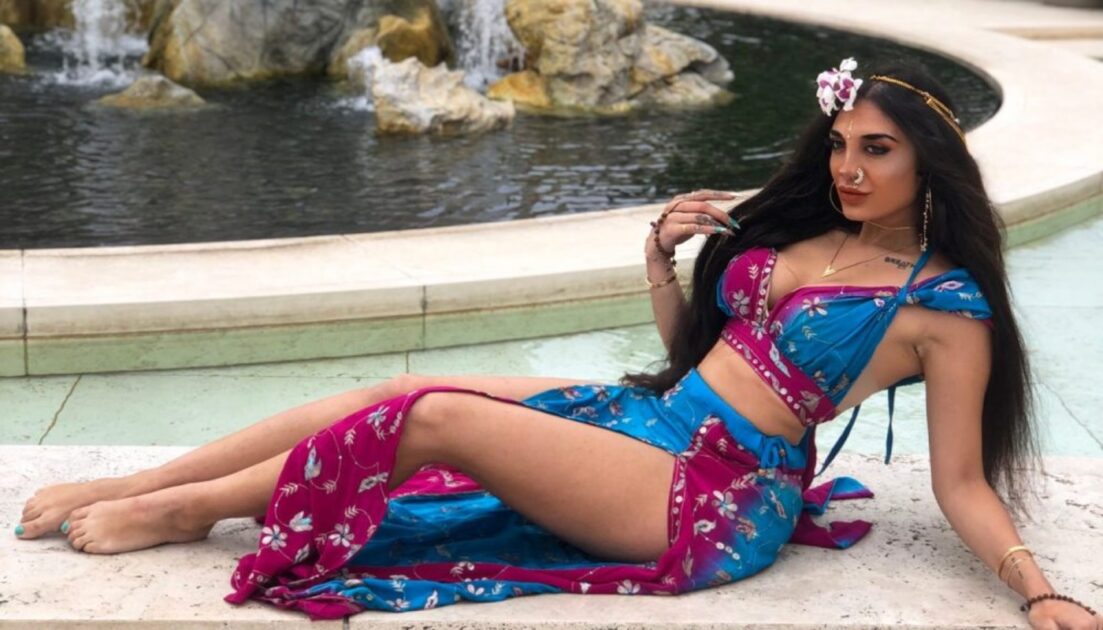
Her designs — made from vintage saris, intricate fabrics, flowing silhouettes, and sensual cuts — offered wearers the opportunity to embody what she described as “Indian Goddesses.”
Through Namaslay, traditional textiles were transformed into:
- Kimonos
- Slit skirts
- Crop tops
- Robes
- Dresses
- Flowy pants
- Layered festival pieces
These garments blended sacred symbolism with sensuality and modern confidence.
In many ways, Namaslay challenged outdated stereotypes around South Asian clothing. Traditional garments were often viewed in the West as either ceremonial or conservative. Avnee reimagined them as powerful, feminine, artistic, and expressive.
That reinvention resonated strongly within festival culture.
Building a Brand Without Funding
Behind the glamour of successful fashion brands often lies years of invisible struggle.
Avnee’s journey was no exception.
Unlike designers who begin with investors, business connections, or institutional support, she built Namaslay independently using personal savings. Every dollar initially went into inventory production, leaving almost no budget for marketing, branding, or web development.
Instead of outsourcing tasks, she taught herself everything.
She built her Shopify website herself using downloaded themes. She learned through YouTube tutorials, online experimentation, and trial-and-error entrepreneurship.
Her story reflects a broader shift in modern creative industries where digital platforms have democratized learning. Traditional gatekeeping within fashion and business has weakened significantly because creators can now self-educate online.
However, self-teaching also requires immense discipline and emotional resilience.
Learning website design, marketing, photography coordination, inventory management, branding, and e-commerce simultaneously can be overwhelming — especially without formal education in those fields.
Yet Avnee continued building step by step.
Her journey demonstrates that modern entrepreneurship often rewards adaptability more than credentials.
Instagram and the DIY Fashion Era
Namaslay’s rise also mirrors the transformation of fashion marketing in the social media age.
Traditional fashion brands once relied heavily on magazines, celebrity endorsements, expensive campaigns, and retail placements. Independent creators rarely had access to those systems.
Instagram changed that.
For Namaslay, social media became both portfolio and storefront.
Avnee gathered friends for DIY photoshoots in parks, collaborated with photographers through direct messages, and organically built visual branding online. These grassroots efforts helped establish the aesthetic identity that later became synonymous with the brand.
The rise of visual platforms particularly benefited niche brands with strong aesthetics. Namaslay’s colorful fabrics, goddess-inspired styling, jewelry layering, and festival imagery translated perfectly into Instagram culture.
The brand did not simply sell clothes.
It sold a fantasy of transformation.
Reinventing Traditional Indian Fashion
One of the most culturally significant aspects of Namaslay is its reinterpretation of traditional Indian textiles.
Fashion often evolves through reinvention. Younger generations continuously reshape cultural garments to reflect contemporary identities. Yet these transformations can also generate debate around authenticity, modesty, and cultural preservation.
Avnee’s work exists within this complex conversation.
Rather than preserving saris exclusively in traditional forms, she deconstructs and redesigns them into modern silhouettes. Vintage Indian fabrics become globally wearable pieces infused with movement, sensuality, and artistic freedom.
Critics may view such transformations as unconventional, but supporters see them as cultural evolution.
Importantly, her designs also introduce Indian textiles to audiences who may otherwise never engage with South Asian fashion traditions.
In this sense, Namaslay functions not only as a fashion brand but as a form of cultural translation.
Clothing as Empowerment
Perhaps the most emotionally powerful aspect of Avnee’s philosophy is her focus on transformation and empowerment.
She frequently describes witnessing women change emotionally when trying on her designs. According to her, clients often appear more confident, expressive, and alive once dressed in Namaslay garments.
This idea aligns with broader psychological discussions surrounding fashion and identity.
Clothing influences self-perception. Certain garments can alter posture, emotional confidence, social behavior, and internal self-image. Festival culture particularly embraces this concept because attendees often use fashion to embody aspirational or liberated versions of themselves.
Avnee frames this transformation spiritually rather than commercially.
She believes her clothing allows women to see themselves not merely as ordinary individuals but as goddesses.
That language carries symbolic power.
The goddess archetype historically represents strength, sensuality, divinity, creation, and feminine energy across many cultures, including Hindu traditions. By invoking goddess imagery, Namaslay taps into themes of empowerment, beauty, and spiritual femininity.
The Spiritual Side of Fashion
Fashion and spirituality are increasingly intersecting in contemporary culture.
Many modern wellness communities emphasize energy, embodiment, ritual dressing, and intentional self-expression. Festival culture especially blends aesthetics with spirituality through yoga, meditation, sacred symbolism, healing workshops, and transformational experiences.
Avnee herself referenced attending a transformation class discussing how identity shifts when people begin seeing you differently.
This insight deeply connects to fashion psychology.
When individuals consistently present themselves in ways aligned with their ideal identity, confidence often strengthens because external validation reinforces internal transformation.
Namaslay’s branding leverages this emotional mechanism beautifully.
The clothing becomes more than visual adornment.
It becomes a symbolic tool for stepping into a more empowered self-image.
Downtown Los Angeles and Creative Identity
Downtown Los Angeles has become a major hub for independent artists, fashion entrepreneurs, creators, and alternative culture brands. The area’s blend of artistic experimentation and multicultural influence makes it an ideal environment for brands like Namaslay.
Unlike traditional luxury fashion capitals driven by exclusivity, Downtown LA often celebrates individuality, subculture aesthetics, and creative fusion.
Namaslay fits naturally within this ecosystem.
The brand embodies:
- South Asian influence
- Festival culture
- Spiritual aesthetics
- Feminine empowerment
- DIY entrepreneurship
- Sustainability through vintage textiles
- Artistic reinvention
This multidimensional identity reflects Los Angeles itself — a city constantly reinventing culture through fusion.
Sustainability Through Vintage Saris
An often-overlooked aspect of Namaslay’s work is sustainability.
By repurposing vintage saris into new garments, the brand participates in upcycling practices increasingly valued in contemporary fashion conversations.
Fast fashion continues to face criticism for environmental damage, textile waste, and exploitative labor practices. Independent designers using recycled or vintage materials offer alternative models focused on longevity and creative reuse.
Indian textiles are particularly rich in craftsmanship, embroidery, and fabric quality. Reimagining vintage saris preserves artistry that might otherwise remain unused.
This approach also gives garments unique individuality since many vintage fabrics cannot be replicated exactly.
A Symbol of Creative Self-Made Success
Perhaps the most inspiring aspect of Avnee’s journey is that she built her brand without waiting for permission.
She had no formal fashion degree.
No major funding.
No established industry connections.
No corporate infrastructure.
Instead, she relied on:
- Creativity
- Cultural intuition
- Self-learning
- Persistence
- Social media
- Community collaboration
Her story reflects the evolving landscape of modern entrepreneurship where independent creators can build globally recognized identities outside traditional systems.
For young South Asian women especially, her success carries symbolic importance. She transformed cultural heritage into contemporary art while remaining unapologetically expressive and unconventional.
Conclusion
Avnee, also known as Akasha Mithaiwala, represents a new generation of fashion creators redefining what cultural fashion can become in modern spaces. Through Namaslay, she transformed childhood memories, traditional Indian textiles, festival aesthetics, and feminine empowerment into a globally recognizable artistic identity.
Her journey from experimenting with saris to building a respected festival fashion brand in Downtown Los Angeles highlights the power of creativity combined with resilience. More importantly, it reveals how fashion can function as emotional transformation rather than mere consumption.
Namaslay’s success lies not only in its garments but in the feeling those garments create — confidence, sensuality, freedom, spirituality, and goddess-like self-expression.
In an era where audiences increasingly seek authenticity and individuality, Avnee’s story stands as proof that the most impactful brands are often born not from trends, but from personal truth.