 by
by Ananya Panday, one of Bollywood’s most talked-about young actresses, recently offered an insightful glimpse into the meticulous preparations she undertook for her upcoming film Kesari Chapter 2. During her appearance on Bollywood Hungama’s Hangout at IFP, Ananya opened up about the challenges of playing a character set in the 1920s, explaining how she had to fundamentally rethink her gestures, speech patterns, and even the way she carried herself. For a Gen Z actress accustomed to contemporary modes of expression, the transition to a character from over a century ago was anything but straightforward.
Stepping into the 1920s: Beyond Dialogue
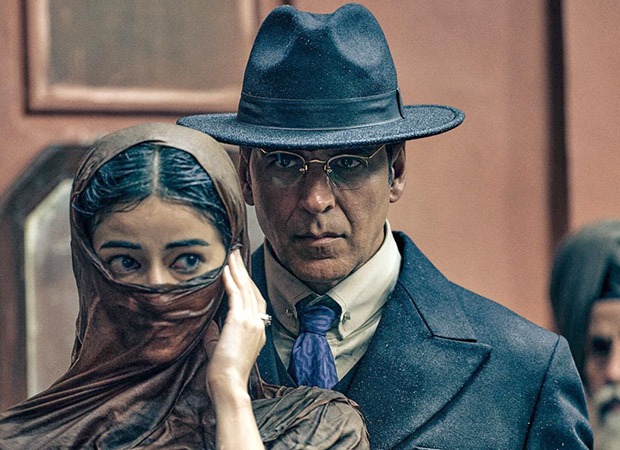
When discussing her preparation for Kesari Chapter 2, Ananya emphasized that transforming into her period character involved far more than just memorizing lines or adopting a costume. “For Kesari, I had to change the way I walked,” she revealed, underscoring the effort that went into crafting the physicality of her character. Unlike her natural, lively Gen Z energy, the woman she portrays demanded restraint, composure, and a deliberate pace.
Ananya elaborated on the challenge, saying, “I’m a 2025 Gen Z girl. I’m playing someone from the 1920s. She can’t move her hands like this or make a hundred expressions. There’s a certain way in which she had to talk and walk and be. So, I had to really work on that.” This conscious effort to shed contemporary mannerisms highlights a critical aspect of acting that is often overlooked: the importance of internalizing the era, culture, and societal norms of a character’s world.
In period films, authenticity is everything. Audiences today are not easily convinced by surface-level costume changes or generic dialogues. The subtleties of movement, posture, and speech often define whether a performance feels genuine. For Ananya, embodying a woman from the 1920s required understanding the cultural milieu of that time—the constraints, expectations, and social etiquette that dictated behavior.
Workshops, Rehearsals, and Character Immersion
When asked whether every film requires extensive workshops or preparatory sessions, Ananya noted that the need varies depending on the project. For films like Tu Meri Main Tera Main Tera, which are built on improvisation and spontaneity, rigid rehearsals could actually hinder performance.
“There are certain films where you don’t need to do workshops,” she explained. “Tu Meri Main Tera didn’t need it because that film required a sense of spontaneity and improvisation with Kartik. If we over-rehearsed, our reactions wouldn’t be genuine.” She shared that she and co-star Kartik Aaryan didn’t even read the script together more than once before shooting, letting natural interactions shape the scenes.
In contrast, films that explore complex emotional landscapes—such as Kontrol, Kho Gaye Hum Kahan, Gehraiyaan, and now Kesari Chapter 2—demand rigorous preparation. “Those films require work because there’s a big internal world the character is feeling,” Ananya noted. For these projects, every nuance of speech, every micro-expression, and every gesture must be carefully calibrated to ensure authenticity. The process often involves workshops, dialect coaching, movement training, and sometimes even historical research to understand the mindset and behaviors of people from that era.
Physicality and Gesture: The Language of the 1920s Woman
Period characters are defined not just by the clothes they wear or the words they speak, but by their physical presence. For Kesari Chapter 2, Ananya needed to adjust her natural gestures, walking style, and even the way she carried her weight. The 1920s was a time of formal etiquette and restrained self-expression, especially for women, and Ananya’s preparation reflects her commitment to embodying this era authentically.
She spoke candidly about the challenges: “I had to work on the way she talks and walks. There’s a stillness, a kind of dignity, that the character demands. It’s very different from how I naturally behave.” This level of detail is what separates a good performance from a memorable one. By internalizing the physical language of her character, Ananya ensures that her portrayal resonates with authenticity, transporting audiences back in time.
Such training often involves observing archival footage, studying period photographs, and sometimes even consulting historians or cultural experts to understand subtle nuances. Actors must pay attention to how women from that era would hold themselves in social interactions, how they gestured during conversation, and even how they managed emotions in public and private spaces.
Dialogue Delivery: Speech as a Portal to the Past
Another critical aspect of period acting is dialogue delivery. Language evolves rapidly, and the way people spoke in the 1920s is markedly different from contemporary usage. Words, intonation, pauses, and rhythm all contribute to making a performance feel authentic.
For Ananya, adopting the speech patterns of her character was a conscious effort. She highlighted that the way her character communicates—her tone, her choice of words, the pace of her sentences—needed to reflect the period accurately. This was especially challenging because it required suppressing natural tendencies toward rapid, casual, or slang-heavy speech that is typical of her Gen Z cohort.
Many actors in period films spend weeks on diction exercises, enunciation, and practicing dialogues aloud to capture the cadence and elegance of historical speech. For someone like Ananya, whose earlier roles were grounded in contemporary settings, this was an entirely new challenge. Yet, she embraced it, recognizing that such dedication is essential for immersive storytelling.
Balancing Authenticity and Relatability
One of the most difficult aspects of playing a historical character is balancing authenticity with relatability. While it is vital to remain true to the period, the performance must also resonate with modern audiences. Ananya’s preparation for Kesari Chapter 2 reflects this delicate balancing act.
Her approach demonstrates an understanding of acting as a form of cultural translation. She does not merely mimic 1920s mannerisms; she interprets them in a way that communicates the character’s inner world to today’s viewers. This requires not only technical skill but also emotional intelligence and imagination—qualities that Ananya has been developing steadily through her career.
Contrast with Contemporary Projects
Ananya’s reflections on the differences between projects like Tu Meri Main Tera and Kesari Chapter 2 provide an illuminating look at the acting process. While one relies on improvisation, the other demands careful study, rehearsal, and historical sensitivity.
This contrast also highlights the versatility required of modern actors. Audiences increasingly expect performers to be able to inhabit a wide range of characters, from lighthearted romantic leads to emotionally complex, historically grounded figures. Ananya’s willingness to adapt to the needs of each project demonstrates her growing maturity as an actress and her commitment to her craft.
Upcoming Projects and Career Trajectory
Ananya’s professional calendar is packed. Alongside Kesari Chapter 2, she is preparing for her Christmas release, Tu Meri Main Tera Main Tera, and has begun filming the second season of her OTT series Call Me Bae. She is also working on Chand Mera Dil with Lakshya Lalwani.
The diversity of these projects underscores Ananya’s commitment to exploring different genres and formats, from big-screen period dramas to lighthearted contemporary romances and digital series. Each project offers unique opportunities to experiment with performance styles, narrative structures, and audience engagement.
Her ability to seamlessly transition between such varied roles speaks to both her talent and her adaptability—a hallmark of actors who can sustain long-term careers in a highly competitive industry.
The Importance of Preparation in Acting
Ananya’s experience with Kesari Chapter 2 is a testament to the importance of preparation in acting. While some roles may thrive on spontaneity, others demand exhaustive study and immersion. The ability to inhabit a character fully—emotionally, physically, and intellectually—is what distinguishes a nuanced performance from a superficial one.
Her insights also provide a valuable lesson for aspiring actors: talent alone is rarely enough. Dedication, research, and an understanding of context are equally crucial. Whether it is learning period-specific gestures, mastering historical speech patterns, or absorbing the social norms of a bygone era, preparation lays the foundation for authenticity and emotional resonance.
Connecting with the Audience
Ultimately, acting is about connection. Audiences must believe in the character, empathize with their struggles, and be drawn into their story. By painstakingly adjusting her mannerisms, dialogue, and presence, Ananya ensures that her portrayal of a 1920s woman is not only historically accurate but also emotionally engaging.
Period films have the added challenge of bridging temporal and cultural gaps. Actors must make historical characters feel immediate and relatable without compromising the integrity of the era. Ananya’s meticulous approach demonstrates a keen awareness of this challenge and a commitment to rising to it.
A Young Actress Taking On Complex Roles
For a Gen Z actress in Bollywood, Ananya Panday’s career trajectory is noteworthy. Many of her contemporaries gravitate toward light-hearted, commercially driven films. However, Ananya has consistently sought roles that challenge her and expand her acting repertoire.
From emotionally layered films like Gehraiyaan to period dramas like Kesari Chapter 2, she is proving that she is more than just a youthful screen presence. She is an actress willing to engage with complex narratives, historical settings, and emotionally demanding roles—an approach that positions her for sustained growth and critical recognition.
Learning from Historical Characters
Portraying characters from the past offers more than just cinematic challenges; it also provides actors with an opportunity for personal growth. Immersing oneself in a different era encourages reflection on contemporary values, social norms, and human behavior. For Ananya, embodying a 1920s woman may offer insights into restraint, dignity, and the subtleties of interpersonal interactions—qualities that contrast sharply with the immediacy and informality of Gen Z culture.
Such experiences can enrich an actor’s craft, informing future performances with deeper understanding and empathy. They also help actors cultivate versatility, enabling them to navigate diverse genres and character types with confidence.
The Evolving Bollywood Landscape
Ananya’s journey reflects broader trends in Bollywood, where young actors are increasingly taking on challenging, non-traditional roles. Audiences today appreciate performances that combine technical skill with emotional depth, and there is growing recognition of the value of preparation, research, and methodical character development.
The industry itself is evolving, with filmmakers experimenting with period narratives, layered storytelling, and cross-genre projects. For actors like Ananya, this creates opportunities to showcase range and depth, moving beyond typecasting and formulaic roles.
Conclusion: Commitment, Craft, and the Road Ahead
Ananya Panday’s experience preparing for Kesari Chapter 2 offers a compelling insight into the craft of acting. By shedding contemporary mannerisms, mastering period-specific gestures, and internalizing the cultural context of her character, she demonstrates a dedication to authenticity and artistic growth.
Her reflections also highlight a crucial truth about acting: every role is unique, and preparation must be tailored to the demands of the story. Whether improvising in a lighthearted romantic film or meticulously studying the nuances of a 1920s persona, the commitment to craft is what elevates a performance from competent to memorable.
As audiences eagerly await Kesari Chapter 2, it is clear that Ananya Panday’s portrayal will be marked by thoughtfulness, precision, and a deep engagement with the character’s world. For a young actress navigating the competitive landscape of Bollywood, her dedication to growth, adaptability, and authenticity bodes well for a career that is both artistically rewarding and widely celebrated.
With multiple projects in the pipeline, including her Christmas release, OTT series, and upcoming films, Ananya continues to balance commercial appeal with artistic ambition. Her journey serves as an inspiring example of how modern actors can honor the past while remaining connected to contemporary audiences—an intricate dance of craft, creativity, and commitment.
In the evolving panorama of Indian cinema, Ananya Panday is not just a Gen Z star; she is a performer willing to challenge herself, learn rigorously, and embrace the complexity of storytelling, proving that talent, preparation, and passion can coexist harmoniously to create cinema that resonates across generations