 by
by In a courtroom saga that has gripped both India’s corporate corridors and Bollywood’s inner circle, the inheritance battle over the late industrialist Sunjay Kapur’s reported Rs 30,000 crore estate has taken a dramatic turn. The Delhi High Court’s decision to order forensic and handwriting analysis of the disputed Will marks a pivotal moment in a case that blends family conflict, corporate control, and legal complexity.
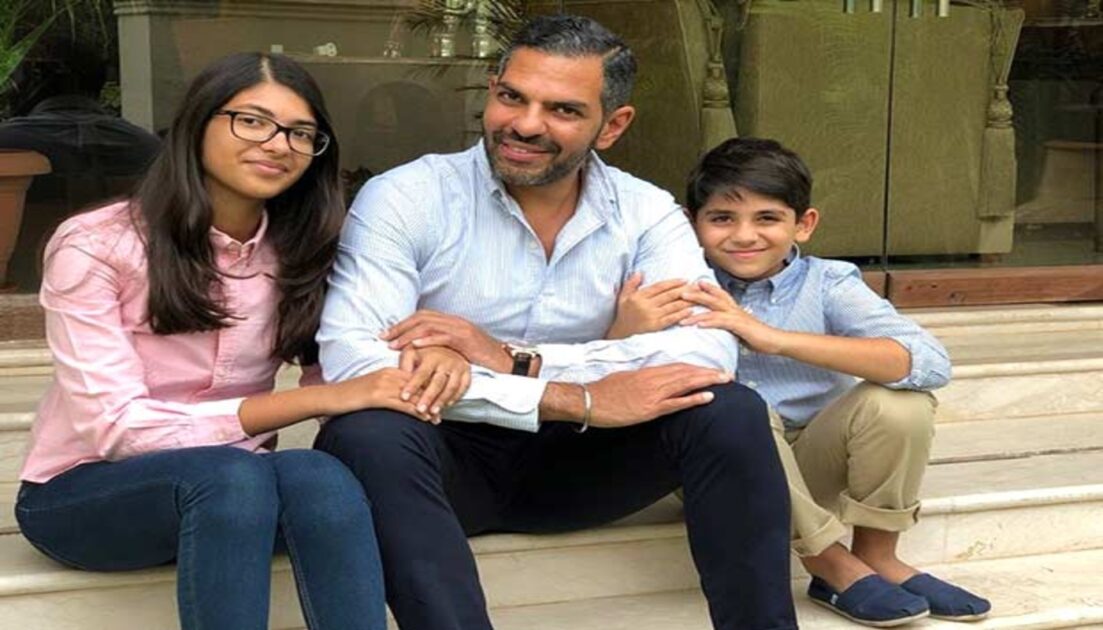
At the center of the storm are Samaira and Kiaan Kapur — the children of Sunjay Kapur and Bollywood actor Karisma Kapoor. Their insistence on scientific scrutiny of the Will has now been validated by the court, setting the stage for what could become one of the most closely watched probate disputes in recent Indian legal history.
This is not just a family disagreement. It is a battle over corporate power, legacy, and the interpretation of a man’s final wishes.
The Courtroom Order That Changed the Momentum
On February 28, the Delhi High Court, through Joint Registrar (Judicial) Gagan Deep Jindal, directed that the contested Will be subjected to forensic and handwriting examination. The decision came after persistent demands from Samaira and Kiaan Kapur, who have since November 2025 argued that only an independent scientific review can resolve serious questions about the document’s authenticity.
The order allows inspection and forensic analysis under court supervision within High Court premises. This ensures both confidentiality and credibility — a balance the court deemed necessary in a case of such magnitude.
Importantly, the court also denied an adjournment request by Priya Kapur and her son Azarius, stating that they had failed to file a reply within the stipulated time and appeared to be delaying the adjudication of the interim application. This judicial observation subtly shifted the optics of the case, suggesting procedural resistance rather than cooperation.
In high-stakes probate disputes, procedural posture often matters as much as substantive claims. Here, the court’s firm stance signals an unwillingness to tolerate delay in a matter involving immense financial and corporate consequences.
The Contested Will: Why Forensics Matter
In inheritance disputes of this scale, forensic examination is not extraordinary — it is standard practice. Experts typically analyze:
- Handwriting consistency
- Ink composition and age
- Paper type and manufacturing date
- Signature authenticity
- Timing of document preparation
Such testing can reveal whether a Will was drafted, signed, or altered at a later stage than claimed. In cases involving large estates and corporate shareholding structures, even minor discrepancies can have enormous legal consequences.
Priya Kapur has maintained that the Will was prepared and signed in her presence and that she handed it to the executor at the family’s Rajokri residence. She has further asserted that the document was electronically circulated. According to her claim, she stands as the sole beneficiary of Sunjay Kapur’s business empire.
However, despite being the document’s propounder and primary beneficiary, she strongly resisted forensic inspection. Her counsel argued that the Will, filed in sealed cover under non-disclosure conditions, should not be exposed to third-party experts and that the Registrar lacked authority to permit such scrutiny.
The court rejected both arguments.
Legally, once a Will is challenged in probate proceedings, it must withstand evidentiary testing. Confidentiality cannot override judicial examination. The ruling underscores a foundational legal principle: transparency in testamentary disputes is not optional when authenticity is questioned.
The Corporate Empire at Stake
Sunjay Kapur was not merely a social figure associated with high-profile relationships; he was a key industrialist with controlling stakes in significant corporate entities. Central to the dispute is majority ownership of Sona Comstar, a major auto components group. Control is reportedly held through promoter entities such as RK Family Trust.
In corporate inheritance cases, ownership of shares equals governance power. Whoever controls the Will’s validity may control:
- Board appointments
- Voting rights
- Strategic business decisions
- Dividend flows
- Long-term corporate restructuring
If Priya Kapur’s claim as sole beneficiary stands, she retains consolidated control. If the Will is found flawed or invalid, statutory succession laws may distribute assets differently — potentially restoring or reallocating rights to Sunjay Kapur’s children from previous marriages.
Corporate governance experts note that sudden shifts in promoter control can affect investor confidence, stock stability, and regulatory oversight. While Sona Comstar’s operational management may continue unaffected in the short term, uncertainty around ownership can ripple through financial markets.
This transforms the case from a private dispute into one with public economic implications.
The Isolation Factor: Who Opposed Forensics?
One striking detail from the proceedings was the near-unanimous acceptance of forensic scrutiny by stakeholders — except Priya Kapur and her son Azarius.
The Will’s executor, Shraddha Suri Marwah, did not object. Nor did Sunjay Kapur’s mother, Rani Kapur. No other stakeholder opposed the move.
In legal battles, alliances matter. The absence of broader opposition strengthened the argument that forensic review is a reasonable procedural step rather than an invasive demand. When only the primary beneficiary resists verification, courts often interpret that resistance carefully.
It does not establish wrongdoing. But it can influence judicial perception about transparency.
The optics are significant: scientific testing typically benefits a genuine document. Resistance to such testing naturally raises questions — whether justified or not.
The Children’s Legal Strategy
For Samaira and Kiaan Kapur, the demand for forensic testing reflects a methodical legal strategy.
Probate law places the burden of proof on the propounder of the Will — the person who seeks to rely on it. That individual must prove:
- The testator signed the Will.
- The testator had testamentary capacity.
- The execution complied with legal formalities.
- There was no coercion, undue influence, or fraud.
By pushing for forensic examination, the children are reinforcing the evidentiary threshold. They are effectively saying: if the Will is genuine, it should survive scientific scrutiny.
This approach shifts the narrative from emotional inheritance claims to objective evidence.
Their move also aligns with broader jurisprudence in India, where courts emphasize strict proof in suspicious circumstances — especially when:
- The primary beneficiary played a role in drafting the Will
- The distribution deviates significantly from natural heirs
- The document surfaces under sealed or confidential arrangements
In such cases, courts demand heightened proof.
Probate Disputes in India: A Broader Context
India has witnessed numerous high-profile inheritance disputes involving business families. Such cases often revolve around:
- Competing Wills
- Allegations of manipulation
- Questions about mental capacity
- Disputes over shareholding structures
- Trust arrangements
Forensic science has increasingly become central to resolving these conflicts. Handwriting experts, chemical analysts, and digital forensics teams frequently assist courts in determining authenticity.
In this case, additional hearings scheduled for March 10 regarding preservation of call detail records and production of mobile devices suggest that the court is willing to examine digital evidence as well.
Modern testamentary disputes rarely remain confined to paper. Emails, WhatsApp messages, call logs, and metadata can establish timelines that either corroborate or contradict claims.
The judiciary’s readiness to consider digital trails reflects evolving evidentiary standards.
Karisma Kapoor’s Silent Presence
Though not directly litigating, Karisma Kapoor’s connection to the case adds public intrigue. As a prominent Bollywood actor, her personal history with Sunjay Kapur was widely covered during their marriage and subsequent separation.
However, in legal terms, this case is not about celebrity narratives. It is about succession rights and corporate control.
Still, public interest inevitably intensifies when recognizable names intersect with massive financial stakes. The story captures national attention because it blends fame, wealth, and judicial drama.
The Psychological and Strategic Dimensions
Inheritance battles are rarely just financial. They often carry emotional undercurrents: legitimacy, acknowledgment, and legacy.
From a strategic standpoint, resisting forensic testing can sometimes stem from procedural caution — concerns about confidentiality, media leaks, or reputational impact. Yet courts prioritize evidentiary clarity over strategic opacity.
By ordering scientific scrutiny within High Court premises under supervision, the Registrar balanced confidentiality with transparency. This procedural safeguard reduces the risk of document mishandling while ensuring independent verification.
The court’s refusal to allow delays reinforces another judicial principle: justice delayed in probate matters can freeze corporate governance and destabilize business operations.
What the Forensic Process Could Reveal
The forensic examination may answer several critical questions:
- Was the signature consistent with Sunjay Kapur’s established handwriting?
- Does the ink match the claimed time of execution?
- Was the paper manufactured before or after the purported signing date?
- Are there signs of interpolation or alteration?
Even subtle discrepancies can shift the case dramatically.
If the Will passes forensic scrutiny, Priya Kapur’s position strengthens considerably. Her resistance may then be viewed as procedural caution rather than obstruction.
If inconsistencies emerge, the legal landscape transforms. The court may consider the Will invalid or demand further evidentiary hearings.
Either outcome will redefine control of a vast corporate empire.
The March 10 Hearings: A Digital Angle
The scheduled hearings concerning call detail records and production of mobile devices introduce a modern evidentiary dimension.
Digital communication can establish:
- Who discussed drafting the Will
- When conversations occurred
- Whether coordination preceded the alleged execution date
- If electronic circulation timelines align with testimony
In contemporary litigation, metadata can be as powerful as ink.
The court’s willingness to explore digital evidence suggests that this dispute will not hinge solely on handwriting — it will encompass the full spectrum of modern forensic tools.
A Milestone, Not a Verdict
For Samaira and Kiaan Kapur, the order represents a milestone. It does not decide inheritance. It ensures examination.
For Priya Kapur, the ruling sharpens scrutiny. Her legal team must now engage directly with forensic evaluation rather than contesting its necessity.
The broader legal community will watch closely. High-value probate disputes often set informal precedents in procedural rigor. This case reinforces that sealed cover filings do not exempt documents from evidentiary challenge.
The Larger Lessons
This case underscores key legal truths:
- Transparency is foundational in probate litigation.
- Scientific scrutiny strengthens judicial credibility.
- Procedural delays can influence judicial perception.
- Corporate succession disputes carry public economic impact.
Inheritance law is not merely about distributing wealth — it is about safeguarding legitimacy. When estates involve corporate empires, the stakes multiply exponentially.
Conclusion: Evidence Over Emotion
What began as a family dispute has evolved into a complex legal and corporate showdown. The Delhi High Court’s decision to order forensic analysis shifts the battle from assertion to verification.
In matters of succession — especially those involving thousands of crores and corporate governance — emotion cannot replace evidence.
The coming weeks will determine whether the contested Will withstands scientific examination. Whatever the outcome, this case reinforces a powerful principle: in the courtroom, authenticity must be proven, not presumed.
For now, the scales have tilted toward transparency. And in a dispute of this magnitude, that alone marks a significant victory