 by
by Introduction: A Film That Became a Moment
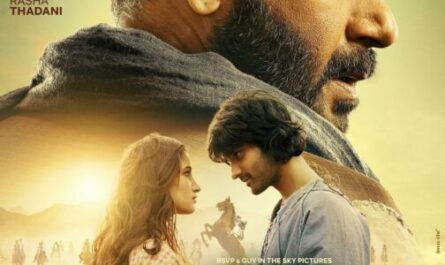
Some films release quietly. Others arrive like events—charged with expectation, emotion, and cultural weight. Raja Shivaji, directed by and starring Riteish Deshmukh, firmly belongs to the latter category. From the moment it was announced, the film carried the responsibility of portraying one of India’s most revered historical figures, Chhatrapati Shivaji Maharaj. But when it finally hit theatres, the conversation quickly expanded beyond history.
Within hours of release, social media—especially X (formerly Twitter)—was flooded with reactions. Words like “grand,” “emotional,” and “goosebumps” dominated timelines. Yet, amid all the praise for storytelling and scale, one element surged to the forefront: Salman Khan’s brief but electrifying cameo.
What makes this phenomenon particularly fascinating is not just the cameo itself, but what it reveals about modern Indian cinema, audience psychology, and the evolving definition of spectacle. This article explores Raja Shivaji as both a film and a cultural moment—balancing its artistic ambitions with the viral energy that has come to define its reception.
The Film’s Vision: A Grand Historical Canvas
At its core, Raja Shivaji is a historical epic—a genre that demands scale, sincerity, and emotional depth. Riteish Deshmukh takes on the dual responsibility of directing and portraying Shivaji Maharaj, a figure deeply embedded in India’s cultural and political consciousness.
The film attempts to capture:
- The rise of Shivaji as a strategic leader
- The emotional complexities behind his decisions
- The socio-political climate of the time
Early reactions suggest that audiences are responding strongly to this vision. Viewers have described the film as a “mass entertainer” that blends action, drama, and emotion effectively.
At the same time, many highlight its emotional resonance—particularly in moments that emphasize loyalty, sacrifice, and identity. The narrative does not merely recount events; it seeks to evoke a feeling of pride and connection.
Visually, the film leans into grandeur—lavish sets, sweeping battle sequences, and dramatic cinematography. This aligns with audience expectations for historical epics, where scale is not just aesthetic but symbolic. It communicates importance, legacy, and cultural weight.
Riteish Deshmukh: A Defining Career Moment
For Riteish Deshmukh, Raja Shivaji represents more than just another project—it is arguably a defining moment in his career.
The Actor
As Shivaji Maharaj, Deshmukh adopts a restrained yet commanding presence. Instead of relying on exaggerated heroism, his performance leans toward controlled intensity. This approach allows the character to feel grounded rather than mythologized.
Audience reactions indicate that his portrayal has been widely appreciated, with many calling it one of his strongest performances to date.
The Director
Behind the camera, Deshmukh faces a complex challenge: balancing historical authenticity with cinematic engagement. His direction reflects an awareness of both responsibilities.
- He avoids reducing Shivaji to a one-dimensional figure
- He emphasizes emotional storytelling alongside action
- He constructs a narrative that appeals to both mass and niche audiences
This dual role—actor and director—adds depth to the film’s vision. It suggests a personal investment in the story, which audiences seem to recognize and appreciate.
Salman Khan’s Cameo: The Scene That Changed Everything
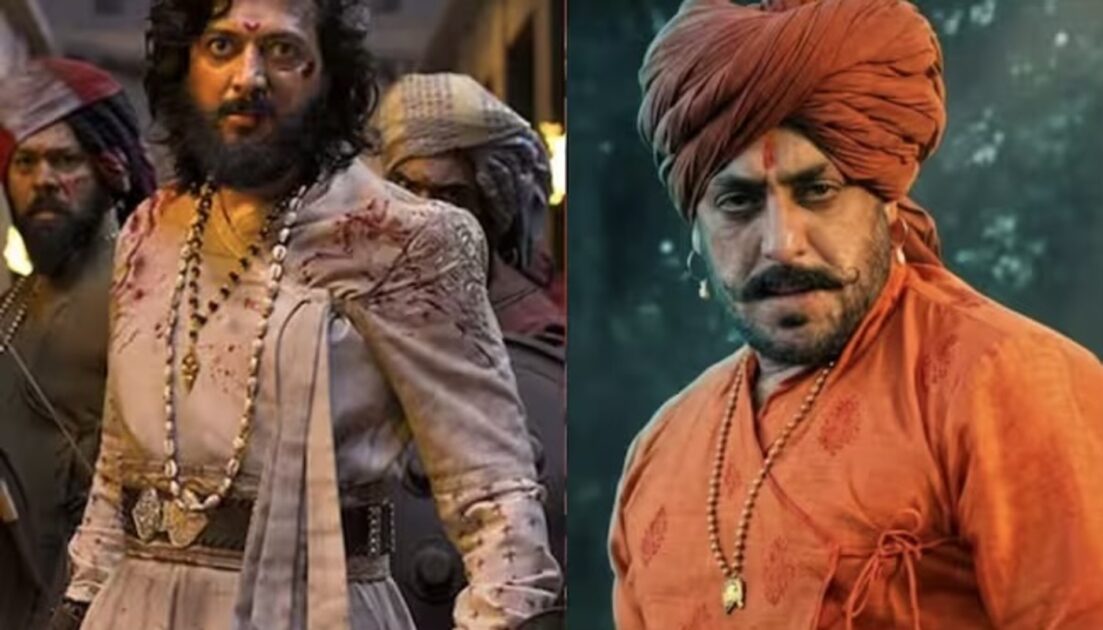
While Raja Shivaji is built on a strong narrative foundation, one moment has undeniably taken over the conversation: Salman Khan’s cameo as Jiva Mahala.
The Entry That Broke the Internet
The cameo was kept under wraps before release, adding an element of surprise. When Salman Khan finally appears on screen, the reaction is immediate and explosive.
- Theatres reportedly erupted with cheers and whistles
- Clips of his entry went viral within hours
- Social media reactions centered heavily on his presence
His dramatic entrance as the warrior Jiva Mahala—complete with costume, dialogue, and action—creates what many viewers describe as a “goosebumps” moment.
Why It Works So Powerfully
The success of this cameo is not accidental. It operates on multiple levels:
1. Star Power as Cultural Currency
Salman Khan is not just an actor; he is a phenomenon. His presence carries emotional and cultural significance that transcends screen time.
2. Narrative Placement
The cameo appears at a moment of heightened tension, amplifying its impact. It feels earned rather than forced.
3. Character Relevance
Jiva Mahala is a historically significant figure, adding authenticity to the cameo. This ensures that the moment is not just spectacle, but also narrative.
Interestingly, some critics have noted that the cameo nearly overshadows the film itself—an observation that speaks both to its effectiveness and its dominance.
Audience Reactions: A Film of Dual Strengths
The response to Raja Shivaji reveals a fascinating duality. Audiences are celebrating both:
- The film’s emotional depth
- Its mass entertainment value
“Grand and Emotional”
Many viewers describe the film as visually grand and emotionally engaging. This combination is crucial. It allows the film to resonate across different audience segments.
- For some, it is a spectacle-driven experience
- For others, it is an emotional tribute
This dual appeal is a significant factor in its positive reception.
Social Media Amplification
In today’s digital landscape, audience reactions do not remain confined to theatres. They spread rapidly across platforms, shaping public perception.
In the case of Raja Shivaji:
- Positive word-of-mouth has driven curiosity
- Viral clips have increased visibility
- Fan reactions have created a sense of collective excitement
The film’s success is not just cinematic—it is digital.
Supporting Cast: Strength Beyond the Cameo
While Salman Khan’s cameo dominates headlines, the film’s supporting cast plays a crucial role in sustaining its narrative.
Actors like Sanjay Dutt and Abhishek Bachchan have been praised for their performances, adding depth and complexity to the story.
Their characters contribute to:
- The political dynamics of the narrative
- The emotional arcs of the story
- The overall richness of the film’s world
This ensemble strength ensures that the film does not rely solely on one moment or one performance.
Music and Cinematic Language: Emotion Through Sound and Scale
The music of Raja Shivaji, composed by Ajay-Atul, has been widely described as the “soul” of the film.
The Role of Music
In historical epics, music serves multiple functions:
- Enhancing emotional impact
- Reinforcing cultural identity
- Elevating dramatic moments
In this film, the soundtrack appears to succeed on all three fronts.
Visual Storytelling
Cinematically, the film embraces a larger-than-life aesthetic:
- Expansive battle scenes
- Detailed set design
- Dramatic lighting
These elements contribute to the film’s immersive quality, making it feel like an experience rather than just a story.
The Cameo Phenomenon: A Broader Cultural Insight
Salman Khan’s cameo in Raja Shivaji is not just a cinematic moment—it is a case study in modern audience behavior.
The Psychology of Surprise
Audiences today are accustomed to trailers, leaks, and spoilers. A genuine surprise—like an unannounced cameo—creates a powerful emotional response.
Star Persona as Narrative Amplifier
When a star like Salman Khan appears, he brings his entire cinematic history with him. This amplifies the impact of even a brief role.
Viral Culture
In the age of social media, moments matter more than narratives. A single impactful scene can:
- Drive ticket sales
- Shape reviews
- Define the film’s identity
In this sense, Salman’s cameo becomes more than a scene—it becomes the film’s most marketable asset.
Historical Responsibility: Balancing Fact and Fiction
Portraying a figure like Shivaji Maharaj comes with immense responsibility. The film must balance:
- Historical accuracy
- Cultural sensitivity
- Cinematic storytelling
Interpretation vs Reality
Like most historical films, Raja Shivaji takes certain creative liberties. Timelines may be compressed, and events dramatized.
However, the key question is whether these choices preserve the essence of the figure being portrayed.
Early reactions suggest that the film succeeds in capturing Shivaji’s spirit—his leadership, courage, and vision—even if certain details are adapted for cinematic purposes.
Strengths and Limitations: A Balanced Perspective
No film is without its limitations, and Raja Shivaji is no exception.
Strengths
- Strong central performance by Riteish Deshmukh
- High production value and visual scale
- Emotional depth and cultural resonance
- Viral appeal driven by Salman Khan’s cameo
Limitations
- The cameo risks overshadowing the main narrative
- Certain dramatized elements may feel exaggerated
- The balance between spectacle and storytelling is not always consistent
These limitations do not diminish the film’s impact, but they add nuance to its reception.
Box Office and Cultural Impact
Early indicators suggest that Raja Shivaji is off to a strong start at the box office, driven by positive word-of-mouth and viral buzz.
However, its impact extends beyond numbers.
Cultural Resonance
The film taps into:
- Historical pride
- Regional identity
- Collective memory
This gives it a significance that goes beyond entertainment.
Digital Legacy
In the age of social media, a film’s legacy is shaped not just by its content, but by its moments. Salman Khan’s cameo ensures that Raja Shivaji will be remembered as much for its viral scenes as for its narrative.
Conclusion: A Film Defined by Both Story and Moment
Raja Shivaji is a film of contrasts. It is both a carefully crafted historical tribute and a mass entertainer driven by viral energy. It is rooted in cultural reverence, yet propelled by modern star power.
Riteish Deshmukh’s vision provides the foundation—a sincere, emotionally engaging portrayal of a legendary figure. But Salman Khan’s cameo adds a layer of spectacle that transforms the film into a cultural event.
The question is not whether the cameo overshadows the film—it does, in many ways. The more important question is what this reveals about contemporary cinema.
Audiences today are drawn to moments—scenes that evoke immediate emotional reactions and can be shared instantly. Raja Shivaji succeeds because it offers both: a compelling narrative and unforgettable moments.
In the end, the film’s legacy may lie in this balance. It reminds us that cinema is no longer just about storytelling—it is about experience, emotion, and the ability to create moments that resonate far beyond the screen.