 by
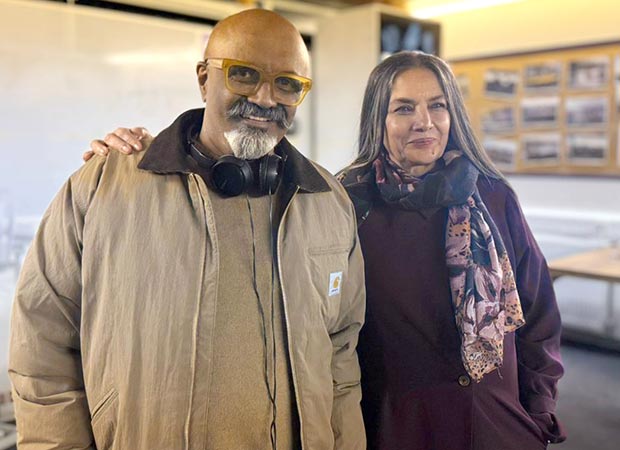
by Veteran Indian screen icon Shabana Azmi has once again affirmed her unwavering commitment to powerful, meaningful cinema by completing the shoot of USA v Raj — a biographical legal drama that already stands among the most anticipated films of the coming year. The project reunites Shabana with legendary actor Kabir Bedi, who has sustained an extraordinary global career across decades, and is helmed by award‑winning cinematographer‑turned‑director Ravi K. Chandran. This collaboration marks not only a meeting of formidable talents but also a deeply resonant cinematic journey based on a compelling true story.
From its real‑life origins in the remarkable case of Dr. Raj Bothra — a surgeon who was wrongfully accused and incarcerated on dozens of federal charges — to its focus on resilience, injustice, and family strength, USA v Raj promises to blend emotional depth with legal and human drama. In this article, we explore the film’s genesis, the significance of its casting, the thematic relevance of its narrative, the artistic vision behind it, and what audiences might expect when it releases in summer 2026.
The Story Behind USA v Raj
: A Real‑Life Tale of Courage and Vindication
USA v Raj is not a fictional courtroom thriller; it is rooted in the unbelievable yet true story of Dr. Raj Bothra, an Indian‑American doctor whose life was upended by allegations, legal battles, and systemic challenges that kept him behind bars for years. According to industry reports, Dr. Bothra was wrongly accused and faced 54 federal charges before ultimately being cleared of wrongdoing — a saga that tested not only his resilience but also the resilience of his family.
Importantly, the film is adapted from Dr. Bothra’s own memoir, USA Vs Raj, which recounts his ordeal from his arrival in the United States to his surprising and triumphant acquittal by a unanimous jury verdict. This narrative isn’t simply about one man’s struggle; it reflects broader themes of justice, identity, bias, and perseverance. The film’s English‑language format suggests its ambitions to transcend regional boundaries and engage global audiences with a story that resonates beyond geographical limits.
That this story is being brought to life by some of cinema’s most distinguished artists makes it all the more significant — and signals that USA v Raj is poised to be more than just a movie; it is shaping up as a cinematic ode to human endurance.
Shabana Azmi: A Stalwart of Indian and International Cinema
Few actors in Indian cinema command the respect and reverence that Shabana Azmi does. Having begun her career in the early 1970s, Azmi has consistently chosen roles that challenge societal norms, confront entrenched prejudices, and elevate the portrayal of women on screen. Her filmography encompasses everything from parallel cinema classics to global collaborations, and she continues to earn accolades while embracing diverse roles with conviction and nuance.
In USA v Raj, Shabana portrays Pammi Bothra, the wife of Dr. Raj Bothra and the emotional core of the family at the center of the unfolding legal crisis. According to director Ravi Chandran, Pammi is “the family’s pillar of strength”—a character whose inner fortitude becomes essential amid escalating tension and uncertainty. Shabana’s history of deeply human performances — whether portraying struggling women in parallel cinema or powerful matriarchs in contemporary films — positions her perfectly for this role, suggesting a portrayal that is both compassionate and compelling.
Her involvement firmly anchors the emotional weight of the story, promising an embodiment of resilience and authenticity that few actresses could achieve with the same depth.
Kabir Bedi at 80: An Enduring Legacy Meets a Defining Role
Kabir Bedi, who recently turned 80, is itself a living testament to the longevity and adaptability of an actor who has traversed continents, industries, and genres. Best known internationally for roles like Sandokan as well as numerous films in India, Europe, and Hollywood, Bedi brings to USA v Raj the gravitas and lived experience that the role of Dr. Raj Bothra demands.
Portraying Dr. Bothra, a man who faced decades of professional acclaim only to have it overshadowed by legal jeopardy, requires an actor capable of conveying vulnerability, strength, contradiction, and dignity. Kabir Bedi’s career has already spanned roles rich in emotional and narrative complexity — and stepping into the shoes of someone who fought not just for his freedom but for his reputation adds another distinguished chapter to his legacy.
That both leads are veteran actors also ensures that the film’s dramatic core will be driven by character and performance, elevating it beyond procedural storytelling into emotionally grounded cinema.
Ravi K. Chandran: Cinematic Vision Behind the Lens
While USA v Raj taps into powerful performances and a compelling true story, the film’s creative direction is also shaped by its director, Ravi K. Chandran — a cinematographer celebrated for his visual finesse and storytelling clarity. Chandran’s work behind the camera spans numerous celebrated films in Indian cinema, and his shift to directing with USA v Raj marks an exciting evolution in his artistic journey.
Chandran has spoken about his intention to tell this deeply personal story with authenticity and respect for its real‑life subjects. His background as a cinematographer positions him uniquely to emphasize the film’s emotional landscapes — informed by visual composition, lighting, and narrative pacing — offering audiences a cinematic experience that is both intimate and expansive.
According to reports, the film is targeted for a Summer 2026 release, indicating a careful production and post‑production schedule that prioritizes quality and global resonance. The fact that this story is being told in English underscores its potential impact on international audiences, film festivals, and cross‑cultural dialogues about justice and humanity.
Behind the Story: The Real Dr. Raj Bothra
To fully appreciate USA v Raj, it helps to understand the extraordinary journey of its protagonist, Dr. Raj Bothra. An Indian‑American surgeon, Bothra’s nightmare began when his professional success was upended by severe legal action in the United States. Without trial, he endured prolonged periods of incarceration, faced more than 50 federal charges, and saw his reputation teeter on the brink of collapse. Yet despite the psychological and legal pressure, Bothra maintained faith in the judicial process — ultimately achieving a unanimous jury verdict clearing him of all charges.
The real‑life book USA Vs Raj, penned by Dr. Bothra along with co‑author Jennifer DeBellis, forms the basis of the film. Its narrative charts the emotional and legal upheavals faced by Bothra and his family, giving readers (and soon, viewers) a rare window into not only the trauma of wrongful accusation but also the resilience it took to reclaim dignity.
Dr. Bothra’s ordeal resonates particularly in an era when discussions about justice systems, immigration policies, and institutional biases are intensifying worldwide. By adapting this story into film, the creators are contributing to a cinematic tradition that brings real human struggles to mainstream consciousness — allowing audiences to confront larger questions of fairness, prejudice, and perseverance.
Pammi Bothra: The Emotional Heart of the Story
In the narrative of USA v Raj, Dr. Raj Bothra is the central figure, but the emotional heartbeat of the film is arguably his wife, Pammi Bothra. Played by Shabana Azmi, Pammi’s character represents the silent yet unbreakable strength often exhibited by families enduring crisis. Behind every public legal battle is a quieter, more personal struggle — the emotional labor of keeping a family stable when the world seems intent on tearing it apart.
Pammi’s story is one of courage, patience, and unwavering belief in her husband’s innocence. Shabana Azmi’s casting underscores the seriousness and depth with which this role was envisioned — an actress whose craft has long been associated with dignity, depth, and powerful emotional resonance. Through Pammi, audiences can expect to witness the untold strength that keeps families intact during periods of fear, confusion, and societal judgment.
This dynamic between Dr. Raj and Pammi anchors the film’s emotional core, transforming USA v Raj from a courtroom drama into a human story of family, compassion, and shared resilience.
The Broader Significance of USA v Raj
: Why This Story Matters
What makes USA v Raj compelling goes beyond its high‑profile cast and the talents behind the camera. At its core, the film grapples with universal themes that resonate across cultures and legal systems:
1. The Fragility and Power of Justice
The American legal system is often idealized globally, but Dr. Bothra’s case illustrates how even robust systems can falter. The ordeal raises questions about due process, wrongful accusation, bail policies, and the psychological toll of lengthy legal battles — topics of relevance not only in the U.S. but globally.
2. Identity and Belonging
Dr. Bothra’s identity as an immigrant professional caught in a web of legal complexities adds a layer of cultural context. USA v Raj touches on the challenges faced by immigrants navigating legal systems that can sometimes feel alien or unyielding, revealing how belonging and reputation can be thrown into jeopardy even in countries defined by ideals of freedom and opportunity.
3. Family as a Source of Strength
Stories of legal injustice often focus on courtroom confrontations, evidence, and verdicts. But USA v Raj weaves in the human dimension — how families cope when the world seems to collapse around them. This emotional core makes the narrative resonate on a deeply personal level.
4. The Power of Storytelling
By transforming Dr. Bothra’s memoir into film, the creators are amplifying voices that might otherwise remain unheard. Cinema, in its best form, makes the personal universal, inviting empathy, reflection, and dialogue.
Anticipation and Expectations for Summer 2026
With principal photography wrapped and post‑production underway, USA v Raj is slated for a Summer 2026 release. This timing places the film in a strategic cinematic window — a period when audiences are seeking thoughtful, impactful cinema that goes beyond formulaic storytelling.
Whether USA v Raj emerges as an awards contender or a critical favorite remains to be seen, but its ingredients — true story, powerful performances, and an evocative narrative — position it for strong cultural impact. Audiences and critics alike will be watching closely as trailers, marketing materials, and film festival appearances start rolling out in the months leading up to its release.
Conclusion: A Story of Humanity, Justice, and Courage
USA v Raj represents a rare convergence of talent, truth, and purpose. For Shabana Azmi and Kabir Bedi — two pillars of Indian cinema — it offers an opportunity to embody characters of profound emotional and narrative weight. For director Ravi K. Chandran, it signals a bold directorial statement grounded in real human experience. And for audiences around the world, it promises a cinematic encounter with questions that extend far beyond the courtroom.
In a media landscape often saturated with fantasy and spectacle, USA v Raj stands apart as a reminder that some of the most powerful stories are those rooted in truth — stories about justice denied and justice eventually served, about families that endure, and about the hope that arises when individuals refuse to give up. As summer 2026 approaches, all eyes will be on this film — not just as a piece of entertainment but as a statement of resilience, courage, and unwavering human dignity.