 by
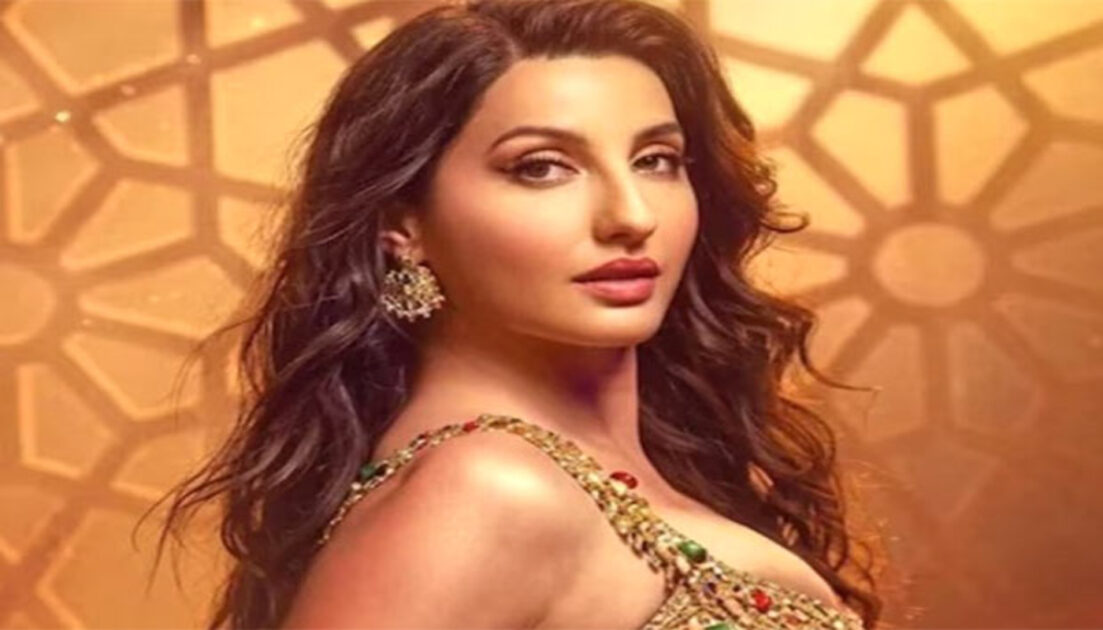
by The ban on Sarke Chunar, the controversial track featuring Nora Fatehi and Sanjay Dutt from KD: The Devil, has quickly become one of the most talked-about flashpoints in Indian entertainment. What may have begun as outrage over a single song has now expanded into a much larger national conversation about censorship, public morality, artistic freedom, political accountability, and the meaning of “reasonable restrictions” in a democratic society. Union Minister for Information and Broadcasting Ashwini Vaishnaw’s statement in the Lok Sabha — that “freedom of speech cannot be absolute” — has placed the issue squarely within the constitutional and cultural framework of India’s ongoing struggle to define the limits of expression. Reports on March 18, 2026, said the song had been banned after objections over its allegedly vulgar lyrics and visuals, following complaints, public backlash, and action involving authorities including the CBFC and other bodies. The song had also reportedly been removed from YouTube earlier as the controversy intensified.
At one level, the incident appears straightforward: a song was accused of crossing the line of public decency, authorities intervened, and the government justified the decision through the language of constitutional restraint. But beneath this official narrative lies a more complicated and more revealing story. Why do some songs become symbols of cultural decline while others escape with little more than criticism? Who gets to define vulgarity in a country as diverse and contradictory as India? And when the state invokes the idea that speech must remain sensitive to “society and culture,” is it protecting the public or narrowing the space available to artists? These questions have returned with force because Sarke Chunar arrived in an era where songs do not merely entertain: they circulate instantly, provoke real-time reactions, trigger political statements, and become battlegrounds for competing visions of Indian identity.
The controversy escalated rapidly after the song’s release. Critics objected to what they described as sexually suggestive choreography, double entendre-heavy lyrics, and a visual presentation they believed crossed into obscenity. Reports said complaints were lodged and that institutions including women’s commissions and the NHRC were drawn into the matter, adding a legal and institutional dimension to what initially looked like a social media outrage cycle. In Parliament, the matter gained further seriousness when it was raised in the Lok Sabha, and Vaishnaw responded by confirming that a ban had already been imposed. He framed the decision not as arbitrary censorship but as a constitutional necessity, arguing that freedom of expression must operate within the framework of social responsibility and reasonable restrictions.
That language matters. In India, freedom of speech has never been framed as an unrestricted right. Article 19(1)(a) of the Constitution guarantees freedom of speech and expression, but Article 19(2) allows the state to impose reasonable restrictions in the interests of public order, decency, morality, defamation, and other concerns. Vaishnaw’s remarks therefore do not emerge from nowhere; they draw on a long constitutional tradition. Yet invoking the Constitution does not automatically settle the debate. The deeper conflict lies in interpretation. “Decency” and “morality” are not neutral categories. They shift across generations, regions, classes, genders, and media environments. A song viewed by one audience as crude provocation may be seen by another as commercially familiar, aesthetically exaggerated, or simply part of the long tradition of sensual performance in Indian cinema.
This is where the Sarke Chunar case becomes culturally revealing. Indian popular cinema has for decades relied on suggestive music, flamboyant choreography, coded eroticism, and spectacle-driven song sequences. The item number, in particular, has occupied a deeply ambiguous place in film culture. It has often been criticized for objectification, yet it has also been defended as performance, glamour, star labour, and a legitimate genre convention. The public memory of Hindi and regional cinema is filled with songs that pushed boundaries through innuendo and bodily display. The difference today is not that provocative content is new. The difference is that the environment in which such content appears has changed dramatically. Digital circulation magnifies outrage. Clips are decontextualized, replayed, moralized, and politicized faster than traditional censorship systems were ever designed to handle.
This helps explain why the response to Sarke Chunar became so intense, so quickly. In the pre-digital era, a controversial film song might have sparked debates in print media, family drawing rooms, and perhaps television panels. Today, reaction unfolds across multiple layers at once. Social media outrage creates immediate visibility. News portals amplify the conflict. Public figures comment. Legal complaints follow. Political institutions respond. Before long, what began as a pop-cultural debate becomes a test case for governance and morality. The speed of escalation leaves little room for slow cultural interpretation. A song is no longer just heard or watched; it is judged, clipped into evidence, and inserted into a national argument.
The case also exposes the uneven standards that shape public morality debates in entertainment. Former actor Rakshita, wife of filmmaker Prem, reportedly questioned why similarly suggestive songs from the past did not receive comparable scrutiny, describing the present response as selective outrage. That argument has resonated with many observers because it touches a familiar truth: censorship in entertainment is rarely applied with perfect consistency. Some songs are normalized because they are attached to nostalgia, accepted stars, or past eras. Others become scandalous because they enter the public sphere at a moment of heightened sensitivity. Rakshita’s intervention did not erase concerns about the song’s content, but it complicated the narrative by suggesting that public outrage is not always morally pure; sometimes it is shaped by convenience, timing, and shifting standards.
Selective outrage is an uncomfortable but important theme in Indian media culture. Audiences often condemn in the present what they romanticize in retrospect. Songs once attacked as indecent later become celebrated classics. Choreographies once described as shameless eventually enter pop nostalgia. This does not mean all criticism is invalid. It means moral judgment in entertainment is historically unstable. The same society that expresses concern over vulgarity also consumes it, circulates it, and often rewards it commercially. This contradiction is not hypocrisy alone; it reflects the fragmented nature of public culture in India, where aspiration, conservatism, sensuality, family values, and mass entertainment coexist in uneasy tension.
Nora Fatehi’s presence in the song also shaped the intensity of the response. As a performer strongly associated with dance-heavy spectacle and glamorous screen presence, she occupies a particular place in the contemporary entertainment imagination. Her songs often attract enormous attention, and that attention can easily become polarizing. Female performers in these situations often bear the symbolic burden of cultural anxiety in ways male performers do not. Although Sanjay Dutt also features in the track, moral panic tends to gather most intensely around the female body, female movement, and female display. This is one of the oldest patterns in entertainment controversies: criticism may be framed as concern for culture, but it frequently rests on regulating women’s visibility. That pattern deserves scrutiny, because debates about vulgarity often become debates about who is allowed to be seen, how, and on whose terms.
At the same time, defending artistic freedom does not require denying that some content can be exploitative, lazy, or cynically designed to provoke attention. The strongest defense of creative liberty is not built on the claim that every song is artistically profound. Rather, it rests on the principle that art should not be suppressed merely because it offends, unsettles, or appears distasteful to some sections of society. The problem is that mass-market entertainment frequently blurs the line between artistic experimentation and formulaic sensationalism. Critics of Sarke Chunar are not entirely wrong to question whether commercial media should rely so heavily on suggestive content to generate clicks and publicity. But the question remains whether a ban is the best answer to that problem.
Bans carry symbolic weight far beyond immediate removal. They announce that the state, not the audience, will ultimately decide when representation has gone too far. That can create a dangerous precedent, especially in a cultural climate where offense is easily mobilized. Once the threshold for prohibition is lowered, almost any work can be targeted by organized outrage. What is labelled obscene today could tomorrow be labelled anti-cultural, anti-national, anti-religious, or socially disruptive. The logic of protection can expand very quickly. This is why free speech advocates remain wary even when a particular piece of content is difficult to defend aesthetically. The issue is not whether Sarke Chunar is tasteful. The issue is whether democratic culture should rely on bans as the default tool for resolving disputes over taste.
There is also a significant institutional question here. Certification bodies such as the CBFC are meant to classify and regulate film content, but song releases in the digital era often exist in a hybrid ecosystem of cinema, streaming, YouTube promotion, and social virality. The regulatory architecture has not fully caught up with this reality. When a song is released as promotional content before a film’s full release, who exercises authority over it, and under what standards? The Sarke Chunar case shows how fragmented regulation has become. The song could be removed from digital platforms under pressure even before broader classification mechanisms completed their work. This means cultural governance increasingly happens through a mix of state intervention, platform response, public pressure, and anticipatory self-censorship.
That last point may be the most consequential. The real impact of such controversies is often not the banned content itself but the chilling effect that follows. Producers, lyricists, directors, choreographers, and platforms may begin to second-guess material long before any official complaint arises. When the fear of backlash becomes structurally embedded, the result is not necessarily better art. Often it produces safer, flatter, more calculated content. Indian cinema has always negotiated social limits, but today the negotiation is more volatile because punishment can arrive from multiple directions simultaneously: legal, political, digital, and reputational.
Yet it would be simplistic to cast this only as a story of the state versus artists. The public is not a passive observer here. Audiences themselves are divided. Some viewers see songs like Sarke Chunar as evidence of cultural decline and as material unfit for family viewing or for easy digital access by minors. Others see the outrage as moral policing disguised as concern. Still others are less interested in the song itself than in what the controversy reveals about power — who is protected, who is targeted, and which forms of entertainment are deemed respectable. In that sense, the debate is not just about censorship. It is about the nature of the public sphere in a country where entertainment has enormous social reach and where mass culture is constantly asked to perform moral responsibility.
There is also an intergenerational dimension to this conflict. Younger audiences raised on global digital media often encounter sexual imagery, dance aesthetics, and suggestive lyrics in far more explicit forms across international platforms. For many of them, outrage over a film song can appear exaggerated or selective. Older or more conservative audiences, however, may see the mainstreaming of such content in Indian cinema as a worrying erosion of cultural standards. Neither side exists in a vacuum. Both are reacting to a rapidly changing media environment in which the boundaries between local and global, private and public, adult and youth culture, are becoming increasingly porous.
Ashwini Vaishnaw’s statement therefore speaks to a political instinct that remains powerful in India: the belief that the state has a role in preserving cultural balance. The phrase “freedom of speech cannot be absolute” resonates because it echoes a broader governance logic — that rights must be mediated by responsibility, and expression by context. Many citizens will find that reasoning intuitive. But constitutional democracy becomes meaningful precisely when it protects expression that parts of society dislike. The challenge is to distinguish between legitimate protection from harm and the overreach of moral paternalism. That distinction is rarely easy, but it is essential.
What makes the Sarke Chunar episode especially important is that it arrives at a moment when Indian entertainment is already under intense ideological scrutiny. Films, songs, stand-up comedy, streaming content, and even promotional material increasingly face organized campaigns of offense. In such an atmosphere, cultural production becomes riskier and more defensive. Every controversy also becomes a referendum on something larger: nationalism, feminism, tradition, modernity, or the supposed moral health of the nation. This burdens entertainment with expectations it cannot possibly resolve. A song becomes a symbol, and once it becomes a symbol, nuanced conversation usually disappears.
The better response to controversial content may lie not in bans but in stronger classification systems, clearer age-gating, platform accountability, contextual advisories, and a more media-literate public culture. Such approaches recognize that audiences are diverse and that not all content needs universal approval to exist. They also preserve space for criticism without turning every dispute into a prohibition battle. Public pressure, reviews, boycotts, and criticism are all legitimate forms of democratic response. A ban, however, is a coercive instrument. It should remain exceptional, not routine.
In the end, the Sarke Chunar ban is significant not because one song was removed, but because of what the episode reveals about the current state of Indian cultural politics. It shows how quickly entertainment controversies can move from screens to Parliament. It shows how constitutional language can be used to defend culturally conservative outcomes. It shows how female performers become focal points of broader moral anxieties. It shows how digital virality intensifies censorship demands. And it shows how difficult it has become to maintain a principled defense of expression in an atmosphere saturated with outrage.
The song may fade from headlines, but the questions it has raised will remain. What counts as obscenity? Who decides what society can tolerate? Can the state act as cultural guardian without shrinking democratic freedom? And are we building a public culture that engages with art critically, or one that responds to discomfort by demanding erasure? These questions matter far beyond KD: The Devil. They will shape the future of Indian cinema, music, and digital creativity.
For now, Ashwini Vaishnaw’s remark stands at the center of the debate: freedom of speech cannot be absolute. Constitutionally, that is true. Democratically, however, the more difficult question is how those limits are interpreted, by whom, and to what end. The controversy over Sarke Chunar reminds us that the real struggle is not between freedom and restriction in the abstract. It is between competing visions of society itself — one that trusts audiences to negotiate culture, and one that believes culture must be managed from above. In that struggle, the future of artistic expression in India will be decided.