 by
by The Met Gala has always been more than just a red carpet—it is a cultural barometer, a space where fashion becomes language and identity is expressed through artistry. Every year, the steps of the Metropolitan Museum of Art transform into a global runway where designers, celebrities, and cultural figures converge to interpret a theme through deeply personal and often political aesthetics.
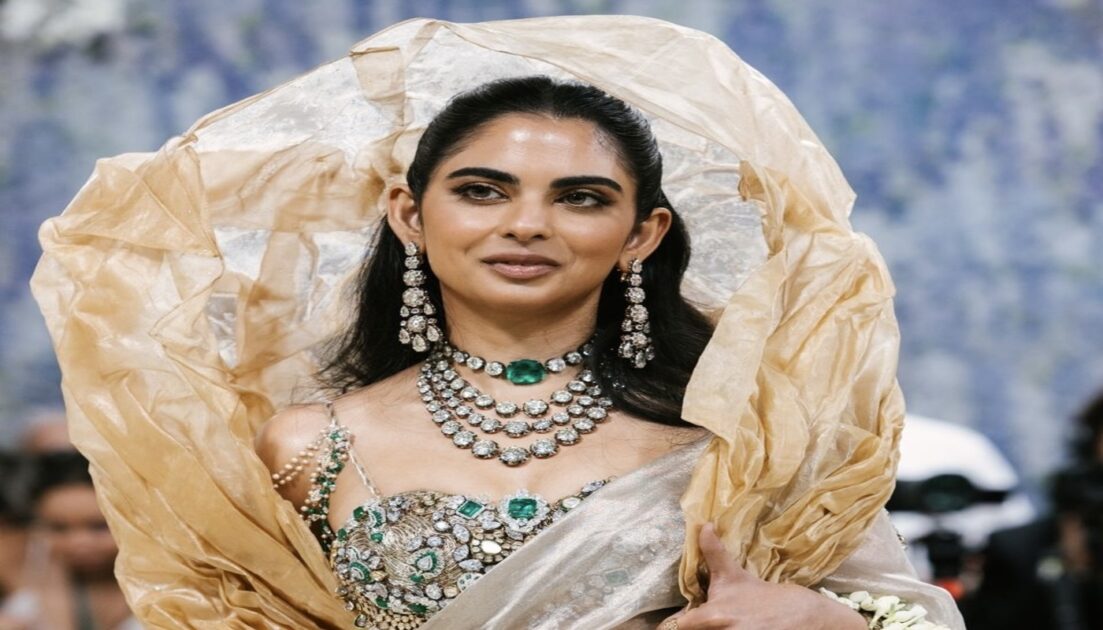
In 2026, one narrative stood out with unmistakable clarity: South Asia had arrived—not as a fleeting trend, but as a defining force in global fashion. At the heart of this moment was Isha Ambani, whose appearance in a gold sari-gown designed by Gaurav Gupta was not just visually striking—it was culturally resonant, historically layered, and artistically profound.
Her look was not simply an outfit. It was a statement. A bridge between past and present. A celebration of craftsmanship that has existed for centuries but is only now receiving the global recognition it deserves.
The Met Gala: A Stage for Cultural Dialogue
To understand the significance of Isha Ambani’s presence, it is essential to first understand what the Met Gala represents.
Often described as “fashion’s biggest night,” the event is organized as a fundraiser for the Costume Institute. But beyond its philanthropic purpose, it serves as a platform where fashion intersects with art, history, and identity.
Each year’s theme invites attendees to interpret concepts that often draw from global cultures. In recent years, there has been a noticeable shift toward inclusivity—an effort to move beyond Eurocentric narratives and embrace diverse traditions.
The 2026 gala reflected this evolution. South Asian fashion, long admired but underrepresented, took center stage in a way that felt both overdue and transformative.
Isha Ambani: A Cultural Ambassador in Couture
Isha Ambani is not just a business leader or a prominent public figure—she is increasingly becoming a cultural ambassador.
Her fashion choices have consistently reflected a deep appreciation for Indian craftsmanship. Whether attending global events or local celebrations, she has shown a commitment to showcasing the work of Indian designers and artisans.
At the Met Gala 2026, this commitment reached its most powerful expression.
Her ensemble—a custom gold sari-gown—was a masterclass in storytelling through fashion. Designed by Gaurav Gupta and styled by Anaita Shroff Adajania, the look combined traditional Indian elements with contemporary couture techniques.
But what made it truly remarkable was its foundation: craftsmanship.
The Sari Reimagined
The sari is one of the oldest garments in the world, with a history that spans thousands of years. It is not just clothing—it is identity, tradition, and artistry woven into fabric.
In recent years, designers have experimented with reimagining the sari for global audiences. The sari-gown, in particular, has emerged as a hybrid form that retains the essence of the original while adapting to modern silhouettes.
Gaurav Gupta’s interpretation took this concept to another level.
The gold sari worn by Isha Ambani was not merely draped—it was sculpted. It flowed like liquid metal, creating a sense of movement that felt almost otherworldly.
Yet, despite its futuristic appearance, the garment remained deeply rooted in tradition.
Gold as a Narrative Medium
The use of gold in the sari was not just an aesthetic choice—it was symbolic.
Gold has long held cultural significance in South Asia. It represents wealth, prosperity, divinity, and continuity. In art and architecture, gold has been used to depict the sacred and the eternal.
By weaving pure gold threads into the fabric, the design elevated the sari from a garment to an artifact.
This was not fast fashion. This was slow, deliberate craftsmanship—created by master artisans at Swadesh, an initiative dedicated to preserving traditional Indian crafts.
Every thread carried history. Every detail reflected skill passed down through generations.
The Artistry of Pichwai
One of the most striking elements of the ensemble was the sari border, which featured hand-painted motifs inspired by pichwai art.
Pichwai is a traditional Indian art form that originated in Rajasthan. Known for its intricate detailing and spiritual themes, it is often used to depict scenes associated with Lord Krishna.
Incorporating pichwai-inspired designs into the sari added another layer of meaning. It connected the garment to a broader artistic tradition, transforming it into a canvas.
This fusion of textile and painting blurred the boundaries between fashion and fine art.
Styling as Storytelling
Anaita Shroff Adajania’s styling played a crucial role in bringing the look together.
The diamond-studded blouse added a contemporary edge, creating contrast against the traditional elements of the sari. The jewelry, while luxurious, was carefully curated to complement rather than overshadow the garment.
The overall effect was balanced—neither overly traditional nor excessively modern.
It was a reminder that styling is not just about aesthetics; it is about narrative.
A Collective South Asian Presence
While Isha Ambani’s look was undoubtedly one of the highlights, she was not alone in representing South Asia at the gala.
Designers and cultural figures from the region made a strong impression, each contributing to a broader narrative of visibility and recognition.
Prabal Gurung, known for his ability to blend cultural heritage with global appeal, dressed attendees who embraced South Asian aesthetics in their own ways.
Meanwhile, figures like Karan Johar and Manish Malhotra brought their own interpretations of Indian fashion to the global stage.
This collective presence signaled a shift—from individual representation to a cultural movement.
Why This Moment Matters
The prominence of South Asian fashion at the Met Gala 2026 is significant for several reasons.
1. Recognition of Craftsmanship
For decades, Indian artisans have produced some of the most intricate textiles in the world. Yet, their work has often been undervalued or overlooked in global fashion narratives.
This moment brought their contributions into the spotlight.
2. Redefining Luxury
Luxury is no longer defined solely by Western standards. The intricate handwork, cultural depth, and historical significance of South Asian garments are redefining what luxury means.
3. Cultural Representation
Representation is not just about visibility—it is about authenticity. Seeing South Asian fashion presented on its own terms, rather than through a Western lens, is a powerful shift.
The Globalization of Indian Fashion
Indian fashion has been gradually gaining international recognition, but events like the Met Gala accelerate this process.
Designers like Gaurav Gupta are pushing boundaries, creating pieces that resonate with global audiences while staying true to their roots.
This duality—global appeal and cultural authenticity—is key to the future of fashion.
The Role of Fashion in Cultural Diplomacy
Fashion is increasingly being recognized as a form of soft power.
When figures like Isha Ambani wear traditional garments on global platforms, they are not just making style statements—they are engaging in cultural diplomacy.
They are telling the world that Indian craftsmanship deserves attention, respect, and celebration.
Social Media and the Amplification of Culture
The impact of Isha Ambani’s look was amplified by social media.
Images of her ensemble circulated widely, sparking discussions about design, craftsmanship, and cultural identity.
This digital amplification plays a crucial role in shaping global perceptions. It allows audiences from around the world to engage with cultures they may not be familiar with.
The Intersection of Tradition and Innovation
One of the most compelling aspects of this moment is the way it balances tradition and innovation.
The sari, a centuries-old garment, was reimagined using modern techniques. Traditional art forms were incorporated into contemporary design.
This intersection is where the future of fashion lies.
Challenges and Opportunities
While the increased visibility of South Asian fashion is a positive development, it also comes with challenges.
- Risk of cultural appropriation: As global interest grows, there is a need to ensure that cultural elements are represented respectfully.
- Sustainability concerns: High demand for handcrafted items must be balanced with ethical production practices.
- Preservation of authenticity: Maintaining the integrity of traditional crafts while adapting to modern markets is a delicate balance.
At the same time, these challenges present opportunities for growth, innovation, and collaboration.
A New Narrative for the Future
The Met Gala 2026 may be remembered as a turning point—a moment when South Asian fashion moved from the margins to the mainstream.
Isha Ambani’s appearance encapsulated this shift. Her sari was not just a garment; it was a narrative woven from history, art, and identity.
It told a story of resilience, creativity, and cultural pride.
Final Reflections
Fashion has the power to communicate what words often cannot.
In a single evening, on a single red carpet, South Asian designers, artisans, and cultural figures demonstrated the depth and richness of their heritage.
Isha Ambani’s gold sari-gown stood as a testament to this legacy.
It reminded the world that true luxury is not just about opulence—it is about meaning.
And as the global fashion industry continues to evolve, one thing is clear:
The future is not about replacing traditions—it is about celebrating them.
In 2026, on the steps of the Met Gala, that celebration shone in gold.