 by
by In an industry where spectacle often relies on extremes—extreme action, extreme styling, extreme personas—there are rare moments that quietly disrupt expectations. Moments that don’t scream for attention but instead linger, resonate, and redefine how we perceive strength, beauty, and identity.
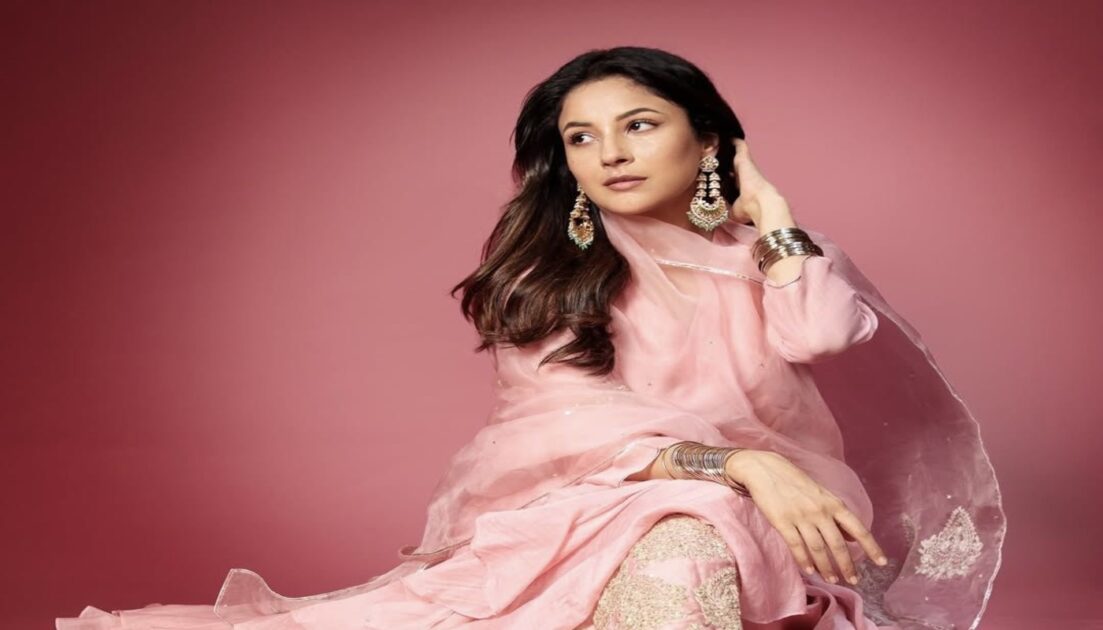
Shehnaaz Gill performing stunts in a soft pink suit is one such moment.
At first glance, it might seem like a simple visual contrast: a feminine outfit placed in a physically demanding environment. But look closer, and it becomes something much more powerful. It is a statement about duality. About breaking stereotypes. About reclaiming what femininity looks like in spaces traditionally dominated by toughness and grit.
This is not just about fashion. It’s about representation, perception, and evolution.
The Visual That Sparked Conversation
The image of Shehnaaz Gill dressed in a soft pink suit while engaging in high-intensity stunts has quickly captured public imagination. The softness of the color, the fluidity of the fabric, and the elegance of the silhouette stand in stark contrast to the physicality of the tasks she undertakes.
It is this contrast that makes the moment so compelling.
Pink, historically associated with delicacy and femininity, is rarely linked with strength or endurance in mainstream media narratives. Stunts, on the other hand, are often framed as masculine—requiring power, fearlessness, and physical dominance.
By combining the two, Shehnaaz disrupts both narratives.
She doesn’t abandon femininity to perform strength. She brings them together.
Breaking the Binary of Strength and Softness
For decades, popular culture has reinforced a binary: strength is hard, softness is weak. Women who wanted to be seen as strong often had to shed visible markers of femininity—opting for darker tones, sharper silhouettes, and restrained expressions.
But this binary is increasingly being challenged.
Shehnaaz Gill’s choice to perform stunts in a pink suit is a visual representation of this shift. It suggests that strength does not require the rejection of softness. That resilience can coexist with grace.
This is particularly significant in the context of Indian entertainment, where female representation has often oscillated between extremes—the fragile heroine and the hyper-masculinized action figure.
What Shehnaaz presents is something different: a balanced, authentic portrayal of strength.
The Evolution of Shehnaaz Gill
To fully appreciate the impact of this moment, it is important to understand Shehnaaz Gill’s journey.
Shehnaaz first entered the public eye with a personality that was vibrant, emotional, and unapologetically expressive. Over time, she has undergone a visible transformation—not just physically, but emotionally and professionally.
Her growth has been marked by:
- Increased confidence
- Greater self-awareness
- A willingness to take on new challenges
Performing stunts is not just a professional choice—it is a personal statement. It reflects her readiness to step out of comfort zones and redefine her own narrative.
The pink suit, in this context, becomes symbolic. It represents continuity—the preservation of her identity even as she evolves.
Fashion as a Language of Identity
Fashion has always been more than just clothing. It is a form of communication—a way of expressing who we are, how we feel, and how we want to be perceived.
In Shehnaaz Gill’s case, the soft pink suit communicates multiple layers of meaning:
- Femininity: Embracing traditionally “soft” aesthetics
- Confidence: Wearing something unconventional in a high-pressure environment
- Individuality: Refusing to conform to expected norms
The choice of color is particularly significant. Pink has undergone a cultural redefinition in recent years. Once dismissed as overly delicate, it is now being reclaimed as a symbol of power, self-expression, and modern femininity.
By wearing pink in a context of physical challenge, Shehnaaz contributes to this redefinition.
The Psychology of Color and Perception
Color plays a crucial role in shaping perception.
Pink is often associated with calmness, warmth, and compassion. It evokes a sense of softness and approachability. When placed in a high-adrenaline context, it creates a visual tension that draws attention.
This tension is not just aesthetic—it is psychological.
Viewers are forced to reconcile two seemingly opposing ideas: softness and strength. This cognitive dissonance makes the moment memorable.
It challenges preconceived notions and encourages a more nuanced understanding of identity.
The Physicality of Stunts: Beyond the Glamour
While the visual contrast is striking, it is important not to overlook the physical demands of stunt performance.
Stunts require:
- Strength and endurance
- Mental focus
- Fear management
- Quick decision-making
Performing these tasks in a tailored suit—rather than specialized athletic gear—adds another layer of complexity.
It demonstrates adaptability. It shows that performance is not solely dependent on attire, but on mindset and capability.
At the same time, it highlights the often-overlooked reality of entertainment: the blending of performance and practicality.
Rewriting the Narrative of the “Strong Woman”
The idea of the “strong woman” has evolved significantly over time.
Earlier portrayals often emphasized physical strength alone, sometimes at the expense of emotional depth or femininity. More recent narratives, however, are moving toward a more holistic understanding of strength.
Shehnaaz Gill’s moment fits into this evolution.
She represents a version of strength that is:
- Emotional and physical
- Soft yet resilient
- Expressive yet composed
This multidimensional portrayal is more reflective of real-life experiences. It acknowledges that strength is not a single trait, but a combination of qualities.
Social Media and the Amplification of Symbolism
In the age of digital media, visuals travel faster than ever.
The image of Shehnaaz Gill in a pink suit performing stunts has been widely shared, discussed, and interpreted across platforms. Social media users have praised the look, analyzed its symbolism, and celebrated its uniqueness.
This amplification plays a crucial role in shaping cultural narratives.
What might have been a fleeting moment on screen becomes a larger conversation about gender, identity, and representation.
It also demonstrates the power of visual storytelling. A single image can spark discussions that go far beyond its immediate context.
The Intersection of Glamour and Grit
One of the most compelling aspects of this moment is the seamless blending of glamour and grit.
Traditionally, these two elements have been treated as opposites. Glamour is associated with appearance, while grit is associated with effort.
Shehnaaz Gill’s performance challenges this separation.
She shows that it is possible to be both glamorous and hardworking, elegant and determined.
This intersection is increasingly relevant in modern storytelling, where audiences are drawn to authenticity and complexity.
Cultural Context: Femininity in South Asian Media
In South Asian media, femininity has often been portrayed through specific visual cues—soft colors, delicate fabrics, and graceful movements.
While these elements are not inherently limiting, they have sometimes been used to confine female characters to certain roles.
By placing these visual cues in a context of physical challenge, Shehnaaz disrupts these limitations.
She reclaims femininity as a source of strength rather than a constraint.
This shift is significant, particularly in a cultural context where gender roles are still evolving.
Inspiration and Representation
Moments like these have a broader impact beyond entertainment.
They serve as inspiration for viewers, particularly young women, who are navigating their own identities.
Seeing someone embrace both strength and softness can be empowering. It sends a message that you don’t have to choose between different aspects of yourself.
You can be:
- Strong and sensitive
- Bold and gentle
- Fearless and vulnerable
Representation matters—not just in terms of visibility, but in terms of diversity of expression.
The Role of Styling in Performance
It’s worth noting that the impact of this moment is not accidental. It is the result of deliberate choices in styling and presentation.
The soft pink suit, the fit, the fabric—all contribute to the overall effect.
Styling in performance contexts is often overlooked, but it plays a crucial role in shaping perception.
In this case, it transforms a stunt sequence into a statement.
Beyond the Moment: What It Represents
While the image itself is powerful, its significance lies in what it represents.
It is part of a larger cultural shift toward:
- Breaking stereotypes
- Embracing individuality
- Redefining traditional roles
Shehnaaz Gill’s performance is not an isolated incident. It is a reflection of changing attitudes within the entertainment industry and society at large.
The Future of Representation in Entertainment
As audiences become more diverse and more aware, the demand for nuanced representation continues to grow.
Moments like these set a precedent. They encourage creators to think beyond conventional narratives and explore new ways of storytelling.
They also highlight the importance of authenticity.
Audiences are no longer satisfied with one-dimensional portrayals. They want complexity, relatability, and depth.
Final Thoughts
Shehnaaz Gill performing stunts in a soft pink suit is more than just a visually striking moment—it is a cultural statement.
It challenges outdated notions of strength and femininity. It celebrates individuality. It demonstrates that identity is not about choosing one trait over another, but about embracing the full spectrum of who you are.
In a world that often tries to categorize and define, moments like these remind us of the power of fluidity.
They show us that strength can be soft, that elegance can be fierce, and that true confidence lies in authenticity.
And perhaps most importantly, they remind us that sometimes, the most powerful statements are the ones made quietly—through a single, unforgettable image.