 by
by In an industry where cameras never stop flashing and celebrity movement instantly becomes public content, a small exchange can quickly evolve into a larger conversation. That is exactly what happened when the paparazzi publicly apologised to Salman Khan at the success celebration of Riteish Deshmukh’s film Raja Shivaji. What appeared to be a brief interaction soon turned into one of the most discussed entertainment moments online—not merely because of celebrity drama, but because it reopened an old and complicated debate: where should the line between public curiosity and personal privacy be drawn?
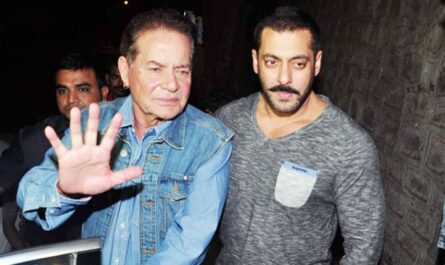
The incident occurred after tensions had reportedly emerged during a hospital-related encounter involving Salman Khan and photographers. Reports suggested the actor had become upset over the circumstances surrounding the media attention and felt that certain boundaries had been crossed. Soon afterward, at the Raja Shivaji success party, photographers apologised publicly, and Salman accepted the gesture in his characteristic style. His now widely discussed reaction—asking them to say sorry loudly—instantly became a viral social media moment.
Yet beneath the humor and entertainment value of the exchange lies a deeper story. Celebrity culture today functions differently than it did even a decade ago. Fame no longer exists only on movie screens, magazine covers, or television interviews. Celebrities are now continuously documented. Every airport appearance, hospital visit, family dinner, gym session, and private outing can become content within minutes. The Salman Khan incident reveals not just one actor’s frustration, but also the increasing pressure of living under permanent observation.
The Rise of Paparazzi Culture in India
Paparazzi culture in India has transformed dramatically over the past fifteen years. Earlier, celebrity sightings were occasional and often linked to movie promotions, award shows, or formal events. Today, however, entertainment media has shifted toward lifestyle-based coverage.
Actors are followed to gyms.
Celebrities are photographed leaving clinics.
Families are documented at airports.
Children of stars become public subjects.
Even routine movements become headlines.
The rise of digital platforms accelerated this transformation. Social media algorithms reward immediacy. The quicker a photograph or short clip reaches audiences, the more engagement it receives. Consequently, paparazzi culture increasingly operates within a speed-driven ecosystem where content value often depends on exclusivity.
Within this system, celebrities become both individuals and products. Their everyday lives generate public interest regardless of whether they are promoting projects or simply carrying out personal responsibilities.
The problem, however, is that public fascination does not always distinguish between access and entitlement.
Just because audiences enjoy seeing celebrity moments does not necessarily mean every moment is meant for public consumption.
That distinction often becomes blurred.
Why Hospital Incidents Trigger Different Reactions
Not all public locations carry the same emotional weight.
Hospitals occupy a uniquely sensitive space.
People visit hospitals during emergencies, grief, illness, fear, or family crises. Privacy expectations naturally increase in such environments.
Reports surrounding Salman Khan suggested that he felt photographers failed to respect the seriousness of the situation. Later discussions indicated that the visit involved concern for someone close to him, making the atmosphere emotionally charged.
The emotional context changes everything.
A celebrity attending a movie screening expects cameras.
A celebrity promoting a brand anticipates photographs.
A celebrity stepping into a hospital often does not.
This distinction matters because human emotions remain unchanged by fame. Public figures experience fear, concern, stress, and vulnerability exactly like everyone else.
Celebrities may become accustomed to attention, but emotional situations often alter their tolerance levels.
For fans, a celebrity hospital appearance can appear like another news update.
For the individual involved, it may represent a deeply personal moment.
That gap in perception often creates conflict.
Salman Khan and His Long Relationship with Media Attention
Throughout his career, Salman Khan’s relationship with media coverage has been complex.
For decades he has existed among India’s most photographed stars. Few actors have experienced the scale of public attention that accompanies his career.
From blockbuster releases and public appearances to controversies and personal moments, Salman has remained continuously visible.
However, constant visibility creates unusual psychological realities.
When a public figure spends years being photographed daily, ordinary life gradually disappears.
Going somewhere anonymously becomes difficult.
Spontaneous moments become rare.
Privacy starts shrinking.
Simple tasks become logistical exercises.
Over time, even small invasions can feel larger because they occur repeatedly.
The hospital incident likely resonated strongly because it reflected accumulated pressures rather than one isolated interaction.
People often interpret celebrity reactions as sudden overreactions.
Yet public frustration rarely emerges from a single event.
Instead, it frequently develops after repeated experiences.
The visible reaction becomes the final expression of many invisible moments.
The Public Apology: Why It Felt Different
The apology itself drew attention because celebrity-media disagreements do not always end peacefully.
Many controversies escalate.
Arguments become social media battles.
Narratives become polarized.
Fans choose sides.
Public relations teams intervene.
This situation unfolded differently.
At the Raja Shivaji success event, photographers reportedly apologised directly. Salman accepted it publicly and even added humor to the moment. Videos quickly spread online because audiences appreciated the lighter tone and perceived resolution.
The interaction mattered because apologies are relatively rare in entertainment narratives.
Modern online culture often rewards conflict.
Disagreements produce clicks.
Arguments create trends.
Outrage drives engagement.
Resolution, on the other hand, receives less attention.
This event stood out because it offered closure.
Rather than extending controversy, both sides appeared willing to move forward.
That simple act may explain why audiences responded positively.
Celebrity Privacy in the Era of Constant Content
The Salman episode also reflects a wider global issue.
Celebrity privacy debates are no longer restricted to India.
Across Hollywood, European media, Korean entertainment industries, and digital influencer culture, public figures increasingly discuss surveillance-like attention.
Technology changed expectations.
Years ago photographers captured limited images.
Today smartphones create millions of cameras.
Fan pages circulate real-time locations.
Social media tracks movements instantly.
Artificial intelligence enhances visibility further.
Privacy becomes harder to preserve.
The result is a culture where audiences sometimes unconsciously assume permanent access.
Yet visibility does not eliminate humanity.
Celebrities still have personal relationships.
They still experience family emergencies.
They still require emotional space.
The challenge lies in balancing public interest with ethical boundaries.
Social Media’s Role in Amplifying Celebrity Incidents
The incident gained extraordinary traction partly because of social media dynamics.
Short-form videos prioritize emotionally charged interactions.
A few seconds of visible frustration can become viral before audiences know the full story.
Context often arrives later.
Reactions arrive first.
This pattern affects public perception significantly.
Viewers initially encounter fragments:
An angry expression.
A brief comment.
A short confrontation.
Only afterward do details emerge.
Consequently, narratives become shaped by first impressions rather than complete understanding.
The Salman Khan story followed a similar path.
Initial attention centered around visible tension.
Later reporting introduced emotional context surrounding the hospital visit and reasons behind his frustration.
This sequence highlights a broader challenge of digital culture:
Speed frequently outruns understanding.
Why Audiences Feel Personally Invested
Celebrity stories create unusually emotional reactions because audiences develop long-term familiarity with public figures.
Fans watch careers evolve across years or decades.
They witness successes, failures, interviews, and personal milestones.
This repeated exposure creates psychological closeness.
Researchers sometimes describe this as a parasocial relationship—one-sided emotional familiarity with media figures.
Fans feel they know celebrities personally.
Consequently, they often react strongly when celebrities appear upset or vulnerable.
Some viewers supported Salman’s frustration.
Others defended media access.
Many simply enjoyed the dramatic aspect.
All responses reflected emotional investment.
That investment explains why relatively small interactions sometimes dominate online conversations.
People do not merely consume celebrity stories.
They emotionally participate in them.
Riteish Deshmukh’s Celebration Becoming an Unexpected News Stage
Ironically, the apology occurred during celebrations surrounding Raja Shivaji, a project receiving considerable attention for its commercial success and impact.
Yet entertainment culture often behaves unpredictably.
Red carpets become news arenas.
Success parties become stages for unrelated narratives.
Unexpected moments sometimes overshadow planned celebrations.
Instead of discussions focusing entirely on cinema achievements, conversations shifted toward celebrity-media relationships.
This demonstrates how modern entertainment ecosystems operate.
Events no longer remain confined to their original purpose.
Everything becomes interconnected.
A Story Bigger Than an Apology
At first glance, the Salman Khan-paparazzi interaction appears simple:
An argument happened.
An apology followed.
The issue ended.
But culturally, it represents something larger.
It asks difficult questions:
How much access should public figures surrender?
Should sensitive spaces have different rules?
Where do professional responsibilities end?
How should entertainment media evolve in the social media age?
There are no easy answers.
Celebrities rely on visibility.
Media depends on access.
Audiences enjoy connection.
All three systems depend upon each other.
Yet coexistence requires boundaries.
The incident involving Salman Khan ultimately reminded audiences that public figures may live extraordinary lives, but their emotional realities remain deeply ordinary. Behind headlines, viral clips, and flashing cameras are individuals navigating moments of stress, concern, and vulnerability.
Perhaps that is why the public apology resonated.
Not because controversy ended.
But because, briefly, humanity became more visible than spectacle.