 by
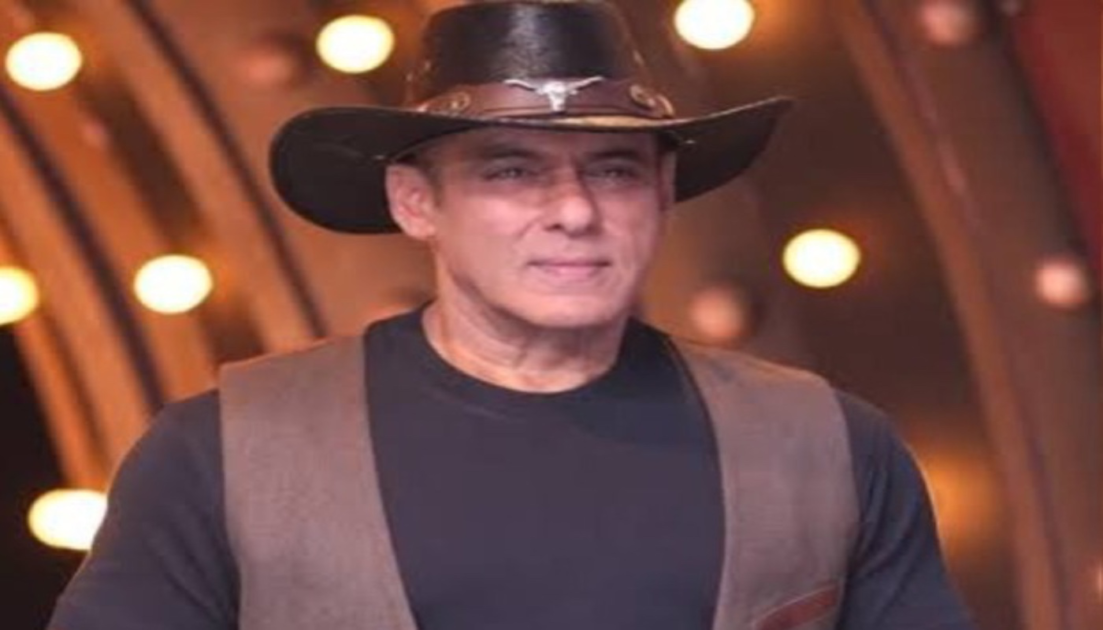
by Salman Khan Breaks Silence on Bigg Boss 20 Casting Criticism: “Sometimes Our Selection Also Falters”
Reality television thrives on uncertainty. Viewers tune in because they do not know which relationships will flourish, which rivalries will erupt, who will emerge as a leader and, ultimately, who will become the season’s most talked-about personality. Yet the unpredictability that makes a reality show compelling can also become its biggest challenge. When a season fails to immediately produce the drama or personalities audiences expect, the criticism often begins with one question: Was the casting wrong?
That conversation has now reached Bigg Boss 20, with host Salman Khan addressing criticism surrounding the season’s contestant selection during the latest Weekend Ka Vaar episode.
Rather than dismissing the criticism, Salman acknowledged that the extensive casting process does not always result in a selection that satisfies everyone. In a candid observation, he admitted that “sometimes our selection also falters,” offering an unusually direct acknowledgment of the uncertainty involved in putting together a reality-show cast.
His comments add an important dimension to the ongoing discussion around Bigg Boss 20. Casting is often treated by audiences as a straightforward exercise: find interesting people, put them inside the house and allow their personalities to generate entertainment. In reality, the process is considerably more complicated. Producers have to consider personalities, backgrounds, interpersonal dynamics, television experience, availability, willingness to participate, audience appeal and the unpredictable chemistry that develops once contestants are isolated from the outside world.
The result can never be guaranteed.
Salman Khan Acknowledges That Casting Is Not Always Perfect
For a show as established as Bigg Boss, casting inevitably becomes one of the most scrutinised elements of every season. The contestants are effectively the engine of the programme. While the format, tasks, house environment and host remain important, it is the people inside the house who create the conversations that keep viewers watching.
That makes criticism of casting particularly significant.
During Weekend Ka Vaar, Salman explained that selecting contestants involves a substantial process. However, he also recognised that even a lengthy and carefully considered process can produce an imperfect result.
His statement that “sometimes our selection also falters” is notable because it does not attempt to present the casting process as infallible. Instead, it recognises a reality that applies to almost every form of entertainment programming: an individual who appears promising during auditions, meetings and evaluations may behave very differently once placed in a highly unusual environment.
A person may seem charismatic in an interview but become reserved inside the house. Another contestant might initially appear relatively low-key but gradually develop into one of the season’s most compelling personalities. Someone expected to create conflict might instead avoid confrontation, while a seemingly unpredictable participant could become the centre of multiple storylines.
Reality television, by definition, cannot completely script these outcomes.
This is precisely why casting Bigg Boss is different from casting a conventional fictional programme. Actors are selected for defined roles. Reality-show contestants are selected partly for who they are, but producers must also anticipate how their personalities might interact with one another.
There is no foolproof formula.
Why Bigg Boss Casting Attracts So Much Attention
The scale of Bigg Boss means that casting criticism can become almost as prominent as the contestants themselves.
Before a season begins, speculation about the potential lineup frequently becomes part of the entertainment cycle. Audiences discuss possible names, debate whether a particular celebrity would be suitable for the house and predict which combinations could create memorable television.
Once the season starts, those expectations become even more intense.
Viewers do not simply evaluate individual contestants. They evaluate the cast as a collective.
A contestant who may be interesting independently might not generate much excitement if there is little chemistry with the rest of the house. Similarly, a participant who initially appears ordinary can become extremely entertaining when placed alongside a strong personality.
This makes casting a delicate balancing act.
A successful Bigg Boss cast usually needs different types of personalities. There may be outspoken contestants, emotionally expressive participants, strategic thinkers, entertainers, quieter observers and people capable of forming unexpected relationships. Too many contestants with similar personalities can make the house feel repetitive. Too many naturally dominant personalities can produce constant confrontation but little emotional variety.
The challenge is therefore not simply to find “interesting people.”
It is to create an interesting ecosystem.
The Audience Wants More Than Famous Names
One of the biggest misconceptions surrounding reality-show casting is that a strong cast necessarily means a cast filled with highly famous personalities.
That is not always the case.
Over the years, reality television has demonstrated that fame before entering the house does not automatically translate into entertainment inside it. A contestant can arrive with an established fan base and considerable public recognition but struggle to make an impact within the programme.
At the same time, someone relatively unfamiliar to mainstream viewers can become a breakout personality.
That distinction matters when discussing Bigg Boss 20.
Audiences increasingly expect contestants to offer something beyond their existing celebrity identities. They want personalities who are willing to participate, communicate, form relationships, disagree, compete and reveal different sides of themselves.
In other words, viewers are not necessarily asking only, “Who is famous?”
They are also asking, “Who has something to say?”
The modern reality-TV audience is particularly sensitive to contestants who appear overly conscious of their public image. Because Bigg Boss places participants under constant observation, authenticity has become one of the most valuable qualities a contestant can possess.
That authenticity cannot always be predicted during casting.
Salman’s Other Message: Contestants Must Use the Opportunity
Salman’s comments were not limited to the casting process itself. He also encouraged the housemates to make effective use of their time on the show rather than waiting for opportunities to come to them.
This is an important point because Bigg Boss offers contestants an unusually large platform.
Once inside the house, contestants have access to millions of viewers. Their conversations, reactions, relationships, disagreements and personal stories can become part of the public conversation almost instantly.
But simply being inside the house does not guarantee visibility.
Contestants have to actively participate in the experience.
Salman’s message essentially places part of the responsibility back on the housemates. If a contestant feels that they are not receiving enough attention, the answer cannot always be attributed to casting, editing or other external factors. Participants also have to make themselves part of the narrative.
This is one of the central paradoxes of reality television.
The show provides the platform, but the contestant has to create the moment.
The Pressure of Being Watched
A Bigg Boss contestant is operating under extraordinary circumstances.
The house removes many of the ordinary structures of daily life. Contestants live together, compete for tasks and nominations, form friendships and alliances, experience disagreements and remain aware that their behaviour is being watched by an enormous television audience.
That environment can affect personality.
Someone who is naturally confident may become cautious. A person who usually avoids conflict may be pushed into confrontation. Relationships can develop rapidly because participants are spending an unusual amount of time together.
The cameras capture these changes, but the audience interprets them through its own expectations.
This can create another layer of criticism.
If a contestant behaves quietly, viewers may call them boring. If they are confrontational, they may be criticised for creating unnecessary drama. If they remain diplomatic, audiences may accuse them of playing safe. If they express strong emotions, they may be labelled dramatic.
The contestant therefore faces an impossible balancing act: be authentic, but also be interesting; be strategic, but not artificial; be outspoken, but not excessively aggressive.
No casting process can guarantee how an individual will navigate those contradictions.
When Audience Expectations Become Part of the Problem
There is also a larger cultural shift behind the criticism of reality television.
Viewers today are not passive consumers. Social media has transformed them into active commentators, critics and participants in the entertainment ecosystem.
A Bigg Boss episode does not end when the television broadcast finishes.
Clips circulate online. Contestants trend on social media. Fans debate nominations and tasks. Memes emerge from individual moments. Viewers defend their favourites and criticise those they dislike.
This means audience expectations can form extremely quickly.
A contestant may be judged within a few episodes, sometimes within a few minutes of a particular interaction. If the cast does not immediately produce the type of content viewers anticipated, criticism can become widespread.
But reality television needs time.
People reveal themselves gradually.
A contestant who seems unremarkable during the opening days may become central to the story weeks later. Likewise, someone who appears to be a major personality during the premiere may lose momentum.
This is why assessing an entire season solely through its early episodes can be misleading.
The Importance of Chemistry Inside the House
Casting should ultimately be understood as a chemistry exercise.
Imagine assembling ten or fifteen individually fascinating people. That does not necessarily create an entertaining ensemble.
The personalities have to interact.
Friendships need to form. Rivalries need to develop. Different opinions need to collide. Contestants need enough individuality to stand apart while also creating relationships that audiences can follow.
This is where reality-show casting becomes partly unpredictable.
Producers can study interviews, social-media behaviour, professional backgrounds and public appearances. They can speak to potential contestants extensively. They can attempt to understand temperament and communication style.
But they cannot completely simulate what will happen when strangers live together under pressure.
Human relationships are too complicated for that.
Two people who seem incompatible during casting may become close friends. Two contestants expected to bond may clash almost immediately. A person selected as a possible supporting personality may unexpectedly become a central figure.
The house itself becomes an experiment.
“Selection Also Falters”: Why the Admission Matters
Salman’s acknowledgment that the selection can sometimes falter is particularly interesting because it humanises a process that viewers rarely see.
Audiences generally see the final cast.
They do not see every discussion that happened before the announcement. They do not see the candidates who were considered and ultimately rejected. They do not see how potential combinations were evaluated or how availability and logistical considerations influence casting.
The final lineup can therefore appear deceptively simple.
From the outside, it may seem as though producers merely selected a group of people.
In reality, casting a major reality show is a long process involving numerous variables.
Salman’s remark brings that unseen complexity into the public conversation.
It also subtly acknowledges that the producers are not immune to mistakes. In an industry where programmes are often expected to maintain an image of control, admitting that selections can occasionally miss the mark is a refreshingly realistic perspective.
Can a Contestant Rescue a Weak Casting Choice?
The answer may sometimes be yes.
One of the most fascinating aspects of Bigg Boss is that contestants can change audience perceptions after entering the house.
A participant may not appear particularly promising based on their introduction package. Yet once viewers see their humour, vulnerability, competitive instincts or relationships with others, the perception can change.
The reverse can happen too.
Someone who enters with considerable hype may fail to connect with the audience.
This demonstrates that casting is only the beginning.
The contestant’s actions ultimately determine the extent to which the opportunity becomes meaningful.
That appears to be part of Salman’s broader message to the housemates: do not wait for the show to manufacture your moment. Create one through your own participation.
Reality Television Has Always Been About the Unexpected
The irony is that unpredictability is actually one of Bigg Boss’s fundamental attractions.
If producers could accurately predict every argument, friendship, breakup, alliance, emotional confession and strategic move, the show would arguably become less interesting.
The uncertainty is the product.
That means a season’s casting cannot be evaluated exclusively by whether every contestant fits an audience’s initial idea of entertainment.
Sometimes the most compelling television emerges from unexpected combinations.
A quiet contestant may become an excellent listener. A comic personality may become emotionally vulnerable. A strategic player may reveal a strong sense of loyalty. A contestant initially dismissed by viewers may eventually establish a distinct identity.
These developments are difficult to manufacture.
They have to emerge organically.
The Changing Definition of a “Good” Bigg Boss Contestant
Another reason casting debates have become more complicated is that the definition of a successful reality-show contestant has changed.
Earlier, visibility and confrontation could dominate the conversation. Today, audiences often reward a much wider range of qualities.
Humour can generate popularity.
Emotional honesty can create connection.
Strategic intelligence can attract admiration.
Strong friendships can become a major storyline.
Even a contestant who consistently provides thoughtful commentary may build a following without being involved in every major confrontation.
This means producers are no longer searching for only one type of personality.
They are attempting to construct a diverse social environment.
The success of that environment depends on how the personalities interact.
Why Salman’s Role Matters in the Conversation
As the host, Salman occupies a unique position.
He is neither a housemate nor a conventional narrator. He interacts with contestants, comments on their behaviour and becomes a significant part of the weekly conversation.
When he addresses casting criticism, therefore, his remarks carry additional weight.
His acknowledgment suggests that criticism is not necessarily being ignored by the show’s team.
At the same time, his encouragement for contestants to make the most of their opportunity reinforces the idea that Bigg Boss cannot simply be expected to create stars automatically.
A reality show can provide visibility.
It cannot provide a personality.
That distinction is crucial.
The Opportunity Behind the Criticism
Every contestant entering Bigg Boss receives something that many aspiring entertainers spend years trying to obtain: sustained public attention.
The platform can introduce contestants to viewers who may never have encountered them otherwise.
But visibility is only valuable when participants know how to use it.
A contestant who spends the entire season waiting for the perfect moment may discover that the moment never arrives. Someone else may take the initiative, tell their story, build relationships and become more memorable.
Salman’s advice therefore extends beyond the immediate criticism of casting.
It is a reminder that opportunity and outcome are two different things.
The show can open the door.
The contestant has to walk through it.
What the Bigg Boss 20 Debate Says About Reality TV Today
The controversy surrounding Bigg Boss 20 casting reflects a much broader transformation in Indian entertainment.
Reality television is now consumed across multiple platforms. Traditional television broadcasts coexist with streaming, short-form video and social media discussion. Viewers can instantly react to a contestant’s behaviour and compare the season with previous editions.
As a result, expectations are enormous.
Audiences want compelling personalities from the first episode. They want memorable moments, strong rivalries, genuine friendships and emotional storytelling. They also want contestants who feel authentic rather than manufactured.
Meeting all those expectations is difficult.
Casting can improve the odds, but it cannot eliminate uncertainty.
That is perhaps the most important takeaway from Salman’s comments.
A Season Cannot Be Judged Only by Its Casting List
Ultimately, whether Bigg Boss 20 succeeds will depend on much more than the names announced at the beginning.
It will depend on how contestants evolve.
It will depend on which relationships become important, which conflicts develop, which personalities reveal unexpected sides and how the house dynamics change as the competition progresses.
Most importantly, it will depend on whether the contestants respond to the opportunity they have been given.
Salman Khan’s admission that “sometimes our selection also falters” does not necessarily mean that the entire casting process has failed. Instead, it acknowledges something fundamental about reality television: no selection process can completely predict human behaviour.
The real test begins once the cameras start rolling.
For viewers, that means the casting debate may be only the first chapter. Contestants who are currently being questioned may still have the opportunity to change perceptions. Those who have not yet made an impact can still find their voice. And personalities who appear promising today may surprise audiences in completely different ways tomorrow.
In a format built around watching people respond to pressure, uncertainty is unavoidable.
Perhaps that is why Bigg Boss continues to generate such intense discussion.
The show is not merely about who enters the house.
It is about what happens when those people are placed together, stripped of their familiar routines and asked to live their lives under constant public scrutiny.
Salman’s comments bring the conversation back to that essential point. Casting matters enormously, but it is not destiny. Producers can assemble the house, the format can provide the rules and the host can challenge the contestants, but the personalities themselves ultimately determine what the audience remembers.
And for the contestants of Bigg Boss 20, the message is clear: if the opportunity is already in front of you, waiting for it to become bigger is not enough.
You have to make something of it.