 by
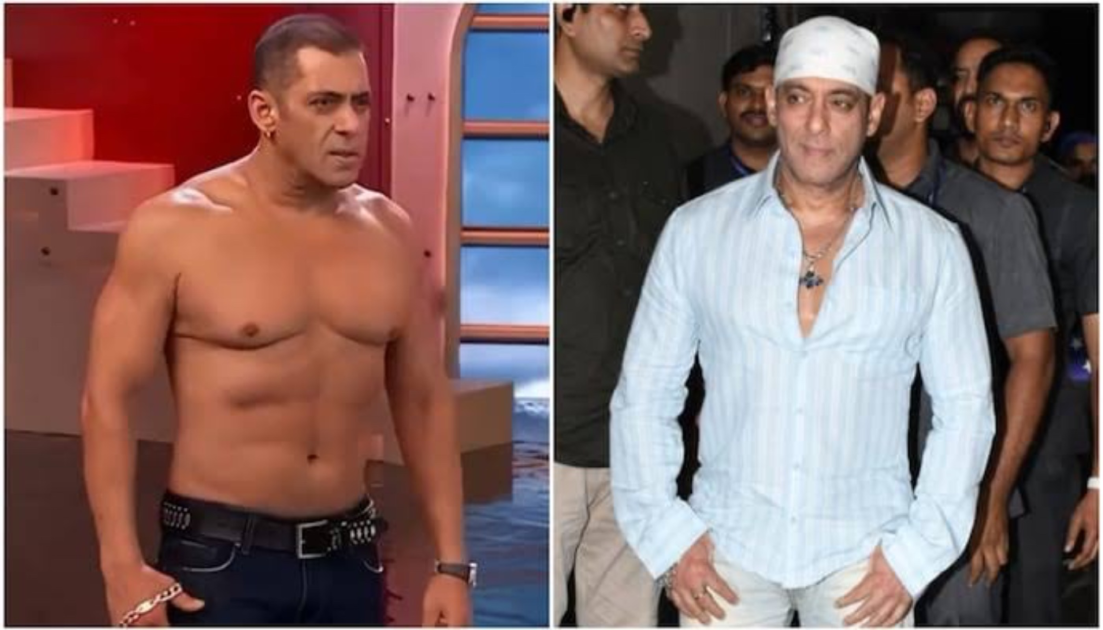
by Salman Khan turned a segment of Bigg Boss 20’s latest Weekend Ka Vaar into a direct confrontation with the culture of online trolling. The actor and longtime host addressed the comments he regularly faces about his age, weight, hairstyle and appearance before removing his hat, jacket and shirt on stage and challenging those who mock him to continue. The moment was not simply about Salman Khan going shirtless. It became part of a broader conversation about how celebrities are discussed online, where criticism of professional work can quickly turn into personal attacks about someone’s body, age or private life.
During the episode, Salman also questioned why people feel entitled to ridicule women for gaining weight after pregnancy, criticized abusive online comments and raised concerns about intrusive paparazzi photography. His comments came while discussing Bigg Boss contestant Scout and his remarks about mobilizing his online gaming community.
Salman Khan Turns the Spotlight on His Own Appearance
For years, Salman Khan’s physical appearance has been closely associated with his public image. From his early Bollywood years to his status as one of Hindi cinema’s most recognizable stars, his body and fitness have frequently been part of the conversation surrounding him.
That makes the latest Bigg Boss 20 moment particularly notable.
Rather than ignoring the comments about his changing appearance, Salman addressed them directly. He referred to the kinds of comments he has encountered online, including remarks suggesting that he had become heavier or older.
He challenged the logic behind such trolling, pointing out that he is now 60 and cannot realistically be expected to look exactly as he did decades ago. He referenced the passage of time and the fact that ageing is a natural part of life.
His response then became deliberately visual.
Salman removed his hat and jacket before eventually taking off his shirt, effectively presenting himself to the audience without the styling and layers that had been part of his appearance on stage. The gesture was framed as a challenge to people who constantly comment on his body.
The message was straightforward: if his body is going to be used as material for online jokes, he was not going to hide it.
“Bhai Mota Ho Gaya Hai”: Salman Addresses Weight-Shaming
One of the recurring themes in the episode was the casual language used when people discuss celebrity bodies.
Salman referred to the type of trolling that labels a celebrity as having become “mota” or “buddha,” essentially reducing a person’s appearance and age to an insult. He questioned why people participate in this behaviour and what motivates them to target someone’s physical appearance in the first place.
His decision to remove his clothes on stage appeared to be an attempt to take control of the very subject being used against him.
Instead of allowing social media users to dictate how his body should look, he essentially exposed the reality they were commenting on and told them to continue if that was what they wanted to discuss.
That distinction matters because celebrity culture has historically placed enormous emphasis on appearance.
Actors are expected to maintain particular physiques for films, promotional appearances and public events. When their bodies change, however, the conversation can shift from professional expectations to personal ridicule.
A performer can be criticized for a film’s story, acting, direction or performance. Those are opinions about work.
But calling someone names because their body has changed is fundamentally different.
Salman’s comments focused on that distinction.
Criticism of Work Versus Personal Abuse
Another important point Salman raised was the difference between legitimate criticism and personal attacks.
A viewer may dislike an actor’s performance. They may dislike a film. They may believe a celebrity’s recent work is weaker than their earlier projects. Those are ordinary forms of audience criticism.
But Salman argued that criticism does not need to become abusive.
He told viewers that they could say they did not like his work or a particular film. What he objected to was crossing from professional criticism into attacks directed at the individual.
This distinction has become increasingly relevant in the social-media era.
A film review once existed primarily in newspapers, magazines, television programmes and entertainment websites. Today, virtually every viewer can instantly publish an opinion. A celebrity can receive thousands of comments within minutes of a public appearance.
The accessibility of social media has created opportunities for audiences to engage directly with public figures. At the same time, it has also blurred the boundary between criticism and harassment.
Salman’s Bigg Boss 20 remarks addressed precisely that tension.
“You Bought a Ticket to Watch the Film. You Didn’t Buy Us”
Salman also questioned the idea that paying to watch a film gives audiences ownership over the people appearing in it.
The argument is particularly relevant to celebrity culture, where fans and critics can develop intense relationships with performers they have never met.
An actor’s work is publicly consumed, discussed and evaluated. But the actor remains a private individual outside the professional material they choose to share.
Salman’s point was that buying a cinema ticket does not mean buying access to an actor’s entire life.
That idea becomes more complicated in the age of social media because celebrities themselves often share aspects of their lives online.
Public Instagram photographs, interviews, promotional events and reality television appearances can create the impression of constant accessibility. Yet visibility does not necessarily eliminate personal boundaries.
The discussion on Bigg Boss 20 therefore expanded beyond Salman himself.
It raised a larger question about where the public’s interest in celebrities should end.
Why Salman Brought Up Women and Post-Pregnancy Body-Shaming
One of the other major subjects Salman discussed was the treatment of women after pregnancy.
He questioned why women should become targets of ridicule simply because their bodies change after having a child. His comments came amid online discussion surrounding actresses facing scrutiny over their post-pregnancy appearances.
Although Salman did not directly name Katrina Kaif while making these comments, several reports connected the discussion to the trolling that Katrina has recently faced over her appearance following pregnancy. That connection was an interpretation made by viewers and media coverage rather than an explicit naming by Salman.
The broader issue, however, exists independently of any one celebrity.
Pregnancy can change the body. Expecting women to immediately return to a previous appearance can create unrealistic expectations, particularly when the person is already under constant public scrutiny.
For actresses, the pressure can be particularly visible because their bodies are frequently treated as part of their professional image.
A performer returning to public appearances after childbirth may find that discussions about her work are overshadowed by photographs and commentary about her physical appearance.
Salman’s argument challenged that tendency.
Celebrity Bodies Have Become Social-Media Content
The internet has changed the way celebrity images circulate.
An actor can attend a public event and photographs can be uploaded within minutes. A screenshot from a video can become a viral post. A candid photograph can be separated from its original context and transformed into a meme.
The resulting conversation may have little to do with the event itself.
This creates a culture in which physical appearance becomes content.
Someone’s weight becomes a headline. A hairstyle becomes a debate. A wrinkle becomes a joke. A photograph taken from an unflattering angle becomes evidence for an entire online narrative.
Salman’s remarks on Bigg Boss 20 highlighted how quickly this cycle can become normalized.
What may begin as one person’s observation can become thousands of people repeating the same insult.
Salman Also Questions Paparazzi Culture
The actor’s criticism did not stop at social-media comments.
He also questioned the way paparazzi sometimes photograph women, particularly when they are getting out of cars or walking through public spaces.
Salman objected to cameras focusing on women’s bodies, including areas such as their hips, thighs and backs. He referred to examples involving actresses and people from his own family while questioning why such images should be considered acceptable entertainment coverage.
This part of his argument broadened the discussion from online behaviour to the production of celebrity imagery itself.
There is an important difference between photographing someone at a public promotional event and deliberately seeking invasive angles.
The first can be part of ordinary entertainment journalism.
The second raises questions about consent, dignity and the responsibilities of photographers and media platforms.
The proliferation of celebrity photography has made these boundaries increasingly complicated.
The Bigg Boss Context: Scout and the Question of Trolling
Salman’s outburst was connected to a discussion involving Bigg Boss 20 contestant Scout.
Reports state that Scout had previously encouraged his gaming community to troll or criticize someone if they believed he was saying something wrong. During the Weekend Ka Vaar discussion, Salman questioned the mentality behind mobilizing an online audience for trolling.
That provided the immediate context for Salman to discuss his own experience.
His argument essentially moved from the individual incident to a much larger phenomenon: once a large online community is encouraged to attack another person, criticism can quickly become overwhelming.
The internet makes such campaigns particularly powerful because participants may not know the person being targeted.
One comment can feel insignificant.
Thousands of similar comments can have a very different effect.
Social Media Has Changed the Meaning of “Trolling”
Trolling is not a new internet phenomenon, but its scale has changed considerably.
In earlier online communities, trolling often meant deliberately provoking another user. Today, celebrity trolling can involve millions of viewers, viral hashtags, reaction videos, memes and comment sections.
The target can be a major actor, an influencer, a sports personality or an ordinary individual.
Salman’s comments on Bigg Boss 20 therefore tapped into a conversation that extends far beyond Bollywood.
When audiences are given direct access to celebrities through social platforms, the distance between performer and viewer becomes smaller.
That can create positive engagement.
It can also create entitlement.
People may begin to believe that because they follow someone, watch their films or contribute to their commercial success, they have a right to comment on every aspect of that person’s appearance and personal life.
Salman’s statement about buying a film ticket challenged precisely that idea.
The Age Question Is Particularly Relevant for Long-Running Stars
Salman’s comments about turning 60 also point toward an interesting issue in Indian popular culture: the way ageing actors are perceived.
Actors who have spent decades in the public eye are frequently compared with their younger selves.
Old photographs circulate alongside current ones. Film stills from decades earlier are compared with recent appearances. Changes that would be considered normal for most people become subjects of intense public discussion when they happen to someone famous.
For Salman, the comparison is especially visible because his image has long been associated with physical fitness and a particular screen persona.
Yet the expectations attached to that image do not stop time.
A performer can change.
Hair can change. Weight can fluctuate. Facial features can age. Bodies can look different at different stages of life.
The question raised by Salman’s comments is whether those changes automatically deserve ridicule.
The Shirtless Moment Became the Symbol of His Response
Among everything Salman said, the image of him removing his shirt was naturally the moment most likely to attract attention.
After all, Salman Khan has been known for shirtless appearances throughout his career. His physique became a recognizable part of his Bollywood image long before social media became dominant.
This time, however, the context was different.
The shirtless appearance was not simply a promotional display of fitness.
It was connected directly to his response to people commenting on his body.
That gave the moment a different meaning.
By deliberately showing himself after discussing age and weight, Salman turned his appearance into a statement about visibility and control.
Instead of allowing critics to determine which version of his body was acceptable, he chose to present himself on his own terms.
The Episode Also Sparked Pushback
Not everyone responded to Salman’s remarks in the same way.
Former Bigg Boss contestant Sofia Hayat criticized the actor following the shirtless segment. She recalled her own experience from Bigg Boss 7 and alleged that Salman had previously made comments about her body and face. She described his current position on body-shaming as inconsistent.
Her reaction adds another dimension to the conversation.
A public statement against body-shaming can be evaluated alongside a person’s past documented public interactions. Hayat’s comments represent her own account and criticism and should not be treated as independently established facts beyond what she herself has alleged.
At the same time, filmmaker Kunal Kohli publicly praised Salman for speaking about trolling, body-shaming and intrusive photography, saying the actor had raised relevant points about social-media etiquette.
The contrasting reactions show why conversations around celebrity statements rarely remain one-dimensional.
Some viewers focused on the message Salman was delivering.
Others brought his earlier public interactions into the discussion.
Monalisa Supports Salman Khan’s Message
Former Bigg Boss contestant Monalisa also spoke positively about Salman’s comments.
She has discussed her own experiences with body-shaming and age-related expectations, and reports say she praised Salman for addressing the subject. She also spoke about the pressure women can face regarding marriage, motherhood and ageing.
Her reaction illustrates how body-related criticism can affect public figures across different stages of their careers.
The conversation is not limited to Bollywood’s leading men.
Women in entertainment frequently face simultaneous expectations regarding appearance, age, motherhood and professional visibility.
A woman can be criticized for being too young, too old, too thin, too heavy, unmarried, married, pregnant or postpartum.
That makes the broader issue considerably larger than the specific Bigg Boss 20 episode.
Why the Conversation Matters Beyond Salman Khan
The significance of Salman’s remarks lies less in the shirtless moment itself and more in the questions surrounding it.
What should audiences be allowed to criticize?
Where does criticism become abuse?
Does public visibility eliminate privacy?
Should pregnancy-related body changes be treated as entertainment?
How should celebrities respond when thousands of strangers comment on their appearance?
And what responsibility do influencers have when they encourage their followers to target another person?
These are questions that apply far beyond reality television.
Social media has created a culture in which everyone can participate in public conversations. That makes responsible participation increasingly important.
Celebrity criticism will always exist. Actors make public work, and audiences are entitled to have opinions about it.
But there is a meaningful difference between saying, “I did not enjoy this performance,” and reducing a person to an insult about their body or age.
Salman Khan’s Message Was Bigger Than His Shirtless Appearance
The viral image from Bigg Boss 20 may be Salman Khan standing shirtless under the studio lights, but the conversation surrounding the moment is much broader.
The actor was addressing the expectation that public figures should remain frozen in a particular version of themselves.
He acknowledged that he is 60. He acknowledged that his appearance can change. And rather than presenting ageing as something that needs to be hidden, he confronted the people using it as an insult.
His comments also extended that argument to women facing body-shaming after pregnancy, to celebrities subjected to invasive photographs and to online communities that can turn criticism into abuse.
At the same time, reactions from figures such as Sofia Hayat demonstrate that statements about body-shaming can also invite scrutiny of the speaker’s own history and conduct.
Ultimately, the Bigg Boss 20 segment became a snapshot of a much larger cultural debate.
Celebrity culture thrives on visibility, but visibility does not necessarily mean unlimited access.
Audiences can watch films, follow actors, discuss performances and express disappointment. What remains increasingly important is the distinction between having an opinion and treating another person’s body, age or private life as an invitation for abuse.
Salman’s decision to take off his shirt may have created the viral headline, but his larger argument was about the culture that made such a moment necessary in the first place.
And as social media continues to make celebrities more accessible than ever, that conversation is unlikely to disappear anytime soon.