 by
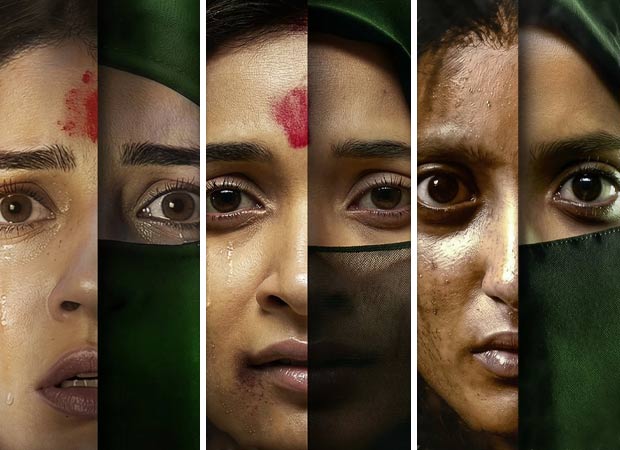
by The buzz around The Kerala Story 2: Goes Beyond has entered a new phase. With the unveiling of the first detailed character posters featuring lead actresses Ulka Gupta, Aishwarya Ojha, and Aditi Bhatia, the makers have offered audiences an early, striking glimpse into the emotional core and narrative tension of the upcoming sequel. These visuals, raw in their aesthetic and charged with psychological intensity, hint at a deeply dramatic journey — one that promises to expand and deepen the conversation begun by the original film.
Scheduled for theatrical release on February 27, 2026, The Kerala Story 2: Goes Beyond continues a cinematic franchise that made waves in 2023 with its provocative storytelling and socially resonant themes. The character posters are the first major promotional drop that throws light on the internal world of the film’s protagonists, foreshadowing the emotional and physical ordeals they will confront.
A First Look at the Leading Women: Visuals with Purpose
The recently released posters capture a bold visual language: each actress is photographed in a tightly framed close‑up, her face split between a burqa covering one side and the other revealing bruises, teary expressions, and marks of trauma. This half‑concealed, half‑revealed frame serves as a powerful metaphor — both literal and symbolic — for the story’s tension between visibility and vulnerability.
Ulka Gupta, Aishwarya Ojha, and Aditi Bhatia are presented not merely as characters but as embodiments of an intense emotional arc. The imagery signals not just the physicality of their roles, but also the psychological weight of the experiences their characters endure, hinting at personal narratives that have been shaped by force, deception, and resilience.
In choosing this visual strategy — half‑covered faces juxtaposed with unflinching realism — the posters communicate that these women are not merely participants in the story; they are the story. Their silence, pain, determination, and defiance are all conveyed through a single piercing image, making the audience anticipate not just a cinematic journey but a human one.
From Kerala to the Nation: Expanding the Narrative Canvas
The Kerala Story 2: Goes Beyond is described by its makers as a continuation of the narrative thrust of the first film, but with broader thematic scope. The original 2023 film focused on the highly controversial and emotionally charged subject of alleged religious conversion and radicalization through coercive means — a storyline that sparked intense debate across the country. That film, while fictionalized, drew heavily from public discourse and polarizing debates on identity, freedom, and agency.
The sequel seeks to expand this narrative beyond a single state and root it in experiences from different parts of India. This broader geographical and emotional frame is reflected in the cast’s backgrounds, character types, and the form of their portrayal. Rather than concentrating solely on a single region or storyline, Goes Beyond positions itself as a nationwide story of personal struggle, deception, and, crucially, resistance.
The Emerging Tone: Trauma, Resistance, and Agency
What is immediately striking about the posters and associated promotional material is the picture they paint of the film’s internal emotional architecture. The narrative does not promise a simple retelling of events. Instead, it hints at a journey of transformation — from victimhood to agency, from silence to defiance.
This shift is echoed in the teasers and early visuals released for the film. The official teaser — which debuted ahead of the posters — built a narrative arc in which the protagonists not only recount their personal ordeals but also affirm their intent to fight back. The tagline “Ab sahenge nahin… ladenge” (translated as “We will not endure anymore — we will fight”) encapsulates this sentiment of resistance.
Rather than portraying these women as silent sufferers trapped by circumstance, the film’s promotional messaging foregrounds their resilience and determination to rise above trauma. This tonal shift reflects a broader cultural conversation about agency, empowerment, and the courage to reclaim one’s narrative in the face of adversity.
Character Insights: Who Are These Women?
Though the makers have carefully avoided revealing extensive plot details at this stage, insights from the teaser and related reports allow us to form an educated sense of who the central characters are:
Ulka Gupta as Surekha Nair
According to promotional sources, Ulka Gupta’s character is introduced as Surekha Nair, a young woman from Kerala with ambitions and dreams. Hailing from a state that serves as the emotional and geographical starting point for the franchise, Surekha’s narrative appears to anchor the story’s original setting while linking it to broader national themes.
Aishwarya Ojha as Neha Sant
Aishwarya Ojha is reported to portray Neha Sant, an aspiring athlete from Madhya Pradesh with Olympic dreams. Neha’s backstory suggests a life shaped by discipline, determination, and ambition — all poised to be disrupted by forces far outside her control.
Aditi Bhatia as Divya Paliwal
Aditi Bhatia’s character Divya Paliwal is described as a social media influencer from Rajasthan, representing a voice and platform in the digital age. Divya’s online presence and regional identity position her story at the intersection of modern cultural participation and deeply personal turmoil.
Together, these characters represent varied Indian identities — regional, professional, and aspirational — while sharing a central narrative of disruption and awakening. Their collective experiences, as hinted in the teasers and posters, are designed to create an emotional bridge between individual struggle and larger societal questions.
Creative Leadership and Context
The Kerala Story 2: Goes Beyond is helmed by National Award‑winning director Kamakhya Narayan Singh, whose involvement underscores a serious, craft‑oriented approach to the sequel. Singh, known for his sensitive yet uncompromising style, brings a distinct visual and emotional sensibility to the narrative — one that aligns with the intensity of the film’s core themes.
The film is produced by Vipul Amrutlal Shah and co‑produced by Aashin A Shah under the Sunshine Pictures banner. Vipul Shah, a veteran of Indian cinema with a track record of films that combine mainstream appeal with nuanced storytelling, has described the sequel as a larger, more expansive exploration of social realities that go beyond the original film’s terrain.
This combination of seasoned production expertise and strong directorial vision suggests a film that hopes not just to repeat the success of its predecessor but to deepen its impact on audiences — especially those attuned to the emotional and social conversations the narrative invokes.
What the Posters Reveal — And What They Withhold
Character posters have long been a staple of film marketing, but the approach taken with these visuals is both artistic and strategic. By withholding plot details and instead using symbolic imagery, the makers generate curiosity without diluting narrative intrigue.
The use of bruises, marks of distress, and tear‑streaked faces does more than suggest physical hardship; it invokes a sense of psychological and emotional friction — the kind that defines the human experience at its most vulnerable. This serves a dual purpose:
- It prepares audiences for a narrative that is emotionally weighty and socially embedded. The visual language is somber and reflective, rather than sensationalist, signaling that the film will ask viewers to engage with emotional complexity.
- It sets up a contrast between concealment and exposure. The motif of a burqa partially covering the face resonates deeply within India’s cultural and social imagery — raising questions of identity, religion, autonomy, and personal narrative. By visually splitting concealment from revelation, the posters invite audiences to consider the tension between what is seen, what is hidden, and what is experienced.
This balance between revealing emotional core and withholding specific plot points is an effective marketing tactic. It ensures that while viewers are intrigued by the visuals, they remain invested in discovering the story’s full contours upon the film’s release.
The Legacy of The Kerala Story and Expectations for the Sequel
The original The Kerala Story (2023) had a complex reception. It was both a commercial box‑office success and a culturally polarizing film that sparked debates across India. Reports indicate it grossed substantial revenue and won awards, while also prompting discussions about the social issues it portrayed.
Goes Beyond, as a sequel, inherits that legacy — carrying both the audience’s memory of the original narrative and a set of expectations shaped by contemporary social discourse. In this context, the character posters and early promotional material are more than marketing tools; they are narrative signposts that signal a thematic continuity even as the story’s scope expands.
Given the original film’s focus on controversial and emotionally charged subject matter, the sequel’s emphasis on resistance, agency, and personal transformation may invite both praise and scrutiny. What sets Goes Beyond apart is its attempt to spotlight not just trauma but the power to fight back — a narrative choice that reflects evolving conversations about women’s agency, identity, and social participation in modern India.
Promotional Strategy and Audience Engagement
The release of character posters is one of the earliest steps in the promotional rollout for The Kerala Story 2: Goes Beyond. By focusing on emotional intensity and symbolic visuals rather than narrative exposition, the marketing team has crafted a visual conversation starter that encourages audience speculation, discussion, and social sharing — essential elements for building anticipation in the crowded entertainment landscape of 2026.
Additionally, the staggered approach — from motion posters to teasers to character posters — helps sustain interest over time, creating multiple touchpoints for audience engagement. This also allows viewers to form early emotional connections with the characters before the full trailer or extended narrative content is released.
Conclusion: A Sequel That Stands on Its Own Narrative Ground
The Kerala Story 2: Goes Beyond is poised to be one of the most discussed films of 2026 — not simply because it is a sequel to a controversial and high‑profile original, but because its early promotional material reveals a thoughtful engagement with narrative, character, and emotional resonance. The character posters featuring Ulka Gupta, Aishwarya Ojha, and Aditi Bhatia are not just images — they are story invitations, signaling a film that promises to explore trauma, resistance, identity, and agency in a deeply personal way.
More than a follow‑up, this sequel appears to be an expansion — one that respects the legacy of its predecessor while charting its own emotional and narrative course. With its theatrical release just weeks away, audiences now have their first visual entry point into a world that is intense, complex, and designed to spark conversation long after the credits roll.