 by
by Introduction: When Fashion Becomes a Public Argument
In the age of social media-driven celebrity culture, fashion is no longer just personal expression—it is public commentary, identity performance, and often, controversy waiting to happen. A recent moment involving Rakhi Sawant and Khushi Mukherjee has once again highlighted how quickly clothing choices can transform into cultural debate.
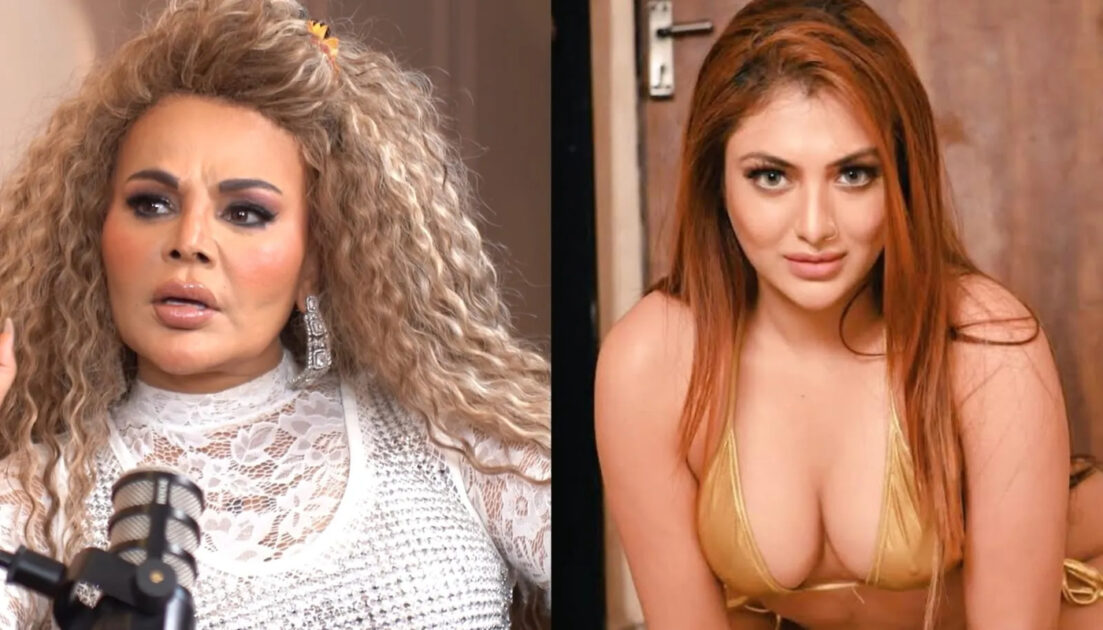
In an interview with The Filmy Charcha, Rakhi Sawant made a sharp and unapologetic remark about Khushi Mukherjee’s bold fashion presence. Her comment—delivered in her characteristic outspoken style—sparked immediate attention online, not only because of its tone but because it reopened a larger conversation about how women in entertainment are judged for their appearance.
While Rakhi is known for her theatrical personality and unfiltered speech, Khushi Mukherjee represents a newer wave of digital-era entertainers whose visibility is heavily shaped by social media aesthetics, bold styling, and direct audience engagement. The friction between these two public personas is not simply personal—it reflects a generational and cultural tension within the entertainment industry itself.
This article explores the deeper cultural meaning behind such exchanges. Beyond the headlines and viral clips, it examines how bold fashion becomes politicized, how women’s bodies are policed in public discourse, and how digital audiences actively shape narratives around “acceptable” expression in entertainment.
The Cultural Weight of “Bold Fashion” in South Asian Entertainment
Fashion in South Asian entertainment has always carried layered meanings. Unlike Western celebrity culture, where experimental or revealing fashion is often normalized in entertainment spaces, South Asian contexts frequently place clothing choices within frameworks of modesty, respectability, and public morality.
This does not mean bold fashion is new. Film industries across the region have long featured actresses challenging conventional norms through styling. However, the rise of social media has changed the scale and immediacy of visibility. What once existed within curated film scenes or magazine spreads now circulates instantly across platforms, where millions can comment, judge, and reinterpret it in real time.
In this environment, “bold fashion” becomes more than aesthetic—it becomes symbolic. It is read as confidence by some, rebellion by others, and provocation by yet others. The same outfit can be framed simultaneously as empowerment and controversy depending on who is interpreting it.
Khushi Mukherjee, like many digital-era personalities, exists within this space of heightened visibility. Her styling choices are not just seen; they are constantly analyzed, clipped, reposted, and debated. This creates a feedback loop where fashion is no longer just worn—it is performed for reaction.
Rakhi Sawant’s Persona: Performance, Provocation, and Public Reaction
Rakhi Sawant is not a typical commentator in the entertainment industry. Over the years, she has built a public identity that thrives on unpredictability, humor, exaggeration, and emotional directness. Her statements often blur the line between performance and sincerity, which makes interpreting her remarks culturally complex.
When she comments on another public figure, it is rarely just a critique—it is part of her established persona of unfiltered expression. This is important because her words are often consumed not only as opinion but as entertainment content in themselves.
Her remarks about Khushi Mukherjee’s fashion choices, therefore, exist within this performance framework. The tone is deliberately provocative, designed to attract attention, spark reaction, and reinforce her identity as someone who “says what others won’t.”
However, once such statements enter digital circulation, they detach from context. Clips are shared without nuance, captions amplify emotional tone, and audiences respond based on interpretation rather than intent. This is how a comment made in an interview becomes a broader cultural debate.
The Rise of Digital Visibility and Fashion as Identity Performance
Khushi Mukherjee represents a growing category of influencers and entertainers whose careers are deeply tied to visual identity. In the social media ecosystem, visibility is currency. The more attention a post receives, the more it circulates; the more it circulates, the more it defines public perception.
In such an environment, fashion becomes a strategic tool. Bold styling, unconventional outfits, and visually striking appearances are not merely personal choices—they are part of an attention economy.
However, this visibility comes with structural vulnerability. Unlike traditional entertainment industries where image is mediated through production teams and editorial decisions, digital platforms expose creators directly to audience feedback. Every outfit becomes open to immediate interpretation, approval, or criticism.
This dynamic creates a paradox: the same boldness that generates visibility also generates scrutiny. The line between empowerment and objectification becomes blurred depending on the viewer’s lens.
Public Reaction Culture: The Internet as Judge, Jury, and Amplifier
One of the most significant aspects of this controversy is not the statement itself, but the reaction ecosystem surrounding it.
Social media platforms have transformed audiences into active participants in celebrity narratives. Comment sections, reaction videos, and repost culture allow users to engage in real-time judgment. In such spaces, opinions often polarize quickly.
On one side, some users defend Rakhi Sawant’s remarks as “honest” or “unfiltered truth,” appreciating her for speaking without restraint. On the other, many criticize the tone as unnecessarily harsh or dismissive, especially given the personal nature of appearance-based commentary.
At the same time, Khushi Mukherjee’s supporters often frame her fashion choices as expressions of individuality and confidence. This creates a layered discourse where both individuals become symbols of larger ideological positions: tradition versus modernity, restraint versus expression, judgment versus freedom.
What is important to note is that these discussions rarely remain about the individuals themselves. Instead, they evolve into broader cultural debates about women’s autonomy, visibility, and the politics of appearance.
Gendered Expectations and the Policing of Female Expression
A recurring theme in such controversies is the gendered nature of public scrutiny. Female entertainers are often subjected to more intense evaluation of their clothing choices than their male counterparts. Fashion becomes a site where societal expectations of modesty, respectability, and “appropriateness” are enforced.
When women in entertainment adopt bold or unconventional styles, reactions often split along moral and cultural lines. Some frame it as empowerment and self-expression, while others interpret it as attention-seeking or transgressive.
This duality is not new, but social media intensifies it. The immediacy of online feedback magnifies both praise and criticism, creating an environment where female bodies and fashion choices are constantly negotiated in public space.
In this context, statements like Rakhi Sawant’s do not exist in isolation—they tap into existing cultural sensitivities around women’s visibility and autonomy. Whether intended as humor, critique, or provocation, such remarks contribute to an ongoing discourse about who gets to define “acceptable” expression.
The Psychology of “Boldness” in Digital Fame
The concept of “boldness” in fashion is psychologically complex in digital entertainment culture. For some creators, it represents confidence, self-ownership, and liberation from traditional norms. For others, it becomes a strategic adaptation to an attention-driven environment where visibility is essential for survival.
However, boldness is not always interpreted in the same way by audiences. What is intended as empowerment can be reframed as controversy. What is meant as individuality can be reduced to spectacle.
This gap between intention and perception creates emotional tension for public figures. It also reinforces the idea that visibility is never neutral—it is always filtered through cultural interpretation.
Over time, repeated exposure to judgment can shape how creators engage with their own image. Some may lean further into bold aesthetics, while others may recalibrate their public persona. In both cases, audience reaction becomes part of the creative feedback loop.
Media Framing: How Interviews Become Viral Narratives
The transformation of Rakhi Sawant’s comment into a viral topic also highlights the role of media framing in shaping public discourse. Interviews are often designed for conversational flow, spontaneity, and entertainment value. However, in the digital ecosystem, short clips are extracted, decontextualized, and redistributed.
This fragmentation changes meaning. A full conversation may include humor, context, and tone that soften or clarify statements. But viral clips often highlight only the most provocative lines.
As a result, audiences engage with compressed narratives rather than complete ones. This increases emotional reaction and reduces interpretive nuance.
In the case of Rakhi Sawant’s remarks, this process amplifies controversy while also reinforcing her established public identity as someone who speaks without filters. At the same time, it places Khushi Mukherjee within a narrative constructed not entirely by her actions, but by how others frame them.
The Blurred Line Between Critique and Entertainment
One of the defining features of modern celebrity culture is the collapse of boundaries between critique and entertainment. Statements that might once have been considered personal opinions are now consumed as content.
Rakhi Sawant’s commentary exists within this hybrid space. It is simultaneously a personal remark, a performative expression, and a media product. Audience engagement—through reactions, shares, and debates—transforms it into entertainment.
This raises important questions about responsibility in public discourse. When does commentary become harmful? When does entertainment rely on controversy at the expense of individuals? And how do audiences participate in sustaining these dynamics?
These questions do not have simple answers, but they are central to understanding how digital celebrity culture operates today.
Conclusion: Beyond the Controversy, Toward Cultural Reflection
The exchange between Rakhi Sawant and Khushi Mukherjee is more than a viral moment—it is a reflection of how contemporary culture negotiates visibility, expression, and judgment. At its core, it reveals the ongoing tension between individual freedom in self-presentation and collective expectations around appearance.
Bold fashion, in this context, is not just clothing. It is a site of negotiation where identity, gender, media interpretation, and audience morality intersect. Public reactions—whether supportive or critical—are part of a larger ecosystem that continuously shapes how visibility is understood in the digital age.
As entertainment culture continues to evolve, such moments will likely become even more frequent. The challenge will not only be how celebrities navigate visibility, but how audiences engage with it—whether through judgment, empathy, critique, or reflection.
Ultimately, the conversation is less about who is right or wrong, and more about what kind of cultural environment is being created when appearance becomes public discourse, and when every statement becomes part of an endless digital conversation.