 by
by Introduction: When a Trailer Becomes a Cultural Moment
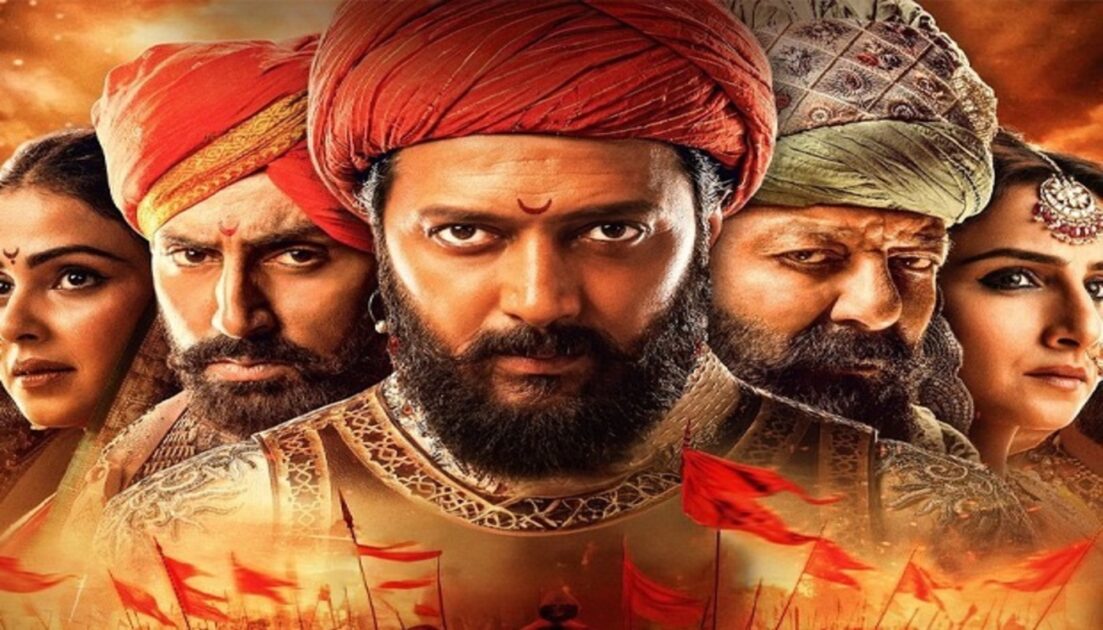
In an era where trailers are often consumed and forgotten within minutes of scrolling, every once in a while, one manages to break through the noise and become a conversation in itself. The trailer of Raja Shivaji, backed by Jio Studios and Mumbai Film Company, is one such example. Released on April 20, it quickly drew widespread attention not only from audiences but also from some of the most influential voices in Indian cinema.
What makes this moment particularly significant is not just the subject of the film—Chhatrapati Shivaji Maharaj, one of India’s most revered historical figures—but also the scale of creative involvement by Riteish Deshmukh, who has taken on the ambitious role of actor, writer, director, and producer. This multi-hyphenate creative control has positioned the film as both a personal artistic statement and a cultural project rooted in historical storytelling.
Soon after the trailer release, prominent figures from Hindi and Marathi cinema including Akshay Kumar, Karan Johar, Nagraj Manjule, Subhash Ghai, and others shared their reactions publicly. Their collective response turned the trailer into more than just a promotional release—it became a moment of industry-wide acknowledgment.
This article explores why Raja Shivaji has generated such strong early reactions, what it reveals about contemporary historical cinema in India, and how celebrity endorsements shape the cultural anticipation surrounding large-scale films.
The Growing Appeal of Historical Cinema in India
Indian cinema has always maintained a deep connection with history, mythology, and cultural epics. From classic portrayals of ancient kingdoms to modern retellings of freedom fighters and warrior kings, historical storytelling continues to occupy a powerful space in audience imagination.
In recent years, this genre has experienced renewed momentum. Audiences have shown increasing interest in stories rooted in identity, heritage, and regional pride. Films based on historical figures often transcend entertainment, becoming cultural events that evoke emotional and collective memory.
Within this context, Raja Shivaji enters a space already shaped by expectations of grandeur, authenticity, and emotional resonance. Chhatrapati Shivaji Maharaj, as a historical figure, carries immense cultural significance, particularly in Maharashtra but also across India. His legacy of leadership, resistance, and governance continues to inspire political discourse, academic study, and artistic interpretation.
This makes any cinematic adaptation of his life not just a creative endeavor but a responsibility. The trailer’s reception suggests that early viewers—especially within the film industry—are responding to the seriousness with which the subject has been approached.
Riteish Deshmukh’s Multi-Role Creative Vision
One of the most discussed aspects of Raja Shivaji is Riteish Deshmukh’s involvement across multiple creative roles. Acting, writing, directing, and producing a historical film of this scale is an ambitious undertaking that signals a strong personal connection to the subject matter.
In Indian cinema, it is relatively rare for mainstream actors to take on such complete creative control in large-scale productions, especially in historical genres that require extensive research, production design, and narrative balance.
This multi-layered involvement suggests a deeply personal vision. Rather than approaching the film solely as a performer, Deshmukh appears to be shaping the narrative from its conceptual foundation to its cinematic execution.
Industry reactions indicate respect for this effort. Akshay Kumar’s public message highlighted the passion behind “dreaming and bringing it alive,” emphasizing the creative challenge involved in such a project. This kind of acknowledgment from a senior industry peer reinforces the perception that Raja Shivaji is not just another historical film but a labor-intensive creative undertaking.
Celebrity Endorsements as Cultural Validation
The immediate wave of reactions from major industry figures played a crucial role in amplifying the trailer’s visibility. In contemporary film culture, celebrity endorsements function as both validation and amplification.
When established names such as Akshay Kumar, Karan Johar, and Subhash Ghai publicly express admiration for a project, it does more than generate buzz—it signals industry confidence. These endorsements influence audience perception, often shaping expectations even before a film’s release.
Subhash Ghai’s reaction, in particular, emphasized the emotional and cinematic scale of the trailer, describing it as a “rocking” experience and suggesting anticipation for the full film. His mention of “nationalistic energies” reflects how historical films often carry emotional and cultural weight beyond storytelling.
Similarly, Karan Johar’s engagement—known for his strong influence in shaping mainstream Hindi cinema discourse—adds another layer of visibility. While each celebrity brings their own interpretive lens, the collective response creates a narrative of momentum around the film.
The Role of Marathi Cinema Influence: Nagraj Manjule’s Perspective
One of the most meaningful aspects of the trailer’s reception is the involvement of voices from Marathi cinema, particularly Nagraj Manjule. Known for his deeply rooted storytelling and socially reflective filmmaking, Manjule’s appreciation adds cultural authenticity to the conversation.
Marathi cinema has historically played a crucial role in portraying regional identity, social structures, and historical narratives tied to Maharashtra. A film based on Chhatrapati Shivaji Maharaj naturally carries significance within this cinematic tradition.
Manjule’s acknowledgment signals a bridge between mainstream Hindi cinema and Marathi storytelling traditions. It reflects a growing trend where regional and national cinema are no longer seen as separate ecosystems but interconnected creative spaces.
This cross-industry appreciation also highlights how historical narratives serve as unifying cultural material, capable of resonating across linguistic and regional boundaries.
The Visual Language of Historical Epics
Although the full film is yet to be released, the trailer has already sparked discussion about its visual presentation. Historical films rely heavily on production design, costume authenticity, cinematography, and scale to create immersive worlds.
Indian audiences today are increasingly visually literate, influenced by global cinema standards. As a result, historical films are expected to balance cultural authenticity with cinematic spectacle.
The early reactions suggest that Raja Shivaji has managed to create a strong visual impression. When industry veterans respond positively to a trailer’s “scale and presentation,” it often reflects recognition of production ambition and technical execution.
In historical storytelling, visuals are not just aesthetic—they are narrative tools. They carry emotional weight, establish period authenticity, and shape audience immersion.
Historical Figures in Cinema: Responsibility and Representation
Portraying historical figures like Chhatrapati Shivaji Maharaj comes with inherent responsibility. Such figures are deeply embedded in cultural memory, and cinematic interpretations are often scrutinized for accuracy, respect, and emotional authenticity.
This creates a delicate balance between artistic freedom and cultural responsibility. Filmmakers must navigate historical research, public sentiment, and narrative dramatization simultaneously.
The early attention surrounding Raja Shivaji suggests that audiences and industry peers are already evaluating the film within this framework. The positive reception of the trailer indicates that it may have successfully struck a tone that respects the legacy while presenting it in a cinematic format.
However, full judgment of historical films often emerges only after release, when narrative choices, character arcs, and thematic interpretations become fully visible.
The Emotional Economy of National History in Cinema
Historical films in India often operate within what can be described as an emotional economy. They are not just entertainment products—they are vessels of collective memory, pride, and identity.
Stories about figures like Shivaji Maharaj evoke strong emotional responses because they are tied to foundational narratives of leadership, resistance, and cultural identity.
This emotional dimension is amplified when industry figures publicly engage with the content. Their reactions become part of the film’s cultural footprint even before release, shaping how audiences emotionally prepare for the viewing experience.
In this sense, Raja Shivaji is already functioning as a cultural event, not just a film project.
Industry Collaboration and Collective Promotion Culture
Another notable aspect of the trailer’s reception is the collaborative nature of its promotion. The involvement of multiple industry figures sharing and reacting to the trailer reflects a broader trend in Indian cinema marketing.
Today’s film promotion is deeply interconnected with social media ecosystems. Instead of relying solely on traditional advertising, films increasingly depend on organic amplification from celebrities and influencers within the industry.
This creates a networked promotional model where visibility is co-created by multiple stakeholders. Each endorsement adds another layer of reach and credibility.
In the case of Raja Shivaji, this collective engagement suggests strong industry alignment behind the project, which often plays a role in shaping audience anticipation.
Audience Anticipation and the Power of Early Reception
While celebrity reactions are influential, audience response ultimately determines a film’s trajectory. However, early industry praise often sets the tone for public anticipation.
The trailer’s reception indicates that Raja Shivaji has successfully positioned itself as a high-stakes historical drama with emotional and visual ambition.
Audience interest in historical films is often driven by curiosity about interpretation—how a well-known figure will be portrayed, what narrative lens will be used, and how the story will be visually realized.
The strong early buzz suggests that these questions are already being actively discussed in public discourse.
Conclusion: A Film Already Becoming a Cultural Conversation
Even before its release, Raja Shivaji has begun to function as more than a film—it is a cultural conversation shaped by history, cinema, and celebrity engagement. The enthusiastic responses from figures like Akshay Kumar, Subhash Ghai, Nagraj Manjule, and others highlight the significance of Riteish Deshmukh’s ambitious creative undertaking.
In many ways, the trailer’s impact reflects the evolving nature of Indian cinema, where films are no longer isolated artistic products but part of a larger ecosystem of dialogue, identity, and shared cultural memory.
As anticipation builds, the true test will lie in how the film translates its historical vision into narrative experience. But for now, Raja Shivaji has already achieved something important—it has captured attention, sparked conversation, and positioned itself within the cultural imagination of both industry and audience alike.