 by
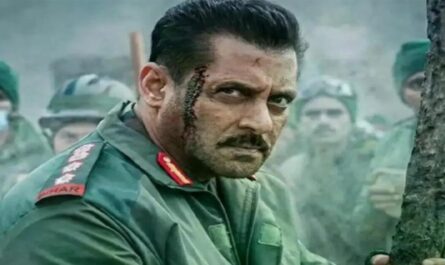
by In an industry where spectacle often overshadows substance, moments of genuine physical commitment stand out. Salman Khan’s recent high-altitude training in Ladakh for his upcoming film Maatrubhumi: May War Rest in Peace is one such moment—one that goes beyond cinematic preparation and enters the realm of discipline, endurance, and personal evolution.
For decades, Salman Khan has been synonymous with fitness in Indian popular culture. Long before social media fitness trends, before gym culture became mainstream, and before transformation videos dominated digital platforms, he had already positioned himself as a figure who valued strength, consistency, and physical resilience.
But what makes this particular phase of training significant is not just the intensity—it is the environment. Ladakh, with its harsh terrain, low oxygen levels, and extreme climate, is not merely a backdrop. It is a test.
And in choosing to train there, Salman Khan is not just preparing for a role—he is redefining what preparation looks like.
The Setting: Why Ladakh Is More Than Just a Location
Ladakh is often romanticized for its breathtaking landscapes—snow-capped mountains, vast open skies, and serene monasteries. But beneath this beauty lies a challenging environment that demands respect.
At high altitudes, the air contains significantly less oxygen. For someone accustomed to training at sea level, this can lead to breathlessness, fatigue, and a slower recovery rate. Even basic physical activity becomes more demanding.
For actors preparing for physically intense roles, such conditions offer a unique advantage. Training in a low-oxygen environment forces the body to adapt. It improves stamina, enhances lung capacity, and builds mental toughness.
But these benefits come at a cost.
The body must first endure discomfort. It must push through limitations. It must learn to function under stress.
In this context, Ladakh becomes more than a location—it becomes a training ground that mirrors the intensity of the role itself.
The Film: A Glimpse into
Maatrubhumi: May War Rest in Peace
While details about Maatrubhumi: May War Rest in Peace remain largely under wraps, the title itself suggests a narrative rooted in conflict, patriotism, and emotional depth.
War films demand a different kind of preparation. They require not just physical strength but also psychological immersion. Actors must embody the exhaustion, discipline, and emotional complexity of individuals living in high-stakes environments.
Salman Khan’s decision to undergo high-altitude training indicates a commitment to authenticity. It suggests that the film may feature sequences that demand realism—whether in combat scenarios, survival situations, or physically demanding landscapes.
In such narratives, the actor’s physicality becomes a storytelling tool. Every movement, every breath, every moment of exertion contributes to the authenticity of the performance.
Fitness as Identity: Salman Khan’s Longstanding Influence
To understand the significance of this training, one must consider Salman Khan’s relationship with fitness.
He is not just an actor who works out—he is someone who has consistently used his platform to promote health and physical well-being. Over the years, he has inspired countless individuals to adopt fitness as a lifestyle rather than a temporary goal.
His approach has always been rooted in discipline. Whether it is weight training, functional fitness, or diet management, his routine reflects a long-term commitment rather than short-term transformation.
In many ways, he helped normalize the idea that fitness is not just for athletes or bodybuilders—it is for everyone.
This influence extends beyond aesthetics. It is about strength, endurance, and the ability to push one’s limits.
The Science of High-Altitude Training
High-altitude training is not a new concept. It has long been used by athletes to enhance performance. But its application in film preparation adds an interesting dimension.
At higher altitudes, the body produces more red blood cells to compensate for lower oxygen levels. This improves oxygen delivery to muscles, enhancing endurance over time.
However, the initial phase can be challenging.
Symptoms such as:
- Headaches
- Dizziness
- Fatigue
- Reduced appetite
are common as the body adjusts.
For someone undergoing intense physical training, this adjustment period requires careful management. Hydration, nutrition, and rest become even more critical.
Salman Khan’s decision to train under such conditions reflects a willingness to embrace discomfort for the sake of performance.
Discipline Beyond the Gym
What sets this training apart is that it extends beyond conventional gym routines.
High-altitude training involves:
- Outdoor endurance exercises
- Terrain-based workouts
- Breathing control techniques
- Mental conditioning
These elements create a holistic training environment where the body and mind are equally engaged.
In contrast to controlled gym settings, the unpredictability of natural environments adds an extra layer of challenge. Weather conditions, terrain variations, and altitude-related stressors all contribute to the intensity.
This kind of preparation aligns closely with the demands of a war-based narrative, where unpredictability is a constant.
Mental Strength: The Invisible Factor
While physical training is visible and measurable, mental strength often remains understated.
High-altitude environments test not just the body but also the mind. The discomfort, isolation, and physical strain require a level of mental resilience that cannot be developed overnight.
For actors, this mental conditioning is crucial. It allows them to stay focused, maintain consistency, and perform under pressure.
Salman Khan’s training in Ladakh likely involves moments of introspection—periods where the mind must push past fatigue and self-doubt.
This psychological aspect of preparation often translates into more nuanced performances.
Authenticity in Modern Cinema
Audiences today are more discerning than ever. With access to global content, they have developed a keen sense for authenticity.
In this context, superficial preparation is no longer enough.
Actors are expected to immerse themselves fully in their roles—physically, emotionally, and psychologically.
Salman Khan’s high-altitude training reflects this shift. It signals an understanding that authenticity is not just about appearance—it is about experience.
When an actor has genuinely undergone physical strain, it shows on screen. Movements feel more natural. Reactions feel more real.
This level of authenticity enhances the overall impact of the film.
The Evolution of Action Roles
Salman Khan’s career has seen a significant evolution in terms of action roles.
From stylized sequences to more grounded performances, there has been a gradual shift toward realism.
High-altitude training aligns with this evolution. It suggests a move toward action that is not just visually impressive but also physically credible.
This shift is important in maintaining relevance in an industry where audiences are constantly seeking fresh experiences.
Fitness Culture in India: A Broader Impact
Salman Khan’s influence on fitness culture in India cannot be overstated.
At a time when gym culture was still emerging, he popularized the idea of strength training and physical fitness as essential aspects of lifestyle.
Today, fitness is a mainstream conversation. From urban gyms to home workouts, the emphasis on health has grown significantly.
Public figures like Salman Khan have played a key role in this transformation.
His current training phase adds another dimension to this influence. It highlights the importance of pushing boundaries and exploring new methods of fitness.
Preparation as Performance
In many ways, the preparation for a role becomes a performance in itself.
Training montages, behind-the-scenes glimpses, and fitness updates create a narrative that builds anticipation.
Fans become invested not just in the final film but in the journey leading up to it.
Salman Khan’s training in Ladakh contributes to this narrative. It creates a sense of expectation—an understanding that the upcoming film will showcase a level of physical commitment that goes beyond the ordinary.
The Role of Environment in Storytelling
Choosing Ladakh as a training location also hints at the film’s visual and narrative direction.
The region’s stark beauty and challenging terrain offer a unique backdrop for storytelling.
In war narratives, environment plays a crucial role. It shapes the experiences of characters, influences their decisions, and adds depth to the story.
Training in the same environment where the film is likely to be shot allows the actor to internalize these elements.
Balancing Risk and Reward
High-altitude training is not without risks.
The physical strain, combined with environmental challenges, requires careful monitoring.
However, the rewards—enhanced stamina, improved endurance, and greater authenticity—often outweigh these risks when managed properly.
For a seasoned actor like Salman Khan, this balance is crucial. It reflects a calculated approach to preparation—one that prioritizes both performance and well-being.
The Narrative of Reinvention
Every phase of Salman Khan’s career has been marked by reinvention.
From romantic roles to action-driven performances, he has consistently adapted to changing audience preferences.
This training phase represents another step in that journey.
It signals a willingness to evolve, to embrace new challenges, and to push beyond established boundaries.
Audience Expectations and Industry Pressure
With every new project, expectations grow.
Audiences anticipate not just entertainment but innovation. They look for performances that offer something new.
High-altitude training sets a benchmark. It raises expectations for what the film will deliver.
For the industry, it also sets a precedent—encouraging other actors to explore more immersive forms of preparation.
Beyond the Screen: A Message of Discipline
At its core, this story is about discipline.
It is about the willingness to step out of comfort zones, to embrace challenges, and to commit fully to a goal.
For audiences, this message extends beyond cinema.
It serves as a reminder that growth often lies in discomfort, and that meaningful achievements require consistent effort.
Conclusion: More Than Just a Role
Salman Khan’s high-altitude training in Ladakh for Maatrubhumi: May War Rest in Peace is more than just preparation—it is a statement.
A statement about commitment.
A statement about authenticity.
A statement about evolution.
In choosing to train under such demanding conditions, he reinforces the idea that great performances are built on real effort.
And in doing so, he not only prepares for a role but also continues to shape the narrative of what it means to be a performer in modern cinema.
Because sometimes, the most compelling stories are not just told on screen—they are lived long before the camera starts rolling.