 by
Indian television has witnessed several reality shows over the years, but very few have managed to create the cultural impact and longevity of Bigg Boss. What began as an experimental celebrity reality show in 2006 has gradually transformed into one of the country’s most recognisable entertainment franchises. Twenty years after introducing Indian audiences to the concept of celebrities living together under constant surveillance, Bigg Boss continues to generate conversations, controversies, viral moments and unprecedented audience engagement.
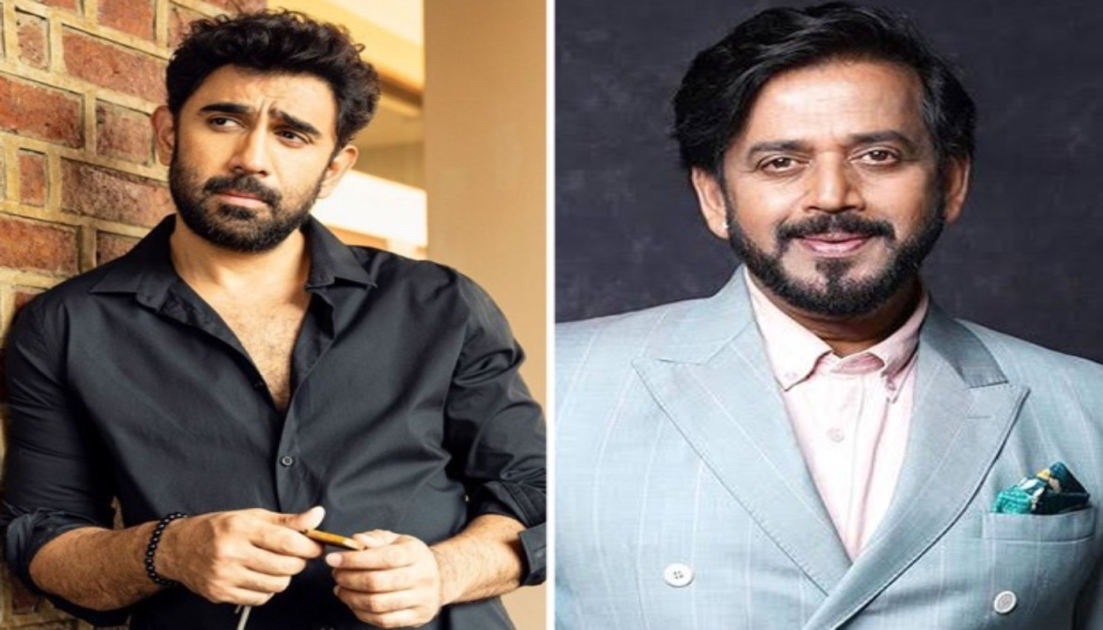
As the franchise celebrates two decades of its journey, memories of its inaugural season have naturally returned to the spotlight. With Bigg Boss Season 20 currently entertaining audiences, the anniversary has offered an opportunity to revisit the personalities who helped establish the show’s identity. Among those who became part of its original journey was actor Amit Sadh, who recently opened up about his experience during an exclusive conversation with Bollywood Hungama.
The actor, who participated in the first season, looked back at his time inside the Bigg Boss house and shared particularly affectionate memories of his former co-contestant Ravi Kishan. Interestingly, Sadh believes that the qualities audiences are appreciating in Kishan today were already evident two decades ago.
Speaking about the actor’s recent popularity on social media, Amit Sadh remarked, “What you guys are seeing now, I saw that 20 years ago!”
His comment reflected genuine affection and admiration for Kishan, whom he remembered for his infectious energy, warmth, humour and ability to make people around him laugh. The conversation also brought attention to an important chapter in Indian television history, reminding audiences how the original contestants helped shape a format that continues to dominate entertainment discussions.
Amit Sadh Revisits His Bigg Boss Journey After Two Decades
For Amit Sadh, Bigg Boss Season 1 remains an experience from a very different stage of his professional life. The actor entered the reality television landscape when he was still establishing himself in the entertainment industry. Having already appeared in television serials and participated in the first season of Nach Baliye, he was familiar with being in front of cameras. However, Bigg Boss introduced an entirely different kind of exposure.
The first season premiered on November 3, 2006, with actor Arshad Warsi taking on hosting responsibilities. Unlike conventional reality programmes that focused on singing, dancing or talent competitions, Bigg Boss introduced a format built around everyday human interactions. Contestants were placed inside a specially constructed house, where cameras captured their conversations, disagreements, friendships and personal experiences.
For television audiences at the time, the concept was relatively unfamiliar. Watching established personalities navigate ordinary domestic situations, complete unusual tasks and respond to interpersonal conflicts created a new kind of entertainment.
When Bollywood Hungama asked Sadh how he viewed his participation after 20 years, the actor initially responded with characteristic humour.
“I don’t look back only!” he said.
He subsequently offered a more reflective response, describing the experience as something that belonged to an important phase of his life.
“But it was a good experience. Ultimately, everything in life is an experience. We should enjoy and move forward. It was a great experience at that time,” he added.
His remarks reflected a straightforward philosophy about personal growth. Rather than allowing an old professional experience to define his present identity, Sadh appeared comfortable acknowledging it as one chapter in a much longer journey.
The anniversary is particularly interesting because the actor has since developed an extensive career across television, films and digital entertainment. His professional identity today is considerably different from the young contestant viewers encountered in 2006.
Nevertheless, his participation in the original season remains an important part of his early public journey.
Ravi Kishan’s Energy Left a Lasting Impression on Amit Sadh
While revisiting the first season, one personality immediately stood out in Amit Sadh’s recollections: Ravi Kishan.
The actor, who has established himself across Bhojpuri cinema, Hindi films and politics, was among the contestants who brought a distinctive personality to the inaugural season.
When the conversation shifted towards Kishan’s recent popularity on social media, Sadh responded enthusiastically. Several clips featuring the actor have attracted renewed attention online, introducing his expressive personality and entertaining mannerisms to audiences who may not have followed his earlier career.
However, according to Sadh, none of these qualities are particularly new.
“Oh yes, Ravi Kishan was there. I remember having a great time and a great laugh with him,” he recalled.
He then delivered the memorable observation that has become the central highlight of the anniversary interview.
“What you guys are seeing now, I saw that 20 years ago! The energy, the bundle of love, the masti and the fondness that he has for everyone. I just love him!”
The statement captures something particularly meaningful about friendships formed during shared experiences. Although two decades have passed since the contestants first entered the house, Sadh’s recollection suggests that Kishan’s natural enthusiasm made an impression that remained with him.
His description goes beyond simply remembering someone as entertaining. By highlighting Kishan’s affection for people, generosity of spirit and infectious energy, Sadh offered an affectionate glimpse into the personality he experienced away from the usual film sets and public appearances.
It is also an interesting reminder that personalities who become popular through viral internet moments often possess qualities that have been appreciated by their colleagues and audiences for years.
Social media may have introduced a new generation to Kishan’s expressive personality, but his ability to entertain people was already evident during the early days of Indian celebrity reality television.
Ravi Kishan’s Bigg Boss Appearance Helped Expand His Audience
Before participating in Bigg Boss, Ravi Kishan had already established himself as a recognised performer, particularly within Bhojpuri entertainment.
His work across regional cinema had earned him an audience, while appearances in Hindi films had provided opportunities to reach viewers beyond that industry.
However, television offered a different kind of visibility.
Cinema audiences generally encounter actors through carefully constructed characters and scripted performances. Reality television, on the other hand, provides opportunities for viewers to observe personalities in situations that are not presented as conventional film narratives.
For someone like Kishan, whose expressive personality and conversational style were naturally suited to an unscripted environment, the format provided another platform to connect with audiences.
His participation in Bigg Boss Season 1 introduced him to viewers who might not previously have followed his Bhojpuri film career.
One of the most memorable elements associated with his television personality was his popular catchphrase, “Zindagi jhandva, phir bhi ghamandva.”
The line became closely associated with his distinctive sense of humour and ability to find entertainment even in difficult situations.
It also reflected the kind of personality that makes reality television memorable. Contestants are not remembered exclusively for winning tasks or surviving nominations. Sometimes, their everyday expressions, spontaneous conversations and individual mannerisms become more enduring than the competition itself.
Kishan’s journey is an example of how reality television can provide performers with opportunities to strengthen their public identities.
His subsequent work across entertainment and public life has further expanded his recognition. Today, he is familiar to audiences through several different professional identities, making his early Bigg Boss appearance an interesting part of his larger career story.
Looking Back at the Original Bigg Boss House
To understand why the 20th anniversary has generated so much nostalgia, it is important to revisit what made the first season distinctive.
When Bigg Boss premiered in 2006, Indian television was already familiar with reality programming. Singing competitions, dance shows, celebrity interviews and talent-based formats had become popular forms of entertainment.
However, Bigg Boss introduced a considerably different proposition.
Instead of asking contestants to demonstrate a particular skill, it placed them in an environment where their personalities became the central attraction.
Fifteen contestants entered the inaugural season, bringing together performers from different professional backgrounds. They had to navigate shared living arrangements, participate in activities, manage disagreements and deal with the uncertainty of nominations and eliminations.
The absence of conventional privacy became one of the format’s defining characteristics.
Ordinary activities such as preparing meals, having conversations, maintaining friendships and resolving disagreements became potential television moments.
For viewers, the attraction was not simply discovering who would eventually win. It was observing how different personalities responded to an unfamiliar environment.
The original season was hosted by Arshad Warsi, whose approachable presentation style helped introduce the format to Indian audiences.
The show ran from November 3, 2006, until January 26, 2007, completing an 86-day journey.
Rahul Roy, best known for his popularity following the film Aashiqui, emerged as the winner. Model Carol Gracias finished as the first runner-up, while Ravi Kishan secured the second runner-up position.
The season established the foundation for a franchise that would eventually become a regular part of Indian television’s entertainment calendar.
The Contestants Who Made Season 1 Memorable
One of the reasons the first season continues to attract attention is its diverse collection of personalities.
Apart from Amit Sadh and Ravi Kishan, the original season featured several contestants who were already recognisable to television and film audiences.
Rakhi Sawant and Kashmera Shah brought their outspoken personalities and entertainment backgrounds into the house. Rupali Ganguly, who would later become widely recognised for her television work, was also among the participants.
Rahul Roy entered the competition with an established film identity, while Carol Gracias represented the modelling industry.
Other contestants included Aryan Vaid, Anupama Verma, Deepak Parashar, Salil Ankola, Deepak Tijori, Baba Sehgal and Ragini Shetty.
The combination of actors, models, performers and public personalities created an environment in which different communication styles and approaches to relationships naturally came together.
Every contestant brought a different understanding of public life and entertainment.
Some were more comfortable expressing their opinions openly, while others preferred observing situations before becoming involved. Certain participants attracted attention through humour, while others became associated with emotional conversations and interpersonal disagreements.
This diversity helped make the inaugural season more than a conventional celebrity gathering.
It also established an important feature of the Bigg Boss format: the unpredictability of bringing people with different personalities into one shared environment.
Twenty years later, viewers continue to remember several of these contestants because their individual characteristics helped establish the show’s early identity.
Amit Sadh’s Journey From Television to Films and OTT
The anniversary also provides an opportunity to revisit Amit Sadh’s professional evolution.
When he entered Bigg Boss in 2006, he was still relatively early in his acting career.
Sadh began his television journey with Kyun Hota Hai Pyarrr in 2002. He subsequently appeared in several television projects, building experience and recognition through the medium.
His participation in Nach Baliye and Bigg Boss introduced him to reality television audiences, giving him exposure beyond conventional scripted performances.
However, his ambitions extended towards films.
Transitioning from television to cinema was not an uncomplicated journey. In a 2022 interview with The Indian Express, Sadh discussed the challenges he experienced while navigating his career and recalled how his expectations about Bigg Boss differed from what he encountered inside the house.
His eventual move towards films became a significant turning point.
He appeared in Phoonk in 2010 before gaining considerable attention through Kai Po Che! in 2013.
The latter film, featuring Sushant Singh Rajput and Rajkummar Rao alongside Sadh, became an important project in his filmography.
His performance demonstrated his ability to handle emotionally layered characters and established him as a performer worth watching.
Over the years, he continued appearing in films such as Sultan, Sarkar 3, Gold and Super 30.
Digital entertainment subsequently provided another opportunity to showcase his acting abilities.
His portrayal of Inspector Kabir Sawant in the Breathe franchise became one of his most recognised performances. The character allowed him to explore a more restrained and psychologically complex style of acting.
He also appeared in projects such as Avrodh and Jeet Ki Zid, further expanding his work across the streaming landscape.
This professional evolution makes the 20-year anniversary particularly interesting.
The young television personality who entered the Bigg Boss house is now an established actor with experience across several entertainment mediums.
His career demonstrates how an individual’s professional identity can continue evolving long after their earliest television appearances.
A More Complicated Relationship With Bigg Boss
Interestingly, Amit Sadh’s latest nostalgic comments also invite a closer examination of his earlier statements about the show.
Although he described the experience as good during the recent anniversary conversation, the actor has previously spoken quite candidly about the difficulties he encountered during his participation.
In an interview with The Indian Express in June 2022, Sadh explained that he entered Bigg Boss without fully understanding the format.
He had initially imagined a competition involving physical challenges and activities. However, he found the atmosphere and interpersonal dynamics very different from what he had expected.
He recalled feeling bored by the constant conversations and gossip and described experiencing emotional difficulties during his time inside the house.
In another interview with PeepingMoon in December 2022, he described the first season as a difficult experience, explaining that being confined with unfamiliar people at a young age brought out emotions and personal struggles he had not fully understood.
These earlier reflections are important because they offer a more complete understanding of his relationship with the experience.
His latest remarks do not necessarily mean that every aspect of his participation was enjoyable. Instead, they demonstrate that memories can contain different emotions.
A person can acknowledge that an experience was challenging while still remembering particular friendships, amusing incidents and meaningful interactions with affection.
That distinction is especially relevant when revisiting reality television experiences.
For Sadh, the positive memories of spending time with Ravi Kishan appear to have remained particularly strong.
His recent comments focused on the affection and laughter he associated with his former co-contestant rather than revisiting the more difficult aspects of his own participation.
It is this personal perspective that gives the anniversary interview an additional layer of interest.
From Arshad Warsi to a Changing Hosting Legacy
Another important aspect of Bigg Boss’s 20-year journey is the evolution of its presentation.
The inaugural season was hosted by Arshad Warsi, who introduced Indian viewers to the format.
Subsequent seasons experimented with different hosting personalities, including Shilpa Shetty and Amitabh Bachchan.
Eventually, Salman Khan became one of the franchise’s most recognisable faces, developing a strong association with the Hindi edition.
The hosting role has always been an important part of the show’s identity.
The host provides context to the week’s developments, interacts with contestants, addresses disagreements and becomes the principal connection between the house and the audience.
Over the years, the hosting style has evolved alongside the expectations of viewers.
What began as an unfamiliar reality television experiment gradually developed into a highly recognisable entertainment format with established rituals, recurring conversations and a dedicated audience.
The anniversary therefore celebrates not only the contestants but also the many people who have contributed to the show’s continuing presence.
How Bigg Boss Transformed Indian Reality Television
The success of Bigg Boss cannot be understood exclusively through its celebrity contestants.
Its larger contribution lies in how it changed the relationship between audiences and television personalities.
Before the popularity of celebrity-based reality formats, viewers primarily encountered actors through films, serials and promotional appearances.
Their public identities were often shaped by scripted roles and carefully controlled interviews.
Bigg Boss introduced a different kind of visibility.
The format encouraged viewers to observe personalities in ordinary situations, creating opportunities for unexpected moments to become part of popular culture.
A funny remark could become a catchphrase. A disagreement could dominate entertainment discussions. A friendship could attract a dedicated following.
This approach also created a different relationship between television and audience participation.
Viewers were no longer simply watching contestants perform. They were forming opinions, supporting favourites, discussing developments and participating through voting mechanisms.
As the franchise developed, these elements became increasingly central to its appeal.
The introduction of digital platforms further expanded the viewing experience.
Audiences could engage with episodes, clips and conversations beyond conventional television broadcasts.
Social media subsequently became an important space for the show’s cultural afterlife.
Memorable moments from older seasons can now resurface years after their original broadcasts, sometimes reaching viewers who were too young to remember the original episodes.
Ravi Kishan’s renewed online popularity is an example of this phenomenon.
His expressive personality, which audiences encountered during the inaugural season, has found another life through digital circulation.
Bigg Boss Season 20 and the Power of Nostalgia
The ongoing 20th season provides an appropriate backdrop for revisiting the show’s origins.
Two decades represent a significant period in the entertainment industry.
Television viewing habits have changed, streaming platforms have transformed content consumption, and social media has become an essential part of celebrity culture.
Yet Bigg Boss continues to attract attention through its central premise of bringing different personalities together and allowing their interactions to become entertainment.
The current season also demonstrates how far the franchise has travelled from its original television beginnings.
Season 1 was an experiment for Indian audiences. Season 20 arrives with an established brand identity, a loyal following and a format that viewers already understand.
The audience has also changed.
Today’s viewers frequently encounter contestants through short video clips, online discussions and social media trends before or after watching full episodes.
A single interaction can become a widely circulated digital moment, extending the show’s reach beyond its regular broadcast audience.
This makes the connection between Bigg Boss’s early seasons and its current popularity particularly interesting.
The people who participated in the inaugural edition helped establish the kind of personality-driven entertainment that continues to define the franchise.
For Amit Sadh, revisiting that period also means recognising the people who made the experience memorable.
His affection for Ravi Kishan is a reminder that behind the nominations, tasks and controversies were real interactions between individuals.
Why Amit Sadh’s Comments Have Resonated With Fans
The most appealing aspect of Sadh’s anniversary interview is its simplicity.
He was not attempting to offer a detailed assessment of the show’s format or compare the first season with the current edition.
Instead, he spoke about someone he genuinely enjoyed spending time with.
His description of Ravi Kishan as a bundle of love, energy and masti offered a personal perspective that audiences could appreciate.
It also highlighted the difference between discovering a personality through a viral clip and knowing someone through everyday interactions.
For viewers who have recently encountered Kishan’s entertaining videos, Sadh’s observation adds an interesting historical connection.
The qualities that attract attention today were already part of his personality when he appeared on television two decades ago.
The comment also reinforces the importance of friendships and memorable interactions in reality television.
Although competitions are built around winners and eliminations, the most enduring memories are not always connected to the final results.
Sometimes, they involve the people contestants laughed with, the conversations they remember and the personalities who made an unfamiliar environment more enjoyable.
Sadh’s recollections fit precisely into that category.
Two Decades Later, Bigg Boss Continues to Create Memories
As Bigg Boss celebrates its 20th anniversary, Amit Sadh’s comments offer a nostalgic reminder of where the journey began.
The inaugural season introduced a new reality television experience to Indian audiences, brought together an eclectic group of personalities and established a format that would eventually become a major entertainment franchise.
For Sadh, the experience belongs to an earlier chapter of his life, one that he has since moved beyond while continuing to build his career across films and digital entertainment.
For Ravi Kishan, the show was another platform through which his personality reached audiences beyond his established regional cinema following.
And for viewers, the first season remains a memorable part of Indian television history.
Perhaps the most meaningful takeaway from the anniversary conversation is that certain qualities do not disappear with time.
Amit Sadh’s affectionate description of Ravi Kishan suggests that the warmth, humour and enthusiasm audiences appreciate today were already evident during their days together inside the Bigg Boss house.
His statement, “What you guys are seeing now, I saw that 20 years ago!” perfectly captures the spirit of the reunion between past and present.
Twenty years may have changed the entertainment industry, expanded the franchise and transformed how audiences discover their favourite personalities. However, the human connections formed during those early experiences can remain just as memorable.
As Season 20 continues, the anniversary is not simply about celebrating another milestone in television history. It is also about recognising the contestants, friendships, personalities and unforgettable moments that helped make Bigg Boss a lasting part of Indian popular culture.