 by
by Fashion has a habit of bringing the past back when we least expect it. One season, a trend can feel firmly associated with another decade, and the next, it can suddenly appear on celebrity wardrobes, fashion feeds and street-style looks as though it had never left. This time, one of fashion’s most recognisable patterns is getting its moment in the spotlight again: polka dots.
Once strongly associated with vintage dresses, retro silhouettes, old-school glamour and playful femininity, polka dots are making a convincing return to contemporary fashion. But their latest comeback isn’t about simply recreating the looks of the past. Instead, a new generation of celebrities and style stars is demonstrating how the familiar pattern can be transformed through modern silhouettes, unexpected styling combinations, dramatic proportions and contemporary accessories.
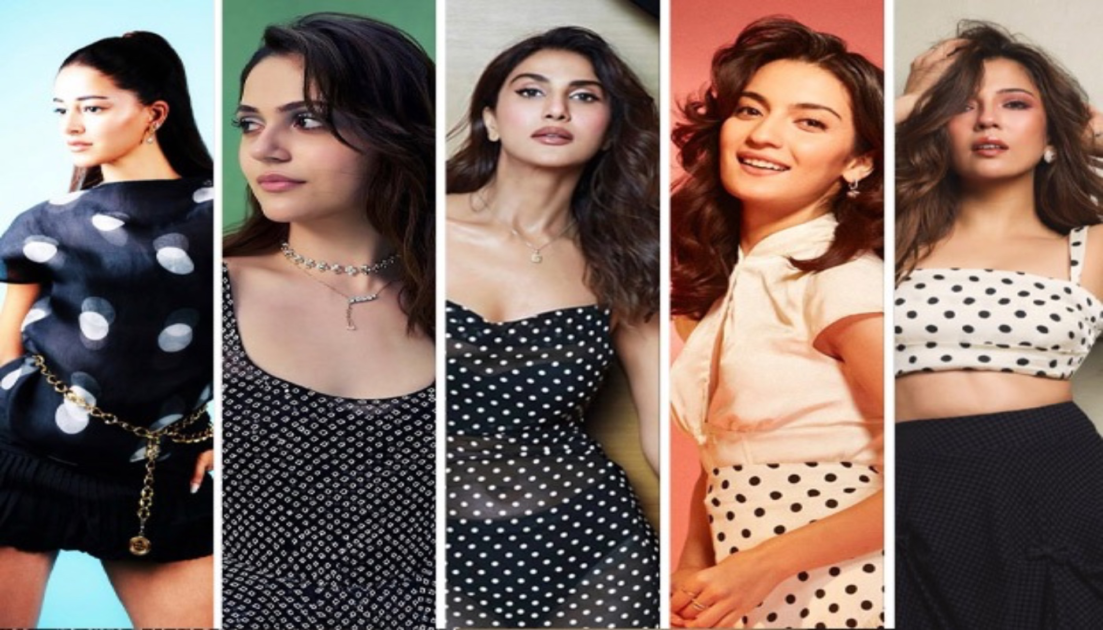
Ananya Panday, Aneet Padda, Vaani Kapoor, Pratibha Ranta and Barkha Singh have each offered their own interpretation of the print, proving that there is no single way to wear polka dots in 2026. One can be sheer and dramatic, another youthful and unexpected, another glamorous, another deliberately retro and another romantic and feminine. Together, their looks demonstrate exactly why the print continues to survive fashion’s constantly changing trend cycle.
The current revival is particularly interesting because polka dots have never completely disappeared. They have periodically returned to runways, celebrity wardrobes and high-street collections, but their meaning changes depending on how they are styled. A polka-dot dress from one decade may evoke sophisticated vintage glamour, while a similar pattern on a contemporary mini dress, sheer top or asymmetrical skirt can feel completely modern.
That ability to change personality is arguably the biggest strength of polka dots.
The pattern itself is deceptively simple. Repeated circles create a strong visual rhythm without requiring complicated embroidery, elaborate graphics or excessive embellishment. A black-and-white version can feel minimalist, while colourful dots can become playful and youthful. Tiny dots can look delicate and romantic, whereas oversized dots can become bold and editorial. Even the same pattern can move from casual to glamorous depending entirely on the fabric and silhouette.
This flexibility explains why celebrities are once again embracing the print.
Ananya Panday, in particular, has shown how polka dots can be taken far beyond their conventional retro associations. Her more recent interpretation uses a dramatic sheer silhouette with prominent dots, creating an editorial effect rather than a traditionally sweet or vintage one. The combination of transparency, oversized patterning and statement proportions makes the outfit feel distinctly contemporary.
The lesson from Ananya’s approach is simple: when the print is familiar, change the silhouette.
Rather than allowing the pattern to dictate the entire aesthetic, the construction of the outfit becomes the modernising element. Sheer fabric immediately gives the print a more fashion-forward character, while larger dots make the look graphic rather than delicate. Instead of looking like a recreation of an old-fashioned polka-dot dress, the outfit feels designed for the current fashion landscape.
This isn’t the first time Ananya has demonstrated the versatility of the print. She has previously worn a black polka-dot mini dress with casual accessories, showing how easily the pattern can move from glamorous styling into a more relaxed, youthful wardrobe. Her continued experimentation reinforces the idea that polka dots do not have to belong to one particular fashion category.
They can be casual, sophisticated, playful or dramatic depending on what surrounds them.
Aneet Padda takes a completely different approach. Her styling introduces a youthful energy that feels particularly relevant to Gen Z fashion. Instead of allowing the polka-dot piece to exist within a traditionally feminine outfit, she combines it with black leggings and introduces a vivid red accent through her footwear.
That contrast is what gives the outfit its personality.
Black-and-white polka dots are already a familiar combination, so the introduction of red prevents the outfit from feeling predictable. It creates a focal point while keeping the rest of the styling relatively streamlined. The result is a reminder that modern fashion doesn’t always depend on matching every element perfectly.
In fact, deliberate contrast can often make a look more interesting.
Aneet’s approach also provides an easy lesson for anyone who loves polka dots but worries that they might look too traditional. The answer is to combine the print with something unexpected. Instead of pairing a polka-dot top with a classic skirt, try tailored trousers. Instead of wearing a vintage-inspired dress with equally vintage accessories, add contemporary shoes. A more traditional printed piece can instantly acquire a younger personality when combined with modern wardrobe staples.
Vaani Kapoor demonstrates yet another side of the revival by taking polka dots into eveningwear.
Her interpretation leans toward sleek glamour, with sheer detailing and a figure-skimming silhouette that gives the print a more sensual character. Strappy heels complete the outfit and reinforce its sophisticated, after-dark mood.
The importance of fabric cannot be underestimated here.
Polka dots on cotton can feel casual and nostalgic. The same dots on chiffon, mesh, satin or another fluid fabric can feel entirely different. Sheer materials are particularly effective because they introduce a contrast between the recognisable pattern and the modern transparency of the garment.
This is one of the easiest ways to update a heritage print. You don’t necessarily have to change the pattern itself. You can change the material carrying it.
Vaani’s look also demonstrates how footwear can completely alter the mood of a polka-dot outfit. Delicate heels make the ensemble feel elegant and evening appropriate, while sneakers could have transformed it into something much more casual. Chunkier shoes could have introduced an edgier attitude.
The pattern stays the same. The styling changes the story.
Pratibha Ranta, meanwhile, embraces the vintage character of polka dots while making sure the overall silhouette remains contemporary.
Her asymmetrical polka-dot skirt provides an obvious reference to classic fashion, but its uneven construction prevents it from looking like a literal reproduction of an older style. A fitted top balances the skirt, while her voluminous hairstyle adds another subtle nod to retro glamour.
This is an important distinction for anyone who genuinely loves vintage fashion.
There is nothing wrong with looking retro. The trick is to make nostalgia feel intentional rather than accidental.
Instead of recreating an entire decade from head to toe, choose one or two elements that provide the vintage reference and allow the rest of the outfit to remain current. In Pratibha’s case, the print and hair carry much of the retro mood, while the asymmetrical silhouette keeps the look firmly rooted in contemporary fashion.
Her styling proves that vintage and modern fashion do not have to compete with each other. They can coexist within the same outfit.
Barkha Singh explores the softer and more romantic side of the trend.
Her polka-dot look combines a fitted crop top with a dramatic flowing skirt, creating a contrast between a defined upper silhouette and a more voluminous lower half. Bow detailing adds another feminine element and reinforces the playful charm that has long been associated with polka dots.
Unlike the more editorial interpretation seen on Ananya or the unexpected styling of Aneet, Barkha’s look embraces the sweetness of the pattern.
And that is equally important to the current revival.
Modernising a trend doesn’t always mean making it edgy.
Sometimes the most effective way to make something feel current is to embrace its original appeal while updating the proportions and styling. Barkha’s look does exactly that. It acknowledges that people love polka dots precisely because they can be feminine, playful and romantic.
The five celebrity looks therefore reveal five different personalities of the same print.
Ananya Panday makes polka dots editorial and dramatic. Aneet Padda gives them a youthful and unexpected edge. Vaani Kapoor turns them into sophisticated eveningwear. Pratibha Ranta demonstrates how retro references can coexist with modern construction. Barkha Singh highlights their romantic and feminine appeal.
That diversity is perhaps the strongest evidence that polka dots are more than a passing microtrend.
A trend becomes genuinely useful when people can adapt it to their own personalities and wardrobes. Polka dots provide that flexibility. Someone who prefers minimal fashion can wear a tiny-print blouse with tailored trousers. Someone who loves glamour can choose a sheer evening dress. Someone who prefers vintage dressing can embrace a full skirt and retro-inspired hair. Someone with a more casual wardrobe can simply add a polka-dot shirt to jeans.
There is no single correct interpretation.
For anyone considering adding the print to their wardrobe, the easiest starting point is the silhouette. Contemporary cuts can immediately prevent a classic pattern from feeling dated. Asymmetrical skirts, structured blazers, fitted dresses, wide-leg trousers, crop tops and unconventional necklines can all make the familiar print feel fresher.
Scale is another important consideration.
Small polka dots tend to feel understated and delicate, making them easy to incorporate into everyday dressing. Larger dots are more dramatic and can turn even a relatively simple garment into a statement piece. Choosing between the two is largely a matter of personality and occasion.
Colour also offers an opportunity to move away from the expected.
Black and white may be the most iconic combination, but it is certainly not the only option. Brown and cream can create a softer, more sophisticated effect. Navy and white can feel polished. Red and white can be playful. Pastel dots can make the print feel youthful and romantic.
Colour can completely change how the pattern is perceived.
Accessories are equally important. Because polka dots already create a repeating visual pattern, accessories don’t necessarily need to compete for attention. A structured handbag, understated jewellery or a clean pair of heels can be enough to finish the look.
But accessories can also be used deliberately to disrupt the pattern.
A bright red shoe, for example, can create a focal point against monochrome dots. Chunky footwear can make a feminine dress feel more youthful. An oversized blazer can make a romantic skirt look more contemporary. Minimal jewellery can allow a dramatic printed dress to remain the centre of attention.
The key is understanding what you want the outfit to communicate.
This is also why polka dots work so well for everyday dressing.
The print does not require an elaborate wardrobe around it. A polka-dot blouse can be paired with denim for a casual outing. A midi skirt can work with a simple fitted top. A printed shirt can be layered under a blazer for a more polished look. A statement dress can be toned down with flats or sneakers.
For someone hesitant about embracing the trend, starting small can be the easiest option. A scarf, handbag, pair of shoes or simple top can introduce the print without making it the entire focus of an outfit.
This adaptability may explain why polka dots continue to return despite fashion’s obsession with novelty.
Unlike extremely specific microtrends, the pattern has a recognisable visual identity that can be repeatedly reinvented. It doesn’t need to be completely redesigned to feel relevant. It simply needs a new context.
That context has changed significantly for today’s younger fashion audience.
Gen Z fashion has become increasingly comfortable with mixing decades, aesthetics and references. Vintage pieces can be worn with contemporary accessories. Feminine dresses can be paired with chunky footwear. Tailored pieces can be styled casually. Luxury-inspired garments can be mixed with accessible wardrobe staples.
Polka dots naturally fit into this approach because they are visually familiar but stylistically flexible.
They can be romantic without being old-fashioned, retro without looking like a costume and playful without necessarily appearing childish.
There is also something particularly appealing about the simplicity of the pattern in an increasingly complicated fashion environment.
As trends become more visually elaborate, a simple repeated dot can provide an alternative form of statement dressing. The print creates interest without demanding excessive embellishment.
That makes it particularly effective in photographs as well. A polka-dot dress has enough visual structure to stand out in a fashion image, but it doesn’t necessarily overwhelm the person wearing it.
This may be one reason the pattern remains so effective for celebrity styling.
The best celebrity fashion moments are not always about the most complicated outfits. Sometimes, they are about taking something familiar and making it feel unexpectedly fresh.
That is exactly what these five women are demonstrating.
Ananya’s sheer and dramatic interpretation proves that polka dots can be editorial. Aneet’s styling shows that they can become youthful through unexpected combinations. Vaani demonstrates their potential for evening glamour. Pratibha shows that their vintage heritage can be embraced without looking dated. Barkha reminds us that their romantic character remains one of their greatest strengths.
Together, their outfits create a broader picture of what the modern polka-dot wardrobe can look like.
And perhaps the most important lesson is that nobody needs to dress like the past simply because they are wearing a pattern from the past.
Fashion works through reinterpretation.
A print can survive for generations precisely because each generation finds a new way to wear it. What was once associated with one particular decade can become something completely different when placed against a new cultural and stylistic backdrop.
Polka dots are experiencing exactly that transformation now.
They are no longer restricted to retro dresses, vintage-inspired silhouettes or old-school glamour. They can be sheer, oversized, asymmetrical, minimalist, colourful, glamorous, casual or deliberately romantic.
The pattern remains familiar, but the styling possibilities have expanded.
That is why the latest polka-dot comeback feels less like a nostalgic fashion moment and more like a genuine wardrobe revival.
The message from Ananya Panday, Aneet Padda, Vaani Kapoor, Pratibha Ranta and Barkha Singh is clear: there is no single way to wear the classic print anymore.
You can make it modern through tailoring, youthful through contrast, glamorous through fabric, retro through styling or romantic through proportion.
The dots may be classic, but the possibilities are anything but.
Polka dots are officially back—and this time, fashion isn’t asking us to recreate the past. It is giving us permission to reinterpret it.