 by
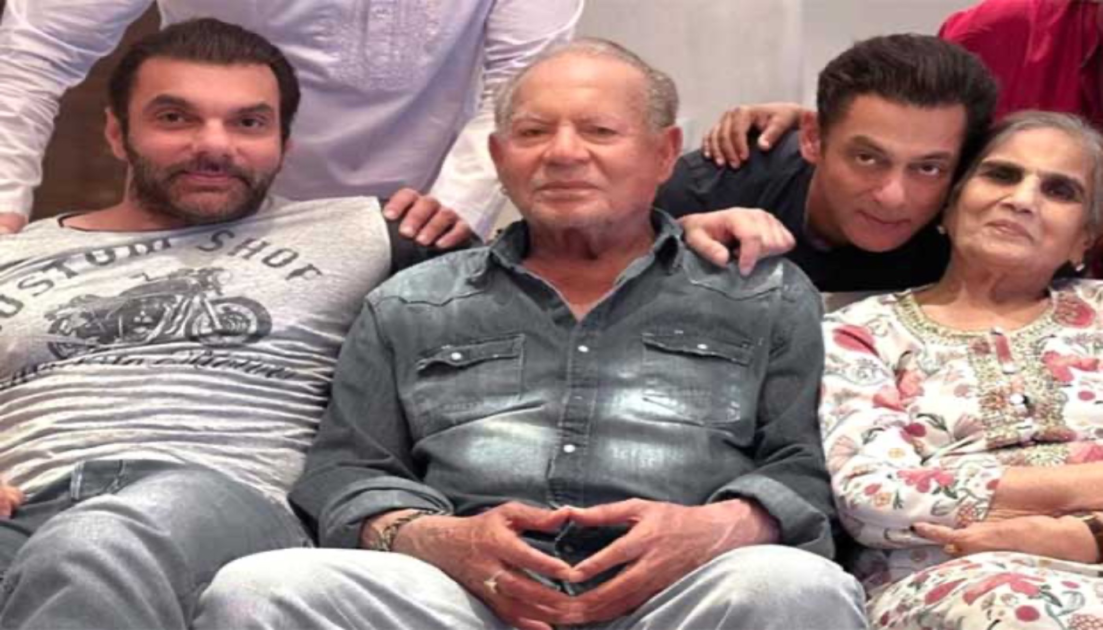
by Salman Khan has shared a deeply personal family story on Bigg Boss 20, turning a conversation about anger, forgiveness, and unresolved disagreements into a moving reflection on the importance of reconciliation. During the latest Weekend Ka Vaar episode, the Bollywood superstar recalled how his maternal grandfather opposed his parents’ marriage and remained distant from his father, Salim Khan, for five years. What eventually brought a change in the situation was the birth of Salman’s younger brother, Sohail Khan, a milestone that prompted his grandfather to visit the family with sweets and acknowledge the time he had lost.
The anecdote, reported by Bollywood Hungama on October 18, 2026, offered viewers a glimpse into the personal experiences that have shaped Salman’s understanding of family relationships. Rather than presenting reconciliation as a simple matter of apologising, the actor highlighted the consequences of allowing disagreements to continue for years. His grandfather’s experience became an example of how pride and resentment can create emotional distance that is difficult to recover from once precious time has passed.
Salman also revealed that he had recently apologised to his father, acknowledging that he might have said something hurtful or fallen short of his responsibilities as a son. By sharing this conversation, he connected a personal moment of reflection with a broader message for the contestants of Bigg Boss 20: disagreements should be addressed before they become lasting regrets.
The story resonated because it moved beyond the glamour associated with Bollywood families. At its heart was a familiar human experience: the difficulty of admitting mistakes, the emotional cost of prolonged family disputes, and the realisation that relationships can be more valuable than the arguments that threaten them.
Salman Khan Emphasises the Importance of Resolving Conflicts Without Delay
The latest Weekend Ka Vaar episode of Bigg Boss 20 provided Salman Khan with an opportunity to discuss the consequences of anger and unresolved conflict. As the show’s host, he frequently addresses contestants’ behaviour, particularly when disagreements escalate into personal attacks or actions that damage relationships.
This time, however, his message carried a more intimate dimension. Instead of limiting the discussion to the contestants’ experiences inside the reality show’s house, Salman drew from his own family history to explain why conflicts should not be allowed to linger unnecessarily.
The actor acknowledged that people often experience regret after saying or doing something hurtful. Yet, recognising a mistake after considerable time has passed does not always mean the damage can be undone. Relationships continue to evolve while people remain separated by anger, and important opportunities for connection may disappear.
During the episode, Salman revealed that he had recently been spending time with his father, Salim Khan, when he decided to apologise for any shortcomings in their relationship.
The actor explained that he told his father that if he had ever said something hurtful or failed him as a son, he was genuinely sorry.
The significance of this admission lay in its simplicity. Salman was not describing a dramatic confrontation or a public dispute. Instead, he recalled an ordinary conversation between a father and son, demonstrating that meaningful apologies do not necessarily require elaborate gestures.
Sometimes, the most important conversations happen when people are relaxed enough to reflect honestly on their relationships.
For Salman, the experience reinforced the idea that acknowledging one’s mistakes should not be postponed until circumstances force a person to confront them.
His message was particularly relevant to the contestants, whose disagreements can intensify under the pressure of constant observation, competition, and emotional confrontations. In such an environment, a seemingly minor argument can become a significant source of resentment.
By drawing attention to his own experiences, Salman encouraged the housemates to consider what their conflicts might cost them beyond the immediate circumstances of the show.
His advice was straightforward: resolve disagreements while there is still an opportunity to do so.
Why Salman Khan’s Apology to Salim Khan Matters
Salman Khan’s willingness to discuss apologising to his father added another layer to the episode.
Despite his enormous success in the entertainment industry, Salman approached the subject from the perspective of a son reflecting on his responsibilities toward a parent.
His admission acknowledged something that many people find difficult to express: even within close family relationships, individuals can unintentionally cause hurt.
The actor did not need to describe a particular incident to communicate the point. Instead, he focused on the possibility that he might have said something inappropriate at some stage or failed to meet his father’s expectations.
His apology illustrated an understanding that affection and respect do not eliminate the possibility of mistakes. Even relationships built over decades can benefit from moments of honest reflection.
Parent-child relationships are especially complex because they change as children grow older. Parents who once made decisions for their children eventually become people with whom adult children must develop a more mature, reciprocal relationship.
As children establish independent lives and careers, their interactions with their parents can be affected by disagreements, misunderstandings, and differing expectations.
An apology can create an opportunity to acknowledge those experiences without allowing them to define the relationship permanently.
Salman’s account also suggested that reconciliation should not always depend on determining who was entirely right or wrong. Sometimes, the more important consideration is whether a relationship is worth preserving and whether a person can take responsibility for their part in a disagreement.
His decision to share the experience on national television gave the message additional significance. Rather than presenting himself as someone who had mastered every aspect of family life, he spoke about the need to reflect, acknowledge imperfections, and express regret.
That vulnerability helped establish the emotional foundation for the story he subsequently shared about his maternal grandfather.
The Marriage That Created a Rift Between Salim Khan and Salma Khan’s Family
Salman Khan’s account then moved back to the circumstances surrounding his parents’ marriage.
His father, Salim Khan, would eventually become one of Hindi cinema’s most influential screenwriters, known for his work alongside Javed Akhtar as part of the celebrated Salim-Javed writing partnership. However, before that success became part of his public identity, he was a young man aspiring to establish himself in the film industry.
Salman’s mother, Salma Khan, was born Sushila Charak. She and Salim fell in love and married in 1964. Their marriage became an important chapter in the family’s history, eventually bringing together a household that would become widely recognised across Indian popular culture.
During Weekend Ka Vaar, Salman explained that his maternal grandfather had reservations about the marriage.
Importantly, the actor clarified that his grandfather’s objection was not religious in nature. Instead, the concern centred on Salim’s aspirations and the environment associated with the film industry.
Salman recalled that his grandfather questioned how his daughter would manage life in that world.
His explanation offered an important distinction between opposing a marriage because of religious differences and worrying about the professional circumstances or social environment into which a family member is entering.
According to Salman, his mother’s siblings were comfortable with the relationship and liked Salim. His grandfather, however, remained unconvinced.
For a parent, the prospect of a child marrying someone pursuing an uncertain career can provoke anxiety. The entertainment industry, particularly for someone still establishing himself, can represent an unpredictable professional future.
Such concerns can become even more complicated when a family’s expectations differ from the ambitions of the person entering the marriage.
Nevertheless, Salman’s account showed how a disagreement that began with concern about his mother’s future eventually became a prolonged family estrangement.
Rather than simply expressing reservations, his grandfather chose to remain distant from Salim Khan for years.
The consequences extended beyond the two men. The separation also affected the family’s opportunities to spend time together, allowing an initial disagreement to influence relationships that would otherwise have developed naturally.
Five Years of Silence and the Emotional Cost of Family Estrangement
One of the most striking details in Salman’s recollection was the length of the estrangement.
According to the actor, his maternal grandfather did not speak to Salim Khan for five years after the marriage.
Five years can represent a substantial portion of a family’s life. During that time, children are born, grow, develop personalities, and begin forming relationships with relatives.
For grandparents, those early years can be particularly meaningful. They offer opportunities to participate in family celebrations, establish familiar routines, and build relationships that may continue throughout the children’s lives.
When disagreements prevent family members from spending time together, those opportunities cannot simply be recovered later.
The emotional cost of estrangement often becomes apparent only after the separation has continued for a considerable period.
Initially, a person may believe that maintaining distance is a necessary expression of disapproval. The decision can feel justified because it communicates displeasure without requiring further confrontation.
Over time, however, the same distance can become a source of regret.
Salman’s account suggested that his grandfather eventually came to understand the consequences of his decision. By remaining distant from Salim, he had also missed opportunities to know his grandchildren as they grew up.
The disagreement had therefore taken on a life of its own, continuing long after the original circumstances that caused it.
This is one of the central lessons of the story: a conflict may begin with a specific concern, but prolonged resentment can create consequences far beyond that initial issue.
In families, relationships rarely exist in isolation. A disagreement between two adults can affect children, siblings, grandparents, and other relatives who may have little control over the circumstances.
The story also invites a distinction between maintaining personal boundaries and allowing anger to become a permanent barrier.
There are situations in which distance is necessary to protect someone’s safety or emotional well-being. Reconciliation is not always appropriate, and no one should be pressured to return to a harmful relationship.
However, when a disagreement can be addressed safely and both parties are willing to communicate, continued silence may prevent a resolution that could have been possible much earlier.
Salman’s grandfather eventually experienced the consequences of that lost time, making the anecdote particularly relevant to the actor’s advice about addressing disagreements promptly.
Sohail Khan’s Birth Becomes a Turning Point
The birth of Sohail Khan marked a significant turning point in the story.
Salman recalled that when his younger brother was born, his maternal grandfather travelled from Mahim to Bandra carrying sweets for the family.
The visit was more than a customary gesture of celebration. According to Salman, it was also an opportunity for his grandfather to acknowledge the regret he felt about remaining away from the family.
The arrival of a new baby can change the emotional atmosphere surrounding a family disagreement. A birth introduces a new relationship, creates an occasion for celebration, and can encourage people to reconsider whether their differences should continue to dictate their interactions.
In this case, Sohail’s birth prompted Salman’s grandfather to reconnect with the family after years of distance.
The sweets he brought served as a simple expression of affection and celebration. His visit also created an opportunity to acknowledge what had been lost.
Salman explained that his grandfather regretted missing his grandchildren’s formative years and not having a relationship with Salim, whom the actor described in deeply affectionate terms.
The significance of the moment was not that the birth erased the earlier disagreement. Rather, it offered a reason to move beyond it.
Family milestones can encourage people to reassess longstanding positions because they make the passage of time especially visible. A newborn represents the beginning of a new chapter, but the arrival also highlights the years that have already passed.
For Salman’s grandfather, the occasion appears to have brought that realisation into focus.
His visit illustrated how reconciliation can begin with a small but meaningful gesture.
It did not require a grand public declaration or an elaborate explanation. Instead, it began with travelling to see the family, bringing sweets, and acknowledging the consequences of staying away.
The episode also demonstrated why reconciliation can be emotionally complicated.
A person may recognise that a previous decision was mistaken while simultaneously struggling with the knowledge that certain experiences cannot be recovered.
The children who were not present in a grandparent’s daily life during their early years will continue growing, regardless of whether the adults eventually resolve their differences.
Reconciliation can restore a relationship, but it cannot reverse the passage of time.
That distinction gives the story much of its emotional weight.
A Grandfather’s Regret That Continued Until His Final Days
According to Salman, his maternal grandfather continued to regret the years he had spent away from the family until his death.
The actor’s recollection suggested that the pain was not limited to the original period of estrangement. Even after the relationship had changed, the knowledge of the lost years remained with his grandfather.
This detail transformed the anecdote from a story about a disagreement into a reflection on the lasting consequences of decisions made in anger or stubbornness.
People sometimes assume that a conflict can be resolved whenever they eventually feel ready. They may postpone an apology because they believe there will always be another opportunity to speak, explain their position, or rebuild a relationship.
Yet life does not guarantee that every opportunity will remain available.
Parents grow older. Children establish their own lives. Relatives move away. Circumstances change, and sometimes the person with whom reconciliation is needed is no longer present.
These realities make timely communication particularly important.
Salman’s grandfather was eventually able to visit the family and acknowledge his regret. However, he could not reclaim the years during which he had remained absent from his grandchildren’s lives.
His experience demonstrates that the end of a disagreement does not necessarily end the emotional consequences associated with it.
Regret can persist because reconciliation addresses the present and future without erasing the past.
This is also why Salman’s account resonated beyond the specifics of his family’s history. Many people can recognise the experience of postponing a difficult conversation, assuming that there will be a more convenient time to resolve it.
The story encourages a different approach: when a disagreement can be addressed constructively, delaying the conversation may create unnecessary emotional distance.
An apology does not guarantee that the other person will immediately forgive or that a relationship will return to its previous state. However, it can create an opportunity for understanding that continued silence cannot provide.
The grandfather’s regret therefore became a cautionary example of what can happen when pride prevents people from making that first move.
Why Salman’s Grandfather Refused to Let Salma Return Home After Arguments
Another detail from Salman’s recollection added complexity to the story.
The actor explained that there were occasions when his parents argued and his mother returned to her parental home.
On those occasions, Salman’s grandfather did not allow her to remain there simply because she had quarrelled with her husband.
Instead, he encouraged her to return to her marital home, explaining that she could visit him whenever she wished but should not come there after an argument.
The remark revealed an important aspect of how he approached the relationship between his daughter and her husband.
Despite his initial opposition to their marriage and his prolonged silence towards Salim, he did not appear to want ordinary marital disagreements to become reasons for his daughter to leave the relationship.
His position suggested that he distinguished between disapproving of the circumstances surrounding a marriage and encouraging a couple to abandon it whenever conflict arose.
The anecdote also showed that family relationships are rarely defined by a single emotion.
A person can disagree with a relative’s decisions, maintain reservations about a relationship, and still care deeply about that relative’s long-term well-being.
In Salman’s account, his grandfather’s behaviour reflected a concern that his daughter should not treat every disagreement as a reason to return permanently to her parental home.
Nevertheless, the anecdote should be understood within its specific family context rather than treated as a universal rule.
Marital disagreements vary considerably. While ordinary arguments can sometimes be resolved through conversation and compromise, situations involving abuse, coercion, or threats require a different response. No one should be expected to return to an unsafe environment simply to preserve a marriage.
The broader lesson is therefore not that people should remain in relationships regardless of circumstances.
Instead, the story illustrates how Salman’s grandfather understood his daughter’s marriage and how his approach to family conflict evolved over time.
It also reinforces the importance of distinguishing between temporary disagreements and deeper problems that require careful attention.
Bigg Boss 20 Uses Personal Stories to Explore Accountability
One reason the anecdote stood out was its connection to the themes explored on Bigg Boss 20.
Reality television frequently places participants in situations where personal differences become highly visible. Arguments unfold in shared living spaces, alliances shift, and disagreements can become central to the narrative of an episode.
The Weekend Ka Vaar format gives Salman an opportunity to respond to developments inside the house and encourage contestants to reconsider their actions.
However, a discussion about accountability can sometimes become more effective when it moves beyond criticism and offers a personal example.
By discussing his conversation with Salim Khan and his grandfather’s estrangement, Salman connected the contestants’ immediate conflicts with the longer-term consequences of unresolved disagreements.
A dispute inside the house may feel overwhelming because the participants are living through it in real time. Yet the consequences of their behaviour can extend beyond the moment itself.
An angry remark may damage a friendship. An unwillingness to apologise may deepen a misunderstanding. A disagreement that could have been resolved through conversation may eventually become a defining feature of a relationship.
Salman’s story offered the contestants a different perspective.
Rather than focusing exclusively on who had won an argument or whose position appeared justified, he encouraged them to consider what the disagreement was costing them.
This is a valuable distinction because accountability involves more than admitting that another person was wrong.
It also requires examining one’s own behaviour, understanding the effects of one’s actions, and deciding whether a different response could produce a better outcome.
Salman’s apology to his father served as an example of that principle.
His grandfather’s story, meanwhile, demonstrated what can happen when someone postpones reconciliation for years.
Together, the two experiences reinforced the episode’s central message: people should not allow the desire to defend their pride to prevent them from addressing relationships that matter to them.
Family Disagreements Are Often More Complicated Than They Appear
Salman’s story also highlighted the complexity of family conflicts.
From the outside, a disagreement may appear straightforward. One person supports a decision, another opposes it, and the two sides become divided.
However, the reasons behind those positions can be more complicated.
In the case of Salman’s parents, his grandfather’s concern centred on the film industry and the life he believed his daughter might face after marrying an aspiring actor.
His objection was connected to his expectations for her future rather than the religious explanation that might otherwise have been assumed.
This distinction matters because family disagreements can easily become simplified when retold without context.
People may assume that a conflict arose from prejudice, hostility, or an unwillingness to accept change. In reality, disagreements can involve a combination of concerns, expectations, fears, and personal judgments.
Understanding the reasons behind an objection does not automatically make the objection justified. Nor does it mean that the person whose decision is being challenged must abandon their own wishes.
However, understanding can help explain why a disagreement developed and what might be needed to resolve it.
Salman’s account showed that his mother’s siblings supported the relationship even though her father did not. This detail illustrated that members of the same family can respond differently to the same decision.
There is rarely a single family perspective.
Some relatives may prioritise personal choice, while others may focus on financial security, social expectations, or the perceived risks associated with a particular career.
The challenge is determining how to navigate these differences without allowing them to permanently damage relationships.
Open communication can help, but only when people are willing to listen as well as speak.
When a disagreement becomes an excuse for prolonged silence, the opportunity to understand another person’s perspective may disappear.
Salman’s grandfather eventually recognised that his decision had deprived him of meaningful family experiences. His regret underscored the importance of reconsidering a position when its consequences become clearer.
The Difference Between Winning an Argument and Preserving a Relationship
The story offers a useful perspective on the way people approach disagreements.
During a conflict, individuals often concentrate on defending their positions. They may believe that apologising means admitting defeat or that changing their minds will weaken their authority.
This approach can turn an ordinary disagreement into a contest in which preserving pride becomes more important than resolving the original problem.
Family relationships are particularly vulnerable to this pattern because the people involved often have long histories together.
Past disagreements can influence present conversations, and old grievances may resurface whenever a new problem emerges.
When neither person is willing to acknowledge their contribution to the conflict, reconciliation becomes increasingly difficult.
Salman’s anecdote demonstrated the limitations of this approach.
His maternal grandfather maintained his opposition to the marriage for years, but the eventual regret he expressed suggests that the distance had not produced the outcome he wanted.
Instead of protecting a relationship, the prolonged silence prevented him from participating fully in his family’s life.
This does not mean that every argument should end with an apology or that people must abandon their convictions to maintain harmony.
Healthy relationships require boundaries, mutual respect, and the ability to disagree.
However, disagreement does not always need to result in estrangement.
Sometimes, preserving a relationship means accepting that another person has made a decision one would not have chosen.
In other situations, it requires acknowledging that a particular response was unnecessarily hurtful.
The essential question is whether the conflict can be resolved without sacrificing personal dignity or safety.
Salman’s advice encouraged people to address that question before the consequences of their silence became more difficult to repair.
Reconciliation Does Not Mean Pretending the Past Never Happened
Another important lesson from the episode is that reconciliation should not be confused with erasing the past.
When people rebuild a relationship after a serious disagreement, the history of the conflict does not automatically disappear.
The people involved may still remember the hurt, the time apart, and the opportunities they missed.
However, acknowledging those experiences can become part of the process of moving forward.
Salman’s grandfather’s regret was significant precisely because the passage of time could not be reversed. His eventual visit represented a change in direction, but it could not recreate the years he had missed.
This is a realistic portrayal of reconciliation.
An apology can acknowledge harm, but it cannot guarantee that every consequence will disappear. Forgiveness may take time, and some relationships may need to develop differently after a prolonged period of separation.
What matters is that people recognise the consequences of their decisions and make a genuine effort to improve the situation where possible.
Reconciliation also requires more than a symbolic gesture when the underlying disagreement remains unresolved.
Bringing sweets to celebrate a birth was a meaningful beginning in Salman’s story because it coincided with an acknowledgment of regret. The gesture was connected to a willingness to reconsider the past rather than simply ignoring it.
In everyday life, similar gestures may help reopen communication, but lasting repair generally depends on honesty, consistency, and mutual willingness.
People must be able to express their concerns without turning every conversation into another confrontation.
They must also accept that the other person may need time to respond.
Salman’s story does not suggest that reconciliation is always easy. Instead, it demonstrates why the effort can matter even after years of distance.
Salim Khan’s Journey From Aspiring Actor to Influential Screenwriter
The family anecdote also provides context for understanding Salim Khan’s early life.
Before he became widely recognised for his screenwriting achievements, Salim pursued ambitions connected to acting and the film industry.
His eventual career as a screenwriter would establish him as an important figure in Hindi cinema, particularly through his celebrated partnership with Javed Akhtar.
The partnership produced several influential films and helped shape the popular Hindi cinema landscape during the 1970s and 1980s.
However, Salman’s recollection focused on a much earlier period, when Salim was still an aspiring professional and his future in the industry was uncertain.
That context helps explain why his maternal grandfather may have worried about the circumstances his daughter would encounter after marriage.
From the perspective of someone concerned about a daughter’s future, an unpredictable career could represent a source of uncertainty.
Yet the subsequent success of Salim Khan’s career also demonstrates how difficult it can be to assess another person’s prospects before their ambitions have had an opportunity to develop.
The point is not that every concern about a potential spouse’s career is misplaced. Rather, the story illustrates how an objection based on expectations about the future can become a source of long-term conflict when it is treated as an unchangeable judgment.
Salim’s eventual professional achievements became part of his family’s history, but they could not restore the years his father-in-law had spent away from him.
This is another reason the story is more than a retrospective account of a famous family’s past.
It illustrates the uncertainty that often surrounds major life decisions and the importance of allowing relationships to develop beyond initial assumptions.
Salma Khan’s Position at the Centre of the Family Story
Although much of the episode focused on the disagreement between Salim Khan and Salman’s maternal grandfather, Salma Khan’s position is central to understanding the story.
She was the person whose marriage prompted the original disagreement.
According to Salman, her father questioned how she would manage life in the film industry, while her siblings were more accepting of her relationship with Salim.
This meant that the family was not united in its response to her decision.
For someone entering marriage, disagreement among relatives can create a difficult emotional situation. A person may want to preserve relationships with their parents while also making independent decisions about their future.
When family members disagree about a marriage, the resulting tension can extend beyond the couple themselves.
Visits, celebrations, and ordinary family interactions may become complicated by the disagreement.
In Salman’s account, his grandfather’s distance from Salim lasted for years. That decision inevitably affected the family’s opportunities to share important moments.
The birth of Sohail eventually prompted a visit, suggesting that the arrival of another grandchild helped create an opening for renewed contact.
Salman’s recollection did not provide a complete account of every conversation between his mother and grandfather during those years, so it would be inappropriate to draw conclusions about every aspect of their relationship.
Nevertheless, the anecdote highlights how a family disagreement can place several people in difficult positions, even when the original dispute involves only two individuals.
It also reminds viewers that the effects of estrangement are not always limited to the people who initially disagree.
Why This Family Anecdote Resonates With Audiences
Celebrity stories often attract attention because they reveal aspects of public figures’ lives that audiences do not usually encounter through films, television appearances, or promotional events.
However, the most compelling personal anecdotes are not necessarily those involving extraordinary wealth, professional achievements, or dramatic revelations.
Sometimes, a story resonates because it reflects experiences that people recognise from their own lives.
Salman’s account contains several such experiences: a parent’s concern about a child’s future, disagreement over a marriage, prolonged silence between relatives, a family milestone that encourages reconciliation, and regret over lost time.
These are familiar themes across generations and cultures.
Many families experience disagreements over relationships, careers, personal choices, and expectations. The circumstances vary, but the emotional challenges can be similar.
People may struggle to accept decisions that differ from their own values. They may believe that maintaining distance is the only way to express their disapproval.
Later, they may discover that the separation has affected relationships they never intended to damage.
Salman’s story is particularly striking because his grandfather’s eventual regret concerned not only his relationship with Salim but also the time he had missed with his grandchildren.
That detail gives the anecdote a broader emotional dimension.
It shows how an unresolved disagreement between adults can shape relationships across generations.
The story also avoids presenting reconciliation as an instant transformation. The grandfather’s regret remained with him, even after he reconnected with the family.
This makes the message more credible: reconciliation can be meaningful without completely undoing the consequences of an earlier decision.
For audiences watching Bigg Boss 20, the story offered an opportunity to reflect on personal disagreements without reducing the issue to the familiar television question of who was right and who was wrong.
Instead, it asked viewers to consider a more enduring question: what happens when people allow a conflict to continue long after the original disagreement could have been addressed?
Salman Khan’s Message About Regret Extends Beyond the Bigg Boss House
Salman’s remarks during Weekend Ka Vaar carried a message that extended beyond the immediate circumstances of the reality show.
His advice was directed at contestants dealing with disagreements, but the underlying principle applies to many kinds of relationships.
Friendships can deteriorate when misunderstandings remain unaddressed. Siblings may become distant after disagreements that neither person wants to revisit. Parents and adult children can struggle to communicate when expectations differ.
In each situation, the passage of time can make reconciliation more complicated.
People may become increasingly attached to their interpretation of what happened. They may fear that initiating a conversation will make them appear weak or require them to accept responsibility for something they believe was justified.
However, acknowledging the possibility of having caused hurt does not necessarily mean accepting blame for every aspect of a disagreement.
It can simply mean recognising that the relationship deserves an honest conversation.
Salman’s apology to Salim Khan demonstrated this distinction. He expressed regret over the possibility that he had said something hurtful or failed his father in some way.
His approach did not depend on recounting a particular dispute. It focused on the value of expressing affection and accountability while the opportunity remained available.
Similarly, his grandfather’s experience illustrated the emotional consequences of waiting too long to reconsider a position.
Together, the two stories encouraged viewers to approach relationships with greater awareness.
That message is especially relevant in an era when communication can be immediate but meaningful conversations are still frequently postponed.
People can send messages within seconds, yet avoid discussing the issues that matter most to them.
The ease of communication does not automatically make emotional honesty easier.
Sometimes, the most difficult step is simply acknowledging that a conversation needs to happen.
A Reminder That Time Cannot Be Reclaimed
The most poignant element of Salman’s story was the recognition that some opportunities disappear while people remain focused on their disagreements.
His maternal grandfather eventually visited the family after Sohail’s birth, but the years of distance could not be recovered.
The experience serves as a reminder that time is not something people can save for later.
Children continue growing. Parents age. Family circumstances change. A relationship that once seemed capable of being repaired at any convenient moment may eventually become impossible to restore in its original form.
This does not mean people should rush into reconciliation without considering their emotional well-being or personal boundaries.
Rather, it encourages them to recognise when pride, rather than a genuine need for distance, is preventing a constructive conversation.
There is a difference between taking time to process a disagreement and allowing silence to become an entrenched response.
The first can create space for reflection. The second can make it increasingly difficult to acknowledge what went wrong.
Salman’s grandfather’s experience demonstrated how a position initially maintained with conviction can eventually become a source of regret.
His story also showed that reconciliation can begin when someone is willing to reconsider the consequences of their actions.
The birth of Sohail Khan created that opening, bringing the grandfather back to the family with sweets and an acknowledgment of the years he had missed.
It was a small moment within a much larger family history, but its significance lay in what it represented: the possibility of changing course before a disagreement defines an entire relationship.
Conclusion: Salman Khan’s Family Story Delivers a Powerful Lesson on Forgiveness
Salman Khan’s latest Weekend Ka Vaar appearance on Bigg Boss 20 offered viewers more than a personal anecdote about his parents’ marriage.
By recalling his maternal grandfather’s opposition to Salma Khan’s marriage to Salim Khan, the five-year estrangement that followed, and the eventual reconciliation prompted by Sohail Khan’s birth, the actor illustrated the emotional consequences of allowing disagreements to continue for too long.
His grandfather’s regret over missing his grandchildren’s formative years became the central lesson of the story. Even when relationships eventually improve, the time lost during periods of resentment cannot be reclaimed.
Salman’s own admission that he had apologised to his father added a personal dimension to the message. It demonstrated that reflection and accountability remain important even in long-established relationships.
The episode also highlighted the difference between holding a conviction and allowing it to prevent meaningful communication. People can disagree about important decisions without necessarily surrendering their relationships to prolonged silence.
At the same time, reconciliation must be approached with care. It should never require someone to ignore harm, abandon necessary boundaries, or return to an unsafe situation.
Within those limits, the story offers a valuable reminder that honest conversations can prevent misunderstandings from becoming permanent divisions.
For the contestants of Bigg Boss 20, the lesson was clear: arguments may feel important in the moment, but their long-term consequences deserve consideration.
For viewers, Salman’s account offered a more personal reflection on family, forgiveness, and the passage of time.
Ultimately, the story’s emotional power comes from a simple truth. People may eventually regret the words they spoke, the distance they maintained, or the conversations they avoided. When a relationship is safe and worth preserving, addressing a disagreement sooner rather than later can make the difference between an opportunity for reconciliation and a lifetime of wondering what might have happened if someone had reached out earlier.