 by
by The Met Gala has always existed at the intersection of fashion, spectacle, celebrity culture, and internet obsession. Every year, the event generates iconic moments—some glamorous, some controversial, and some so unexpectedly funny that they immediately become part of digital pop culture history.
In 2026, one such moment arrived not through a dramatic couture reveal or an avant-garde runway-inspired ensemble, but through a shirt featuring a hilariously iconic image from a beloved Bollywood comedy film.
The image?
The unforgettable “donkey on a horse” painting from Welcome.
The man at the center of it?
Anil Kapoor.
And suddenly, the internet found itself asking one very important question:
Did Anil Kapoor actually attend the Met Gala 2026 wearing the viral Welcome painting?
The answer, as it turned out, was more amusing—and more culturally interesting—than anyone expected.
What began as a playful social media moment quickly evolved into a fascinating conversation about nostalgia, meme culture, Bollywood legacy, and the increasingly blurred lines between high fashion and internet humor.
Because in today’s world, even a comedy prop from a 2007 Bollywood film can find its way into the global fashion conversation.
The Painting That Refused to Die
To understand why this moment became instantly viral, one must revisit Welcome—the 2007 cult comedy directed by Anees Bazmee.
The film remains one of Bollywood’s most quoted and rewatched comedies, celebrated for its absurd humor, eccentric characters, and unforgettable scenes. Among those scenes was one particularly bizarre artistic creation: a painting featuring a donkey on a horse.
The painting became iconic because of its sheer randomness.
It was simultaneously ridiculous and oddly memorable—a visual gag that somehow transcended the film itself. Over the years, screenshots of the painting circulated online, becoming a recurring meme template and a nostalgic callback for Bollywood fans.
Unlike many comedy props that fade into obscurity, this painting took on a second life in internet culture.
It became shorthand for chaotic creativity, exaggerated confidence, and unintentionally brilliant absurdity.
And perhaps most importantly, it became deeply associated with Anil Kapoor’s comedic legacy in the film.
Anil Kapoor: The Master of Reinvention
Anil Kapoor occupies a unique space in Indian cinema.
Over the course of decades, he has managed to remain culturally relevant across multiple generations—a feat very few actors achieve successfully. He is simultaneously:
- A veteran Bollywood superstar
- A beloved comedy icon
- A style-conscious celebrity
- A meme-worthy internet personality
- A globally recognized Indian actor
This versatility is key to understanding why the Met Gala joke resonated so strongly.
Younger audiences know him through viral clips, memes, and social media humor. Older audiences remember his legendary filmography and charismatic performances. International viewers recognize him from global projects and red carpet appearances.
Anil Kapoor exists comfortably in all these spaces.
And unlike many stars who resist internet culture, he embraces it.
That self-awareness has become one of his greatest strengths.
The Viral Image That Fooled the Internet
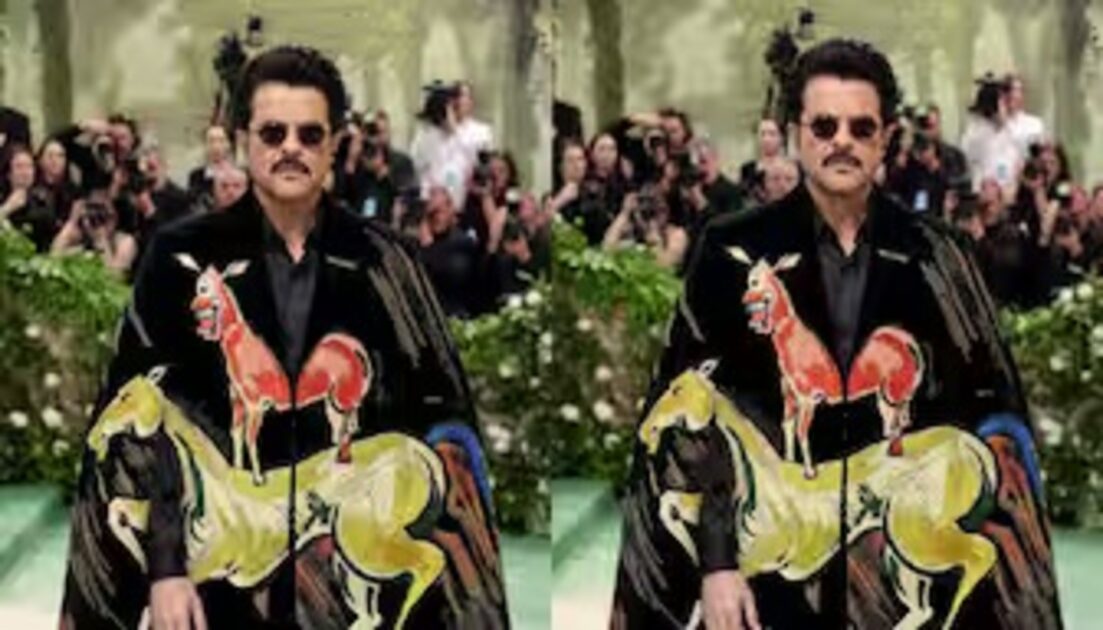
The buzz began when Anil Kapoor shared an image featuring himself in a shirt adorned with the now-famous Welcome painting.
The internet immediately exploded.
Social media users assumed—or at least jokingly speculated—that the actor had attended the Met Gala wearing the shirt.
The idea itself was so absurd that it became believable in the context of modern fashion culture.
After all, the Met Gala has seen:
- Giant sculptural outfits
- Surrealist fashion experiments
- Meme-inspired couture
- Camp aesthetics
- Highly ironic style statements
Would a shirt featuring a viral Bollywood painting really be impossible?
Not entirely.
And that uncertainty fueled the virality.
The “Here’s the Catch” Phenomenon
What made the story even more entertaining was the reveal that Anil Kapoor had not actually walked the Met Gala red carpet in the outfit.
Instead, the image was part joke, part nostalgia-driven internet moment, and part playful engagement with fans.
This “almost believable” setup is precisely what makes modern celebrity virality work.
Audiences enjoy participating in the illusion.
The humor lies not only in the image itself, but in the collective willingness to briefly entertain the possibility that a donkey-horse painting from a Bollywood comedy had infiltrated the world’s most elite fashion event.
It was internet culture at its finest:
- chaotic
- self-aware
- nostalgic
- collaborative
When Meme Culture Meets High Fashion
The larger significance of this moment lies in what it reveals about the changing nature of fashion itself.
For decades, high fashion operated with a sense of exclusivity. It was serious, curated, and often inaccessible to mainstream audiences.
Today, however, fashion increasingly interacts with internet humor and meme culture.
The boundaries between:
- luxury and comedy
- art and absurdity
- couture and pop culture
have become increasingly fluid.
The Met Gala itself has contributed to this shift. It is no longer simply a fashion event—it is an internet event.
Looks are judged not only for elegance but for meme potential.
Virality has become part of the aesthetic economy.
And in that environment, Anil Kapoor’s Welcome painting shirt fits surprisingly well.
The Enduring Legacy of Welcome
One reason this moment resonated so strongly is because Welcome continues to hold an extraordinary place in Indian pop culture.
Many Bollywood comedies fade with time, their humor becoming dated or repetitive. Welcome, however, remains remarkably rewatchable.
Its appeal lies in:
- exaggerated performances
- absurd visual comedy
- quotable dialogues
- chaotic storytelling
The donkey painting scene perfectly captures the film’s tone.
It is nonsensical, over-the-top, and unforgettable.
The fact that director Anees Bazmee reportedly keeps a version of the painting in his house further emphasizes how iconic it has become within Bollywood folklore.
What was once a throwaway joke has evolved into a cultural artifact.
Nostalgia as a Powerful Cultural Currency
Modern internet culture thrives on nostalgia.
Audiences constantly revisit:
- old films
- iconic dialogues
- vintage aesthetics
- memorable scenes
This nostalgia creates emotional familiarity in an increasingly fast-paced digital environment.
The Welcome painting represents more than comedy—it represents a specific era of Bollywood entertainment.
An era characterized by:
- unapologetic humor
- ensemble comedy films
- theatrical performances
- mass-market entertainment
By referencing that image in 2026, Anil Kapoor taps into collective memory.
He reminds audiences of a time when Bollywood comedy felt joyfully chaotic and unfiltered.
Why Fans Loved the Joke
The reaction online was overwhelmingly positive.
Fans appreciated the humor because it felt organic rather than manufactured.
In an age where celebrity branding can sometimes feel overly calculated, spontaneous and self-aware moments stand out.
The image succeeded because:
- it didn’t take itself too seriously
- it referenced a beloved cultural moment
- it acknowledged internet humor
- it felt authentically “Anil Kapoor”
There was no attempt to appear overly polished or detached.
Instead, the moment embraced absurdity—and audiences rewarded that authenticity.
Bollywood and the Met Gala: A Growing Relationship
Another reason the joke gained traction is the growing presence of Bollywood figures at the Met Gala.
In recent years, Indian celebrities and designers have increasingly become part of global fashion conversations.
From elaborate couture appearances to heritage-inspired ensembles, South Asian representation at the event has expanded significantly.
This growing visibility has created a fascinating crossover between:
- Bollywood fandom
- international fashion culture
- meme-driven internet discourse
Anil Kapoor’s viral shirt moment exists within this evolving landscape.
Even without an official red carpet appearance, he became part of the Met Gala conversation.
That alone demonstrates the power of digital culture.
The Democratization of Fashion Conversations
Traditionally, fashion criticism and commentary were dominated by industry insiders.
Now, social media allows everyone to participate.
Audiences no longer passively consume red carpet images—they reinterpret them, meme them, remix them, and transform them into entirely new narratives.
In this environment:
- humor matters
- relatability matters
- cultural references matter
The Welcome painting shirt became successful not because it adhered to fashion norms, but because it sparked engagement.
It created a shared joke.
And shared jokes are one of the internet’s most powerful social currencies.
The Artistic Irony of the Painting
There’s also an interesting irony at play here.
The original painting in Welcome was intended as a comedic symbol of “bad art.” It was funny because of its absurdity and lack of conventional artistic logic.
Yet years later, that same image has become iconic enough to appear on fashion merchandise and dominate online conversations.
This reflects a broader trend in contemporary culture:
the elevation of irony into legitimacy.
Objects once dismissed as silly or lowbrow can gain genuine cultural significance through repetition, affection, and meme circulation.
The donkey-horse painting is now part of Bollywood visual history.
Anil Kapoor’s Understanding of Digital Relevance
What makes Anil Kapoor particularly fascinating is his intuitive understanding of relevance.
Many actors from earlier generations struggle to adapt to internet-driven celebrity culture. Kapoor, however, navigates it with surprising ease.
He understands:
- timing
- humor
- nostalgia
- audience engagement
The viral shirt moment demonstrates how celebrities can remain culturally relevant without forcing trends.
Sometimes all it takes is self-awareness and a willingness to laugh with the audience.
Humor as Cultural Longevity
One of the reasons comedic moments endure longer than dramatic ones is because humor encourages repetition.
People revisit funny scenes.
They quote them.
They remix them.
They share them across generations.
The Welcome painting survives because it is endlessly reusable.
Its absurdity is timeless.
And by bringing it into a contemporary context like the Met Gala discourse, Anil Kapoor effectively reintroduced it to a younger audience.
Fashion, Virality, and the Future of Celebrity Moments
The incident also highlights how celebrity culture has changed.
Today, a viral Instagram post can generate as much conversation as an actual red carpet appearance.
Digital engagement often matters more than physical presence.
In some ways, Anil Kapoor’s humorous post achieved exactly what the Met Gala is designed to do:
- create conversation
- inspire reactions
- dominate timelines
- generate cultural moments
And he did it without even attending in the outfit.
Final Thoughts
The story of Anil Kapoor and the viral Welcome painting shirt is more than just a funny internet moment.
It is a reflection of:
- nostalgia culture
- evolving fashion discourse
- meme-driven celebrity engagement
- the blending of Bollywood and global pop culture
It reminds us that in the digital age, cultural impact is no longer limited to formal events or carefully curated appearances.
Sometimes, a single humorous image can capture the internet’s imagination more effectively than the most expensive couture gown.
And perhaps that is what makes this moment so memorable.
A ridiculous painting from a 2007 comedy film found its way into the Met Gala conversation nearly two decades later—not because it was glamorous, but because it was beloved.
In an era obsessed with perfection, that kind of imperfect, chaotic joy feels strangely refreshing.
And somewhere between Bollywood nostalgia and fashion-week irony, the donkey-on-a-horse painting achieved exactly what every work of art secretly wants:
It became unforgettable.