 by
Bollywood actor Kareena Kapoor Khan has found herself at the centre of an unexpected controversy following her Diwali 2026 appearance, which has attracted attention for reasons extending well beyond fashion. What initially appeared to be a celebration of traditional Indian craftsmanship and royal family heritage has turned into a debate involving religious sentiments, historical jewellery, personal expression and the responsibilities associated with displaying sacred symbols in contemporary popular culture.
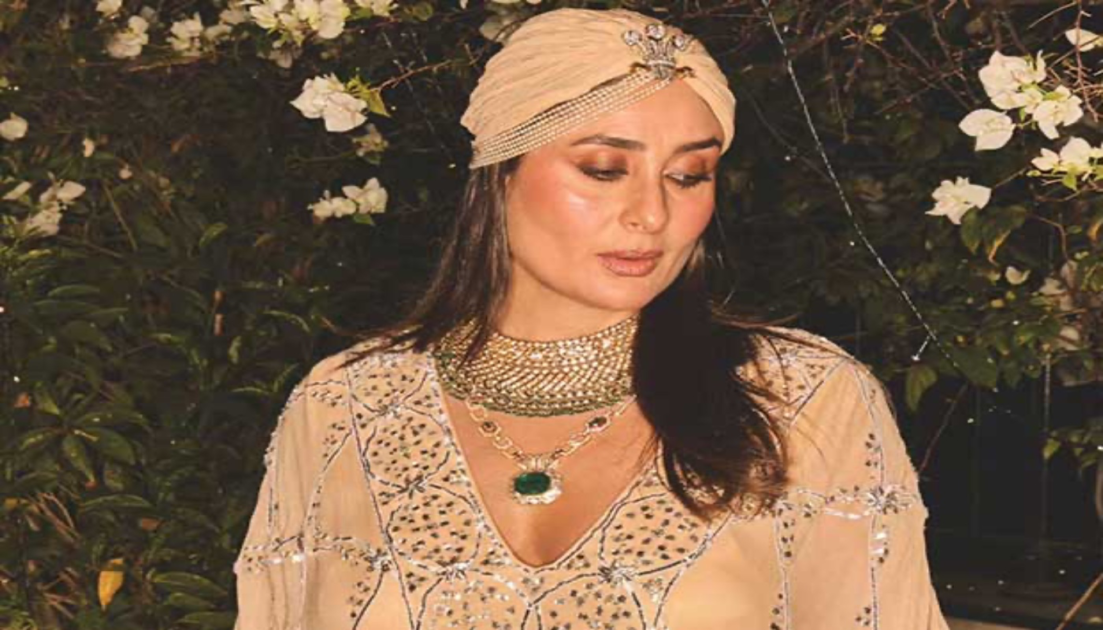
The controversy revolves around a remarkable 30-carat emerald pendant that Kareena wore as part of her festive ensemble. Reportedly dating back approximately 200 years, the jewellery piece is associated with the erstwhile royal family of Bhopal and features Ayat-ul-Kursi, a highly revered Quranic verse. Although the pendant was presented as a family heirloom, its appearance in photographs shared on social media prompted objections from Congress spokesperson Abbas Hafeez, who subsequently issued a legal notice to the actress and her stylist, Rhea Kapoor.
The notice reportedly demands the removal of photographs and videos featuring the pendant, a public apology and an assurance that the religious inscription will be treated with appropriate respect in future.
Meanwhile, the Hindu Utsav Samiti has expressed support for Kareena, introducing another dimension to an already sensitive discussion.
As the controversy continues to attract attention, the incident raises important questions about the intersection of religious identity, inherited cultural traditions, celebrity influence and the changing meaning of heritage jewellery in modern India.
Kareena Kapoor Khan’s Diwali 2026 Appearance Draws Unexpected Attention
Kareena Kapoor Khan is no stranger to fashion conversations. Over the years, the actress has established herself as one of Bollywood’s most recognisable style figures, regularly attracting attention for her choices at festive celebrations, award ceremonies, public appearances and fashion events.
Her Diwali 2026 appearance was initially appreciated for its distinctive combination of traditional Indian design and understated royal elegance.
For the occasion, Kareena wore a silver-toned kaftan with a matching turban, creating an ensemble that departed from conventional festive styling. The outfit was designed by Punit Balana, whose creations frequently draw inspiration from Indian craftsmanship, traditional silhouettes and regional aesthetics.
However, the most striking element of her appearance was the jewellery.
Celebrity stylist Rhea Kapoor shared details of the ensemble on social media, describing the outfit as a pure silver kaftan and turban accompanied by historic family jewellery. The accessories included a 200-year-old kalgi associated with the Nawab of Bhopal and a 30-carat emerald belonging to the Begum of Bhopal.
The emerald pendant featured Ayat-ul-Kursi carved into its surface.
Rhea’s description emphasised that the jewellery was not contemporary designer merchandise but part of the Pataudi family’s inherited collection. The pieces reportedly came through Saif Ali Khan’s family, connecting Kareena’s festive appearance to a history that predates her marriage by several generations.
While the ensemble generated interest among fashion enthusiasts, the religious inscription soon became the central subject of public discussion.
What made the situation particularly complicated was the fact that the pendant carried two distinct forms of significance: its importance as an antique belonging to a former royal household and its association with a verse regarded as sacred by Muslims.
Why Did Kareena Kapoor Receive a Legal Notice?
The controversy escalated after Abbas Hafeez, a Congress spokesperson from Madhya Pradesh, issued a legal notice to Kareena Kapoor Khan and celebrity stylist Rhea Kapoor.
The notice, dated November 11, 2026, reportedly objected to the manner in which the Quranic inscription was presented in photographs and videos shared on social media.
According to Hafeez, the concern was not about Kareena celebrating Diwali, wearing traditional clothing or exercising her personal freedom to choose jewellery. Instead, his objection specifically concerned the presentation of a sacred Quranic verse as part of a fashionable festive appearance.
He argued that Ayat-ul-Kursi holds considerable religious significance and should be displayed with the reverence associated with Quranic scripture.
The legal notice reportedly requests three principal actions.
First, it seeks the removal of photographs, videos and related social media posts featuring the pendant. Second, it demands a public apology to members of the Muslim community. Third, it asks for an assurance that the religious inscription will not be presented in circumstances considered disrespectful to its sacred significance.
Hafeez’s lawyer, Mohammad Zafar, also indicated that further legal remedies could be considered if the demands were not addressed.
Importantly, Hafeez clarified that the notice was issued in his personal capacity rather than on behalf of the Congress party. His position should therefore not automatically be interpreted as the official position of the political organisation.
The distinction matters because the controversy involves an individual complaint concerning religious sensitivities rather than an established institutional action against the actress.
It is also important to understand that receiving a legal notice does not establish that someone has committed an offence. A legal notice communicates a complainant’s objections and demands. Any subsequent legal determination would depend on the applicable law, the evidence presented and the findings of the relevant authorities or courts.
As of November 13, Kareena Kapoor Khan and Rhea Kapoor had not issued a publicly reported formal response to the notice.
What Is Ayat-ul-Kursi and Why Is It Considered Sacred?
Understanding the controversy requires looking beyond the appearance of the emerald itself and examining the religious importance of the inscription.
Ayat-ul-Kursi, commonly translated as the Verse of the Throne, is the 255th verse of Surah Al-Baqarah, the second chapter of the Quran.
It is among the most widely recognised and frequently recited verses in Islam. Its significance comes from its description of Allah’s absolute authority, knowledge, power and eternal existence.
The verse describes Allah as Al-Hayy, the Ever-Living, and Al-Qayyum, the Sustainer of all existence. It emphasises that neither drowsiness nor sleep overtakes Him and that everything in the heavens and earth belongs to Him.
It also speaks about divine knowledge, sovereignty and the vastness of Allah’s authority.
For many Muslims, Ayat-ul-Kursi carries a particularly important spiritual association with protection, reassurance and faith. It is commonly recited after obligatory prayers and before sleeping, among other religious practices.
Its significance is not limited to private worship. Throughout Islamic history, Quranic verses have appeared in architecture, manuscripts, decorative objects, calligraphy, household items and jewellery.
The use of Quranic inscriptions in ornamental objects has therefore existed across different Muslim societies and historical periods.
However, the presence of sacred scripture on jewellery also raises questions about how the inscription should be treated. Jewellery is exposed to ordinary daily activities, including physical contact, movement, storage and potentially inappropriate handling.
Some Islamic scholars have expressed reservations about wearing Quranic verses as jewellery, particularly because of concerns about maintaining the dignity of sacred text. Other interpretations distinguish between different intentions, circumstances and forms of use.
There is consequently no reason to assume that every Muslim holds an identical position on the subject.
In Kareena’s case, the legal objection centres on the belief that the pendant’s presentation did not reflect the religious reverence its inscription deserves.
That argument is separate from the historical question of why the emerald was originally created with the verse.
The 200-Year-Old Emerald’s Connection to the Begums of Bhopal
One of the most fascinating aspects of the controversy is the pendant’s reported association with the former royal household of Bhopal.
Unlike contemporary jewellery pieces created for celebrity appearances, the emerald is described as an approximately 200-year-old family heirloom.
Its history is connected to the Begums of Bhopal, a remarkable succession of female rulers who governed the princely state during an important period in Indian history.
Bhopal’s royal history is particularly notable because several women exercised political authority over the state during the nineteenth and early twentieth centuries.
The Begums developed a distinctive legacy involving administration, architecture, education, public infrastructure and cultural patronage.
Their influence extended beyond ceremonial royal life, making the history of the Bhopal ruling family an important part of India’s broader historical narrative.
The emerald pendant is reportedly associated with this heritage and is believed to have passed through generations of the family.
According to Rhea Kapoor’s description, the jewellery came through Saif Ali Khan’s paternal family. Saif’s grandmother, Sajida Sultan, was the daughter of Hamidullah Khan, the last ruling Nawab of Bhopal.
Sajida Sultan married Iftikhar Ali Khan Pataudi, and their son, Mansoor Ali Khan Pataudi, became the father of Saif Ali Khan.
This family connection explains how jewellery associated with the former royal household of Bhopal eventually became part of the Pataudi family’s inherited collection.
It also explains why Kareena, as Saif’s wife, has access to pieces that carry generations of family history.
The emerald is therefore not simply an expensive accessory. Its reported historical background gives it a cultural and familial significance that cannot be measured through its carat weight or monetary value alone.
Nevertheless, the precise provenance, original commissioning circumstances and complete ownership history of the pendant have not been independently established through publicly available historical documentation.
Its reported connection to the royal family remains an important part of the story, but claims about its exact origins should be distinguished from verified genealogical information.
The Significance of the Royal Kalgi Also Worn by Kareena
The emerald was not the only historical accessory featured in Kareena’s Diwali appearance.
Her ensemble also included a 200-year-old kalgi associated with the Nawab of Bhopal.
A kalgi, also known as a sarpech in certain traditional contexts, is an ornamental accessory traditionally worn on turbans. Historically, such ornaments were associated with royal households, nobility and ceremonial occasions.
They could feature precious stones, diamonds, pearls, elaborate metalwork and intricate designs.
In royal settings, these ornaments were not merely decorative. They could communicate social position, family identity, authority and ceremonial prestige.
The kalgi reportedly worn by Kareena has an additional connection to her husband’s family history. Saif Ali Khan himself wore the same ornament at his wedding to Kareena in 2012.
This detail gives the accessory an emotional significance beyond its antique value.
The same piece that appeared during their wedding celebrations has now been incorporated into another important family occasion.
It also illustrates how heirloom jewellery can become part of a family’s continuing visual identity, connecting different generations through objects that survive changing fashion trends.
Kareena’s Diwali ensemble brought these elements together, combining an outfit inspired by traditional Indian clothing with historical accessories that reportedly belonged to the Pataudi family’s royal heritage.
Ironically, what made the appearance distinctive from a fashion perspective also became the reason it attracted religious and public scrutiny.
Hindu Utsav Samiti Comes Out in Support of Kareena
As criticism surrounding the pendant gained momentum, the Hindu Utsav Samiti expressed support for Kareena Kapoor Khan.
The organisation’s position introduced another perspective into the discussion, particularly because the controversy emerged from a Diwali appearance.
The Hindu Utsav Samiti and Sanskriti Bachao Manch have reportedly rejected the demand for an apology, arguing that Kareena should not face objections for wearing an inherited family possession.
Their support highlights a different interpretation of the situation.
From this perspective, the actress was wearing jewellery that reportedly belonged to her husband’s family and had a longstanding connection to the royal household of Bhopal.
The emphasis was therefore placed on family heritage, personal choice and the distinction between wearing an inherited object and deliberately attempting to offend a religious community.
The support also demonstrates that public reactions to religiously sensitive controversies are not necessarily divided along predictable religious or political lines.
People may approach the same incident from different perspectives depending on whether they prioritise religious reverence, historical ownership, individual freedom or cultural continuity.
However, support from one organisation should not be interpreted as representing the views of every Hindu individual, just as the objection raised by Hafeez should not be treated as representative of every Muslim.
Religious communities contain diverse interpretations and opinions, particularly when discussions involve cultural practices and historical objects.
Why the Controversy Goes Beyond a Celebrity Fashion Choice
Celebrity fashion has increasingly become a platform through which cultural identity, historical references and personal expression are communicated.
A red-carpet appearance or festive photograph can generate conversations about designers, craftsmanship, heritage textiles, traditional accessories and the evolution of Indian fashion.
However, when an accessory carries religious significance, its meaning can extend beyond the intentions of the person wearing it.
This is particularly relevant in a country as culturally and religiously diverse as India.
Religious symbols are not always understood as neutral decorative elements. For believers, they can represent deeply personal relationships with faith, family, history and community.
Consequently, the same object may be interpreted differently depending on the context in which it appears.
A historical pendant may represent family inheritance to one person, religious devotion to another and a fashion statement to a third.
None of these interpretations automatically explains the intentions of the person wearing it.
In Kareena’s situation, the pendant was introduced publicly as an heirloom belonging to the Bhopal royal family. The stylist’s description highlighted its historical background and its association with the Begums.
However, the inscription itself attracted attention because Ayat-ul-Kursi is not simply an ornamental pattern. It contains religious text that many Muslims consider sacred.
This distinction is central to understanding why the photographs generated criticism.
The broader question is whether the historical and personal significance of an inherited object should be considered separately from the religious responsibilities that some people associate with displaying sacred scripture.
It is a question that cannot be answered through fashion preferences alone.
The Difficult Balance Between Religious Reverence and Personal Freedom
The legal notice has also brought attention to an important question: where should the boundaries between religious sensitivities and individual freedom be drawn?
India’s cultural identity includes a wide variety of religious traditions, historical communities and inherited practices.
Jewellery, clothing, architecture and decorative arts have frequently reflected this diversity. Objects carrying religious inscriptions have existed across different historical periods and have sometimes been preserved as family heirlooms long after their original owners passed away.
In such circumstances, inherited jewellery may have personal, historical and religious significance simultaneously.
The difficulty arises when these meanings appear to conflict.
Those who support Hafeez’s objection may argue that sacred inscriptions deserve particular consideration regardless of whether they appear on jewellery owned by a family or purchased for contemporary fashion.
From this viewpoint, the historical age or monetary value of the pendant does not diminish the importance of the Quranic verse.
Those defending Kareena may emphasise that she was wearing an inherited family possession rather than creating or commissioning a religious object for publicity.
They may also question whether a legal notice is an appropriate response to a fashion appearance when there is no publicly established evidence of deliberate disrespect.
Both positions raise questions worth examining.
Religious sensitivity deserves consideration, but allegations of disrespect should also be evaluated carefully rather than automatically accepted as established facts.
Similarly, personal freedom should not be used to dismiss genuine concerns about the treatment of sacred symbols.
A meaningful discussion requires distinguishing between intention, interpretation, impact and legal responsibility.
It also requires recognising that disagreement does not necessarily establish hostility between communities.
The Role of Social Media in Escalating Celebrity Controversies
Another important aspect of the incident is the role played by social media.
Kareena’s Diwali photographs were shared as part of a celebrity fashion presentation. Rhea Kapoor’s description provided information about the outfit and the historical accessories.
However, once the images entered the wider online conversation, their interpretation moved beyond the original context.
Social media allows photographs to circulate rapidly among audiences who may not have any knowledge of the individuals, families or historical objects involved.
A detail that might initially attract the attention of jewellery enthusiasts can become the focus of a much larger debate once users begin examining its religious or cultural significance.
The speed of online circulation also creates challenges for context.
People may react to an image before reading its accompanying description or understanding the background of the object being displayed.
In celebrity culture, such reactions can quickly attract media coverage, public statements and demands for accountability.
The situation also highlights the complicated relationship between celebrity influence and public interpretation.
Actors and public figures have considerable visibility, meaning their fashion choices can generate discussions that would rarely follow similar decisions made by private individuals.
This does not mean celebrities should be expected to anticipate every possible interpretation of their appearance.
However, it demonstrates why historical and religious references in fashion can attract heightened scrutiny.
Social media has effectively transformed celebrity dressing into a form of public communication, even when the original intention is simply to share a festive photograph.
Heritage Jewellery and the Changing Meaning of Luxury
The controversy also offers an opportunity to examine the growing interest in heritage jewellery within contemporary fashion.
For decades, luxury jewellery was frequently associated with expensive gemstones, international brands and elaborate designer collections.
However, there has been increasing appreciation for antique pieces that carry family histories, traditional craftsmanship and cultural significance.
Heirloom jewellery occupies a different category from ordinary luxury purchases.
Its value may be influenced by its age, craftsmanship, historical ownership and emotional associations.
A necklace inherited from a grandmother, for instance, may hold greater sentimental value than a considerably more expensive contemporary piece.
In royal families, these objects can also represent historical continuity.
They may preserve memories of marriages, political relationships, family traditions and important ceremonial occasions.
Kareena’s pendant reflects this broader relationship between jewellery and inherited identity.
Its reported connection to the Begums of Bhopal gives it a story that extends beyond the modern fashion industry.
At the same time, the controversy illustrates an important responsibility associated with heritage objects: their historical background should be understood alongside their cultural and religious meanings.
Preserving an heirloom is not necessarily just about maintaining its physical condition. It can also involve understanding the traditions and beliefs associated with its creation.
This is especially relevant when an object contains religious inscriptions.
The conversation surrounding Kareena’s pendant therefore raises a wider question about how contemporary fashion can incorporate historical objects without overlooking the traditions that originally shaped them.
Kareena Kapoor Khan’s Public Image and the Attention Surrounding Her Personal Choices
Kareena Kapoor Khan has spent more than two decades in the entertainment industry and remains one of Bollywood’s most recognisable personalities.
From her early film appearances to her later work in commercially successful and critically discussed projects, she has maintained a strong presence in popular culture.
Her personal style has also evolved considerably.
She has embraced contemporary designer fashion, traditional Indian ensembles, minimalist looks and statement accessories, often attracting attention for her ability to combine different influences.
Her marriage to Saif Ali Khan has also connected her to a family with a distinctive historical background.
Through Saif, Kareena has become part of a family associated with both the former royal household of Bhopal and the Pataudi legacy.
The Diwali pendant brought this connection into public view.
However, the controversy demonstrates how a personal fashion choice can become disconnected from its original context once it attracts wider attention.
For Kareena, the incident has shifted the conversation from her festive appearance to questions about religious representation and the handling of historical jewellery.
Whether the matter develops further legally or remains a public disagreement will depend on the responses of the individuals involved and any subsequent action taken.
For now, the legal notice remains a demand rather than a judicial finding.
What Happens Next?
As of November 13, 2026, the controversy remains unresolved.
Abbas Hafeez has sought the removal of the photographs and videos featuring the pendant, a public apology and assurances regarding the future presentation of the religious inscription.
His lawyer has indicated that further legal remedies could be explored if the demands are not addressed.
Meanwhile, the Hindu Utsav Samiti has expressed support for Kareena, rejecting the argument that she should be required to apologise for wearing the inherited jewellery.
Neither Kareena Kapoor Khan nor Rhea Kapoor had issued a publicly reported formal response at the time of the latest coverage.
Several questions therefore remain unanswered.
Will the actress or her stylist respond to the legal notice? Will the photographs remain available on social media? Will the disagreement lead to further legal proceedings, or will it remain a matter of public debate?
These developments will determine how the situation progresses.
It is equally important not to confuse the existence of a legal notice with a court ruling. Until an appropriate legal authority makes a determination, allegations and demands should remain attributed to the individuals making them.
A Conversation About Faith, Family History and Cultural Sensitivity
The controversy surrounding Kareena Kapoor Khan’s 30-carat emerald pendant demonstrates how an apparently straightforward fashion appearance can reveal complicated questions about history, religion and personal identity.
For Kareena, the jewellery was presented as part of a family inheritance connected to her husband Saif Ali Khan and the former royal household of Bhopal.
For Abbas Hafeez, the presence of Ayat-ul-Kursi raised concerns about how sacred Quranic text should be displayed and treated.
For those supporting the actress, the historical and familial nature of the pendant is an important consideration, particularly when there is no established finding that she intended to disrespect any religious belief.
The Hindu Utsav Samiti’s response further illustrates how the issue has attracted perspectives extending beyond the original objection.
Ultimately, the incident is about more than a gemstone or a celebrity’s festive wardrobe.
It highlights the complicated relationship between objects that carry multiple layers of meaning. Jewellery can be beautiful, expensive, historically significant and spiritually important at the same time.
Recognising these different dimensions does not require dismissing religious concerns or questioning an individual’s right to wear inherited possessions.
Instead, it calls for a more thoughtful conversation about cultural preservation, religious understanding and the responsibilities associated with public representation.
As the discussion continues, the most constructive approach would be to distinguish genuine questions of religious reverence from assumptions about personal intentions, while allowing the legal process, if pursued, to address the specific demands being made.
Kareena’s Diwali 2026 appearance may have begun as a celebration of royal heritage and traditional fashion, but it has since become a much broader conversation about the place of faith and history in contemporary celebrity culture.