 by
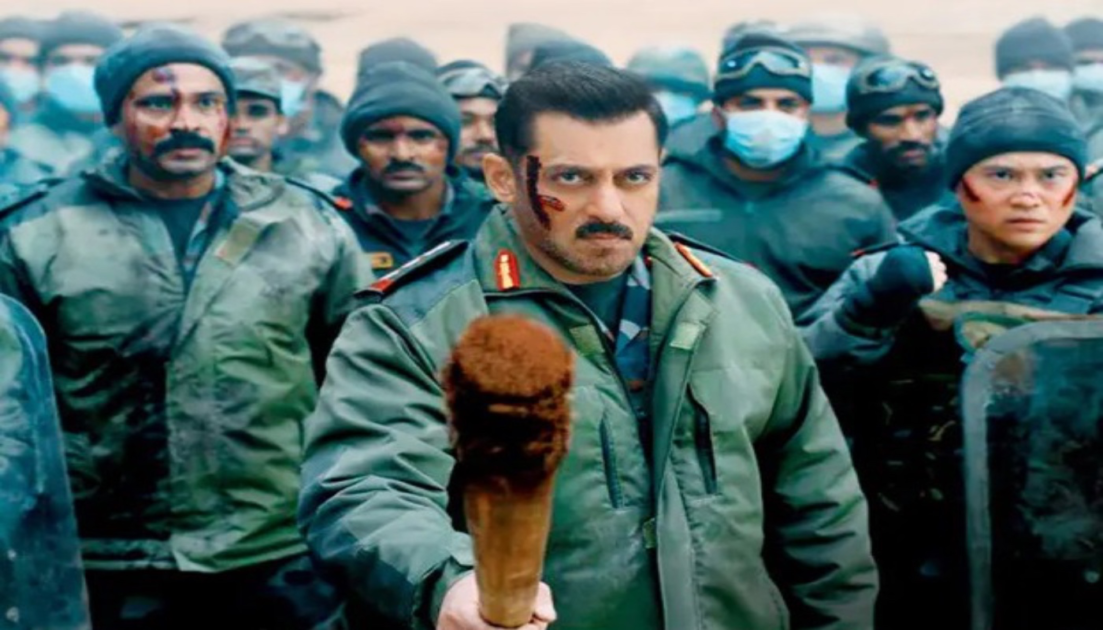
Salman Khan’s much-anticipated war drama Maatrubhumi: May War Rest in Peace has crossed one of its most significant pre-release milestones, and the latest development is particularly encouraging for the film’s makers and the superstar’s fans. The film has received a U/A 16+ certificate from the Central Board of Film Certification (CBFC), with no additional cuts, modifications or disclaimers requested by the censor board. Adding another unusual detail to the development, the certification document has reportedly been personally signed by CBFC chairman Shashi Shekhar Vempati rather than carrying the signature of the board’s chief executive officer, as is generally the practice.
The development is noteworthy for several reasons. Maatrubhumi is not an ordinary commercial action entertainer. Inspired by the 2020 Galwan Valley confrontation between Indian and Chinese troops, the film explores a politically and historically sensitive subject involving military sacrifice, national security and international relations. Its journey towards theatrical release has consequently attracted considerable attention, with questions surrounding its content, its original title and the reported government-level changes becoming part of the wider conversation.
Now, with the certification process completed and its release approaching, the film appears to have overcome another important hurdle.
According to an exclusive report by Bollywood Hungama, which has been tracking the film’s developments, the CBFC cleared Maatrubhumi on November 18, 2026, with a U/A 16+ classification. The newly revealed details indicate that the examining body did not ask the filmmakers to make any further changes to the version submitted for certification. The film is scheduled to arrive in cinemas on December 4, 2026.
Maatrubhumi Receives a Clean Certification Without Additional Cuts
The biggest takeaway from the latest development is that Maatrubhumi has reportedly received clearance without a single cut or modification being requested by the CBFC.
For filmmakers, the certification stage can sometimes become a complicated part of the theatrical release process. Depending on the subject matter, presentation and content of a production, the board may recommend edits, alterations to particular sequences, changes to dialogue or additional information for audiences.
In some instances, filmmakers are also asked to incorporate certain presentation-related requirements, including displaying titles and credits in the appropriate language or adding prescribed public-awareness material.
Interestingly, according to Bollywood Hungama’s exclusive report, none of these additional requirements were sought in the case of Maatrubhumi. The board reportedly did not ask the makers to insert an anti-drug ticker or advertisement at the beginning of the film or during the interval. Nor were additional modifications requested.
This makes the development particularly interesting considering the nature of the film.
A war drama inspired by an actual military confrontation inevitably carries responsibilities beyond those associated with a fictional action spectacle. Its portrayal of soldiers, military operations, geopolitical tensions and national identity can attract considerable scrutiny. The filmmakers must balance dramatic storytelling with the sensitivities surrounding the real events that inspired the narrative.
However, the reported clean clearance should be understood in its proper context. It does not mean that the film reached the CBFC without any earlier intervention. According to an industry insider quoted by Bollywood Hungama, certain changes had already been requested by the Government of India before the film was submitted to the certification board.
The makers reportedly implemented those changes and presented the revised version to the relevant authorities. Following their approval, the film was submitted to the CBFC through the usual certification process.
The insider explained that because the government authorities had already approved the revised version, the CBFC found no reason to recommend further modifications.
This distinction is important. The film reportedly underwent changes at the government level, but the CBFC did not request additional cuts or modifications during its certification process.
For the production team, this represents a significant step towards bringing the film to audiences in its final approved form.
CBFC Chairman Shashi Shekhar Vempati Personally Signs the Certificate
Another particularly interesting aspect of the certification is the signature appearing on the document.
According to Bollywood Hungama, CBFC certificates are generally digitally signed by the board’s chief executive officer, Rajendra Singh Shekhawat. However, Maatrubhumi’s certificate carries the signature of CBFC chairman Shashi Shekhar Vempati.
The unusual detail has attracted attention because it could be among the first instances of a film certification document bearing the new chairman’s signature.
Although the signature does not change the film’s classification or the conditions attached to its certification, it gives the development an additional administrative significance.
The CBFC plays an important role in India’s theatrical exhibition ecosystem. Its certification determines the category under which a film can be publicly screened, while its examination process considers the nature, presentation and potential impact of the content.
A chairman’s signature on a certificate is therefore an interesting procedural detail, particularly when it accompanies a film that has already attracted attention because of its politically sensitive subject.
It is equally important not to confuse the signature with a separate endorsement of the film’s creative or political viewpoint. The certification remains an official classification decision, and the reported personal signature is an unusual administrative feature rather than evidence of an additional public statement by the chairman.
Nevertheless, the development adds another talking point to the film’s already eventful journey.
What Does the U/A 16+ Certificate Mean for Maatrubhumi?
The film has received a U/A 16+ certificate, a classification that allows public exhibition while advising parents and guardians to exercise discretion when considering whether children below the recommended age should watch it.
India introduced the revised age-based U/A certification categories in October 2024. The earlier, broader U/A classification was divided into three categories: U/A 7+, U/A 13+ and U/A 16+.
The purpose of the revised system was to provide audiences and parents with more specific guidance regarding the suitability of films for younger viewers.
Under the classification framework, a U/A 16+ film is considered suitable for viewers aged 16 and above, while parents or guardians are advised to consider the nature of the content before allowing younger children to watch it.
The classification is particularly relevant for films dealing with mature themes, intense action, violence, horror, intimacy or other material that may not be appropriate for younger audiences.
For Maatrubhumi, the rating establishes an important distinction between its subject matter and its intended audience.
A military drama based on a real confrontation may involve emotionally intense sequences, battlefield situations and the consequences of armed conflict. The U/A 16+ classification provides an indication of the audience guidance attached to the film without restricting its theatrical exhibition exclusively to adults.
It is also worth clarifying that U/A 16+ does not mean that the film has received an adults-only certificate. The A classification is reserved for films restricted to adult audiences.
Consequently, Maatrubhumi remains eligible for general public exhibition under the conditions associated with its U/A 16+ rating.
Maatrubhumi’s Runtime: Salman Khan’s War Drama Runs for 2 Hours and 34 Minutes
The certification document also confirms another important detail about the film: its runtime.
As mentioned on the CBFC certificate, Maatrubhumi has a certified length of 154.12 minutes, translating to 2 hours, 34 minutes and 12 seconds.
The runtime places the film within the longer format frequently associated with large-scale Hindi commercial productions.
For a war drama, the duration also offers room for multiple narrative elements. A story inspired by a real military confrontation can extend beyond the action sequences themselves, exploring the circumstances surrounding the conflict, the soldiers’ responsibilities, their relationships and the emotional consequences of their experiences.
The film’s official promotional material has already highlighted this broader approach.
Rather than presenting the project exclusively as a battlefield spectacle, its trailer introduces audiences to the personal dimensions of military service. It offers glimpses of life at the border alongside the relationships and responsibilities that soldiers leave behind when they report for duty.
The runtime could therefore accommodate both the physical intensity of the military setting and the emotional elements that give the narrative its wider meaning.
However, audiences will ultimately discover how effectively these different aspects come together when the film reaches cinemas.
From Battle Of Galwan to Maatrubhumi: Why the Title Change Became a Major Talking Point
One of the most discussed aspects of the project has been its change of title.
The film was originally announced as Battle Of Galwan, a name that immediately established its connection with the June 2020 confrontation between Indian and Chinese troops in the Galwan Valley.
The title was direct, geographical and closely connected to the real-life incident that inspired the production.
However, earlier this year, the makers rechristened the film Maatrubhumi: May War Rest in Peace.
The change transformed the way the project was presented to audiences.
While Battle Of Galwan placed the emphasis on a particular military confrontation, Maatrubhumi introduced a broader emotional and thematic dimension. The word refers to one’s motherland, a concept deeply embedded in Indian cultural consciousness, literature, cinema and patriotic expression.
The accompanying subtitle, May War Rest in Peace, adds another layer of meaning.
It introduces an apparent contrast between the realities of military conflict and the aspiration for lasting peace. Rather than suggesting that war itself should be celebrated, the title invites audiences to consider the human consequences of armed confrontation.
This distinction is particularly significant for a film inspired by an incident in which soldiers lost their lives.
The new title also provides the filmmakers with an opportunity to position the story beyond the immediate circumstances of the Galwan confrontation. It creates space for themes such as duty, sacrifice, family, national belonging and the emotional cost of defending a country’s borders.
In contemporary Indian cinema, patriotic storytelling has frequently relied on familiar cinematic symbols, including military uniforms, national flags, stirring music and emotionally charged speeches.
Maatrubhumi appears to be positioning itself within this tradition while highlighting the human experiences behind the uniform.
The title change, therefore, has become an important part of the film’s identity.
Why the Galwan Valley Subject Makes the Film Particularly Sensitive
The 2020 Galwan Valley confrontation remains one of the most significant military incidents involving India and China in recent decades.
On June 15, 2020, Indian and Chinese troops were involved in a violent confrontation in the Galwan Valley region of Ladakh along the Line of Actual Control.
The incident occurred amid an extended period of tension along the disputed frontier.
The two countries had been engaged in military and diplomatic discussions aimed at managing the situation and addressing disagreements over troop deployments and the border standoff.
The confrontation resulted in the deaths of 20 Indian military personnel. Chinese authorities subsequently acknowledged casualties on their side as well.
The incident attracted international attention because it represented a major escalation in tensions between two nuclear-armed neighbours.
It also brought renewed attention to the difficult conditions under which military personnel operate in high-altitude border regions.
For Indian audiences, the Galwan confrontation carries considerable emotional significance because of the sacrifices made by the soldiers involved.
Any cinematic project inspired by these events therefore enters a sensitive storytelling space.
The filmmakers must consider the distinction between historical events, official accounts, dramatic interpretation and cinematic reconstruction.
A commercial film can recreate certain circumstances for dramatic purposes, but it also has a responsibility to communicate the nature of its inspiration without unnecessarily confusing audiences about what is historically established.
This becomes especially important when the subject involves international relations.
The latest certification development is particularly interesting against this backdrop. Reports surrounding the film had previously highlighted concerns about its content and references to China, especially amid improving diplomatic relations between the two countries.
The reported government-level changes suggest that the project underwent a review process before reaching the CBFC.
The subsequent certification without additional cuts indicates that the revised version was cleared through the formal process.
For audiences, the challenge will be to evaluate the film not simply as a patriotic production but also as a cinematic interpretation of a complex historical episode.
The Diplomatic Dimension Behind Maatrubhumi’s Journey
Films based on real international conflicts operate in a different environment from fictional military entertainers.
When a production draws inspiration from a confrontation involving two countries, its creative choices can become part of a wider public discussion.
Dialogue, characterisation, visual representation and the depiction of military events may be interpreted through the lens of contemporary political relationships.
This is particularly relevant to India and China, whose relationship involves several interconnected dimensions, including trade, diplomacy, security and unresolved border questions.
The Galwan confrontation took place during a period of serious bilateral tension. Since then, both countries have continued diplomatic and military engagement aimed at managing their differences.
Consequently, a film based on the incident has to navigate an environment in which the historical event remains important while diplomatic circumstances continue to evolve.
This does not mean filmmakers should avoid subjects involving international conflict. Cinema has historically played an important role in examining war, political tensions and the experiences of people caught in extraordinary circumstances.
However, it does explain why projects of this nature can attract greater scrutiny.
For Maatrubhumi, the reported government-level review and subsequent CBFC certification have become essential parts of its pre-release narrative.
The film’s journey demonstrates how entertainment projects inspired by real geopolitical events can involve considerations extending beyond production schedules, casting decisions and promotional strategies.
Salman Khan Takes on Another Patriotic Role
For Salman Khan, Maatrubhumi represents another opportunity to explore a military-oriented character on the big screen.
The actor has a long association with larger-than-life commercial entertainers, but his filmography also includes projects centred on patriotism, national identity, sacrifice and military life.
His portrayal of characters connected with the armed forces has been an important part of his cinematic image.
In Maatrubhumi, Salman plays Colonel Bikumalla Santosh Babu, according to available film information. The character is inspired by the real military officer associated with the Galwan confrontation.
The casting naturally brings considerable attention to the project.
Salman’s screen presence has traditionally been associated with action, physical intensity and emotionally direct performances. These qualities make him a familiar choice for a large-scale military drama.
However, portraying a character inspired by a real military officer also brings additional expectations.
Audiences may look for more than action choreography and powerful dialogue. They may want to see the discipline, responsibility and personal sacrifices associated with military service.
The emotional authenticity of the portrayal could therefore become as important as the film’s larger action sequences.
The film also provides Salman with an opportunity to connect his established commercial appeal with a story rooted in a significant contemporary event.
Chitrangda Singh and the Human Side of the Story
Alongside Salman Khan, Chitrangda Singh plays a pivotal role in Maatrubhumi.
Her presence is particularly interesting because the film’s promotional campaign has highlighted the personal lives of soldiers alongside their responsibilities at the border.
War films frequently concentrate on the men and women serving in combat situations. However, the emotional consequences of military duty extend well beyond the battlefield.
Families experience separation, uncertainty and the constant awareness that their loved ones are working in dangerous environments.
A soldier’s identity is not limited to military rank or professional responsibility. Behind the uniform is an individual with relationships, memories, hopes and personal commitments.
The official trailer’s emphasis on the contrast between border life and family life suggests that the production intends to explore this emotional dimension.
This approach can make military dramas more relatable to audiences who may have little direct experience of military life.
By connecting the national story with personal relationships, filmmakers can communicate the human consequences of conflict in a way that goes beyond statistics and military terminology.
Chitrangda’s role will therefore be an important component of the film’s emotional storytelling.
The supporting cast includes Ankur Bhatia, Heera Sohal, Dayashankar Pandey, Jason Tham, Abhilash Chaudhary, Vipin Bhardwaj, Samar Gill, Tenzin Bodh, Tanya Desai, Zeyn Shaw and Abhishrri Sen, among others.
Apoorva Lakhia Directs the War Drama
Maatrubhumi is directed by Apoorva Lakhia, a filmmaker known for working on action-oriented and dramatic projects.
His association with the film is particularly noteworthy because the subject demands a combination of action direction, emotional storytelling and an understanding of the historical context.
A war drama requires more than large-scale visual effects or elaborate combat sequences.
The director must establish the atmosphere of the military environment, create believable interactions between characters and maintain narrative momentum while handling emotionally sensitive material.
The film’s technical team also includes several experienced professionals.
The project is produced by Salma Khan under the Salman Khan Films banner. Its music is composed by Himesh Reshammiya, Meet Bros, Sajid Khan, Shamir Tandon and Ayaan Lall.
Fasahat Khan serves as director of photography, while Mayuresh Sawant is responsible for editing.
The background score and sound design are handled by Ravi Basrur.
The action direction team includes Kawee Sirikhanaerut, Dr. K. Ravi Verma, Aejaz Gulab and Kevin Kumar.
This combination of technical contributors suggests that the production has invested in building a substantial cinematic experience.
For a project centred on a high-altitude military confrontation, cinematography, sound design, editing and action choreography will play particularly important roles in establishing its atmosphere.
The Official Trailer Emphasises Courage, Sacrifice and Peace
The official trailer of Maatrubhumi: May War Rest in Peace was released on November 10, 2026.
Starring Salman Khan and Chitrangda Singh, the promotional video introduced audiences to the film’s central themes of courage, sacrifice, brotherhood and the desire for peace.
One of the most interesting aspects of its presentation is the emphasis on the contrast between a soldier’s professional responsibilities and personal relationships.
The trailer’s accompanying promotional message suggests that the film intends to examine the lives of soldiers both at the border and back home.
This is an important storytelling choice.
Military films can sometimes become overly focused on conflict, with the personal lives of characters receiving limited attention. However, stories about soldiers become more emotionally meaningful when audiences understand what they are protecting and what they leave behind.
A soldier’s service involves personal sacrifices that are often invisible to the public.
Families experience extended periods of separation, while the individuals serving at difficult locations must manage their responsibilities under demanding conditions.
By bringing these experiences into the narrative, Maatrubhumi appears to be attempting to connect its patriotic themes with a more personal emotional framework.
The film’s subtitle reinforces this approach.
May War Rest in Peace is a sentiment that places peace alongside courage and sacrifice, suggesting that the ultimate aspiration should not be endless conflict but a world in which such sacrifices are no longer necessary.
Whether the film successfully delivers this message will ultimately depend on its storytelling and execution.
Why the Certification Is Important for Salman Khan’s December Release
The certification announcement arrives at a particularly important moment for the film.
After its original release plans were affected by delays and the project underwent changes, the December 4 theatrical date has become a significant milestone.
Pre-release uncertainty can create complications for a major production.
The makers must coordinate distribution, promotional activities, theatre bookings, publicity campaigns and audience engagement. When a film’s certification remains pending, some aspects of the release strategy can become difficult to finalise.
Receiving the certificate well ahead of its scheduled theatrical arrival gives the production greater clarity.
The film’s reported clean CBFC clearance also provides the publicity campaign with an additional positive development.
For Salman Khan’s fans, the news offers reassurance that the film has crossed another important stage.
For the industry, it demonstrates how a production involving a sensitive real-life subject can proceed through government review and formal film certification before reaching cinemas.
The remaining challenge will be to translate the attention surrounding the film into audience interest and ultimately theatrical performance.
Maatrubhumi and the Continuing Popularity of Patriotic Cinema
The announcement also arrives at a time when patriotic cinema continues to occupy an important position in mainstream Indian filmmaking.
Stories involving military service, historical events and national identity have repeatedly attracted audiences because they combine large-scale entertainment with emotionally recognisable themes.
These films can create a shared cinematic experience by bringing together action, sacrifice, family relationships and collective memory.
However, the genre has also evolved.
Modern audiences increasingly expect more than conventional heroic storytelling. They want characters with emotional depth, convincing situations and narratives that acknowledge the complexity of the events being portrayed.
A successful military drama must therefore balance spectacle with substance.
The battlefield may provide the visual scale, but the human experiences behind the conflict provide the emotional foundation.
Maatrubhumi has an opportunity to explore this balance through its portrayal of a real military episode.
Its certification, title change and promotional messaging have already established several points of public interest.
The next important question is whether the film can bring these elements together into a coherent and emotionally compelling theatrical experience.
December 4 Release: What Lies Ahead for Maatrubhumi?
With its U/A 16+ certificate secured, Maatrubhumi: May War Rest in Peace is scheduled to release worldwide on December 4, 2026.
The film will arrive in cinemas following a lengthy pre-release journey involving its original announcement, title change, reported government-level review and eventual CBFC certification.
Its release will also place it in competition with other theatrical offerings, making audience reception an important factor in determining its commercial performance.
Nevertheless, the project already has several elements working in its favour.
Salman Khan’s established star power, the historical inspiration behind the story, Chitrangda Singh’s involvement and the film’s patriotic subject matter have helped it maintain visibility.
The December release also provides an opportunity for the filmmakers to connect with audiences who have followed the project’s developments over the past several months.
At the same time, the film faces the responsibility of treating its real-life inspiration with care.
The Galwan confrontation is not simply a backdrop for an action sequence. It represents a painful historical episode involving military personnel who lost their lives.
A meaningful cinematic interpretation should recognise the human dimensions of that history while delivering the dramatic experience expected from a mainstream theatrical production.
The Final Word
The latest certification development marks an important chapter in the journey of Salman Khan’s Maatrubhumi: May War Rest in Peace.
The film has reportedly received its U/A 16+ certificate without any additional cuts, modifications or disclaimers being requested by the CBFC. Its certification document carries the signature of chairman Shashi Shekhar Vempati, an unusual administrative detail that has further distinguished the announcement.
At the same time, the reported government-level changes made before submission to the CBFC provide important context behind the smooth certification process.
With a certified runtime of 2 hours, 34 minutes and 12 seconds, the film is now moving closer to its December 4 theatrical release.
More importantly, Maatrubhumi has the opportunity to tell a story that connects military duty with personal sacrifice and the broader human desire for peace.
For Salman Khan, it is another major big-screen project rooted in patriotism. For Apoorva Lakhia, it is an opportunity to bring a sensitive contemporary historical subject to mainstream cinema. And for audiences, it is a chance to revisit an important chapter of recent history through a dramatic cinematic interpretation.
The certification hurdle has been crossed. Now, the real test begins when Maatrubhumi finally reaches theatres and audiences decide how effectively its story of courage, sacrifice and the hope for peace translates onto the big screen.