 by
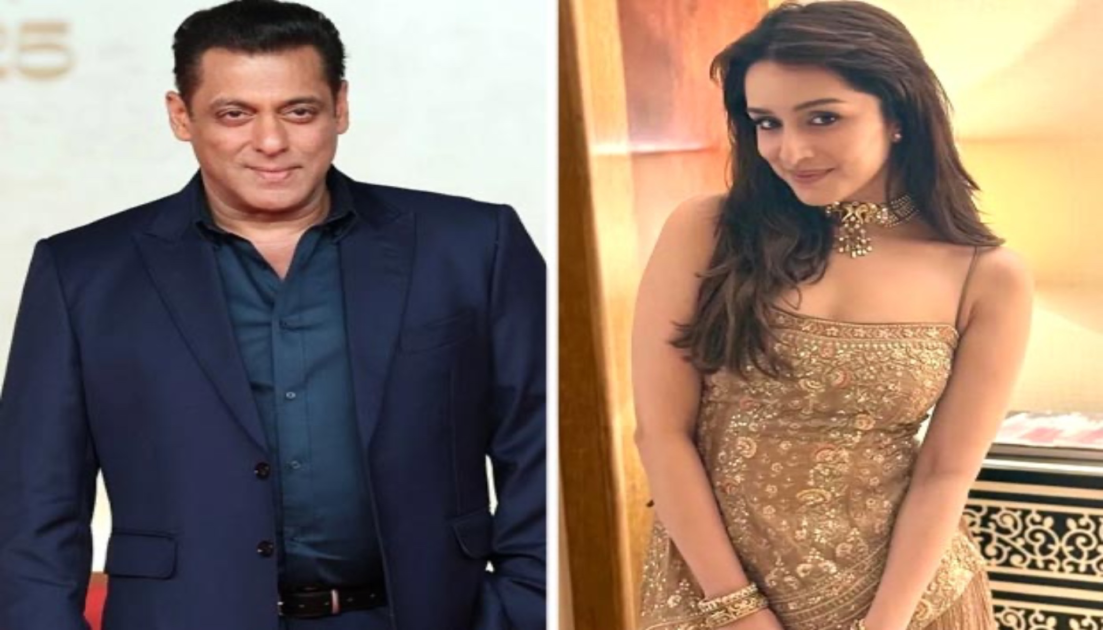
Bollywood’s December release calendar has an unexpected box-office face-off, with two vastly different films preparing to arrive in cinemas on the same day. Salman Khan’s much-anticipated war drama, Maatrubhumi: May War Rest in Peace, and Shraddha Kapoor’s upcoming biographical film, Eetha, are both scheduled to release on December 4, 2026. While simultaneous releases are hardly unusual in the Hindi film industry, this particular clash has attracted attention because of the stature of the two actors and the contrasting subjects of their respective projects.
However, Salman Khan has made it clear that the clash was never intentional. Addressing the situation during a recent conversation with ABP News, the superstar revealed that he was unaware of Shraddha’s film having the same release date when the makers finalised December 4 for Maatrubhumi. The actor also disclosed that he personally called Shraddha to apologise after discovering the scheduling overlap.
Admitting that he genuinely felt uncomfortable about the situation, Salman said, “So, when we announced the 4th (of December), I did not know that Shraddha was coming out on the 4th of December. I feel really, really bad about it. If I would’ve known, I would not have come out with Shraddha.”
His statement offered an unusually candid glimpse into the considerations behind Bollywood’s release-date decisions. More importantly, it demonstrated that the actor did not view the situation merely as another commercial competition but also acknowledged the professional implications for a fellow performer.
Salman further revealed that he had contacted Shraddha personally, explaining that he had watched her grow up over the years. Recalling their conversation, he shared that he apologised for the unexpected overlap and received an understanding response from the actress.
According to Salman, Shraddha reassured him that there was enough room for both films to succeed in theatres. The actor appeared pleased by her response and subsequently encouraged audiences to watch Eetha as well.
With December 4 approaching, the simultaneous release of Maatrubhumi and Eetha has become an interesting development for Bollywood audiences, particularly because the films represent two very different cinematic experiences.
Salman Khan reveals he personally called Shraddha Kapoor to apologise
Speaking at an event hosted by ABP News, Salman addressed the upcoming clash and explained that the December 4 announcement was not made with the intention of competing against Shraddha’s film.
The actor’s remarks suggested that he was genuinely unaware of Eetha’s release schedule when his own film’s release date was finalised. Rather than dismissing the overlap as an ordinary part of the theatrical business, Salman openly expressed regret and acknowledged that he would have preferred a different arrangement.
He explained that he would not have selected December 4 had he known Shraddha was also bringing her film to cinemas on the same Friday.
What made his statement particularly noteworthy was his revelation that he had taken the initiative to speak with Shraddha directly.
Salman recalled, “I spoke to her. I called her up. I mean, I’ve seen them grow up. I spoke to her and said, ‘I’m really sorry, I didn’t know.’”
The actor’s reference to having watched Shraddha grow up also reflected his familiarity with the Kapoor family and the actress’s journey in the entertainment industry.
Shraddha, according to Salman’s account, responded graciously rather than treating the situation as a personal disagreement.
Recounting her response, he said, “‘No, no, sir. There’s enough space for both of our films to come’. So I told her, ‘Very good, I’m happy’.”
Her response brought a lighter moment to an otherwise potentially uncomfortable conversation. It also reinforced the idea that professional competition does not necessarily have to translate into personal rivalry.
Salman subsequently extended his support to Shraddha’s project, stating, “I do think that everyone should go and see that film.”
His comments are significant because the release of a major star’s film can influence the theatrical environment for other projects arriving on the same date. By publicly encouraging audiences to watch Eetha, Salman made it clear that he did not want his film’s release to be interpreted as a reason to overlook Shraddha’s work.
Why did Maatrubhumi’s release date change?
One of the most interesting aspects of Salman’s explanation concerned the complicated process behind finalising Maatrubhumi’s theatrical release.
The film has experienced scheduling changes, and the actor offered insight into why the makers eventually settled on December 4.
According to Salman, the team had initially considered November 20. However, after watching a screening of the film, he noticed certain issues with the visual effects.
Rather than releasing the project in a condition he was not satisfied with, the actor wanted the team to address the problems before bringing it to theatres.
He explained that he did not want the film to reach audiences with the VFX work falling short of expectations. Consequently, the makers considered moving the release to November 27.
However, that date presented another scheduling complication.
Sooraj Barjatya’s upcoming film, Yeh Prem Mol Liya, was expected to arrive on November 27. Salman made it clear that he was not interested in competing against the filmmaker, with whom he shares a long professional association.
He also mentioned Sunny Deol’s film, Suryaa: Ant Se Aarambh Tak, as another release that influenced his scheduling considerations.
The December calendar presented additional complications because Shah Rukh Khan’s much-anticipated King, featuring Suhana Khan, was scheduled for December 24.
Salman openly stated that he did not want to clash with Shah Rukh’s film.
His comments offered an interesting glimpse into the release-date negotiations that take place behind the scenes. For a major production, selecting a theatrical date involves more than simply identifying an available Friday. Filmmakers and distributors must consider competing releases, holiday periods, audience availability, marketing campaigns and the number of screens that exhibitors can allocate.
The makers eventually selected December 4, which appeared to provide a suitable window before the arrival of King later in the month.
However, the team was apparently unaware that Shraddha’s Eetha was also scheduled for that date.
Salman’s explanation makes it clear that the overlap emerged from a series of scheduling decisions rather than a deliberate attempt to challenge another actor’s theatrical prospects.
Maatrubhumi: Salman Khan returns with a war drama inspired by the Galwan Valley conflict
Directed by Apoorva Lakhia, Maatrubhumi: May War Rest in Peace is among Salman’s most anticipated upcoming projects.
The film draws inspiration from the June 2020 Galwan Valley confrontation between Indian and Chinese troops, an incident that became a significant moment in India’s contemporary military and diplomatic history.
The project centres on Colonel Santosh Babu, portrayed by Salman Khan, and the soldiers serving alongside him during the confrontation.
The narrative focuses on troops attempting to enforce a disengagement agreement in the Himalayas before tensions escalate into a violent confrontation.
Salman’s involvement in the project has generated interest because the film represents a different kind of theatrical outing for the actor. Although he has previously explored action-heavy narratives, Maatrubhumi places its central character within a military setting inspired by a documented contemporary event.
The film also stars Chitrangda Singh, who plays an important role in the project.
Produced under Salman Khan Films, with Salma Khan backing the project, the film combines military action with emotional elements associated with sacrifice, duty and patriotism.
The Galwan Valley confrontation is particularly sensitive because of its historical and geopolitical significance. Consequently, the film’s treatment of the subject will be an important aspect of audience engagement.
Viewers will likely be interested in how the filmmakers translate a real-life military confrontation into a cinematic narrative while balancing dramatic storytelling with the responsibilities that come with portraying an actual event.
The film’s title, Maatrubhumi: May War Rest in Peace, also suggests a broader emotional dimension. Beyond the action sequences, the narrative appears positioned to explore the human cost of conflict and the sacrifices made by soldiers.
Salman’s decision to delay the film after identifying VFX concerns also indicates the importance the production has placed on its technical presentation.
For a war drama, visual effects, production design, sound and action choreography can significantly influence the overall cinematic experience. Mountainous landscapes, military sequences and large-scale confrontations require considerable technical coordination.
The additional time allowed the makers to work on the elements Salman felt needed improvement.
With its December 4 release approaching, the film will be looking to attract audiences interested in military dramas, patriotic cinema and Salman’s return to the big screen in a prominent action-oriented role.
Eetha: Shraddha Kapoor takes on the life of legendary Lavani performer Vithabai Narayangaonkar
While Maatrubhumi explores a contemporary military conflict, Shraddha Kapoor’s Eetha takes audiences into the world of Maharashtra’s traditional performing arts.
Directed by Laxman Utekar and backed by Maddock Films, the biographical drama is inspired by the life of Vithabai Bhau Mang Narayangaonkar, a celebrated performer associated with the Lavani and Tamasha traditions.
Shraddha is set to portray the legendary artist, whose contribution to Maharashtra’s folk-performance culture remains an important part of its artistic history.
The film also features Randeep Hooda and Mohammed Zeeshan Ayyub in significant roles.
For Shraddha, the project represents an opportunity to explore a character whose life and artistic journey are rooted in a cultural tradition that deserves wider recognition.
Lavani is a traditional Maharashtrian performance form that combines expressive singing, rhythmic music and dance. Tamasha, meanwhile, is a folk-theatre tradition that incorporates music, dance, humour and dramatic storytelling.
Both forms have historically played an important role in Maharashtra’s cultural landscape.
Performers associated with these traditions have often worked within challenging social and economic circumstances while contributing to the preservation of regional artistic identities.
Vithabai Narayangaonkar became an influential name within this world, making her life a compelling subject for a biographical film.
The project is particularly interesting because it places a traditional folk artist at the centre of a mainstream Hindi theatrical release.
Biographical cinema frequently gravitates towards political leaders, sporting personalities, military figures and entertainment celebrities. However, the stories of regional performers and folk artists can offer equally powerful narratives, particularly when their contributions have not received the same national visibility.
Through Eetha, audiences will have an opportunity to discover more about an artist whose legacy is closely connected to Maharashtra’s folk culture.
The casting of Shraddha also brings an additional dimension to the project. The actress has previously explored romantic dramas, thrillers, comedies and action-oriented roles. Taking on a historical cultural personality presents a different set of creative responsibilities.
A portrayal of Vithabai requires more than recreating the appearance of a performer. It involves understanding the artistic discipline, cultural environment, performance traditions and emotional experiences that shaped her life.
The film’s success will therefore depend significantly on how convincingly it brings the artist’s journey to the screen.
Two contrasting films, one release date
The December 4 clash is particularly interesting because Maatrubhumi and Eetha are not competing within exactly the same cinematic space.
Although both films will be targeting theatrical audiences, their subjects, storytelling approaches and cultural foundations are considerably different.
Maatrubhumi is a military drama inspired by a contemporary geopolitical event. Its appeal is likely to extend to viewers interested in action, patriotism, military narratives and Salman Khan’s screen presence.
Eetha, on the other hand, is a biographical drama rooted in Maharashtra’s folk culture. It is expected to attract viewers interested in character-driven storytelling, regional heritage, music, dance and the life of an influential cultural personality.
This distinction could become important when audiences decide which films to watch during the first weekend of December.
The two productions also represent different kinds of storytelling opportunities.
A military drama often depends on large-scale sequences, technical execution and the emotional intensity of its central conflict. A biographical film, meanwhile, must establish a convincing connection between the audience and its central character.
Neither genre automatically guarantees commercial success. Both require strong performances, engaging storytelling and effective audience communication.
Interestingly, the contrasting subjects could also encourage viewers to watch both films rather than treating them as interchangeable options.
A person interested in Salman’s war drama may have a completely different reason for purchasing a ticket to Shraddha’s biographical project.
This is precisely the point Salman appeared to emphasise when he encouraged audiences to support Eetha.
His response also offers a useful reminder that the theatrical business does not always have to be approached through an adversarial lens.
Salman Khan’s public support for Shraddha Kapoor sends a positive message
Salman’s decision to apologise privately and subsequently speak positively about Shraddha’s film publicly has become one of the most notable aspects of the story.
In an industry where release dates are frequently treated as strategic commercial decisions, an overlap involving two prominent actors can quickly become a subject of speculation.
Fans may begin comparing the projects, predicting opening-day collections and discussing which film has a stronger commercial advantage.
However, Salman’s remarks shifted attention towards the personal and professional relationship between the actors.
Instead of presenting the situation as an inevitable rivalry, he acknowledged that the overlap was unfortunate and expressed his willingness to have avoided it.
His reference to Shraddha growing up also gave the conversation a personal dimension.
Salman has been associated with the Hindi film industry for decades, and his career has overlapped with multiple generations of performers. His connection with established industry families has also meant that he has witnessed younger actors enter the business and develop their careers.
His interaction with Shraddha reflects that familiarity.
The actress, meanwhile, has built a substantial career through commercially successful films and projects across different genres.
Her response, as narrated by Salman, was equally important. By suggesting that there was enough room for both films, she avoided turning the situation into a public disagreement.
It also demonstrated a constructive approach to an issue that could otherwise have generated unnecessary controversy.
The actor’s subsequent encouragement for audiences to watch Eetha further strengthened the impression that he wanted both productions to receive attention.
Why box-office clashes remain a major concern for Bollywood filmmakers
The situation involving Maatrubhumi and Eetha also highlights a recurring challenge within the Hindi film industry: theatrical release scheduling.
A film’s release date can influence its commercial prospects long before the first ticket is sold.
Producers must consider several factors when deciding when to bring a project to cinemas. These include competing films, public holidays, school vacations, examination periods, regional festivities, marketing schedules and the availability of cinema screens.
The December period is particularly significant because it frequently attracts major releases.
Audiences may have more opportunities to visit cinemas during the holiday season, making the month attractive for producers planning large-scale theatrical launches.
However, this also means that multiple productions may compete for the same limited number of screens.
When two films release simultaneously, exhibitors must decide how to distribute showtimes according to expected audience demand.
A major star-driven production may command considerable attention during its opening weekend. Smaller or more specialised films may consequently face challenges in securing desirable showtimes, depending on the commercial expectations of theatre owners.
This does not necessarily mean that every simultaneous release results in one film defeating another.
Audience preferences are not uniform. Different films can appeal to different demographic groups, and positive word of mouth can significantly influence their performance beyond opening day.
The quality of the final product also matters.
A film that receives strong audience appreciation can maintain theatrical momentum even when it faces competition from a larger release.
Similarly, a major production may benefit from significant opening-day interest but still require favourable audience feedback to sustain its performance.
The December 4 clash therefore presents an interesting commercial test for both productions.
For the makers of Maatrubhumi, the challenge will be to convert Salman’s star power and the film’s subject matter into strong theatrical interest.
For Eetha, the opportunity lies in introducing a compelling cultural biography to a wide audience while drawing attention to Shraddha’s performance.
The importance of release-date coordination in an increasingly competitive industry
Bollywood’s theatrical landscape has become increasingly complicated, with several large productions competing for attention throughout the year.
Release planning is now closely connected to distribution strategies, marketing investments and the financial expectations attached to a project.
A film involving a major star often requires an extensive promotional campaign. Producers invest in advertising, music releases, interviews, promotional appearances and digital marketing to create anticipation before the theatrical launch.
When another significant film arrives on the same date, the promotional environment becomes more competitive.
Both productions must work harder to establish their individual identities.
This is particularly relevant when two films are backed by established production houses and feature recognised performers.
However, the industry has also witnessed occasions when multiple films have managed to attract audiences during the same period.
The commercial outcome depends on several variables, including the genre, target audience, distribution reach, marketing strategy and critical or audience reception.
The Maatrubhumi–Eetha situation is a reminder that release-date coordination is not always straightforward.
A production may experience technical delays, changes in post-production schedules or complications involving competing releases. A date that initially appears suitable may become less convenient as other announcements emerge.
Salman’s explanation about the VFX work on Maatrubhumi illustrates precisely how technical considerations can affect a theatrical calendar.
For filmmakers, delivering a finished product that meets their creative expectations can sometimes take priority over retaining an earlier release date.
At the same time, the experience reinforces the importance of communication between production teams when major films are preparing to enter cinemas.
Chitrangda Singh also extends her appreciation for Shraddha Kapoor
Another interesting element of the conversation was Chitrangda Singh’s presence alongside Salman.
The actress, who plays a prominent role in Maatrubhumi, also spoke positively about Shraddha and her upcoming project.
Chitrangda described Shraddha as an amazing actor and expressed appreciation for the work she has delivered throughout her career.
She also suggested that audiences should do justice to both films by watching them in theatres.
Her remarks complemented Salman’s position and further reinforced the supportive tone of the conversation.
The involvement of both Salman and Chitrangda in the discussion is noteworthy because their film is directly affected by the release-date overlap.
Nevertheless, neither appeared interested in presenting Eetha as an opponent that audiences should avoid.
Instead, their comments highlighted the possibility of supporting two different cinematic projects during the same theatrical window.
For Shraddha, receiving such public encouragement from two established performers is a positive development ahead of the film’s release.
It also places additional attention on Eetha, which has a subject rooted in a regional artistic tradition that may be unfamiliar to some sections of the wider Hindi-speaking audience.
Can both films succeed at the box office?
The biggest question surrounding the December 4 release date is whether both films can establish themselves commercially.
At this stage, it would be premature to predict the final box-office outcome.
A release-date clash can create challenges, but it does not automatically determine a film’s performance.
Maatrubhumi benefits from Salman’s established popularity and the anticipation surrounding his return in a military drama. The subject also provides an opportunity to attract audiences interested in patriotic and action-oriented cinema.
However, the film will need to deliver on its narrative and technical expectations.
The audience’s response to the portrayal of the Galwan Valley conflict, the performances and the action sequences could influence its theatrical journey.
Eetha has a different set of opportunities.
The biographical drama can distinguish itself through its subject, Shraddha’s portrayal of Vithabai and its exploration of Maharashtra’s folk-performance traditions.
Its appeal may extend beyond conventional star-driven marketing if the film successfully connects audiences with the central character’s life.
Strong performances and positive word of mouth could become particularly important for a culturally rooted biographical film.
It is also worth remembering that opening-day collections are only one part of a film’s commercial story.
A project that begins with comparatively modest numbers can gain momentum through favourable audience reactions. Conversely, a strong opening does not guarantee sustained success.
Both productions will ultimately be judged by their ability to connect with viewers.
The December 4 release date may create competition, but it also places two different stories before audiences at the same time.
Salman Khan’s apology becomes an unexpected highlight ahead of December 4
While the primary focus surrounding Maatrubhumi remains its theatrical release, Salman’s comments about Shraddha have added a separate human-interest dimension to the film’s promotional campaign.
His admission that he felt genuinely bad about the clash, followed by his revelation that he personally called the actress, has attracted attention across entertainment circles.
What stands out is the straightforward nature of his explanation.
Salman did not attempt to present the overlap as a carefully calculated strategy. He explained the sequence of events, acknowledged that he had been unaware of Shraddha’s release date and expressed regret.
He also shared the actress’s reassuring response and encouraged audiences to watch her film.
For Shraddha, the exchange provides a positive moment ahead of an important release.
For the makers of Maatrubhumi, it helps clarify that the December 4 date was selected because of the film’s evolving production and scheduling requirements rather than any intention to compete directly with Eetha.
More broadly, the conversation highlights how established actors can acknowledge commercial realities without allowing them to overshadow professional relationships.
The Hindi film industry is competitive by nature, but its performers and filmmakers do not necessarily have to approach every scheduling conflict as a personal contest.
What lies ahead for Maatrubhumi and Eetha?
With both films currently scheduled to release on December 4, 2026, the coming weeks will be important for their respective promotional campaigns.
Maatrubhumi: May War Rest in Peace will be looking to build anticipation around Salman’s portrayal of Colonel Santosh Babu and the film’s depiction of the Galwan Valley confrontation.
The project also has the responsibility of presenting a sensitive real-life military event through a compelling cinematic narrative.
Meanwhile, Eetha will be introducing audiences to Vithabai Narayangaonkar’s extraordinary artistic legacy through Shraddha Kapoor’s performance.
Its focus on Lavani and Tamasha provides an opportunity to bring a significant part of Maharashtra’s cultural heritage into mainstream cinema.
Both films have distinct creative identities, and their simultaneous arrival could encourage audiences to explore different genres during the same weekend.
Salman’s remarks have already established one important point: he does not want the release-date overlap to become a reason for audiences to disregard Shraddha’s project.
His personal apology and public encouragement have helped establish a cordial atmosphere ahead of the clash.
Ultimately, December 4 will determine how audiences respond to the two productions. Until then, the focus will remain on their promotional journeys, performances and the anticipation surrounding their theatrical debuts.
For now, Salman’s honest admission that he feels really bad about the situation, coupled with Shraddha’s gracious response, has become an unexpected talking point in Bollywood.
And perhaps the most interesting takeaway from the entire episode is that two films can compete for the same theatrical audience without their leading stars turning that competition into a personal rivalry.