 by
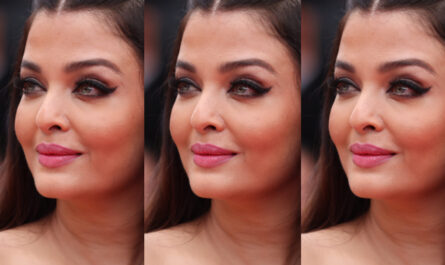
by In the ever-evolving world of celebrity culture, a single photoshoot can spark layered conversations about identity, beauty, comparison, and agency. Elli AvRam’s latest photoshoot—featuring her in a striking beige, sparkly dress accompanied by the bold caption “not your bebo”—is one such moment. At first glance, it appears to be a glamorous, sensual visual statement. But beneath the shimmer lies a deeper narrative about self-definition, industry labeling, and the power of reclaiming one’s individuality in a space that constantly seeks to categorize.
This article explores the aesthetic, cultural, and psychological dimensions of Elli AvRam’s photoshoot, unpacking how a simple caption can challenge entrenched perceptions and how visual storytelling in the digital age shapes—and reshapes—celebrity identity.
The Visual Language of the Photoshoot
Elli AvRam’s photoshoot is rooted in visual seduction and minimalistic elegance. The beige dress, adorned with subtle sparkles, walks a delicate line between understated and striking. Beige, often considered a neutral or “safe” color, is transformed here into a statement of refined sensuality. The sparkle detailing adds dimension, catching light in a way that draws attention without overwhelming the composition.
The silhouette of the dress plays a crucial role. Designed to accentuate natural curves, it embraces the body without appearing overly structured. This creates a sense of fluidity—an almost second-skin effect—that aligns with contemporary trends in fashion photography, where the emphasis is on authenticity and effortless allure.
Lighting in the shoot appears carefully curated to enhance the shimmer of the fabric while highlighting Elli’s features. Soft, diffused lighting likely plays a role in creating a luminous effect, giving her skin a radiant glow. The interplay between shadow and sparkle contributes to a visual rhythm that keeps the viewer engaged.
The overall aesthetic suggests control. Every element—from the dress to the lighting to the pose—feels intentional. This is not a random act of glamour but a carefully constructed narrative.
“Not Your Bebo”: A Caption That Speaks Volumes
The caption “not your bebo” is arguably the most powerful element of the entire shoot. In a single phrase, Elli AvRam addresses years of comparison, labeling, and public perception.
In the entertainment industry, comparisons are almost inevitable. New or emerging actresses are often described in relation to established stars, reducing their individuality to familiar reference points. Elli AvRam, throughout her career, has occasionally been compared to other actresses due to certain stylistic or aesthetic similarities. While such comparisons can sometimes be flattering, they can also be limiting.
By declaring “not your bebo,” Elli is doing something significant—she is rejecting the framework of comparison altogether.
This is not a statement of rivalry. It is a statement of identity.
It asserts:
- She is not a replica.
- She is not an extension of someone else’s persona.
- She exists as her own narrative.
The tone of the caption carries a subtle defiance. It is neither aggressive nor apologetic. Instead, it is confident, almost playful, yet deeply intentional. It invites the audience to reconsider how they perceive her—not through the lens of similarity, but through the lens of individuality.
The Politics of Comparison in Celebrity Culture
To fully understand the impact of Elli AvRam’s statement, it is important to examine the culture of comparison within the entertainment industry.
From the early days of cinema, actors—especially women—have been compared based on appearance, style, and perceived persona. These comparisons often reduce complex individuals into simplified archetypes:
- The “next” someone
- The “new version” of a familiar star
- The “lookalike” phenomenon
While these labels can generate initial buzz, they often come at the cost of personal identity. They frame an artist’s journey as derivative rather than original.
Elli AvRam’s photoshoot disrupts this pattern.
By explicitly rejecting comparison, she challenges the audience to engage with her on her own terms. This shift is subtle but powerful. It transforms the narrative from one of imitation to one of self-definition.
Sensuality as Self-Expression
The photoshoot also engages with the concept of sensuality—an aspect of celebrity imagery that is often misunderstood or oversimplified.
In Elli AvRam’s case, sensuality is not presented as an external performance meant to satisfy the viewer. Instead, it appears to be an internal expression of confidence and self-assurance.
The choice of a beige, sparkly dress is particularly interesting. Unlike bold colors that demand attention, beige operates quietly. It draws the viewer in rather than commanding them. Combined with sparkle, it creates a layered effect—subtle yet captivating.
This duality mirrors the nature of modern sensuality:
- It is not always loud or overt.
- It can be soft, nuanced, and introspective.
Elli’s body language likely reinforces this idea. Rather than exaggerated poses, the emphasis seems to be on natural movement and presence. This aligns with a broader shift in fashion photography, where authenticity is increasingly valued over theatricality.
The Digital Age and the Power of Self-Narration
Social media has fundamentally changed how celebrities communicate with their audience. In the past, public image was largely mediated through interviews, films, and traditional media coverage. Today, platforms like Instagram allow celebrities to curate and control their own narratives.
Elli AvRam’s photoshoot is a perfect example of this shift.
By sharing the images with a carefully chosen caption, she is not just participating in a photoshoot—she is telling a story. She is framing the narrative before anyone else can interpret it for her.
This is the essence of self-narration:
- Choosing how to present oneself
- Controlling the message
- Engaging directly with the audience
The phrase “not your bebo” becomes even more impactful in this context. It is not filtered through a journalist or a headline. It comes directly from Elli herself, making it more personal and more authoritative.
Fashion as Identity
Fashion has always been a tool for self-expression, but in the world of celebrity culture, it carries additional layers of meaning.
Elli AvRam’s choice of outfit in this photoshoot reflects a deliberate approach to identity-building. The beige sparkly dress is not just aesthetically pleasing—it communicates a specific persona:
- Elegant yet bold
- Sensual yet controlled
- Minimal yet impactful
This balance is crucial. It allows Elli to present herself as multifaceted, resisting the tendency to be boxed into a single category.
The sparkle element adds a touch of glamour, aligning her with the visual expectations of the entertainment industry. At the same time, the understated color palette suggests a departure from overt dramatization.
This interplay between conformity and individuality is what makes the look compelling.
Audience Reception and Interpretation
Whenever a celebrity shares a bold statement, audience reaction becomes an integral part of the narrative.
Elli AvRam’s photoshoot and caption are likely to evoke a range of responses:
- Admiration for her confidence and clarity
- Curiosity about the context of the statement
- Discussion about comparison culture in Bollywood
- Appreciation for the aesthetic of the shoot
In the digital age, these reactions unfold in real time. Comments, shares, and reposts amplify the reach of the content, turning a single post into a larger cultural moment.
What makes this particularly interesting is how different audiences interpret the same message. For some, “not your bebo” may be seen as a playful remark. For others, it may resonate as a deeper assertion of identity.
This multiplicity of interpretation is a hallmark of modern media culture.
Reclaiming Narrative in a Competitive Industry
The entertainment industry is inherently competitive, with constant pressure to stand out while also fitting into established frameworks.
Elli AvRam’s photoshoot can be seen as a strategic move in this landscape. By asserting her individuality, she positions herself as a distinct voice rather than a derivative presence.
This is important for long-term career sustainability. While comparisons may generate short-term attention, they rarely support enduring identity.
Reclaiming narrative involves:
- Defining one’s own image
- Setting boundaries around perception
- Communicating clearly with the audience
Elli’s approach demonstrates an awareness of these dynamics. It suggests a shift from passive participation in industry narratives to active authorship.
The Psychology of Visibility
At a deeper level, the photoshoot touches on the psychology of visibility—how individuals choose to be seen and understood.
For celebrities, visibility is both an opportunity and a challenge. It offers a platform for expression but also exposes them to constant scrutiny.
Elli AvRam’s statement “not your bebo” reflects an awareness of this duality. It acknowledges the presence of comparison while refusing to be defined by it.
This is a form of psychological boundary-setting:
- Recognizing external perceptions
- Choosing not to internalize them
- Reaffirming self-identity
Such acts of self-definition are increasingly important in a world where public figures are constantly analyzed and categorized.
Aesthetic Minimalism Meets Emotional Boldness
One of the most striking aspects of the photoshoot is the contrast between its visual minimalism and its emotional boldness.
The beige palette, subtle sparkle, and refined styling create a sense of calm and control. Yet the caption introduces a bold, almost provocative statement.
This contrast enhances the impact of both elements:
- The simplicity of the visuals draws attention to the complexity of the message
- The boldness of the caption adds depth to the elegance of the imagery
It is this interplay that makes the photoshoot memorable. It engages both the eye and the mind, inviting viewers to look beyond the surface.
Redefining Glamour in Contemporary Bollywood
Elli AvRam’s photoshoot also contributes to the ongoing evolution of glamour in Bollywood.
Traditional notions of glamour often emphasized extravagance, bold colors, and dramatic styling. While these elements still exist, there is a growing appreciation for subtlety and nuance.
The beige sparkly dress represents this shift:
- It is glamorous without being overwhelming
- It is sensual without being overtly theatrical
- It is modern without abandoning classic elegance
This redefinition aligns with global trends in fashion and photography, where the focus is increasingly on individuality and authenticity.
Conclusion: A Statement Beyond the Surface
Elli AvRam’s “not your bebo” photoshoot is more than just a visual display of beauty and style. It is a carefully crafted statement about identity, agency, and the power of self-definition.
Through a combination of aesthetic elegance and a bold caption, Elli challenges the culture of comparison that often defines celebrity narratives. She reclaims her individuality, inviting audiences to see her not as a reflection of someone else, but as a distinct and evolving persona.
In doing so, she highlights an important shift in modern celebrity culture—the move from being defined by others to defining oneself.
The beige sparkly dress, the controlled lighting, the confident pose, and the striking caption all come together to create a moment that is both visually captivating and intellectually engaging.
In a world saturated with images, it is not just what is seen that matters, but what is said—and more importantly, what is meant.
Elli AvRam’s photoshoot succeeds on both counts.
It captures attention.
It sparks conversation.
And most importantly, it asserts a simple yet powerful truth:
She is not anyone else.