 by
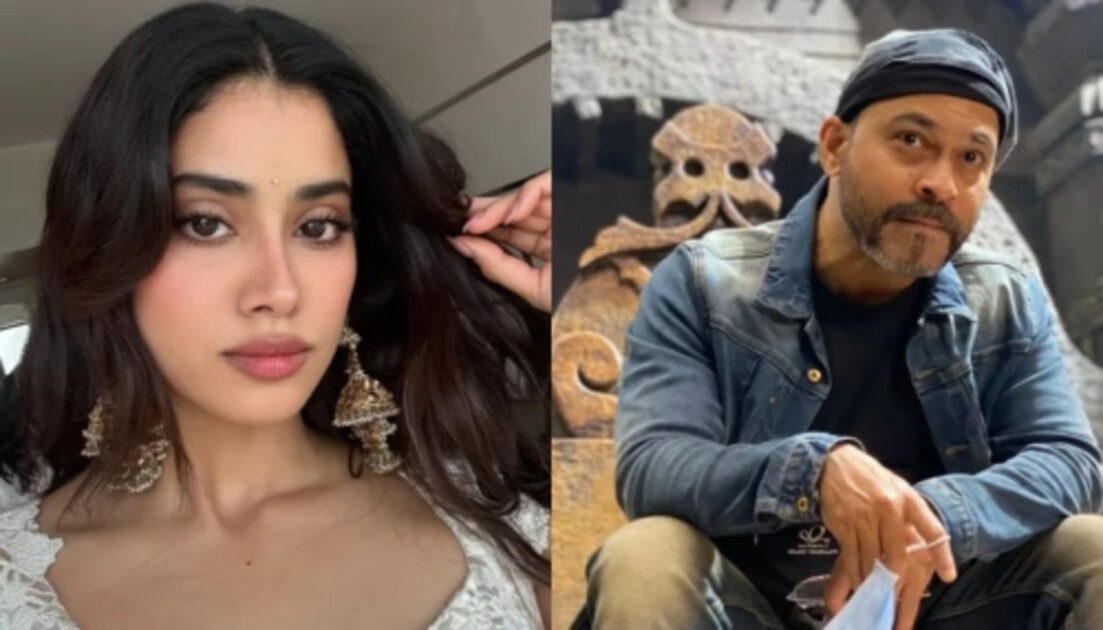
by Indian cinema has been undergoing a steady but unmistakable transformation over the past decade. While mainstream Bollywood once relied heavily on romance, comedy, and family melodrama, the rise of genre-driven storytelling—especially horror, thriller, and mythological fantasy—has begun reshaping audience expectations. In this evolving landscape, a new development has caught industry attention: reports that actress Janhvi Kapoor is in advanced discussions to star in a creature-based horror film directed by Rahi Anil Barve, the visionary filmmaker behind the cult classic Tumbbad.
If finalized, the project will be backed by Jio Studios, a production house that has been aggressively expanding its slate of ambitious, high-concept films across genres. The film is reportedly expected to go on floors later this year, signaling another bold step toward redefining Indian horror cinema with large-scale production values and a distinctly atmospheric storytelling style.
While official confirmation is still awaited, the pairing of Janhvi Kapoor with Rahi Anil Barve has already generated significant curiosity—and for good reason.
The Return of Rahi Anil Barve: A Director with a Cult Legacy
To understand why this collaboration is generating buzz, it is essential to revisit the creative identity of Rahi Anil Barve.
Barve is best known for directing Tumbbad (2018), a film widely regarded as one of the most visually distinctive and narratively ambitious horror-fantasy films in Indian cinema. The film blended mythology, greed, and existential horror into a haunting narrative rooted in Indian folklore. Though it took years to reach completion, Tumbbad eventually achieved cult status for its world-building, production design, and philosophical undertones.
Unlike conventional horror films that rely on jump scares, Barve’s storytelling emphasizes atmosphere, slow-burn tension, and mythological depth. His visual language is deeply textured—rain-soaked landscapes, decaying architecture, and myth-infused symbolism define his cinematic identity.
Since Tumbbad, Barve has been associated with several reported projects in development stages, often described as high-concept genre films. One of his confirmed upcoming ventures, Mayasabha: The Hall of Illusion, is already in post-announcement discussion circles for its surreal aesthetic and unconventional storytelling approach.
Against this backdrop, a creature horror film under his direction feels like a natural extension of his creative universe—possibly even a more ambitious exploration of mythological horror.
Janhvi Kapoor: A Career at a Transitional Point
Janhvi Kapoor has steadily built a filmography that oscillates between mainstream commercial cinema and performance-driven roles. From Dhadak to Gunjan Saxena: The Kargil Girl, and horror-comedy experiments like Roohi, she has shown an inclination toward diverse genres, though her career trajectory is still evolving in search of a defining artistic identity.
Her earlier experience in horror-comedy, particularly Roohi (produced under Jio Studios and Maddock Films), places her within a genre she has already partially explored. However, Roohi leaned heavily into horror-comedy tropes, balancing scares with humor. A creature horror film, especially one directed by Rahi Anil Barve, would mark a significant tonal shift.
This project—if it materializes—would push her into a far more intense cinematic space, one rooted in psychological tension, folklore-inspired horror, and potentially unsettling creature design.
For Janhvi Kapoor, such a film could serve as a career-defining pivot toward darker, more experimental cinema.
What Is a “Creature Horror Film” in the Indian Context?
Creature horror is a subgenre that focuses on non-human antagonists—mythical beings, mutated entities, supernatural monsters, or folklore-inspired creatures. In Indian storytelling traditions, this genre has deep roots, although it has rarely been explored with consistent technical sophistication in mainstream cinema.
Indian mythology and folklore are rich with creature-like beings:
- Vetalas (spirit entities)
- Rakshasas (demonic figures)
- Naags (serpent beings)
- Chudails (witch spirits)
- Forest-dwelling mythological hybrids
However, most Indian horror films have historically leaned toward haunted-house narratives rather than creature-based storytelling. This is where Rahi Anil Barve’s vision becomes particularly relevant.
His approach in Tumbbad demonstrated how Indian mythology can be reinterpreted through a darker, more philosophical lens. A creature horror film under his direction could potentially:
- Reimagine forgotten folklore
- Build a fully immersive mythological ecosystem
- Introduce high-quality practical and digital creature effects
- Blend psychological horror with existential themes
If successful, the film could place Indian creature horror on a global map alongside international franchises like The Witch, Pan’s Labyrinth, or The Ritual.
The Role of Jio Studios: Big-Scale Genre Investment
Jio Studios has emerged as one of the most aggressive content backers in Indian entertainment, investing heavily in theatrical and digital-first projects across genres.
Their strategy in recent years has been clear:
- Build large-scale cinematic universes
- Support experimental storytelling
- Back both star-driven and content-driven projects
- Expand into genre cinema (horror, fantasy, sci-fi, thrillers)
Their involvement in this rumored Janhvi Kapoor–Rahi Anil Barve project signals a continued push into premium horror-fantasy cinema.
Given their expanding portfolio of films and collaborations with top-tier directors, the studio appears committed to creating content that balances commercial viability with artistic ambition.
A creature horror film under their banner would likely involve:
- High-end VFX studios
- Extensive production design
- Large-scale set construction
- Possibly pan-India or global marketing
This indicates that the project, if greenlit, is not a small experimental film but a major studio-backed spectacle rooted in genre storytelling.
Why This Collaboration Makes Industry Sense
At first glance, Janhvi Kapoor and Rahi Anil Barve might seem like an unusual pairing. However, from a strategic filmmaking perspective, the collaboration makes considerable sense.
1. A Director Known for Visionary Horror
Barve brings credibility, artistic depth, and a proven ability to create atmospheric horror rooted in Indian mythology.
2. An Actress Seeking Genre Expansion
Janhvi Kapoor has already tested horror-comedy and emotional drama, making her a plausible fit for a more intense horror-driven role.
3. A Studio Focused on Scale
Jio Studios provides the financial and technical backbone necessary for a creature-heavy narrative.
Together, the trio represents a convergence of:
- Vision (director)
- Star power (actor)
- Infrastructure (studio)
This combination is often the foundation for genre-defining cinema.
The Evolution of Horror in Bollywood
To fully appreciate the significance of this potential project, it is important to understand how horror has evolved in Indian cinema.
Early Era: Gothic and Supernatural Horror
Films like Raat, Veerana, and Bhoot relied heavily on haunted houses and spirit possession.
Mid-2000s: Horror-Comedy Era
Franchises like Bhool Bhulaiyaa and Stree introduced humor as a balancing mechanism.
Recent Phase: Elevated Horror
Films like Tumbbad and Bulbbul introduced artistic horror, focusing on mood, folklore, and symbolism.
The proposed Janhvi Kapoor–Barve film sits firmly in the third category, but with a stronger emphasis on creature mythology and visual world-building.
What the Film Could Explore Thematically
Although plot details remain undisclosed, a Rahi Anil Barve creature horror film would likely revolve around themes such as:
1. Greed and Human Destruction
Following Tumbbad’s thematic lineage, greed could again play a central role.
2. Myth vs Reality
The boundary between folklore and lived reality may blur.
3. Isolation and Fear
Creature horror often thrives on environments where human vulnerability is amplified.
4. Ancient Curses or Forgotten Deities
Indian mythology offers endless material for reinterpretation.
5. Psychological Horror
The creature may not only be external but symbolic of internal human darkness.
Why Janhvi Kapoor’s Casting Matters
If Janhvi Kapoor is officially signed, the casting will carry symbolic weight.
She represents:
- A new-generation Bollywood actor
- Someone transitioning from romantic roles to experimental cinema
- A public-facing star with strong digital influence
Her participation could:
- Increase mainstream audience reach for a niche genre film
- Bridge the gap between arthouse horror and commercial cinema
- Help normalize female-led horror narratives in Bollywood
In global cinema, horror often provides actors with transformative roles—think of performances in Hereditary, The Witch, or Midsommar. A well-executed creature horror film could similarly elevate her acting portfolio.
Risks and Challenges
Despite the excitement, such a project comes with challenges:
1. High VFX Expectations
Creature horror requires convincing visual effects. Poor execution can break immersion.
2. Audience Reception
Indian mainstream audiences still show mixed reactions to pure horror without comedic relief.
3. Narrative Balance
Rahi Anil Barve’s slow, atmospheric style may conflict with commercial pacing expectations.
4. Production Scale Pressure
Large studio backing increases expectations for box office performance.
Industry Impact: If the Film Succeeds
If this project comes to fruition and succeeds, it could:
- Establish a new benchmark for Indian creature horror
- Encourage more mythological horror films
- Strengthen India’s global genre cinema presence
- Open doors for experimental filmmakers within mainstream studios
- Redefine Janhvi Kapoor’s career trajectory
It could also mark a broader shift where Bollywood embraces high-concept horror as a mainstream theatrical category, rather than a niche offering.
Conclusion: A Film to Watch Closely
The reported collaboration between Janhvi Kapoor, Rahi Anil Barve, and Jio Studios represents more than just another casting rumor—it reflects a larger movement in Indian cinema toward ambitious genre storytelling.
While official confirmation is still pending, the possibility alone signals something important: Indian filmmakers are increasingly willing to push horror beyond formulaic boundaries and into mythological, philosophical, and visually immersive territory.
If the project moves forward and begins filming later this year as reported, it may well become one of the most anticipated genre films in recent Bollywood history.
And for audiences, it raises an intriguing question:
What happens when one of India’s most visually distinctive horror directors meets a rising mainstream star inside a fully imagined world of creatures, myth, and fear?
The answer, if the film succeeds, could redefine what Indian horror looks like for years to come.