 by
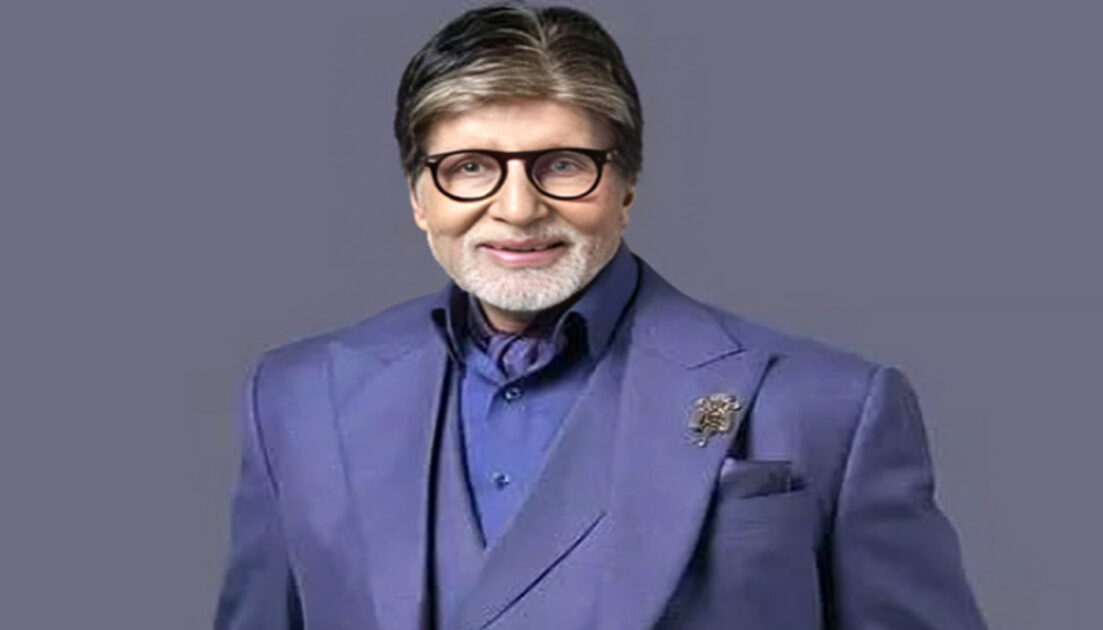
by Amitabh Bachchan Reveals He Was Once Asked to ‘Go Back Home’ Over His Height: “Tum Bohat Lambe Ho, Ghar Jao”
Amitabh Bachchan may now be regarded as one of the most influential and enduring actors in Indian cinema, but his journey to becoming a superstar was anything but straightforward. Long before his towering presence became synonymous with his screen persona, the actor himself was told that his height was a disadvantage.
In a recent episode of Kaun Banega Crorepati, Bachchan opened up about the criticism and rejection he experienced during the early years of his acting career. While interacting with Commonwealth Games 2026 winners Lovlina Borgohain, Asmita Dey, Jhandu Kumar and Sharmila Dhankar, the veteran actor recalled moments when people questioned whether he was suitable for acting.
One particularly memorable remark centred on his height. Bachchan recalled being told, “Tum bohat lambe ho, ghar jao” — essentially, “You are too tall, go home.”
The comment sounds almost unbelievable today. Bachchan’s height is now one of the characteristics most closely associated with his imposing screen presence. But at the beginning of his career, what later became an advantage was apparently regarded by some as a reason why he should not pursue acting.
His candid recollection offers an interesting look at the uncertainty, criticism and rejection that can exist behind even the most celebrated careers.
When Height Was Considered a Problem
Amitabh Bachchan’s physical presence has always been distinctive. His tall frame, deep voice and commanding personality helped create a screen image unlike that of many of his contemporaries.
However, according to the actor’s recollection, his height was once considered a drawback.
During the conversation on Kaun Banega Crorepati, Bachchan was asked whether directors had ever scolded him when he was a newcomer. His answer revealed that criticism was a regular part of his early professional life.
He remembered being told that he did not know how to act and that he was too tall. The criticism was blunt enough to end with the instruction that he should simply go home.
For someone trying to establish himself in a fiercely competitive industry, such words could have been deeply discouraging. Acting requires confidence, and being told that even your physical appearance makes you unsuitable can easily undermine that confidence.
Yet Bachchan continued.
That decision ultimately became significant not only for his own career but also for the evolution of the Hindi film hero.
The Irony of His Height Becoming His Strength
There is a striking irony at the heart of Bachchan’s recollection.
The height that was once apparently viewed as a problem eventually became one of his most recognisable physical characteristics.
As his career developed, Bachchan’s towering appearance contributed to the authority and intensity he brought to his roles. His physical stature complemented his voice, expressions and performance style, creating a presence that could dominate the screen.
In retrospect, the criticism appears particularly ironic because audiences eventually came to associate his height with precisely the kind of larger-than-life persona that made him so memorable.
This demonstrates how perceptions can change dramatically over time.
A characteristic that appears unsuitable in one person’s eyes can become an important part of another person’s identity. The difference often lies in context, confidence and the ability to turn individuality into an advantage.
Bachchan did not need to become shorter to succeed. He needed to find a way to use what made him different.
Early Criticism Was Not Limited to His Appearance
Bachchan’s recollection was not solely about his height. He also acknowledged that his acting skills were criticised during the early stages of his career.
He remembered directors correcting him and telling him how to improve his performance. These corrections included aspects such as the way he stood and delivered dialogue.
Rather than presenting every criticism as unfair, Bachchan recognised that some of it helped him develop.
This is an important distinction.
Not all criticism has the same value. Some comments are based on prejudice, assumptions or personal preferences. Others identify genuine areas that need improvement.
For an actor starting out, learning how to separate the two can be crucial.
Bachchan’s story suggests that he gradually absorbed useful feedback and used it to become better at his craft. His success was therefore not simply the result of refusing to listen to anyone. Instead, he appears to have learned when criticism could help him and when it should not determine his sense of self-worth.
The Journey From Rejection to Recognition
Amitabh Bachchan’s early career did not immediately resemble the legendary career that would follow.
He entered the film industry in the late 1960s and initially struggled to establish himself. His debut film, Saat Hindustani, was released in 1969, but widespread recognition did not come overnight.
His breakthrough eventually arrived with Zanjeer, which helped transform his professional trajectory and contributed to the emergence of the iconic “angry young man” image associated with him during the 1970s.
That journey makes his recent comments especially meaningful.
People looking at Bachchan today may find it difficult to imagine him being told that he was not suitable for acting. His name has become so closely linked with Hindi cinema that his early struggles can seem almost disconnected from the superstar he became.
But every established career has a beginning.
And beginnings are rarely as polished as the final result.
The Incident Involving His Late Arrival
Bachchan also recalled another difficult episode from his early career.
He explained that he generally made an effort to reach film sets on time. However, there was an occasion when he arrived late for a shoot.
At the time, he did not have a car and had travelled to the location in someone else’s vehicle. When he arrived, the director was apparently waiting outside the set.
The shooting had already been wrapped up, and Bachchan was told to leave.
For a newcomer, an incident like this could have serious consequences. Establishing a reputation for reliability is important in any profession, but it can be particularly important in an industry where productions involve large teams and significant costs.
The story also highlights the circumstances surrounding Bachchan’s early years. He was not beginning his career with the comfort and influence that would later accompany his name.
He was a newcomer trying to find opportunities and establish himself.
Why the “Go Home” Remark Is So Powerful
The phrase “go home” is what makes the height story particularly memorable.
Being told that you are too tall is one thing. Being told to leave because of it carries an entirely different emotional weight.
It suggests that the person speaking has already decided that you do not belong.
For an aspiring actor, belonging can be particularly important. The film industry is built around appearance, performance, charisma and public perception. A newcomer is already likely to question whether they have what it takes.
Hearing that something as fundamental as their physical appearance makes them unsuitable could reinforce those doubts.
Bachchan’s experience shows why early judgments should not always be treated as final verdicts.
The person making the judgment sees one moment. A career unfolds over decades.
A Different Kind of Lesson From Amitabh Bachchan
Bachchan’s story is not simply about proving people wrong.
It is also about learning from difficult experiences.
He did not become successful simply because people criticised him and he ignored them. He continued working while developing his abilities.
The acting industry requires performers to constantly adapt. Dialogue delivery, body language, timing, emotional expression and interaction with other actors all require practice.
Bachchan’s own recollection suggests that he underwent this learning process.
The actor who was once told he did not know how to act eventually developed one of the most distinctive performance styles in Indian cinema.
That transformation did not happen overnight.
It came through years of work.
His Voice Became Another Defining Feature
Interestingly, Bachchan’s height was not the only characteristic that became central to his identity.
His deep, distinctive voice has also played an enormous role in his career.
At the beginning of his journey, even his voice was reportedly not viewed as an obvious advantage in the traditional sense. Yet it eventually became one of the most recognisable voices in Indian entertainment.
His voice has been used in films, television programmes, narration and advertising, and it became particularly central to his identity as the host of Kaun Banega Crorepati.
This adds another layer to the story.
The qualities that make Bachchan unmistakable today were not necessarily qualities that guaranteed acceptance when he was beginning.
They became powerful because he developed them within his own style.
From the “Angry Young Man” to a Versatile Veteran
Bachchan’s career also demonstrates that success is not necessarily about maintaining one image forever.
During the 1970s and 1980s, he became famous for intense roles and characters who challenged injustice. His performances in films such as Zanjeer, Deewaar, Sholay, Don, Trishul and *Kaala Patthar helped establish his position as one of the defining stars of his generation.
But his career did not end with that era.
He continued reinventing himself through different kinds of roles in later decades.
Films such as Mohabbatein, Black, Paa, Piku, Pink, 102 Not Out and Jhund demonstrated his ability to move between genres, characters and emotional registers.
His work as the host of Kaun Banega Crorepati introduced another dimension to his public image, allowing audiences to see his humour, warmth, conversational skills and ability to connect with contestants.
The actor who once had to convince people that he belonged eventually became the face of one of Indian television’s most enduring shows.
The Connection Between Actors and Athletes
The setting of Bachchan’s recent revelation is particularly fitting because he was speaking with accomplished athletes.
Lovlina Borgohain, Asmita Dey, Jhandu Kumar and Sharmila Dhankar have their own stories of discipline, training and competition.
Athletes understand what it means to be corrected repeatedly.
A coach may tell an athlete to change their technique, improve their timing or adjust their strategy. An athlete can spend years working on small details that an audience never sees.
Actors face a similar process.
A director may tell an actor to change their posture, alter their delivery, control their expressions or approach a scene differently.
In both professions, the final performance often hides the amount of correction that happened behind the scenes.
Bachchan’s conversation therefore created a natural bridge between cinema and sport.
Success Rarely Looks Like Success at the Beginning
One of the biggest misconceptions about successful people is that their eventual achievements were obvious from the start.
Once someone becomes a superstar, it is tempting to assume that everyone must have recognised their potential immediately.
Reality is often different.
People can possess extraordinary potential without having the experience to demonstrate it.
A young actor may lack confidence. A young athlete may not yet have developed technique. A student may not yet understand how to perform under pressure. A professional may not have discovered their strongest skills.
Early struggles do not necessarily reveal the limits of future achievement.
Bachchan’s story is a powerful illustration of that principle.
The young man being criticised for his height could not have known exactly what his career would become. He simply had to continue taking the next opportunity.
The Difference Between Useful Feedback and Unfair Judgment
There is a broader lesson in the way Bachchan describes his early experiences.
People entering competitive fields need feedback. Without feedback, improvement becomes difficult.
But feedback and judgment are not the same thing.
If someone says, “Your dialogue delivery needs work,” that is something an actor can practise.
If someone says, “You are too tall to act,” the statement is fundamentally different. It treats a physical characteristic as a permanent limitation.
The first kind of criticism provides a path forward.
The second attempts to close the door.
Learning to recognise this difference can help people protect their confidence while remaining open to genuine improvement.
Bachchan’s career shows the value of doing exactly that.
Individuality Can Become an Advantage
The entertainment industry constantly changes.
Styles change. Audience preferences change. Definitions of attractiveness change. The qualities considered commercially desirable can change from one generation to another.
What remains valuable is individuality.
A performer who looks, sounds or behaves exactly like everyone else may find it harder to create a distinctive identity.
Bachchan’s height, voice and commanding presence contributed to a persona that audiences could immediately recognise.
Rather than trying to eliminate every feature that made him different, his career demonstrates how those characteristics could be incorporated into a unique screen identity.
That is a valuable lesson far beyond cinema.
Being different does not automatically mean being unsuitable.
Sometimes it simply means that you have not yet found the environment where your difference becomes an advantage.
Rejection Does Not Have to Define the Future
One of the most relatable aspects of Bachchan’s story is the uncertainty surrounding the beginning.
Every ambitious person encounters moments when their ability is questioned.
The criticism might come from a teacher, employer, coach, colleague, casting director or even someone close to them.
The natural reaction can be to assume that the criticism reveals the truth.
But one person’s assessment is still one person’s assessment.
It may contain something useful. It may be based on incomplete information. It may reflect the expectations of a particular time. Or it may simply be wrong.
Bachchan’s height story illustrates the last possibility particularly well.
The people who saw his height as a limitation could not have predicted how that same physical presence would later contribute to his iconic image.
Why His Story Still Matters Today
Although Bachchan’s experience belongs to the early stage of his decades-long career, its message remains relevant.
Young people entering creative industries continue to face appearance-based judgments. Actors, models, performers, influencers and other public figures are often evaluated on characteristics that have little connection to their actual ability.
The pressure to fit a particular image can be intense.
Bachchan’s experience provides an alternative perspective: individuality does not necessarily need to be corrected.
Of course, professional presentation matters, and performers must develop their skills. But there is a difference between improving one’s craft and changing one’s identity simply to satisfy someone else’s expectations.
A Career That Outgrew Its Early Critics
Perhaps the most satisfying part of Bachchan’s recollection is knowing what happened afterward.
The man who was once apparently told, “Tum bohat lambe ho, ghar jao,” did not go home permanently.
He stayed in the industry.
He found his opportunities.
He improved.
He developed a distinctive identity.
And eventually, he became one of the most recognisable actors in the history of Indian cinema.
His career has lasted across generations, political and cultural changes, shifts in filmmaking and major transformations in the entertainment industry.
Few careers demonstrate longevity on that scale.
The Real Meaning Behind the Anecdote
At its surface, Bachchan’s revelation is an amusing and surprising story about being told that he was too tall.
Underneath, however, it is a story about persistence.
It is about what happens when someone else’s certainty clashes with your own ambitions.
The person who criticised Bachchan could only see the young actor standing in front of them. They could not see the decades of work that would follow.
That is the limitation of early judgment.
Nobody can fully see another person’s future.
From “Go Home” to a Legacy
Amitabh Bachchan’s recollection on Kaun Banega Crorepati offers a fascinating glimpse into the less glamorous side of his journey.
Before he became a household name, he experienced criticism about his appearance, doubts about his acting and the occasional professional setback.
He was told that he was too tall.
He was told that he did not know how to act.
He was corrected by directors.
He once arrived late and found that the shoot had already been wrapped.
None of these moments looked like the beginning of a legendary career.
Yet they became part of the journey.
The greatest irony is that the characteristic that once prompted the instruction “ghar jao” eventually became part of the commanding presence that audiences came to admire.
Bachchan’s story therefore goes beyond celebrity nostalgia. It is a reminder that early rejection does not always predict eventual success, and that criticism should be evaluated rather than allowed to define a person’s future.
His journey also reinforces an important truth about individuality: what one person considers a weakness may become another person’s greatest strength.
For Amitabh Bachchan, being “too tall” did not end his acting ambitions.
Instead, the tall, imposing figure who was once questioned would go on to become one of the most iconic faces of Indian cinema.
And perhaps that is the most fitting response to the old instruction to “go home”: he did not leave. He stayed, learned, evolved and built a career that ultimately made it impossible to imagine Hindi cinema without him.