 by
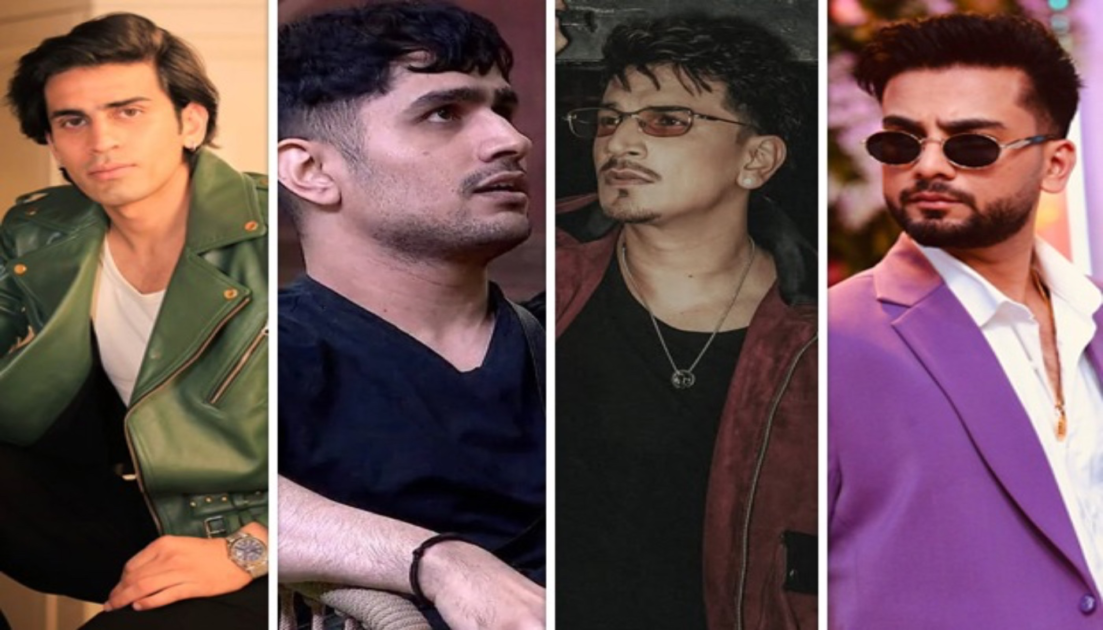
by The drama inside the Bigg Boss 20 house has taken another interesting turn, with Kushal Tanwar, popularly known as Gullu, opening up about his strained equation with wildcard contestant Nakul Dhull, also known as Mitthu Don. What initially appeared to be a clash between two contestants has now drawn attention to a much wider web of relationships involving former MTV Roadies XX gang leaders Prince Narula and Elvish Yadav.
In a conversation with fellow contestant Qazi Touqeer, Gullu shared his perspective on why he believed Nakul had developed such strong hostility towards him. According to Gullu, the tension was not simply about something that happened inside the Bigg Boss house. Instead, he suggested that Nakul’s attitude could have been influenced by the rivalry between Prince and Elvish, a disagreement that had already attracted attention during and after their association with Roadies.
Gullu’s comments have added another layer to the controversy surrounding his relationship with Nakul. They have also encouraged viewers to look beyond the immediate confrontation and consider how friendships, professional associations and disagreements from outside a reality show can influence contestants’ behaviour inside it.
The situation became even more significant after Gullu and Nakul’s disagreement escalated into a physical altercation, leading to Nakul’s exit from the show, according to reports. What followed was renewed discussion about the relationship between the two contestants, the role of their respective associations and the extent to which an existing rivalry can influence a new conflict.
However, while Gullu has offered his interpretation of Nakul’s hostility, it is important to distinguish his claims from independently established facts. The precise reasons behind Nakul’s behaviour cannot be determined solely from another contestant’s account.
Gullu Opens Up to Qazi Touqeer About His Equation With Prince Narula
During his conversation with Qazi Touqeer, Gullu discussed the apparent deterioration of his relationship with Prince Narula. His account suggested that the relationship had changed after Gullu won Roadies XX as a member of Elvish Yadav’s gang.
Gullu recalled an incident involving an online disagreement and a statement attributed to Prince about confronting someone at a particular time and place. He also described how he and Elvish were in Goa when Prince reportedly travelled to Gurugram.
According to Gullu, another significant moment occurred when Prince was asked during a podcast why he had not congratulated Gullu publicly after his Roadies victory.
Gullu recalled Prince’s reported explanation that he had learned Gullu was supporting someone else. He further stated that Prince subsequently unfollowed him on social media.
This recollection offers an insight into how Gullu understands the breakdown of their relationship. From his perspective, the situation was connected to his association with Elvish and the broader disagreement between the two personalities.
However, the distinction between personal interpretation and confirmed motivation remains important. An unfollow on social media may indicate a strained relationship, but it does not independently establish the complete reason behind that decision.
For Gullu, the incident appears to have become part of a larger story about loyalty, friendship and the consequences of being associated with one side of a public disagreement.
His account also raises a question that frequently emerges in reality television: can contestants maintain independent relationships when their friends and professional associates are involved in an ongoing rivalry?
In an environment where public support is often interpreted as taking sides, even a personal decision to remain close to a friend can become part of a larger narrative.
Why Gullu Believes Nakul Brought the Existing Rivalry Into Bigg Boss 20
The most striking aspect of Gullu’s conversation with Qazi was his suggestion that Nakul’s hostility towards him originated outside the Bigg Boss house.
Explaining his position, Gullu emphasised his friendship with Elvish and questioned why Nakul had become involved in a disagreement that, in his view, did not directly concern him.
Gullu said, “Mera Elvish acha dost hai. Main aur Elvish hai bhai, jaise, aur ye nafrat wahan se leke aaya.”
The statement reflected Gullu’s belief that Nakul had carried an existing animosity into the reality show rather than approaching him solely on the basis of their interactions inside the house.
He also questioned Nakul’s involvement, suggesting that the latter might have been acting in support of someone else.
Gullu’s remarks were particularly significant because they framed the conflict as something larger than a disagreement between two individuals. His interpretation placed Nakul and himself on opposite sides of a rivalry associated with two established reality television personalities.
Nevertheless, Gullu’s account should be understood as his perspective on the situation rather than definitive proof of Nakul’s intentions.
Nakul’s precise motivations cannot be established without considering his own explanation and the complete context of their interactions.
It is also possible for a conflict to involve several overlapping factors. Existing disagreements, personal misunderstandings, competitive behaviour and the pressure of living in a highly scrutinised environment can all contribute to tensions between contestants.
The controversy therefore presents a more complicated picture than simply assigning responsibility to one personality or one pre-existing rivalry.
What remains clear is that Gullu believes his relationship with Elvish has become relevant to how others perceive and approach him.
The Prince Narula and Elvish Yadav Rivalry That Continues to Attract Attention
To understand why Gullu’s comments have generated interest, it is necessary to examine the wider context involving Prince Narula and Elvish Yadav.
Both personalities have established themselves in India’s reality television and digital entertainment industries, although their public identities have developed through different career paths.
Prince rose to prominence through reality television competitions, building a reputation as a formidable contestant and later expanding his presence as a mentor and gang leader.
Elvish, meanwhile, became widely recognised through digital content creation before his participation in reality television increased his visibility among audiences who might not have followed his online career closely.
Their association with MTV Roadies XX brought them together in a competitive setting in which gang leaders had to select contestants, guide their teams and demonstrate their leadership abilities.
Roadies is built around competition, strategic decisions and strong personalities. Disagreements between gang leaders can become central to the entertainment value of a season, particularly when their approaches to mentoring or evaluating contestants differ.
The relationship between Prince and Elvish became a subject of discussion during the season, with their disagreements contributing to the competitive atmosphere.
Their differences also became part of the broader conversation surrounding the programme, as viewers discussed which gang leader appeared more convincing, whose strategy was more effective and which contestants benefited most from their respective mentors.
For audiences, such rivalries can become an extension of the competition itself. Viewers may continue supporting a gang leader even after the programme ends, especially when they feel personally invested in the contestants associated with that leader.
However, it is important not to assume that every disagreement between former colleagues reflects a permanent personal feud. Competitive television can encourage confrontation, while relationships outside the programme may be more nuanced than edited episodes or social media exchanges suggest.
The significance of the Prince-Elvish rivalry in the present controversy lies in how their respective associations have become part of the public interpretation of the Gullu-Nakul conflict.
Whether that rivalry directly explains Nakul’s behaviour remains a separate question.
How MTV Roadies XX Created the Connection Between Gullu and Elvish
Gullu’s association with Elvish is central to his explanation of the tensions involving Nakul.
During MTV Roadies XX, Gullu was part of Elvish’s gang and eventually won the competition under his leadership. The experience gave the two men a shared professional history and helped establish a relationship that Gullu continues to describe in familial terms.
In the competitive world of reality television, such relationships can extend beyond the programme itself.
Contestants spend time together during filming, face challenges as a team and develop relationships that may continue after the cameras stop rolling. A successful contestant may also feel grateful to the mentor who supported them during the competition.
For a gang leader, a contestant’s victory can become a source of professional pride. For the contestant, the mentor may represent someone who recognised their abilities and helped them navigate a demanding environment.
These connections can therefore become important parts of both individuals’ public identities.
Gullu’s continued friendship with Elvish appears to be an important part of how he understands his own position in the controversy.
By describing Elvish as a good friend and brother, Gullu communicated that their association was not merely a temporary alliance formed for Roadies.
His remarks also suggested that he did not consider his friendship with Elvish something that should be abandoned because of the latter’s disagreement with another personality.
This raises a broader issue about loyalty in competitive entertainment.
Should a contestant be judged by their own actions, or can their relationships influence how others perceive them?
Ideally, each individual should be evaluated on their own conduct. Yet public entertainment often operates through networks of friendships, rivalries and shared histories.
When two prominent personalities disagree, people associated with them can find themselves drawn into the same conversation, even when they were not originally responsible for the disagreement.
Gullu’s account suggests that he believes this dynamic has affected his relationship with Nakul.
Nakul Dhull’s Entry Added a New Dimension to the Conflict
Nakul Dhull, popularly known as Mitthu Don, entered Bigg Boss 20 as a wildcard contestant.
Wildcard entries are an important part of the show’s format because they introduce new personalities into an environment where existing relationships and alliances may already be established.
A new contestant can challenge the prevailing group dynamic, question other housemates’ behaviour or bring a different style of confrontation to the programme.
Such entries can also create immediate tension when the newcomer has a history with someone already living inside the house.
In Nakul’s case, his disagreement with Gullu quickly became a major talking point.
Their clash attracted attention not only because of the confrontation itself but also because reports about their earlier tensions encouraged viewers to search for a possible explanation beyond the programme.
The association between Nakul and Prince’s side of the wider rivalry, alongside Gullu’s friendship with Elvish, became a prominent part of that discussion.
However, an individual’s association with a particular personality does not automatically establish that every subsequent disagreement is motivated by loyalty to that person.
Nakul’s actions must still be considered in the context of his own decisions and interactions.
The same principle applies to Gullu. His friendship with Elvish may explain why he believes the rivalry is relevant, but it does not independently establish every detail of the dispute.
The most responsible interpretation is that the contestants’ outside associations provide a possible context for the conflict, while the precise motivations behind their behaviour remain a matter requiring further evidence.
The Social Media Factor: When Online Disagreements Follow Contestants Into Reality Television
Social media has transformed the way reality television personalities interact with audiences and with one another.
In earlier eras of television, rivalries were often associated primarily with episodes, interviews and public appearances. Today, disagreements can continue through Instagram Stories, short videos, podcasts, livestreams and indirect remarks posted for followers.
These platforms allow public figures to respond almost immediately to criticism. They also make it possible for audiences to revisit old disagreements long after the original incident has passed.
A single post can become the starting point for another exchange, with supporters interpreting its meaning and encouraging further responses.
Over time, a disagreement can develop into a narrative that exists independently of its original context.
Gullu’s account of his relationship with Prince illustrates the role social media can play in this process. He recalled an alleged change in their relationship following his association with Elvish and mentioned Prince’s reported decision to unfollow him.
Although such actions may seem relatively minor, they can acquire symbolic importance when they involve prominent personalities.
For supporters, an unfollow may be interpreted as evidence of a falling-out. A congratulatory message that never appears may become a subject of speculation. A vague statement may be understood as an indirect reference to a particular person.
These interpretations can intensify disagreements, particularly when followers are already familiar with a history of rivalry.
The same dynamics can affect contestants entering a reality show.
Even before they interact face-to-face, contestants may have formed impressions of one another through online content, public statements or the opinions of mutual acquaintances.
That history can influence expectations and make a neutral interaction feel confrontational.
However, social media does not always provide a complete account of personal relationships. A post may be ambiguous, an interaction may be taken out of context, and an audience’s interpretation may not reflect the intentions of the person involved.
Consequently, online activity can help explain why a dispute attracts attention without necessarily proving the underlying allegations.
From Online Tension to an On-Screen Physical Altercation
The controversy took a more serious turn when Gullu and Nakul became involved in a physical confrontation inside the Bigg Boss 20 house.
Reports about the incident described an argument that escalated after Nakul confronted Qazi Touqeer over comments concerning ScoutOP. Gullu subsequently became involved in the exchange, and the disagreement developed into a physical altercation.
Other contestants reportedly intervened to separate the men.
The incident attracted attention because it moved the dispute beyond verbal exchanges and into physical aggression.
Reality television frequently features arguments, heated accusations and confrontational conversations. Such moments can create suspense and generate discussion about the contestants involved.
Physical altercations, however, introduce a different level of concern.
When an argument becomes physical, the immediate priorities should be preventing further harm, separating those involved and ensuring that the situation does not escalate.
The show’s rules and the consequences imposed by its production team also become central to the discussion.
Reports subsequently linked Nakul’s exit from the programme to the altercation with Gullu.
His departure intensified the debate about the incident, with viewers discussing what happened, who was responsible for the escalation and how the contestants behaved before and after the confrontation.
It is important to distinguish between the circumstances of the physical clash and the broader claims about its origins.
Even if an existing rivalry contributed to tension between the contestants, it would not automatically justify physical aggression.
Likewise, a contestant’s association with a particular personality does not establish responsibility for every action taken by that contestant.
Each individual remains accountable for their own behaviour.
This distinction matters because discussions about celebrity rivalries can sometimes overshadow the immediate issue of personal conduct.
The larger story may be compelling, but the seriousness of a physical confrontation should not be reduced to a contest between rival fan groups.
Why the Incident Has Become Bigger Than a Typical Bigg Boss Argument
Bigg Boss is a format in which personal relationships and competitive strategies are placed under sustained scrutiny.
Contestants live together, share limited space, participate in tasks and face repeated situations that test their patience and judgment.
The resulting disagreements are often interpreted as evidence of loyalty, insecurity, strategic thinking or genuine friendship.
Yet the conflict between Gullu and Nakul has attracted a different kind of attention because viewers have connected it to personalities outside the house.
The possibility that an earlier rivalry influenced their relationship creates a more extensive narrative.
Instead of asking only why two contestants argued, audiences are also asking whether their disagreement reflects an older conflict involving Prince and Elvish.
This connection gives the incident a wider entertainment context.
For viewers familiar with Roadies XX, the confrontation may appear to be another chapter in a story that began during an earlier reality show.
For viewers who are less familiar with the history, Gullu’s conversation with Qazi provides an explanation of why he believes Nakul’s attitude may have been influenced by outside relationships.
However, this broader narrative also creates a risk of oversimplification.
Reality television encourages viewers to organise events into clear categories: friends and enemies, loyal supporters and opportunists, strategic players and emotional contestants.
Real relationships rarely fit such neat divisions.
Two people may disagree for several reasons, and a contestant may have personal objections that are unrelated to a friend’s rivalry.
The fact that a dispute resembles an earlier disagreement does not necessarily mean the same motivations are operating in both situations.
The Gullu-Nakul controversy therefore demonstrates both the appeal and the limitations of interpreting reality television through the lens of existing rivalries.
Loyalty, Friendship and the Pressure to Take Sides
One of the most interesting aspects of Gullu’s comments is the emphasis he places on his relationship with Elvish.
By describing Elvish as a close friend, Gullu made it clear that their connection remains important to him.
Friendship often involves standing by someone during difficult periods, particularly when that person faces criticism or becomes involved in a public disagreement.
However, loyalty can become complicated when the disagreement involves several people who have their own relationships and histories.
A person may support a friend without endorsing every decision that friend makes. Equally, someone may maintain a professional relationship with one individual while disagreeing with their position in a particular dispute.
Public entertainment rarely allows these distinctions to remain uncomplicated.
When audiences follow celebrities through multiple programmes and social media platforms, they often develop strong expectations about where their favourite personalities should stand.
A contestant who refuses to criticise a friend may be accused of blind loyalty. Someone who offers an independent opinion may be perceived as abandoning an alliance.
These expectations can create pressure to demonstrate allegiance even when the disagreement has little to do with the person being asked to take sides.
Gullu’s account suggests that he believes his friendship with Elvish has become relevant to how Nakul views him.
If that interpretation is accurate, it would illustrate how relationships between prominent personalities can affect people associated with them.
Nevertheless, the broader lesson is not that loyalty is inherently problematic. Genuine friendship can be meaningful and supportive.
The concern arises when loyalty is treated as a reason to continue a conflict that the individuals involved might otherwise resolve independently.
A healthier approach would allow people to maintain their friendships without inheriting every disagreement connected to them.
Prince Narula and Elvish Yadav: The Influence of Established Reality-TV Identities
Prince and Elvish occupy recognisable positions within India’s entertainment landscape, and their public identities influence how audiences interpret events involving people associated with them.
Prince’s career has been shaped significantly by competitive reality television. His experience as a contestant and mentor has helped establish a public image associated with confidence, competitiveness and a willingness to engage in confrontations.
Elvish built a substantial following through digital content and later expanded his presence through reality television.
Their participation in Roadies XX brought their respective styles and audiences into the same competitive environment.
When prominent personalities develop a rivalry, the disagreement can attract attention beyond the original programme.
Supporters may compare their records, debate their conduct and evaluate the people who work alongside them.
The contestants associated with each personality may consequently become part of a larger public discussion.
This does not mean that the senior personalities necessarily direct the behaviour of those around them.
Rather, their public profiles can create a framework through which audiences interpret otherwise separate interactions.
In the present case, Gullu’s association with Elvish and the reported connection between Nakul and Prince’s circle have become part of the explanation surrounding the conflict.
Whether either senior personality directly influenced the specific confrontation remains a separate matter.
It would be unfair to attribute responsibility to Prince or Elvish for the actions of other individuals without clear evidence.
The more useful question is how the public identities of established reality-TV figures can shape the expectations surrounding their associates.
The Role of Audience Perception in Shaping the Narrative
Reality television is not simply a sequence of events captured on camera. It is also an ongoing conversation between the programme, its contestants and the audience.
Viewers interpret interactions, form opinions and share their reactions online. Those responses can influence which moments receive attention and how subsequent developments are understood.
When a contestant makes an allegation about another person’s motives, audiences may compare it with earlier incidents they remember.
Some viewers may find the explanation convincing because it fits their understanding of the personalities involved. Others may believe the contestant is presenting events selectively or attempting to justify their own position.
Both reactions can contribute to the visibility of the controversy.
The Gullu-Nakul dispute illustrates how a personal explanation can quickly become part of a wider narrative about celebrity loyalty and rivalry.
Gullu’s comments have given viewers a possible framework for understanding the conflict, but that framework should not replace careful consideration of the available evidence.
A contestant’s recollection can provide useful information about how they experienced a relationship. It cannot, on its own, establish what another person intended.
This distinction is particularly important when the discussion involves allegations of hostility or deliberate provocation.
Responsible audience engagement requires viewers to recognise the difference between what was said, what was shown and what people believe those events mean.
That approach does not diminish the entertainment value of the programme. Instead, it allows audiences to engage with the drama without turning every interpretation into a confirmed fact.
Why the Physical Confrontation Should Not Be Reduced to a Question of Allegiance
The association between Gullu and Elvish, alongside the reported connection between Nakul and Prince, has become an important part of the controversy.
However, focusing exclusively on these associations risks distracting from the conduct that led to the physical altercation.
A disagreement can be influenced by past tensions without being predetermined by them.
The contestants still make individual choices about how to respond when a conversation becomes heated.
Verbal provocation, disagreement or criticism does not make physical aggression an acceptable response.
Similarly, supporting one contestant does not require audiences to excuse that person’s mistakes or condemn everyone associated with an opposing personality.
This principle is relevant to both the contestants and their fan communities.
A viewer can appreciate Gullu’s friendship with Elvish while still examining Gullu’s actions independently. Another viewer can recognise Prince’s contribution to reality television without assuming that Nakul’s behaviour necessarily reflects Prince’s views.
Such distinctions encourage a more balanced discussion.
They also prevent a reality-show disagreement from becoming a proxy battle between two fan groups.
Ultimately, the question of who influenced whom is less important than understanding the actual sequence of events, recognising the seriousness of physical aggression and allowing individuals to explain their own motivations.
What Gullu’s Revelation Means for the Future of Bigg Boss 20
Gullu’s conversation with Qazi has added a new dimension to the Bigg Boss 20 storyline by connecting the dispute with Nakul to the broader rivalry involving Prince and Elvish.
Even after Nakul’s reported exit, the discussion surrounding the confrontation has continued to generate interest.
That continued attention demonstrates how reality-show narratives can extend beyond the contestants’ immediate presence in the house.
A confrontation may last only a few minutes on screen, but its interpretation can continue through interviews, social media reactions and conversations about earlier events.
For Gullu, the issue appears to involve more than his disagreement with Nakul. His comments suggest that he believes an outside rivalry has affected how others perceive his friendship with Elvish.
Whether further developments clarify that interpretation remains to be seen.
The controversy also creates an opportunity for the programme to explore a recurring reality-TV question: how much of a contestant’s behaviour inside the house is shaped by personal history, and how much develops from the immediate pressures of the game?
The answer is unlikely to be the same for every participant.
Some contestants may enter with established disagreements. Others may develop unexpected friendships or conflicts after living together. Still others may find that their assumptions about someone change when they interact directly.
The Bigg Boss environment brings these possibilities together, often producing situations that are difficult to understand through a single explanation.
Gullu’s comments are therefore one part of a larger story rather than a final verdict on the motivations behind the conflict.
Conclusion: An Old Rivalry, a New Conflict and Questions That Remain
The controversy involving Gullu and Nakul Dhull has once again demonstrated how reality television can connect separate programmes, personalities and public disagreements into one continuing narrative.
Speaking to Qazi Touqeer, Gullu suggested that Nakul’s hostility towards him may have been influenced by the rivalry between Prince Narula and Elvish Yadav. He also recalled the deterioration of his own relationship with Prince, including the latter’s reported decision to unfollow him after Gullu’s Roadies XX victory.
Gullu’s account offers insight into how he interprets the conflict. His close friendship with Elvish appears to be an important part of his understanding of the situation, particularly because both men shared an association through Roadies XX.
However, the precise reasons behind Nakul’s behaviour cannot be established solely through Gullu’s comments. The reported connections between the contestants and the two former gang leaders provide context, but they do not conclusively prove that the wider rivalry caused the confrontation.
The physical altercation remains a separate and serious aspect of the story, one that should not be overshadowed by speculation about celebrity alliances.
As the discussion continues, the most meaningful distinction is between established events and the interpretations surrounding them.
Gullu has offered his perspective, and audiences now have a clearer understanding of why he believes the conflict extends beyond the Bigg Boss house. Whether that explanation captures the full story remains an open question.
For Bigg Boss 20, the episode is a reminder that contestants do not enter the house without histories, friendships or public identities. Those connections can shape how they are perceived, how disagreements unfold and how audiences interpret the resulting drama.
Yet an individual’s actions ultimately remain their own. Whatever the history between Prince Narula and Elvish Yadav, the Gullu-Nakul conflict must be understood through the specific events and decisions that brought it to a head.
The wider rivalry may explain why the confrontation has attracted so much attention, but it does not necessarily provide every answer.