 by
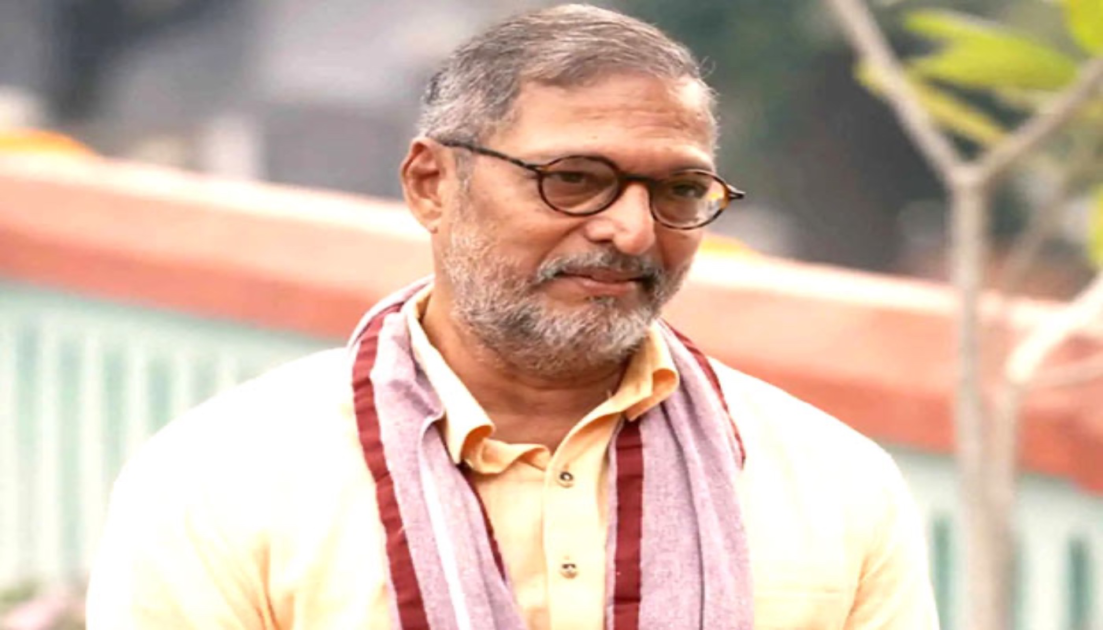
by Veteran Actor Nana Patekar Dies at 75 After Medical Emergency in Goa; Doctors Attempt CPR for Around 45 Minutes
Indian cinema has lost one of its most distinctive performers. Veteran actor Nana Patekar died on Thursday, October 8, 2026, at the age of 75 after suffering a suspected cardiac arrest at his residence in Goa. The acclaimed actor was taken to Manipal Hospital after a medical emergency, but doctors were unable to revive him despite prolonged resuscitation efforts.
According to reports, Patekar had experienced discomfort during the early hours of Thursday. A friend subsequently reached his residence, where the actor was reportedly found in a critical condition. Emergency responders attempted cardiopulmonary resuscitation (CPR), and medical personnel continued efforts to revive him after he was brought to the hospital. He was declared dead at approximately 5:20 a.m.
News of his death marks the end of a remarkable career spanning nearly five decades across Hindi and Marathi cinema. Renowned for his commanding screen presence, distinctive voice, emotional intensity, and ability to inhabit complicated characters, Patekar occupied a unique position in Indian entertainment. He moved between independent cinema, socially conscious dramas, mainstream commercial films, and comedy without losing the individuality that made his performances instantly recognizable.
His contribution to Indian cinema extended far beyond the number of films he appeared in. Patekar represented a tradition of acting in which a performer could command attention through dialogue delivery, physical expression, emotional restraint, and an unmistakable understanding of human complexity.
As tributes emerge from the film industry and admirers remember his extensive body of work, his passing offers an opportunity to reflect on the life, career, and enduring influence of an actor who consistently chose characters that demanded more than conventional screen charisma.
Nana Patekar Dies at 75 Following Medical Emergency in Goa
Nana Patekar’s death was reported on Thursday morning after he experienced a medical emergency at his residence in Goa.
According to reporting from Indian media outlets, the actor contacted a friend around 2:30 a.m., indicating that he was feeling unwell and experiencing discomfort on the left side of his chest. The message was reportedly not seen immediately because of the late hour.
When the friend reached Patekar’s residence at approximately 4 a.m., the actor was said to be sweating and experiencing severe distress. An ambulance was subsequently called, and emergency personnel began resuscitation efforts.
Patekar was taken to Manipal Hospital in Goa at approximately 4:20 a.m. Medical professionals attempted to revive him through CPR and other emergency measures for around 45 minutes. Despite their efforts, he could not be saved and was declared dead at 5:20 a.m.
Doctors initially described the death as a suspected cardiac arrest. Reports indicated that a post-mortem examination had been planned as part of the procedures to establish the circumstances and clarify the cause of death.
The details surrounding his final hours have drawn considerable attention, particularly because the actor had remained publicly active shortly before his death.
Although the circumstances are deeply distressing, it is important to distinguish the reported medical emergency from speculation about his health. Information about his final hours should be understood through the statements attributed to medical professionals and the findings of the relevant authorities.
The loss of an established performer at 75 has nevertheless left an unmistakable void in Indian cinema, especially for audiences who followed his work across generations.
A Career That Spanned Nearly Five Decades
Nana Patekar built a career that challenged conventional definitions of stardom.
While many mainstream film careers depend heavily on a consistent screen persona, Patekar developed his reputation through transformation. He could portray a volatile police officer, a conflicted social activist, a troubled family man, a ruthless antagonist, or a deeply vulnerable individual without making the characters feel like variations of the same performance.
His filmography also reflected the diversity of Indian cinema itself. He worked in Marathi and Hindi productions, appeared in films associated with socially conscious storytelling, and later became familiar to mainstream audiences through commercially successful projects.
His journey began long before he became a recognizable name in Bollywood.
Patekar’s early work helped establish his reputation as a serious performer, while subsequent roles demonstrated his ability to adapt to changing audience expectations. Rather than relying entirely on conventional romantic or heroic roles, he frequently explored characters whose personalities were shaped by moral conflict, anger, disappointment, ambition, or social circumstances.
This willingness to embrace complicated material distinguished him from performers who were primarily associated with a particular genre.
His career also demonstrated that screen presence does not necessarily depend on traditional leading-man characteristics. Patekar could dominate a scene through the rhythm of a sentence, a prolonged silence, a sudden emotional shift, or an expression that suggested an entire history behind a character.
These qualities became central to his reputation and contributed to his longevity.
From Gaman to Recognition in Indian Cinema
Patekar made his Hindi film debut with Gaman in 1978, beginning a cinematic journey that would eventually bring him national recognition.
The film formed part of a period in Indian cinema when filmmakers increasingly explored the experiences of ordinary people, migration, urban isolation, and the difficulties associated with economic opportunity.
Although Patekar’s later popularity would be closely associated with forceful performances, his broader career was never limited to high-volume dialogue delivery or aggressive characters.
His work developed within a cinematic environment in which realism, character development, and socially relevant themes were increasingly important to certain filmmakers.
For actors, such films offered opportunities to portray people whose lives were shaped by circumstances rather than conventional heroic narratives.
Patekar’s subsequent performances demonstrated an ability to engage with these demands. He became known for portraying individuals whose outward behaviour often concealed insecurity, frustration, or conflicting motivations.
This complexity helped establish him as a performer capable of working across different kinds of storytelling.
His journey from early film appearances to major national recognition also reflected the importance of persistence in an industry where visibility and commercial success are rarely guaranteed.
Rather than becoming defined by one immediate breakthrough, Patekar gradually developed a reputation that would eventually extend across generations of moviegoers.
Parinda: A Defining Performance in Hindi Cinema
Among the films that helped establish Patekar’s standing as a major actor was Parinda, the 1989 crime drama directed by Vidhu Vinod Chopra.
The film explored the violent world of organized crime in Mumbai and the difficult choices faced by people drawn into its orbit.
Patekar’s portrayal of Anna, a powerful underworld figure, became one of the defining performances of his career.
The character was threatening, unpredictable, and psychologically complicated. Rather than presenting the antagonist as a one-dimensional villain, the performance conveyed a dangerous personality whose authority depended on both calculated behaviour and sudden volatility.
Patekar’s dialogue delivery and physical presence contributed to the character’s impact. His ability to shift between apparent calm and explosive anger made Anna a memorable figure in Hindi cinema.
The film itself became an important example of the darker, more realistic crime dramas emerging in Indian filmmaking.
Parinda received widespread recognition and won multiple National Film Awards, including the award for Best Popular Film Providing Wholesome Entertainment.
For Patekar, the film helped reinforce his ability to create formidable screen characters without relying on the conventions of a traditional hero.
Anna remains an important reference point when discussing performances that reshaped audience expectations of antagonists in Hindi films.
The role also demonstrated how a supporting or antagonistic character can become central to a film’s emotional and dramatic identity when portrayed with conviction.
Salaam Bombay! and International Recognition
Another significant chapter in Patekar’s career came with Mira Nair’s Salaam Bombay!, released in 1988.
The film examined the lives of children living on the streets of Mumbai, presenting a world shaped by poverty, exploitation, unstable family circumstances, and the struggle for survival.
It became internationally acclaimed and received an Academy Award nomination for Best Foreign Language Film.
Its significance extended beyond awards. Salaam Bombay! brought attention to lives that mainstream commercial cinema had often represented through simplified narratives or treated as peripheral to conventional storytelling.
The film’s realism depended on its willingness to observe difficult social conditions without turning them into easy sentimental resolutions.
Patekar’s involvement in the project connected his career with a tradition of filmmaking that placed social observation and human vulnerability at its centre.
The international recognition surrounding Salaam Bombay! also helped introduce wider audiences to Indian performers and filmmakers working outside familiar commercial formulas.
For Patekar, whose career would continue to encompass both mainstream and more unconventional projects, the film illustrated the breadth of his artistic environment.
It also reinforced an important characteristic of his career: his willingness to participate in stories that demanded engagement with difficult social realities.
Krantiveer: The Performance That Captured Mainstream Audiences
For many Indian moviegoers, Nana Patekar will forever be associated with Krantiveer, the 1994 action drama directed by Mehul Kumar.
The film presented him as Pratap Narayan Tilak, an unconventional and confrontational character who becomes involved in a struggle against corruption, injustice, and powerful interests.
Patekar’s performance combined anger, idealism, humour, and emotional vulnerability.
His delivery of politically charged dialogue became one of the film’s defining features. The character’s confrontational style allowed the movie to address questions about civic responsibility, institutional corruption, and the relationship between ordinary citizens and those who wield power.
The film connected with audiences who responded to its dramatic treatment of social grievances.
Patekar received the National Film Award for Best Actor for his performance in Krantiveer, adding to the recognition he had already earned through his earlier work.
The character also demonstrated how an actor could bring political and moral questions into mainstream entertainment without sacrificing dramatic intensity.
Pratap Narayan Tilak was not a conventional hero whose authority came from physical strength or social status. Much of the character’s impact came from his refusal to remain silent in the face of injustice.
Patekar’s performance gave that defiance a distinctive voice.
Decades later, the film remains an important part of his legacy because it illustrates the connection between his acting style and the socially charged themes that appeared throughout his career.
National Film Awards and the Recognition of His Craft
Patekar’s achievements received recognition through some of India’s most prestigious film honours.
He won three National Film Awards during his career, including the Best Actor award for Parinda and Krantiveer, and the Best Supporting Actor award for Agni Sakshi.
These honours reflected the range of his work and his ability to make an impression in different narrative roles.
The National Film Awards are particularly significant because they recognize artistic and cinematic achievement across India’s diverse film industries.
For an actor whose work moved between Marathi cinema, Hindi-language commercial productions, and socially conscious filmmaking, such recognition underscored the breadth of his contribution.
Patekar also received the Padma Shri, one of India’s highest civilian honours, in recognition of his contribution to the arts.
Awards alone cannot fully measure an actor’s influence. Some performances remain culturally significant because audiences continue to discuss their characters, repeat their dialogue, or draw comparisons between fictional situations and contemporary social concerns.
Nevertheless, formal recognition offers an important record of the esteem in which an artist’s work has been held.
Patekar’s honours provide a useful perspective on a career defined by versatility rather than dependence on one successful film or character.
They also underline his position among the prominent performers who helped shape Indian cinema during the late twentieth century and beyond.
Natsamrat and the Emotional Power of Theatre-Inspired Acting
Patekar’s association with Natsamrat represents another important dimension of his artistic identity.
The Marathi film, released in 2016 and directed by Mahesh Manjrekar, was based on the celebrated Marathi stage play by V. V. Shirwadkar, also known as Kusumagraj.
The story follows an accomplished theatre actor confronting the emotional consequences of retirement, changing family relationships, and the loss of the identity that had defined much of his life.
Patekar’s portrayal of Ganpat Ramchandra Belwalkar demanded a different kind of intensity from the confrontational characters for which he was widely known.
Here, the central challenge was to communicate the vulnerability of a man whose professional triumphs could not protect him from personal disappointment.
The character’s theatrical background was essential to the story. Belwalkar had spent his life inhabiting other people’s words and emotions, yet struggled to find a stable place for himself after leaving the stage.
The film explored the relationship between public admiration and private loneliness.
Patekar’s performance resonated with the themes of ageing, family expectations, dignity, and the difficulties people face when their established roles disappear.
These themes have relevance beyond the entertainment industry.
People frequently derive a sense of identity from their work, professional achievements, family responsibilities, or social recognition. When these foundations change, the adjustment can be emotionally demanding.
Natsamrat explored those experiences through a character whose theatrical brilliance contrasted with his increasingly painful personal circumstances.
The film demonstrated Patekar’s ability to convey emotional devastation without reducing it to spectacle.
It also highlighted the importance of Marathi cinema in preserving and reinterpreting the region’s literary and theatrical traditions.
A Distinctive Voice That Became Part of His Identity
Patekar’s voice was one of his most recognizable professional assets.
Its texture, rhythm, and force gave his dialogue a quality that was difficult to confuse with another performer.
In films such as Krantiveer and Parinda, his delivery helped establish the emotional temperature of entire scenes.
However, the power of his voice did not come simply from speaking loudly.
It came from timing, emphasis, pauses, and the ability to make a sentence sound as though it emerged directly from a character’s internal conflict.
His delivery could communicate menace, frustration, moral conviction, sarcasm, or grief.
This quality was particularly effective in films where dialogue carried ideological or emotional weight.
In an industry where memorable lines can become part of popular culture, Patekar developed a style that made his characters immediately identifiable.
His performances also demonstrated how language and regional identity contribute to screen characterisation.
An actor’s voice can communicate social background, personality, authority, and emotional history before the audience has learned every detail of the character’s circumstances.
Patekar understood the dramatic potential of these elements.
His delivery became part of the experience of watching his films, helping transform dialogue into a defining feature of his performances.
Moving Between Serious Drama and Comedy
Although Patekar was celebrated for his intense dramatic roles, his career also included memorable comic performances.
His appearances in films such as Welcome and Welcome Back introduced his distinctive screen presence to audiences who knew him primarily through serious cinema.
In the Welcome franchise, he played Uday Shetty, a powerful gangster whose attempts to navigate family expectations and social respectability create much of the comedy.
The humour emerged from the contrast between the character’s intimidating public identity and his increasingly absurd personal circumstances.
Patekar approached the role with the same commitment he brought to dramatic performances, allowing the comedy to develop through the character’s seriousness rather than abandoning it.
That approach helped create an entertaining contradiction.
Uday Shetty could be threatening in one moment and comically exasperated in the next, yet the character retained a recognisable personality.
The role demonstrated that Patekar’s intensity was not a limitation. In the right context, it could become a source of humour.
This ability to move between genres expanded his appeal and introduced his work to younger viewers who may have first encountered him through commercial entertainers rather than earlier dramas.
It also challenged the assumption that actors known for serious performances cannot excel in comedy.
Patekar’s career showed that versatility often depends on how an actor understands a character’s motivations, rather than on the genre attached to a film.
Working Across Hindi and Marathi Cinema
Patekar’s legacy cannot be fully understood through Hindi cinema alone.
His work in Marathi films connected him with a regional cinematic tradition shaped by theatre, literature, language, and distinct cultural experiences.
Marathi cinema has produced performers and filmmakers whose contributions extend beyond regional audiences, while continuing to reflect the concerns and identities of the communities from which it emerges.
Patekar’s movement between Hindi and Marathi productions demonstrated the possibilities available to performers who maintain connections with more than one film industry.
His work in Natsamrat was particularly important in this respect because the film drew upon a celebrated Marathi theatrical tradition.
The production brought a major literary character to a wider contemporary audience while retaining the emotional and cultural significance of its source material.
For viewers familiar with Marathi theatre, the story carried the weight of an established cultural work. For others, it provided an entry point into a tradition that might otherwise have remained unfamiliar.
Patekar’s performance helped bridge those audiences.
His career therefore represented more than an individual achievement within Bollywood. It formed part of a wider history of Indian acting, in which artists have moved between languages, theatrical traditions, and cinematic styles.
That contribution remains significant in an industry as linguistically and culturally diverse as India’s.
Beyond the Screen: Social Responsibility and Naam Foundation
Patekar’s public life also included involvement in social initiatives.
He co-founded the Naam Foundation with Marathi actor Makarand Anaspure in 2015.
The organisation became associated with efforts to support communities affected by rural distress, particularly in Maharashtra, where drought, agricultural challenges, and water shortages have placed considerable pressure on rural livelihoods.
The foundation’s work brought attention to the difficult circumstances faced by farming communities and the need for practical interventions to improve access to water and support vulnerable households.
Its activities formed part of a broader conversation about the responsibilities of public figures who possess visibility and resources that can be directed towards social causes.
For rural communities, water scarcity can affect far more than agricultural output. It can influence household finances, access to education, migration decisions, and the ability of families to maintain stable livelihoods.
Initiatives addressing these problems operate within a complicated environment involving climate conditions, infrastructure, public policy, and local needs.
The work associated with Naam Foundation placed Patekar within this wider discussion about rural welfare.
His involvement also demonstrated that public figures can contribute to conversations that extend beyond entertainment.
Although the long-term effectiveness of any social initiative must be evaluated through its documented activities and outcomes, the foundation became an identifiable part of Patekar’s public profile.
As audiences remember his films, his association with rural welfare efforts will also remain part of the broader account of his life.
The Challenges of Ageing and Identity Reflected in His Work
One reason Patekar’s performances remain relevant is that many of his films examined the relationship between personal identity and changing circumstances.
In Natsamrat, for example, the central character confronts the loss of a professional identity that once gave his life meaning.
In Krantiveer, the protagonist struggles against systems that he believes have failed ordinary people.
In Parinda, the characters inhabit a violent environment in which personal loyalties and moral choices become difficult to separate.
These stories differ substantially, yet they share an interest in people confronting forces larger than themselves.
Such themes help explain why Patekar’s characters could remain compelling beyond the immediate circumstances of their films.
Audiences may not share the same professions, social positions, or experiences as the characters he portrayed. However, they can recognise familiar emotions within them: frustration, grief, pride, fear, loyalty, and the desire to retain dignity.
This is one of the enduring strengths of character-driven acting.
An actor does not need to make every character admirable or sympathetic. The challenge is to make the character sufficiently human that audiences can understand the motivations behind their actions, even when they disagree with them.
Patekar’s most memorable performances frequently operated within this space between understanding and judgement.
His characters could be difficult, intimidating, or emotionally destructive without becoming dramatically empty.
That complexity helped distinguish his work from more formulaic portrayals.
His Influence on the Portrayal of Antagonists
Patekar’s career also offers an opportunity to consider how antagonists have been represented in Indian cinema.
Traditional commercial narratives have often organised characters around clear moral divisions between heroes and villains.
However, some of the most memorable antagonists complicate those divisions.
They possess their own motivations, histories, insecurities, and systems of belief. Their actions may be destructive, but their personalities are not necessarily reducible to a single trait.
Patekar’s performance as Anna in Parinda is an important example.
The character’s menace came from a combination of authority, unpredictability, and psychological intensity.
Rather than existing only to provide an obstacle for the protagonist, Anna became a central dramatic presence in his own right.
Such performances can alter how audiences respond to the structure of a film.
A compelling antagonist forces viewers to pay attention even when the character’s actions are disturbing. The resulting tension can make the conflict more emotionally engaging and the story less predictable.
Patekar’s work demonstrated the importance of giving antagonistic characters an internal logic.
This does not mean excusing violence or treating harmful behaviour as admirable. Instead, it means understanding that convincing dramatic characters are usually more complicated than simple moral categories suggest.
His performances contributed to the continuing popularity of psychologically forceful antagonists in Indian cinema.
Public Controversy and the Importance of Responsible Reporting
Patekar’s public life was not without controversy.
In 2018, during India’s #MeToo movement, actor Tanushree Dutta accused him of sexual harassment in connection with a film set. Patekar denied the allegation.
The controversy became part of a wider national conversation about workplace conduct, power imbalances, and the treatment of women in the entertainment industry.
The #MeToo movement encouraged people in numerous professions to speak publicly about experiences of alleged misconduct and examine the structures that can discourage complaints.
The allegations involving Patekar attracted considerable attention because of his prominence and the wider cultural debate surrounding accountability in Indian cinema.
Responsible reporting requires distinguishing allegations, denials, and established findings rather than presenting every claim as a proven fact.
It is equally important not to allow a public figure’s professional achievements to erase legitimate discussions about accountability.
A balanced assessment of a prominent person’s legacy can acknowledge significant artistic contributions while recognising the controversies that formed part of their public life.
Remembering Patekar’s cinema therefore does not require ignoring the difficult questions associated with his public history.
Instead, his career can be considered within the broader context of an industry that continues to examine the relationship between celebrity, professional power, workplace safety, and public accountability.
This approach allows discussion of his artistic work without turning remembrance into either unquestioning celebration or unsupported accusation.
Tributes From Political Leaders and Film Industry Colleagues
News of Patekar’s death prompted tributes from public figures and members of the entertainment industry.
Prime Minister Narendra Modi expressed condolences, praising the actor’s intensity, individuality, and unmistakable presence.
Modi also highlighted Patekar’s versatility and creativity, noting that his characters would be remembered for generations.
Actor Akshay Kumar, who had shared screen space with Patekar in several films, also paid tribute to the veteran performer.
Kumar’s remarks focused on Patekar’s distinctive acting style, particularly the intensity and honesty that audiences associated with his performances.
Such tributes reflect the different ways in which a long career can influence colleagues and audiences.
For fellow performers, Patekar represented a senior actor whose body of work demonstrated the importance of individuality.
For filmmakers, his career offered examples of how a strong performer could shape a character beyond what was written on the page.
For viewers, the memories may be more personal: a particular scene, a memorable line, a moment of unexpected humour, or a performance that remained meaningful years after a film’s release.
Tributes also help document the cultural significance of a public figure at the moment of their passing.
However, the lasting measure of an actor’s influence often emerges over time, as audiences revisit the work and younger generations discover performances that preceded their own cinematic experiences.
Patekar’s extensive filmography gives that process considerable material to draw upon.
Why Nana Patekar’s Performances Will Continue to Matter
The legacy of an actor is not defined exclusively by awards, box-office results, or the number of films in which they appear.
It is also shaped by the characters that remain part of public memory and the artistic choices that influence subsequent generations.
Patekar’s career offers several examples of performances that continue to invite discussion.
His portrayal of Anna in Parinda remains associated with a more psychologically intense approach to cinematic antagonists.
His work in Krantiveer illustrates the power of politically charged characters in mainstream entertainment.
His performance in Natsamrat demonstrates how a film can explore ageing, dignity, family relationships, and professional identity through a deeply personal story.
His comic turn in Welcome reveals another side of his abilities, showing how a serious performer can create humour through character consistency.
These roles also demonstrate the value of artistic individuality.
Patekar rarely appeared to be simply reproducing the conventions of another actor’s screen persona. His performances carried recognisable characteristics, but those qualities were adapted to the demands of each role.
This combination of individuality and transformation is an important aspect of lasting screen presence.
Future audiences may encounter his work through television broadcasts, streaming platforms, film retrospectives, or recommendations from family members.
Each new viewing can introduce different interpretations, particularly as social attitudes and cinematic conventions change.
A performance that once seemed primarily entertaining may reveal new emotional or political dimensions when watched years later.
That capacity for reinterpretation is one reason influential films continue to be revisited.
A Loss for Indian Cinema and Its Audiences
Patekar’s death at 75 marks the end of a career that crossed multiple generations and cinematic traditions.
He worked during periods of significant change in Indian filmmaking, from the prominence of socially conscious dramas to the expansion of commercial entertainment and the growing reach of digital distribution.
Throughout these changes, he remained associated with a distinctive approach to acting.
His characters were frequently outspoken, emotionally complicated, and difficult to ignore. Yet his work also demonstrated an ability to portray vulnerability, loneliness, humour, and uncertainty.
This breadth made him an unusual figure in Indian cinema.
His influence extended across languages and genres, giving audiences different points of connection with his work.
Some viewers will remember his confrontational performances. Others will recall the emotional devastation of Natsamrat or the comic contradictions of Uday Shetty in Welcome.
Still others may associate his public identity with his involvement in rural welfare initiatives.
Taken together, these aspects form a more complete picture of a public figure whose life cannot be reduced to a single role or defining moment.
The circumstances of his death have brought renewed attention to his career, but his contribution to Indian cinema deserves consideration beyond the immediate news cycle.
His films remain available for audiences to revisit, discuss, and reinterpret.
For younger viewers, they offer an opportunity to discover a performer whose approach differed from many contemporary models of screen stardom.
For longtime admirers, they provide a way to return to characters that have accompanied them through different stages of life.
Final Thoughts: Remembering Nana Patekar’s Enduring Cinematic Legacy
Nana Patekar’s death at 75 closes a remarkable chapter in Indian cinema.
From his early appearance in Gaman to the internationally acclaimed Salaam Bombay!, the crime drama Parinda, the socially charged Krantiveer, and the emotionally powerful Natsamrat, his career reflected an enduring commitment to character-driven storytelling.
His performances demonstrated that screen presence can emerge from individuality, precision, emotional conviction, and an understanding of human contradiction.
He could portray characters who inspired admiration, provoked discomfort, generated laughter, or forced audiences to confront difficult questions.
His three National Film Awards and Padma Shri recognition provide a formal record of his achievements, while the continuing discussion of his performances offers another measure of his influence.
Beyond cinema, his association with Naam Foundation connected his public profile with efforts to address rural distress and water-related challenges in Maharashtra.
His public history also included controversy, reminding audiences that an individual’s professional legacy can coexist with difficult questions about conduct and accountability.
As the circumstances surrounding his final hours are documented and the film industry continues to pay tribute, the focus will inevitably return to the work he leaves behind.
The characters he created will remain part of the wider story of Indian cinema, reflecting the changing tastes, concerns, and aspirations of audiences across decades.
Ultimately, Patekar’s significance lies in the distinctive presence he brought to the screen and the range of human experiences he helped bring to life.
His performances will continue to offer audiences reasons to revisit his films, reconsider his characters, and reflect on the craft of acting.
Nana Patekar may no longer be present to create new cinematic memories, but the work he leaves behind ensures that his contribution to Indian film history will continue to be discussed and remembered.