 by
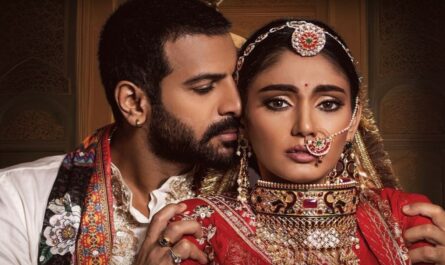
by Singer and former Bigg Boss 20 contestant Rhiti Tiwari has offered a fresh perspective on her complicated equation with Qazi Touqeer, describing him as a complete entertainer and a mature individual in an interview with Bollywood Hungama following her eviction from the reality show. Reflecting on her experience inside the house, Rhiti discussed the lessons she learnt from the controversy surrounding their relationship, her response to Salman Khan’s criticism, and the personal transformation she believes the show has brought about.
Her comments offer an interesting new chapter in a relationship that began with warmth and mutual encouragement before deteriorating into one of the season’s most talked-about confrontations. Rhiti acknowledged that Qazi had motivated her during her time in the house, while also reflecting on how her emotional reactions contributed to their fallout. Her post-show assessment places renewed attention on the bond they shared before tensions escalated.
In the conversation with Bollywood Hungama’s Anand Vaishnav, Rhiti revisited her journey after leaving Bigg Boss 20. She reflected on the controversial diss battle, admitted that her language had crossed a line, and explained why she now believes that Qazi possesses the qualities of both a mature individual and an entertainer. She also spoke about Salman Khan’s guidance, her father Manoj Tiwari’s reaction to her stint, and whether she would consider returning to the reality show.
Rhiti Tiwari Calls Qazi Touqeer the Complete Package
Rhiti’s description of Qazi as the best entertainer is particularly noteworthy given the dramatic turn their relationship took during Bigg Boss 20.
The two initially connected inside the house, with Rhiti finding encouragement in Qazi’s personality and his ability to motivate her. However, their equation subsequently became strained, eventually leading to a confrontation that attracted considerable attention from viewers.
Now that she has had an opportunity to reflect on the experience outside the Bigg Boss environment, Rhiti appears willing to acknowledge the qualities she appreciates in Qazi, even after their disagreement.
Her assessment goes beyond simply describing him as funny or entertaining. In the Bollywood Hungama interview, she discussed him as someone who combines maturity with the ability to entertain, presenting him as a contestant who brings multiple qualities to the reality-show environment.
This distinction matters because entertainment inside the Bigg Boss house is not limited to creating humorous moments or participating in tasks. A contestant’s appeal can also come from their personality, emotional intelligence, relationships with fellow housemates, and ability to keep audiences invested in their journey.
Qazi’s appeal, as reflected in Rhiti’s assessment, lies in this combination. A contestant can be entertaining without being constantly confrontational, and a person can hold their own during disagreements while still showing emotional maturity.
Rhiti’s praise is also significant because it comes after a period of visible friction between them. Rather than allowing the conflict to define her entire assessment of Qazi, she has spoken about the broader relationship and the positive influence he had on her.
Her comments do not erase the confrontation or suggest that their disagreements were insignificant. Instead, they offer a reminder that relationships formed in a high-pressure environment can contain both genuine affection and moments of serious conflict.
For viewers who followed their equation, the interview provides an opportunity to reconsider the relationship beyond its most controversial moments.
From an Early Connection to a Complicated Equation
One of the defining aspects of Rhiti and Qazi’s relationship was the contrast between its beginning and its later deterioration.
According to Rhiti’s post-show reflections reported by India Today and Moneycontrol, Qazi was among the first people she connected with inside the house. She appreciated the encouragement he offered and described him as someone who motivated her regularly.
Such encouragement can be particularly meaningful in a reality-show environment, where contestants are removed from their familiar surroundings and placed under constant scrutiny.
Inside the Bigg Boss house, ordinary interactions can take on greater significance. Contestants live together, participate in demanding tasks, navigate alliances, and deal with disagreements without the usual privacy or personal space available outside.
A supportive conversation or a reassuring gesture can therefore become an important source of comfort.
For Rhiti, Qazi’s encouragement appears to have been an important part of her early experience. She had entered the show hoping to establish herself as an artist, and the presence of someone who encouraged her ambitions may have helped her feel more confident.
However, the same relationship later became a source of emotional tension.
As their disagreements intensified, the warmth that had initially connected them gave way to accusations and confrontations. Their equation became a reminder of how quickly relationships can change when personal expectations, competition, and emotional reactions collide.
The contrast also made their story compelling for viewers. Audiences had seen the beginnings of a bond and then witnessed the deterioration of that connection.
Rhiti’s later comments suggest that the positive aspects of their relationship were not necessarily erased by the conflict. Her willingness to acknowledge Qazi’s influence indicates that she can look back on their time together and recognise the support she received, even while accepting responsibility for her own behaviour.
That is an important distinction in any post-conflict reflection: acknowledging the good in a relationship does not require pretending that nothing went wrong.
The Diss Battle That Changed Their Relationship
The controversy surrounding Rhiti and Qazi escalated during a diss battle in Bigg Boss 20.
A task intended to encourage verbal sparring became personal, with Rhiti making remarks that drew criticism from viewers and prompted a strong reaction from Qazi. The incident subsequently became a central talking point in discussions about her conduct inside the house.
Reality television often uses competitive tasks to bring out contestants’ personalities. Challenges involving performance, humour, debate, or verbal exchanges can create entertaining television while revealing how participants respond to pressure.
However, there is an important difference between a sharp exchange and a personal attack.
A diss battle may invite participants to challenge one another, but that does not automatically make every remark acceptable. When criticism moves away from the task and towards personal insults, the nature of the interaction changes.
In Rhiti’s case, the confrontation became more serious because it affected a relationship that had previously been supportive.
The episode also drew attention to the difficulty of managing emotions when a disagreement involves someone with whom a contestant has developed a connection.
People can sometimes react more strongly when they feel disappointed by someone they once trusted or admired. Expectations that would not exist in a distant or casual relationship can make a conflict feel much more personal.
That possibility offers context for understanding the intensity of the disagreement, but it does not excuse hurtful language.
Rhiti has acknowledged this distinction in her post-eviction reflections. While discussing the incident, she admitted that she had been wrong in the way she spoke and recognised the need to be more careful about how she expresses herself.
Her admission is significant because it moves the discussion away from the immediate drama and towards the consequences of behaviour.
The confrontation may have created a memorable television moment, but the more meaningful question is what the people involved take away from it.
For Rhiti, the answer appears to involve learning to separate an emotional reaction from the words she ultimately chooses to use.
Rhiti Reflects on the Importance of Controlling Her Emotions
One of the clearest themes in Rhiti’s post-show reflections is the need to avoid allowing emotions to dictate behaviour.
Speaking about her reaction to Qazi, she acknowledged that her feelings had influenced the way she handled the situation. In her conversation with Moneycontrol, she explained that she had felt hurt after believing that she had been misled about his health-related situation. She also reflected on how her emotions affected her response.
This account adds context to the conflict without removing responsibility for the language used during it.
Emotional disappointment can be difficult to process, particularly when it involves someone who has offered support or encouragement. A person may feel that a relationship has changed suddenly or that their trust has been misplaced.
Yet there is a difference between experiencing anger and deciding how to express it.
Anger is a feeling; verbal aggression is a behaviour. The two can occur together, but they are not identical.
A person may feel deeply upset while still choosing to step away from an argument, ask questions, or explain why they feel hurt. Conversely, an emotionally charged response can intensify a disagreement and make reconciliation more difficult.
The Bigg Boss environment can complicate this process because contestants are frequently expected to respond immediately. Tasks, confrontations, and group discussions often unfold in front of cameras, leaving little room for private reflection before an argument escalates.
That does not make self-control impossible, but it can make the consequences of losing control more visible.
Rhiti’s willingness to discuss her behaviour after leaving the house suggests that she has considered the difference between what she felt and how she acted.
Her reflections also demonstrate why accountability is more meaningful when it includes an understanding of what needs to change.
Simply regretting an incident may not prevent a similar situation from happening again. Learning to recognise emotional triggers, pause before responding, and choose words carefully can help turn regret into a practical lesson.
For Rhiti, this appears to be one of the most important outcomes of her Bigg Boss experience.
Salman Khan’s Reality Check Became a Turning Point
Another major part of Rhiti’s journey was the criticism she received from Bigg Boss 20 host Salman Khan.
During Weekend Ka Vaar, Salman addressed her conduct towards fellow contestants, including her language during the confrontation involving Qazi. His comments prompted a wider discussion about the way she had handled the situation and the impression her behaviour was creating.
The criticism was particularly significant because Rhiti had entered the show with ambitious expectations for her career as a singer and performer.
A reality-show appearance can provide exposure, but it also places a contestant’s conduct under intense public scrutiny. The audience does not see only the person’s professional aspirations; it also watches how they interact with others when they are frustrated, disappointed, or challenged.
Salman’s intervention therefore became more than a disagreement about one task. It forced Rhiti to confront the possibility that her behaviour was overshadowing the qualities she wanted audiences to recognise.
In her post-eviction conversation with India Today, Rhiti described the experience of being called out as a deeply significant moment. She reflected on how she initially tried to defend herself before beginning to question why she had reacted as she did.
That shift from defensiveness to reflection is important.
When people receive criticism, their first response may be to explain their intentions or argue that their behaviour has been misunderstood. While context can matter, focusing exclusively on intentions can make it difficult to acknowledge the effect of one’s actions.
A person may not intend to hurt someone, yet the words they choose can still cause harm.
Rhiti’s later reflections indicate that she has begun to recognise this distinction. She has acknowledged that her intentions did not justify the way she spoke.
The episode may have been uncomfortable for her, but it also created an opportunity to reassess how she wants to present herself publicly.
For viewers, the incident highlighted the tension between being outspoken and being respectful. A contestant can be confident and assertive without using language that crosses personal boundaries.
That balance is particularly important for public figures whose behaviour is observed by large audiences.
A New Perspective on Accountability and Personal Growth
Rhiti’s post-show assessment suggests that she does not want the controversy to be the only defining element of her Bigg Boss 20 journey.
She has spoken about becoming more level-headed and being more careful with her words. The Bollywood Hungama interview also highlighted her intention to avoid the kind of language that contributed to the confrontation.
Personal growth is often discussed in broad terms, but it becomes more meaningful when a person identifies specific behaviours they want to change.
In Rhiti’s case, the issue is not simply whether she will avoid another public argument. It is whether she can learn to manage frustration without allowing it to dictate her language.
This is a challenge that extends beyond reality television.
In professional settings, friendships, family relationships, and public interactions, disagreements are unavoidable. What often determines the outcome is not whether people experience conflict but how they respond to it.
A disagreement can become an opportunity to clarify expectations and repair trust. It can also become a lasting rupture if the people involved resort to personal attacks.
The difference frequently lies in communication.
Listening before responding, acknowledging the other person’s perspective, and accepting responsibility for hurtful remarks can help prevent a disagreement from escalating.
These actions do not require someone to abandon their own point of view. They require the person to express that point of view without disregarding the dignity of others.
Rhiti’s reflections indicate that she has recognised the importance of this balance.
Her experience also illustrates why public criticism can sometimes become a catalyst for self-examination. While online backlash can be harsh and disproportionate, feedback can prompt a person to reconsider conduct that may otherwise have gone unquestioned.
The challenge is to separate constructive criticism from personal attacks and focus on the lessons that can genuinely improve future behaviour.
For Rhiti, the most valuable outcome may ultimately be how she applies those lessons beyond the Bigg Boss house.
Qazi’s Encouragement Left a Lasting Impression
While much of the public discussion surrounding Rhiti and Qazi has focused on their confrontation, her comments also highlight the positive influence he had on her during their earlier interactions.
Rhiti has described Qazi as someone who regularly encouraged her and made her feel motivated. Her reflections suggest that the bond was meaningful to her, rather than merely a convenient alliance formed for the game.
Encouragement can play a powerful role in how people approach challenges.
When someone is trying to establish themselves professionally, supportive words can help them maintain confidence during periods of uncertainty. This can be especially true in competitive environments, where participants may constantly compare their progress with that of others.
A person who offers encouragement can become an important source of reassurance.
However, the emotional significance of that relationship can also make disagreements more painful. If someone has come to depend on another person’s support, a perceived breach of trust may produce a stronger response than an ordinary disagreement would.
This does not mean that every emotional reaction is justified. Rather, it helps explain why relationships inside reality shows can develop complicated dynamics.
Rhiti’s willingness to acknowledge Qazi’s positive influence demonstrates that she is considering the relationship in broader terms.
Her praise also suggests that she sees qualities in him that extend beyond the immediate competition. By describing him as both mature and entertaining, she has recognised the combination of personality and emotional presence that can make a contestant memorable.
Such an assessment carries particular weight because it comes from someone who experienced both the supportive and difficult sides of their equation.
For viewers, it offers a reminder that a single confrontation rarely tells the complete story of a relationship.
The Ring That Added an Emotional Dimension to Their Story
An especially touching detail from Rhiti’s post-eviction reflections concerns a ring Qazi reportedly gave her as a good-luck gesture when she left the Bigg Boss house.
According to Moneycontrol’s account of her interview, Qazi told her that the ring had brought him good luck and success and that he hoped she would achieve new heights in her own career. Rhiti described the moment as emotional, particularly because her eviction had come as a shock.
The gesture added another dimension to their relationship.
A small personal gift can carry a meaning that goes beyond its material value, especially when it is given during a significant moment. In this case, the ring appears to have represented encouragement and a wish for Rhiti’s future success.
It also contrasted with the hostility that had surrounded their relationship earlier.
The gesture does not erase the disagreement or automatically resolve every issue between them. However, it suggests that their interactions were not defined exclusively by the conflict.
People who have argued can still recognise the positive aspects of their relationship. They can also choose to move forward without pretending that the difficult moments never occurred.
In the context of Bigg Boss, where relationships are frequently examined through the lens of alliances and competition, such gestures can be especially meaningful.
Contestants may be competing for visibility, audience support, and continued participation in the show, but they are also people forming connections under unusual circumstances.
Qazi’s reported gesture appears to have been a moment of personal encouragement during an otherwise difficult exit.
For Rhiti, it became part of the story she chose to share after leaving the house.
Rhiti’s Journey Beyond the Nepotism Debate
Rhiti entered Bigg Boss 20 with the added public attention that comes from being the daughter of singer and politician Manoj Tiwari.
Her family background became part of the discussion surrounding her participation, including questions about whether her name had helped her secure an opportunity on the show.
Such debates are common in the entertainment industry, where audiences frequently examine the relationship between family connections, professional access, and individual achievement.
Being related to an established public figure can create visibility and introduce a newcomer to audiences who might otherwise be unfamiliar with them. At the same time, that visibility can bring heightened expectations and criticism.
A contestant with a famous parent may find that their behaviour is judged not only on its own merits but also in relation to the parent’s public image.
During Bigg Boss 20, Rhiti’s conduct attracted attention in this broader context. Her confrontation with Qazi and the criticism from Salman Khan prompted discussion about how she was representing herself and how her actions might reflect on her family.
However, a public figure’s family background does not tell the complete story of their individual ambitions or capabilities.
Rhiti has spoken about wanting to establish herself as an artist, and her reality-show appearance provided an opportunity to introduce her personality and aspirations to a wider audience.
The challenge now is to build on that visibility through her own work and professional decisions.
Controversy can create immediate attention, but sustained recognition generally requires more than a memorable reality-show moment. For a singer, that may mean developing a body of work, strengthening an artistic identity, and finding audiences who connect with the music.
Rhiti’s post-show reflections indicate that she is aware of the importance of moving beyond the controversy and focusing on what comes next.
Her journey will ultimately be shaped not only by what happened inside Bigg Boss 20 but also by how she chooses to use the experience in her professional life.
What Rhiti’s Experience Reveals About Reality Television
Reality television often presents contestants with an unusual combination of emotional pressure, public visibility, and limited privacy.
Participants must navigate relationships while knowing that their conversations and reactions may be watched by millions. Their behaviour can be discussed on social media, analysed in interviews, and judged by viewers who have access to only part of their lives.
This environment can magnify both positive and negative interactions.
A supportive friendship may become a central storyline, while a single argument can overshadow weeks of other experiences.
Rhiti’s journey demonstrates how quickly the public perception of a contestant can change when a relationship deteriorates or a controversial moment captures attention.
Her early connection with Qazi, their later confrontation, and her subsequent reflections have each contributed to the way audiences understand her participation.
The experience also raises a broader question about what viewers expect from reality-show contestants.
Some audiences enjoy outspoken personalities and dramatic exchanges, while others place greater value on emotional maturity, fairness, and the ability to admit mistakes.
These preferences are not mutually exclusive. A contestant can be entertaining and outspoken while still treating fellow participants respectfully.
The most memorable reality-show personalities often possess qualities that make them engaging beyond conflict alone. Humour, vulnerability, creativity, empathy, and resilience can all contribute to audience interest.
For contestants, the challenge is to remain authentic without assuming that every spontaneous reaction will be harmless.
Rhiti has said that she was herself during her time on the show, but her later reflections suggest that authenticity also requires self-awareness.
Being genuine does not mean that a person must defend every action simply because it reflects how they felt in the moment. Genuine growth can involve acknowledging that a reaction was wrong and deciding to respond differently in the future.
That is one of the more useful lessons to emerge from her experience.
Would Rhiti Tiwari Return to Bigg Boss?
Despite her difficult experience and unexpected mid-week eviction, Rhiti has expressed interest in returning to Bigg Boss if another opportunity arises.
In her post-eviction interview with India Today, she indicated that she felt she was only beginning to establish herself inside the house when her journey ended. She said she would be open to going back if given another chance.
Her interest in returning suggests that she does not view the experience exclusively through the lens of controversy.
Although the show exposed her to criticism, it also gave her a platform to present her personality and ambitions to a wider audience.
A second opportunity could allow her to approach the experience with a different perspective.
Having seen how quickly emotions can escalate and how closely contestants’ words are scrutinised, she may be more conscious of the choices she makes during disagreements.
A return would not necessarily guarantee a different outcome, but it could provide an opportunity to demonstrate whether the lessons she has discussed have influenced her behaviour.
It could also allow viewers to see another side of her personality, beyond the confrontation that became one of the most discussed aspects of her season.
For any former contestant, returning to a reality show carries both opportunity and risk. Familiarity with the format can be an advantage, but expectations are often higher because audiences already have an established impression of the person.
Rhiti would therefore have to navigate the challenge of showing personal growth without appearing to perform for public approval.
Ultimately, whether she returns or pursues other professional opportunities, the important question is how she builds on what she has learnt.
Conclusion: Rhiti Tiwari’s Praise for Qazi Offers a New Perspective on Bigg Boss 20
Rhiti Tiwari’s description of Qazi Touqeer as the best entertainer offers a fresh perspective on one of the more complicated relationships to emerge from Bigg Boss 20.
Their equation began with encouragement and a sense of connection before deteriorating into a confrontation that attracted widespread attention. In the aftermath, Rhiti has reflected on her own reactions, acknowledged that her language was wrong, and spoken positively about the qualities she sees in Qazi.
Her comments are significant because they recognise that a relationship can contain both meaningful moments and serious disagreements.
Qazi’s encouragement appears to have left a lasting impression on Rhiti, while the controversy surrounding their fallout forced her to examine how she responds when she feels hurt or disappointed.
Salman Khan’s criticism became another turning point, prompting her to reconsider the gap between her intentions and the impact of her behaviour.
The ring Qazi reportedly gave her as a good-luck gesture also added a personal dimension to their story, suggesting that their relationship included moments of warmth even after tensions had emerged.
For Rhiti, the experience appears to have been an opportunity to learn about emotional control, accountability, and the importance of choosing words carefully.
For viewers, her reflections offer a reminder that reality television captures people during unusually intense circumstances, and that a single confrontation does not necessarily represent the entirety of a relationship.
Her praise for Qazi does not erase what happened between them, just as her admission of mistakes does not reduce her entire journey to controversy.
Instead, it adds nuance to the story.
As Rhiti considers her next professional steps and remains open to a possible return to Bigg Boss, her challenge will be to translate the lessons she has discussed into lasting personal and professional growth.
Qazi, meanwhile, remains central to the story she has chosen to tell about her time in the house: not merely as the person with whom she had a public disagreement, but as someone she credits with offering encouragement and making a meaningful impact.
Ultimately, Rhiti’s post-show reflections show that the most revealing part of a reality-show journey may sometimes come after the cameras stop rolling, when contestants have the opportunity to revisit their decisions, recognise their mistakes, and reconsider the people who shaped their experience.