 by
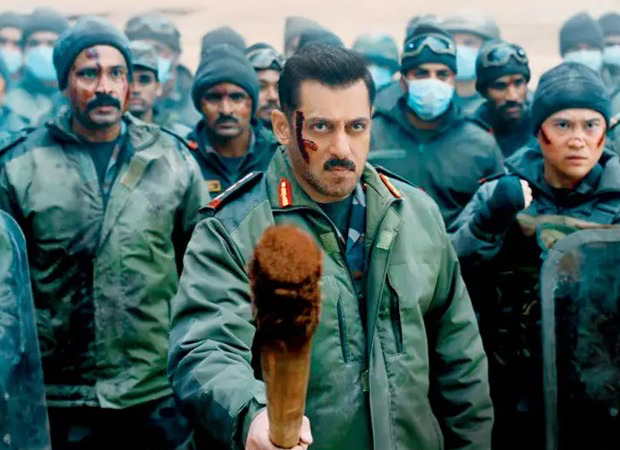
by Salman Khan’s much-awaited war drama Maatrubhumi has crossed a significant hurdle on its journey to the big screen. The film, which was originally announced under the title Battle Of Galwan, has reportedly received a No Objection Certificate (NOC) from India’s Ministry of Information and Broadcasting after undergoing substantial changes.
The development is particularly important because the film is inspired by the 2020 India-China border conflict, a subject that became increasingly sensitive as diplomatic relations between the two countries evolved. According to a recent report by Bollywood Hungama, officials were satisfied with the revised version submitted by the makers and subsequently cleared it for public exhibition.
However, the government clearance does not yet mean that Maatrubhumi has completed every stage required before its theatrical release. The film still has to undergo certification by the Central Board of Film Certification (CBFC), with reports suggesting that the makers could be targeting November 13, 2026, if the certification process is completed in time.
Directed by Apoorva Lakhia and featuring Salman Khan opposite Chitrangda Singh, Maatrubhumi has therefore become much more than another Salman Khan action vehicle. Its journey reflects the complicated relationship between cinema, contemporary geopolitics, national memory and changing diplomatic realities.
From
Battle Of Galwan
to
Maatrubhumi
The evolution of the project begins with its original identity.
When the film was first announced, it was titled Battle Of Galwan, immediately connecting the project with the violent 2020 confrontation between Indian and Chinese troops in eastern Ladakh. The title itself suggested a direct cinematic treatment of a specific real-world episode.
That association also established expectations.
Audiences naturally anticipated a military drama focused heavily on the confrontation, soldiers and the India-China conflict. But translating a recent geopolitical event into mainstream cinema can be considerably more complicated than adapting an older historical episode.
The diplomatic circumstances surrounding the subject can change while a movie is still being made.
That appears to have happened with Maatrubhumi.
The project was subsequently renamed Maatrubhumi, creating some distance from the original title and its direct association with Galwan. The change also hinted at a broader thematic approach rather than a straightforward recreation of the 2020 clash.
Earlier reports indicated that the filmmakers had undertaken extensive changes. The revised version reportedly introduced fictional elements, romantic material and additional character backstories.
That was a substantial intervention for a major production.
Rather than simply making a few cosmetic edits, the filmmakers were reportedly reshaping the movie itself.
Why the China angle became such a major issue
The central difficulty surrounding Maatrubhumi has been the film’s treatment of China.
The movie is rooted in a real conflict, but the political environment surrounding that conflict is not static. India-China relations have experienced considerable tension since the 2020 border confrontation, while more recent diplomatic developments have pointed toward an attempt to stabilize the relationship.
That changing environment reportedly became an important consideration for the film.
Earlier reports suggested that the Ministry of Defence had reservations about the project’s portrayal of China. The makers were reportedly asked to make changes to direct references to China, leading to a more fictionalized treatment of the story.
The latest development represents a major shift.
According to Bollywood Hungama, officials from the Information and Broadcasting Ministry were satisfied with the revised version and issued an NOC. The report also states that the new version has been substantially altered and presents India-China relations in a positive light.
This is arguably the most important creative development in the film’s journey so far.
A war film that is no longer simply about war
The revised Maatrubhumi could ultimately be interesting precisely because it has moved away from being a conventional conflict-driven narrative.
War films traditionally depend on clear dramatic divisions: one side represents the protagonist, while the other becomes the opposing force. Such storytelling can be effective because it creates immediate emotional stakes.
But contemporary geopolitical relationships are considerably more complicated.
A country can be a military adversary in one historical moment and an important diplomatic or economic partner in another. Cinema dealing with recent conflicts therefore has to negotiate between historical memory and present-day realities.
Maatrubhumi now appears to be attempting that balance.
The reported decision to portray India-China relations more positively could transform the tone of the movie. Instead of presenting the story exclusively through confrontation, the revised film may have more room to explore soldiers, duty, personal relationships, sacrifice and the broader human cost of conflict.
That does not necessarily make the story less patriotic.
In fact, it could make the concept more nuanced.
Patriotism in cinema does not always have to depend upon portraying another nation as an uncomplicated villain. A film can celebrate courage and national service while simultaneously recognizing that international relationships can evolve.
The significance of the government NOC
The reported NOC is particularly significant because it distinguishes the film’s current position from the uncertainty that surrounded it earlier.
An NOC from the Information and Broadcasting Ministry means the revised version has cleared an important governmental hurdle. It allows the project to move forward toward the next stage of the theatrical process.
But it is important not to confuse this with final certification.
The CBFC process remains pending. The makers are expected to submit the film to the certification board, after which the final release plan can become clearer.
A recent report suggested that the film could be viewed by the CBFC in early October, while possible release windows were also being discussed.
Therefore, the current situation is best understood as a major step forward rather than the final confirmation of a release date.
That distinction is important, especially because the movie has already experienced multiple changes and postponements.
Salman Khan’s role in the project
For Salman Khan, Maatrubhumi represents an interesting departure from the kind of mainstream entertainment with which he is most strongly associated.
The actor’s filmography contains numerous action-oriented blockbusters, but a story inspired by a recent military conflict carries a different set of expectations.
The character has to work within a narrative where military duty and personal emotion coexist.
The reported reshoots and additional backstory could be especially relevant here. If the revised film has expanded its emotional components, Salman Khan’s character may no longer function simply as an action hero moving through battlefield sequences.
Instead, the film could place greater emphasis on the person behind the uniform.
That distinction matters because audiences tend to connect more strongly with war stories when the soldiers are presented as individuals rather than simply symbols of military strength.
Chitrangda Singh adds another dimension
Chitrangda Singh stars opposite Salman Khan, giving the film a prominent female lead alongside its military and action elements.
Her presence could prove particularly important if the revised narrative gives more space to relationships and character development.
War dramas can sometimes become overwhelmingly focused on battlefield action, leaving personal relationships as secondary elements. A stronger emotional storyline can make the consequences of conflict more immediate.
Rather than simply asking audiences to care about a military operation, a character-driven story can ask them to care about the people whose lives are affected by it.
This is where Chitrangda Singh’s role could become central to the film’s emotional architecture.
The exact nature of her character has not been fully detailed publicly, meaning audiences will have to wait for the finished film to understand how extensively the revised version uses her storyline.
Apoorva Lakhia’s challenge
The director of Maatrubhumi, Apoorva Lakhia, faces an unusually complicated filmmaking challenge.
The project has reportedly undergone significant alterations while retaining its original foundation. That requires a director to ensure that the final movie feels coherent rather than stitched together from different versions.
Reshoots can change pacing, character motivations and even the thematic balance of a film.
If substantial portions of a screenplay are modified after filming, the director has to make sure that new material integrates naturally with existing footage.
Maatrubhumi therefore represents not just an ambitious action project but also a considerable exercise in cinematic restructuring.
The ultimate test will be whether audiences can feel the changes or whether the revised material becomes seamless enough that the movie feels like it was always designed this way.
The fascinating question of historical adaptation
One of the biggest questions surrounding Maatrubhumi is how much freedom filmmakers should have when dramatizing a recent historical event.
The closer a movie is to contemporary history, the more complicated the adaptation becomes.
A filmmaker wants emotional freedom, dramatic structure and compelling characters. But a story based on a recognizable conflict also carries expectations of historical responsibility.
There is a fundamental difference between historical fiction and documentary filmmaking.
A commercial film does not have to reproduce every event exactly as it happened. Characters can be combined, timelines compressed and fictional situations introduced.
But when the underlying event remains politically sensitive, fictionalization can generate controversy.
Maatrubhumi appears to have responded to precisely this problem by moving further toward fictional storytelling.
The title change was an early indication of that transition. The subsequent reported reshoots appear to have taken it even further.
Why the positive India-China angle matters
The most intriguing element of the latest development is the reported positive portrayal of India-China relations.
That phrase could have significant implications for the movie’s final message.
Instead of ending with a simple narrative of hostility, the revised version may frame the conflict within a larger understanding of diplomacy and coexistence.
This is particularly relevant given recent developments in the bilateral relationship.
Against that backdrop, a film released in late 2026 that focuses heavily on an earlier period of hostility would inevitably be viewed through the lens of present circumstances.
The filmmakers therefore appear to have found a way to preserve the film’s dramatic foundation while making the narrative more compatible with the current diplomatic climate.
Can a war film promote peace?
That is perhaps the most interesting question Maatrubhumi now raises.
At first glance, a film inspired by a border conflict sounds like a story built around confrontation.
But the revised project could potentially move in the opposite direction.
The reported thematic direction suggests a film that can remember sacrifice without necessarily glorifying permanent hostility.
A war story can remember sacrifice while still arguing that war should not become a permanent state of relations.
That could give Maatrubhumi a broader emotional identity.
Its soldiers can remain brave.
Their sacrifices can remain meaningful.
The historical conflict can remain part of the story.
Yet the conclusion can still acknowledge that diplomacy and peaceful relations matter.
That is a more complex proposition than a straightforward patriotic action film.
The commercial stakes are equally high
There is also a significant business question surrounding the project.
Salman Khan remains one of Indian cinema’s biggest theatrical stars, and a major Salman release can command enormous attention.
But Maatrubhumi has already spent considerable time in development and undergone extensive changes. The longer a film remains in the news before release, the greater the expectations can become.
Audiences now know that the movie has been renamed, delayed, reshot and substantially revised.
That history itself has created curiosity.
People who might not have been following the film initially may now want to see what changed.
In this sense, the production difficulties could inadvertently have generated a new marketing advantage.
The question of “What is the film actually like now?” could become one of its strongest hooks.
The potential release window
The makers are reportedly considering a theatrical release once the certification process is completed. A November release has previously been discussed, while other reports have suggested Diwali or Christmas as possible windows.
The timing would be strategically significant.
The post-Diwali period can provide films with strong audience momentum, particularly when families are still in a festive mood and theatrical attendance remains active.
However, the exact release date should not be treated as final until the certification and scheduling processes are completed.
The makers will also have to consider the competitive landscape. A Salman Khan film requires sufficient screen space and a promotional campaign capable of turning curiosity into theatrical demand.
A very different film from the one audiences originally expected
Perhaps the biggest takeaway from the latest development is that Maatrubhumi may now be a fundamentally different movie from the one audiences imagined when they first heard the title Battle Of Galwan.
The original concept appeared to promise a direct, contemporary military drama based around the 2020 confrontation.
The revised project appears more fictionalized, more relationship-driven and more cautious in its treatment of China.
That transformation could either strengthen the film or change its identity completely.
For some viewers, the fictionalization may make the story more accessible. For others, those expecting a direct Galwan-based account may find the final product considerably different from their expectations.
But from a filmmaking perspective, the changes demonstrate how cinema can be shaped by circumstances outside the screenplay.
Movies do not exist in political isolation.
A story conceived during one geopolitical moment can enter production under another and reach cinemas in an entirely different environment.
Maatrubhumi is an unusually clear example of that phenomenon.
The larger cultural conversation
The film’s journey also opens up a broader conversation about how Indian cinema portrays neighboring countries.
For decades, popular Indian films have frequently used geopolitical conflict as a dramatic device. Pakistan, China and other external adversaries have appeared in different forms depending on the genre and political context.
But modern audiences are increasingly exposed to international news, diplomacy and global culture in real time.
A simplistic portrayal of international relations can therefore feel disconnected from reality.
Maatrubhumi’s reported shift toward a more positive India-China relationship could reflect a growing awareness that patriotism and geopolitical complexity can coexist.
The film does not have to abandon its Indian perspective to acknowledge that international relationships change.
It can tell a story about national courage while also recognizing the importance of peace.
That balance may ultimately determine whether the film feels dated or contemporary.
What happens next?
The immediate priority for the makers is certification.
The government-level NOC is an important breakthrough, but the film still needs to clear the CBFC process before a theatrical release can be finalized. Recent reporting suggests the film is moving into that stage now.
Once certification is complete, the makers can make a definitive announcement about the release date and begin the final promotional campaign.
That campaign could be particularly interesting because the marketing strategy will have to introduce audiences to the revised identity of the movie.
Will the makers emphasize Salman Khan’s action image?
Will they focus on the emotional relationship at the center of the story?
Will they promote the military aspect?
Or will the film’s “war and peace” theme become its primary selling point?
The answer could reveal how dramatically the project has evolved.
Final thoughts
Maatrubhumi has had an unusually complicated journey to the cinema.
What began as Battle Of Galwan, a film directly associated with the 2020 India-China conflict, has gone through a title change, reported reshoots, creative restructuring and prolonged uncertainty surrounding its government clearance.
Now, the project appears to have reached a crucial turning point.
The Information and Broadcasting Ministry has reportedly issued an NOC after approving the revised version, while the film is expected to proceed toward CBFC certification.
The most striking reported change is the film’s new approach to India-China relations. Rather than presenting the relationship exclusively through the lens of confrontation, the revised version reportedly portrays it in a more positive light.
That could make Maatrubhumi more than a conventional war drama.
It could become a story about how memories of conflict coexist with the possibility of reconciliation.
For Salman Khan, it represents another major theatrical project with substantial expectations attached to it. For Chitrangda Singh, it offers an opportunity to participate in a large-scale production whose emotional dimension may have grown considerably through the revisions. And for Apoorva Lakhia, it is a test of whether an extensively reworked film can emerge as a unified cinematic experience.
Most importantly, the film’s long journey demonstrates how quickly the context surrounding a movie can change.
A story inspired by a border conflict can begin as a tale of confrontation and eventually evolve into something more reflective about diplomacy, relationships and the desire for peace.
Whether Maatrubhumi ultimately arrives on its targeted release date or takes a different route will depend on the remaining certification and scheduling process. But after months of uncertainty, the project has finally taken a major step toward the big screen.
And when audiences eventually watch the finished film, they may be watching not only a story about a conflict that happened in 2020, but also a cinematic reflection of how the world around that conflict continued to change.