 by
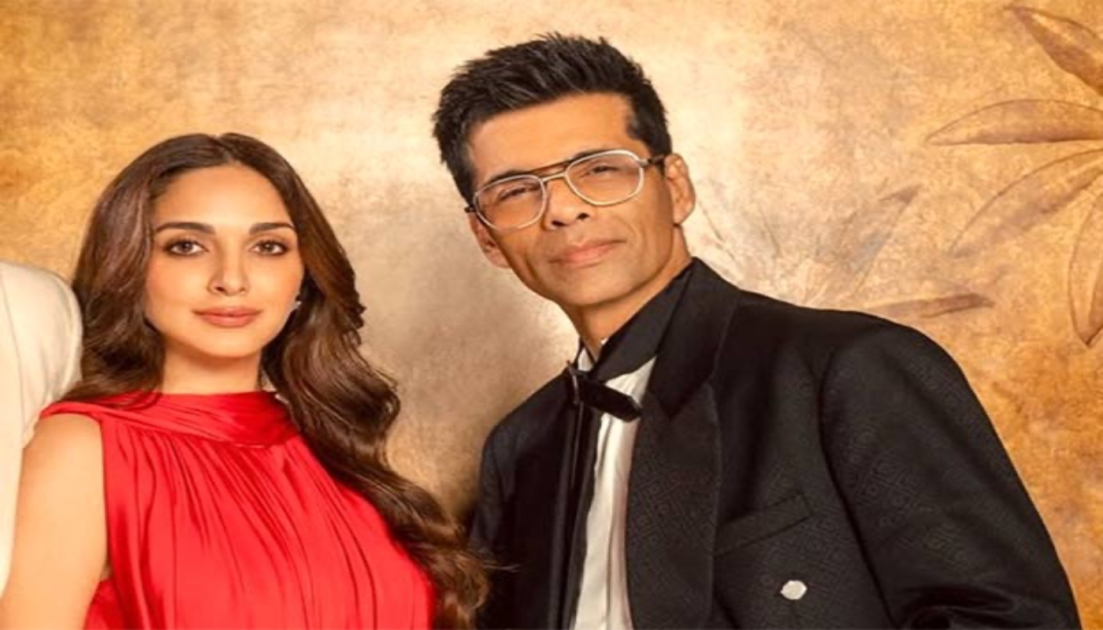
Karan Johar has never been particularly reserved when it comes to expressing his admiration for actors he has worked with, and his latest appearance alongside Kiara Advani and Sidharth Malhotra on Koffee With Karan 9 offered another memorable example. During the conversation, the filmmaker showered Kiara with praise for her performance in Toxic, describing her as the best part of the film and once again referring to her as his lucky mascot. His affectionate remark, “We never had a wrong beat,” highlighted the longstanding professional understanding between the filmmaker and the actress, whose collaborations have extended across several successful projects.
The latest episode, which brought the married actors back to the iconic Koffee couch, offered considerably more than entertaining relationship revelations and playful exchanges. From discussions about parenthood and professional ambitions to conversations about the pressures of the film industry, the episode provided an interesting glimpse into how two established performers navigate their personal and professional lives. However, Karan’s appreciation of Kiara became one of its particularly noteworthy moments, especially because it reflected a professional relationship that has developed over several years.
Speaking directly to Kiara, Karan expressed his admiration for her work in Toxic, saying, “First thing I wanna tell you Kiara how much I loved you in Toxic, you were the best part of the film. It was amazing, you performed like a real dream. At least for me you are a lucky mascot, we never had a wrong beat.”
His words were particularly significant because they connected Kiara’s latest performance with the history of their professional collaborations. Rather than offering a conventional compliment about an individual performance, Karan acknowledged the consistency of their working relationship and the positive association he has developed with the actress over the years.
Karan Johar and Kiara Advani: A Professional Association Built Over Several Years
The association between Karan Johar and Kiara Advani dates back several years and includes projects across different genres. Their professional relationship has been shaped by films such as Lust Stories, Good Newwz, Shershaah and Jugjugg Jeeyo, each representing a different phase of Kiara’s evolving career.
Their first notable collaboration came through Lust Stories, the Netflix anthology film that explored contemporary relationships, intimacy and changing social expectations. The project provided Kiara with an opportunity to participate in a narrative that moved beyond conventional commercial storytelling.
Her involvement in the anthology also demonstrated her willingness to explore characters and situations that required a different approach from the performances audiences traditionally associated with mainstream Hindi cinema.
The collaboration continued with Good Newwz, a comedy-drama featuring an ensemble cast. The film allowed Kiara to explore a lighter, more entertaining screen presence while participating in a story that combined humour with a family-oriented narrative.
However, Shershaah became another important title in the association. The biographical war drama, featuring Sidharth Malhotra in the lead role, brought Kiara into a romantic narrative that resonated strongly with audiences. Her portrayal contributed an emotional dimension to the film, which received considerable attention for its depiction of the relationship between Captain Vikram Batra and Dimple Cheema.
The two actors subsequently reunited in Jugjugg Jeeyo, a family comedy-drama produced by Dharma Productions. The film explored marriage, relationships, generational expectations and the complexities of family life through a commercially accessible narrative.
These collaborations help explain why Karan’s description of Kiara as his lucky mascot carries a personal professional significance. The actress has been associated with several projects connected to his production house, and their working relationship has continued across different storytelling formats.
For a filmmaker who has worked with numerous actors throughout his career, maintaining a consistent creative understanding with a performer is valuable. Karan’s latest comments suggest that he considers his association with Kiara one of those particularly comfortable professional relationships.
Why the Lucky Mascot Comment Is Significant
Karan’s reference to Kiara as his lucky mascot was not entirely new. During the trailer launch of Jugjugg Jeeyo in 2022, he had also described her as the lucky mascot of Dharma Productions.
His latest statement on Koffee With Karan 9 therefore revisited an affectionate observation he had made publicly several years earlier.
The expression is interesting because it reflects a familiar aspect of the entertainment industry. Filmmakers and production houses frequently develop long-standing associations with particular actors, directors, writers and technicians whose collaborations become an important part of their creative journeys.
Sometimes these relationships develop because of professional compatibility. At other times, they are strengthened by shared experiences, successful collaborations and an understanding of each other’s working styles.
In Kiara’s case, the association with Dharma Productions has allowed her to participate in projects ranging from unconventional anthology storytelling to commercial comedies and emotionally driven romantic dramas.
Calling someone a lucky mascot is generally an affectionate expression rather than a literal assessment of professional success. Nevertheless, Karan’s repeated use of the description suggests that he associates Kiara with positive memories and a particularly comfortable creative partnership.
His additional remark, “We never had a wrong beat,” makes the sentiment even more meaningful.
The phrase communicates consistency, familiarity and an absence of professional friction. It suggests that the filmmaker values not only the results of their collaborations but also the process of working together.
For an actress whose career has involved exploring different genres and screen identities, having filmmakers publicly recognise her professional contribution is an important form of acknowledgement.
Kiara Advani’s Performance in Toxic Receives Karan’s Appreciation
Another important element of Karan’s compliment was his specific reference to Toxic.
By describing Kiara as the best part of the film, he directed attention towards her individual contribution rather than simply praising the project as a whole.
The film has been a significant talking point in Kiara’s recent professional journey, particularly because of the conversations surrounding her role and the public response to its promotional material.
During her earlier appearance on Koffee With Karan 9 alongside Sidharth, Kiara also discussed the criticism surrounding her intimate sequences with Yash. Some sections of social media questioned her decision to participate in bold scenes despite being married.
The discussion highlighted a familiar gender-based double standard in entertainment. Female performers frequently face scrutiny over romantic and intimate scenes, with their personal relationships sometimes becoming part of the public conversation surrounding their professional choices.
Kiara explained that Sidharth had never been bothered by the criticism and had not brought the subject up between them. She also acknowledged that many people online had already started identifying the hypocrisy in the reaction, which meant she did not feel compelled to justify her professional decisions.
The subject offered an important perspective on the distinction between an actor’s personal identity and professional responsibilities.
Actors regularly portray characters whose decisions, relationships and experiences may differ considerably from their own lives. Their work requires them to inhabit fictional circumstances, and the expectation that their professional choices should always conform to public assumptions about their personal relationships can create unnecessary restrictions.
Kiara’s comments reflected her understanding of this distinction.
Her experience with Toxic also became particularly relevant when she discussed the film’s reception. She admitted that the initial response was emotionally difficult because the team had not anticipated the way the film’s performance unfolded.
However, she also found encouragement in the appreciation she received for stepping outside her comfort zone.
Karan’s praise on the latest episode consequently highlighted another dimension of the experience: the importance of recognising an actor’s contribution independently of a film’s overall reception.
A film’s commercial performance and an individual actor’s work are not necessarily identical measures of success. A project may encounter challenges while particular performances still generate appreciation and create opportunities for future artistic growth.
Karan’s compliment acknowledged Kiara’s performance from precisely that perspective.
Koffee With Karan 9 Brings Kiara and Sidharth Back to the Couch
The episode featuring Kiara and Sidharth was also notable because it marked another chapter in their relationship with the long-running celebrity chat show.
Their appearance offered an opportunity to revisit different phases of their lives, from their earlier relationship and marriage to their experiences as parents.
Karan opened the conversation by expressing his happiness at having them back on the show. The discussion included references to their daughter, Sarayaah, and the family’s expanding responsibilities.
The couple also shared details about their approach to parenthood and the changes that having a child has brought to their priorities.
One particularly thoughtful part of the conversation involved Sidharth discussing the importance of valuing the present stage of family life.
He reflected on the relatively short period during which children, parents and grandparents can all be together in the same phase of life. He explained that although professional ambitions remain important, personal happiness should not be entirely dependent on career successes and disappointments.
His comments introduced a more reflective tone into an episode otherwise filled with humour and entertainment.
For two actors working in an industry that constantly measures success through public attention, box-office performance and professional recognition, the ability to maintain perspective is an interesting subject.
Their discussion suggested that becoming parents has encouraged them to reconsider how they distribute their time and energy.
Sidharth also spoke about adjusting his schedule around his daughter, describing it as an important part of being a father.
Kiara, meanwhile, shared some lighthearted observations about their everyday relationship. Her responses revealed an affectionate understanding of Sidharth’s habits, including his tendency to use his phone before sleeping.
The couple’s playful exchanges helped balance the more serious conversations about their careers and family responsibilities.
Kiara’s Response to Questions About Marriage and Professional Independence
One of the most interesting exchanges during the episode came when Kiara was asked about the criticism directed at married actresses who participate in intimate scenes.
Her response was direct and uncomplicated: “Grow up.”
The statement captured her frustration with the expectation that marriage should determine the professional boundaries of female performers.
The question itself reflected a wider cultural conversation about how society views women in the entertainment industry after marriage.
Although male actors frequently continue portraying romantic characters regardless of their marital status, female performers can face additional scrutiny when they undertake similar roles.
Such reactions reveal how traditional expectations about marriage and gender continue to influence public conversations surrounding popular culture.
Kiara’s position was particularly interesting because she did not present her professional choices as something requiring permission or elaborate justification.
Her earlier explanation that Sidharth had never raised the issue also demonstrated the importance of mutual understanding within a relationship.
Rather than allowing online criticism to dictate their personal decisions, the couple appeared comfortable maintaining a distinction between their professional commitments and private life.
Karan’s involvement in the conversation further emphasised the entertainment industry’s responsibility to acknowledge these double standards.
For actresses working in contemporary Hindi cinema, the discussion remains relevant because professional opportunities increasingly involve characters with complex relationships, conflicting motivations and unconventional personal circumstances.
Restricting female performers through assumptions about their marital status would ultimately limit the range of stories they can participate in.
Karan Johar’s Koffee Couch Continues to Create Memorable Celebrity Conversations
Over the years, Koffee With Karan has developed a distinct identity within Indian entertainment television.
The programme is recognised for its combination of celebrity interviews, rapid-fire questions, playful controversies and personal revelations.
Its appeal comes partly from the opportunity to see actors outside their usual promotional environments.
Film premieres, press conferences and promotional interviews generally revolve around specific projects. The Koffee couch, however, encourages celebrities to discuss their friendships, relationships, professional experiences and personal opinions.
Karan’s interviewing style also contributes to the programme’s identity.
His familiarity with the entertainment industry allows him to approach guests through shared professional experiences, sometimes creating conversations that feel more like exchanges between longstanding acquaintances than conventional interviews.
His relationship with Kiara is a particularly clear example.
Because they have collaborated on several projects, Karan can discuss her career through personal professional observations rather than relying entirely on publicly available information.
His praise for her work in Toxic therefore felt connected to their history.
The episode also demonstrated the programme’s ability to move between different conversational tones.
One moment involved discussions about family and parenting, while another featured playful questions about celebrity habits, romantic relationships and professional friendships.
The rapid-fire round provided some of the episode’s lighter moments.
Kiara was asked to identify the Bollywood film she would want her daughter to watch while growing up. She selected 3 Idiots, describing it as a lovely film.
She also mentioned that she would enjoy playing a character similar to Nikki from Obsession, acknowledging her interest in challenging roles.
When asked about her relationship with Sidharth through a film title, she chose Kuch Kuch Hota Hai, prompting an affectionate reaction from the host.
The questions offered an entertaining glimpse into her personality while also highlighting her interest in cinema and acting.
Sidharth Malhotra Adds His Own Perspective to the Episode
Although Karan’s compliment to Kiara became a major talking point, Sidharth’s presence added another dimension to the conversation.
The actor participated in discussions about marriage, parenthood, professional relationships and the changing nature of personal priorities.
His responses frequently combined humour with thoughtful observations.
One particularly interesting moment involved his description of what he would do if he woke up as Karan Johar. He joked about calling Sidharth to offer him another family film or a role in a love story.
The exchange reflected the comfortable professional relationship between the two men.
Sidharth also discussed the pressures surrounding film criticism and paid publicity.
He suggested that criticism should ideally offer meaningful opinions rather than simply discouraging audiences from watching films.
His comments touched upon a larger issue in contemporary Bollywood: the increasingly complicated relationship between filmmakers, critics, publicity campaigns and audiences.
Social media has changed how films are discussed and evaluated. Public opinion can develop rapidly, sometimes before audiences have had sufficient opportunity to experience a project themselves.
For actors and filmmakers, navigating these conversations has become another part of maintaining a public career.
Sidharth’s observations suggested that constructive criticism and genuine industry support remain important.
Kiara Advani’s Career: The Importance of Choosing Different Roles
Karan’s appreciation also provides an opportunity to consider Kiara’s career trajectory.
Since entering Hindi cinema, the actress has gradually established herself through a combination of commercial entertainers, romantic dramas, comedies and more unconventional projects.
Her filmography demonstrates an interest in moving between different kinds of characters.
Kabir Singh brought her widespread mainstream recognition, while Good Newwz showcased her ability to participate in ensemble comedy.
Guilty offered another kind of opportunity, placing her in a story that explored difficult questions surrounding consent, privilege and social perceptions.
Shershaah further expanded her association with emotionally driven storytelling, while Bhool Bhulaiyaa 2 demonstrated her participation in a commercially successful horror-comedy format.
These projects represent different demands on an actor.
Commercial entertainers often require performers to balance humour, romance and audience expectations, whereas emotionally demanding dramas may require a more restrained and psychologically detailed approach.
For an actress working in a competitive industry, the ability to move between genres can help create a broader professional identity.
Her experience with Toxic appears to have represented another step towards exploring a different screen presence.
Kiara’s own description of the experience as defining because she stepped outside her comfort zone suggests that the role held personal artistic importance.
This is particularly relevant in an industry where actors can sometimes become strongly associated with a specific image.
Breaking away from familiar character types requires both professional confidence and a willingness to accept uncertainty.
Karan’s appreciation of her performance recognises that effort.
The Importance of Professional Relationships in Bollywood
The relationship between Karan and Kiara also reflects the importance of professional networks within the film industry.
Filmmaking is a collaborative process involving directors, producers, actors, writers, cinematographers, editors and numerous other professionals.
Successful collaborations often depend on trust and an understanding of how different individuals approach their responsibilities.
When a filmmaker repeatedly works with the same performer, familiarity can make the creative process more comfortable.
The director understands the actor’s strengths, while the actor becomes increasingly familiar with the filmmaker’s expectations and storytelling preferences.
However, maintaining such a relationship also requires the willingness to explore new material rather than repeatedly relying on the same creative formula.
Karan’s association with Kiara has extended across films with different tones and storytelling approaches.
That variety is important because it suggests that their working relationship has not been limited to one particular kind of role.
His description of their professional association as one in which they have never had a wrong beat can therefore be understood as an acknowledgement of creative compatibility.
For Kiara, such professional relationships can also provide opportunities to continue exploring her abilities within an established production environment.
For filmmakers, working with actors they trust can contribute to a more confident creative process.
Why Karan’s Compliment Resonated Beyond the Episode
Celebrity compliments are common during promotional appearances, but certain statements attract attention because they communicate something about relationships that have developed over time.
Karan’s description of Kiara as his lucky mascot stands out because he has used the expression previously.
It connects their latest conversation with an earlier public acknowledgement made during the Jugjugg Jeeyo trailer launch in 2022.
The repetition also gives the comment a sense of continuity.
Rather than presenting the compliment as an isolated reaction to Toxic, Karan placed it within a longer professional association.
His words also highlighted an important distinction between recognising an actor’s popularity and appreciating their actual work.
Calling Kiara the best part of Toxic was a direct statement about her performance.
The filmmaker did not simply congratulate her on participating in a high-profile project. He specifically acknowledged the quality of her acting and described her performance as a dream.
For performers, such recognition from filmmakers who have worked with them across multiple projects can carry particular value.
It demonstrates that their work continues to attract attention from people familiar with their abilities.
It also reinforces the importance of looking at individual performances separately from the overall fortunes of a film.
A Memorable Episode for Kiara Advani and Karan Johar
The latest Koffee With Karan 9 episode successfully brought together several aspects of Kiara and Sidharth’s lives.
Their relationship provided the foundation for entertaining conversations, while their experiences as parents introduced a more personal dimension.
Their professional journeys offered opportunities to discuss the pressures of the film industry, the challenges of public criticism and the importance of maintaining a healthy distinction between personal relationships and professional responsibilities.
Within this broader conversation, Karan’s appreciation of Kiara became an especially meaningful moment.
His remarks about Toxic recognised her willingness to explore a different kind of performance, while his lucky mascot comment revisited the longstanding professional association between them.
The phrase “We never had a wrong beat” was perhaps the most telling part of his compliment because it captured the consistency and comfort that have characterised their collaborations.
For Kiara, the recognition adds another positive moment to a career that continues to evolve through different genres and creative opportunities.
For Karan, it reinforces his appreciation for an actress whose professional journey has been closely connected with several Dharma Productions projects.
Ultimately, the episode was more than another celebrity appearance filled with playful questions and entertaining revelations. It offered a reminder that relationships within the entertainment industry are often built through years of shared creative experiences.
And while the term lucky mascot may have been delivered affectionately, Karan’s larger message was clear: his admiration for Kiara extends beyond individual films.
As their professional association continues, audiences will undoubtedly remain interested in seeing what other creative collaborations emerge from a partnership that the filmmaker himself describes as one that has never missed a beat.