 by
Indian television has explored countless interpretations of love, marriage, family relationships and emotional conflicts. However, the stories that often leave a lasting impression are those that find something extraordinary within ordinary relationships. Moving beyond the excitement of new romance, some narratives examine what happens when two people who have spent years together begin looking at life from different perspectives. This is precisely the emotional territory that Ekta Kapoor hopes to explore through her upcoming romantic family drama, Dil Ki Bewafaiyaan.
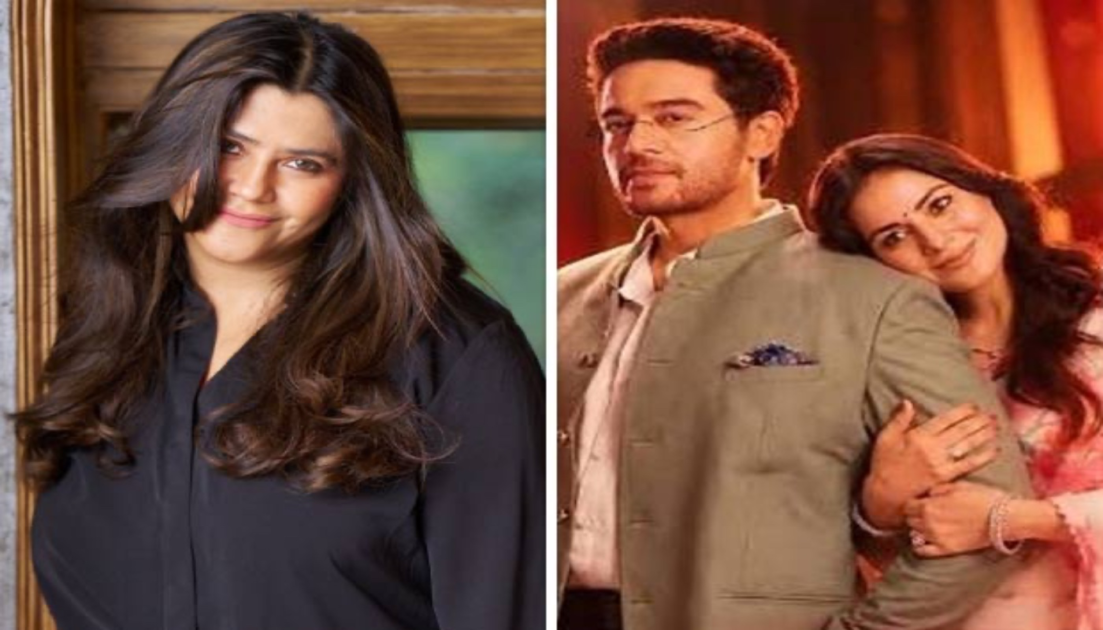
Featuring Gaurav Khanna and Shraddha Arya in the lead roles, the upcoming Star Plus show has already generated considerable curiosity, particularly because it brings two popular television performers together for the first time. Produced under the banner of Balaji Telefilms, the series promises to examine the complicated relationship between love, stability, personal ambitions and the desire for something new.
While the title might initially suggest a conventional story involving betrayal and heartbreak, producer Ekta Kapoor has offered a different perspective on the creative thinking behind the project. In a video shared on social media, she explained that the central idea emerged from a question about marriage: Can two people remain happy in the same relationship when they have different expectations and aspirations from life?
It is an interesting question, particularly because relationships do not necessarily fall apart because love disappears. Sometimes, the people involved simply begin wanting different things. One partner may feel fulfilled by the life they have created together, while the other may begin wondering whether there is something more waiting beyond their familiar routine.
Through Dil Ki Bewafaiyaan, Kapoor intends to bring these contrasting emotional experiences to television, offering viewers a relationship drama that looks beyond the conventional definition of marital happiness.
The show is scheduled to premiere on November 24, 2026, at 9 PM on Star Plus and JioHotstar.
Ekta Kapoor’s Creative Inspiration: The Conflict Between Excitement and Stability
Explaining the idea behind Dil Ki Bewafaiyaan, Ekta Kapoor discussed a universal emotional conflict that many individuals experience at different stages of life: the desire for excitement versus the comfort of stability.
In her explanation, Kapoor described how people often find themselves caught between wanting to explore new possibilities and appreciating the security of what they already have.
She explained, “Har insaan ki life mein ek constant dichotomy rehti hai, which is excitement versus stability. Hum udne aur judne ke beech mein phanse reh jaate hain.”
The thought captures a familiar contradiction. People naturally want to experience new things, discover different possibilities and occasionally step outside their established routines. At the same time, they seek emotional security, familiarity and the reassuring feeling of belonging somewhere.
Kapoor further explained that stability can sometimes make life feel predictable, while pursuing something unfamiliar brings excitement. However, the excitement of exploration does not necessarily replace the comfort of having a secure emotional foundation.
Her intention is to explore both sides of this experience rather than automatically presenting one as correct and the other as wrong.
This becomes particularly interesting when the conflict exists within a marriage. Two people may share a home, family, memories and years of companionship, yet their personal expectations can evolve differently.
One person might be perfectly comfortable with the life they have created, while the other begins questioning whether their individual dreams have received enough attention.
Neither perspective necessarily makes someone selfish or unreasonable.
The challenge emerges when both individuals struggle to understand why their partner does not experience happiness in the same way.
By placing this contradiction at the centre of its narrative, Dil Ki Bewafaiyaan appears interested in examining the emotional conversations that can emerge when a couple discovers that their definitions of fulfilment are no longer identical.
Manav and Janki: Two People, Two Different Ideas of Happiness
The show’s central relationship revolves around Manav, played by Gaurav Khanna, and Janki, portrayed by Shraddha Arya.
According to Kapoor’s explanation, the characters approach their shared life from different emotional positions.
Janki finds happiness in the small moments and the life she has built with Manav. For her, the relationship represents familiarity, companionship and the comfort of having created something meaningful together.
Manav, however, reaches a stage where he begins questioning his own aspirations. He pauses to consider what he wants for himself and whether his current circumstances offer the excitement he is looking for.
This difference creates the foundation for the show’s central conflict.
For Janki, the life they share may represent everything she hoped to achieve from marriage. She recognises the value of their journey and finds satisfaction in the relationship they have maintained over the years.
Manav’s emotional experience is different. His desire to explore new possibilities does not necessarily mean that everything in his existing relationship has become meaningless. Instead, he appears to be experiencing an internal conflict about personal fulfilment and the direction of his future.
Such situations can be difficult for couples because dissatisfaction is not always easy to explain.
A partner may ask what is missing when the family is together, the household is functioning and the relationship appears stable from the outside.
The other person may struggle to articulate the feeling that something within their individual identity needs attention.
This is where the narrative could find its strongest emotional moments.
Rather than relying exclusively on dramatic confrontations, the relationship between Manav and Janki provides an opportunity to explore quieter struggles: conversations that remain unfinished, expectations that go unspoken and the growing distance that can develop when two people interpret the same circumstances differently.
Why the Excitement Versus Stability Conflict Feels Relatable
One of the most interesting aspects of Kapoor’s explanation is that the conflict is not restricted to marriage.
The desire for excitement and the need for stability influence several areas of everyday life.
People frequently find themselves questioning their choices, even when those choices have provided them with security. Someone might appreciate their career but wonder whether they should pursue a completely different professional direction. Another individual may enjoy their established lifestyle but feel attracted to experiences they have never explored.
Relationships can make these questions even more complicated because personal decisions often affect another person’s emotional world.
Marriage, in particular, involves balancing individual identities with shared responsibilities.
Two people enter a relationship with their own personalities, dreams, preferences and expectations. As their lives become increasingly interconnected, they develop shared routines and responsibilities. However, becoming partners does not mean that their individual needs automatically become identical.
Over time, their priorities may change.
One partner might begin appreciating a peaceful domestic life, while the other develops a stronger desire for adventure, romance or professional growth.
These differences do not automatically indicate that a relationship is failing. They can simply reflect the fact that people continue to evolve.
The real difficulty lies in recognising those changes without making the other person feel inadequate.
This makes the premise of Dil Ki Bewafaiyaan particularly relevant to audiences who have experienced long-term relationships or witnessed changing marital dynamics within their families.
The show has the opportunity to explore a subject that is often discussed privately but not always represented with sufficient emotional complexity on television.
A Different Perspective on Marriage and Romantic Relationships
Indian television has traditionally given considerable attention to the beginning of romantic relationships.
First meetings, misunderstandings, family opposition, wedding celebrations and the initial stages of married life have provided the foundation for numerous successful dramas.
However, the emotional realities of marriage extend far beyond the wedding ceremony.
The transition from courtship to companionship introduces different responsibilities. Couples must navigate finances, family expectations, parenting, household decisions, professional commitments and personal ambitions.
Romance does not necessarily disappear during this transition, but its expression can change.
The excitement associated with discovering someone new may gradually become the comfort of knowing their habits, preferences and personality.
For some couples, this transformation represents the natural development of a relationship. For others, it can create questions about whether they are still experiencing the emotional connection they once imagined.
Dil Ki Bewafaiyaan appears positioned to examine precisely this distinction.
By focusing on a couple whose expectations have evolved differently, the show can explore the idea that long-term relationships require more than simply maintaining an established routine.
They also require curiosity about one another.
Partners need to understand who the other person is becoming, rather than assuming that the person they married will always have identical priorities.
The narrative could therefore encourage conversations about emotional intimacy, communication and the importance of acknowledging individual aspirations within marriage.
Importantly, the premise does not suggest that stability is inherently boring or that excitement must always come from making dramatic changes.
Instead, it raises a more complicated question: How can individuals continue growing without losing the emotional security they have created together?
Why Gaurav Khanna and Shraddha Arya’s Pairing Has Generated Curiosity
Another major attraction of Dil Ki Bewafaiyaan is its lead casting.
Gaurav Khanna and Shraddha Arya are familiar faces to Indian television audiences, but their collaboration introduces a fresh dynamic.
The actors have established their popularity through different television projects, and their first appearance together as the central couple gives the upcoming series an additional promotional advantage.
For viewers, an unfamiliar pairing can bring a different kind of excitement. Audiences are already familiar with the actors individually, but they have not previously experienced them in this particular romantic combination.
The success of a relationship drama depends significantly on whether viewers can believe in the emotional connection between its central characters.
The performers must communicate affection, frustration, disappointment, familiarity and vulnerability without making every interaction feel like an exaggerated confrontation.
A story involving an established marriage also demands a different acting approach from a conventional young romance.
The performers need to establish the impression that their characters share a history. Their conversations, disagreements and moments of affection should reflect the familiarity of people who have spent considerable time together.
For Khanna and Arya, this offers an opportunity to explore a more layered relationship on screen.
Gaurav Khanna Returns to Daily Fiction
Gaurav Khanna’s association with Anupamaa introduced him to an enormous television audience through his portrayal of Anuj Kapadia.
His character became particularly popular because of the emotional qualities he brought to the role. Anuj’s romantic nature, loyalty and complicated personal circumstances made him an important part of the show’s storytelling.
His departure from Anupamaa in December 2024 marked the end of a significant chapter in his daily-fiction career.
Since then, audiences have been curious about his next television project.
Dil Ki Bewafaiyaan represents an opportunity for the actor to explore a different kind of romantic character.
Manav’s emotional conflict is particularly interesting because it is not necessarily built around the conventional idea of a man searching for love. Instead, the character appears to be questioning his own desires within an existing marriage.
That distinction could allow Khanna to portray a character whose struggles are more internal than external.
His performance will need to communicate the difference between appreciating an established relationship and feeling that personal aspirations remain unexplored.
For an actor who has previously been associated with a popular romantic character, this could become an interesting opportunity to demonstrate another dimension of his television persona.
Shraddha Arya Returns With a New Television Character
Shraddha Arya also brings substantial television experience to the project.
She became widely recognised through her portrayal of Preeta in Kundali Bhagya, a character with whom she maintained a long association.
Her performance helped establish her as one of the recognisable faces of contemporary Hindi television.
After spending years associated with the popular drama, Arya’s return with Dil Ki Bewafaiyaan introduces her to a new fictional world.
The project also marks an important professional chapter following her break from television.
Her portrayal of Janki could be particularly significant because the character’s understanding of happiness differs from Manav’s.
Janki is not simply being positioned as someone who must react to her husband’s dissatisfaction. Her perspective is an important part of the central narrative.
The character’s appreciation for the life she has built deserves its own emotional space.
Arya therefore has an opportunity to explore a woman whose understanding of commitment, companionship and personal fulfilment may challenge the assumptions made by those around her.
The strongest version of this character would allow Janki to express her feelings independently rather than reducing her to a supporting presence in Manav’s journey.
Ekta Kapoor’s Interest in Bringing the Two Actors Together
Beyond the storyline, the casting itself reflects a creative decision that Kapoor had apparently been considering for some time.
In an earlier statement discussing the collaboration, she expressed her excitement about finally bringing Khanna and Arya together.
She shared that both actors had earned considerable affection from viewers and that she had wanted to see them share screen space for a long time.
Kapoor admitted that she was excited and nervous about the collaboration while also imagining how audiences would respond to their pairing.
This combination of anticipation and uncertainty is understandable.
A familiar actor returning to television naturally attracts attention, but introducing that actor alongside someone with whom they have never previously shared a lead romantic storyline creates another layer of interest.
For producers, casting is not simply about selecting performers with individual popularity. The chemistry between the central characters must also support the emotional requirements of the narrative.
Khanna and Arya’s first collaboration gives the makers an opportunity to introduce a relationship that audiences have not already associated with an established television storyline.
It also allows viewers to approach their characters without the expectations attached to an earlier on-screen pairing.
Whether the combination becomes one of the show’s biggest strengths will ultimately depend on their performances and the writing.
Nevertheless, the initial curiosity surrounding their collaboration provides the series with a promising starting point.
What Does the Title Dil Ki Bewafaiyaan Suggest?
The title itself invites interpretation.
The word bewafaiyaan is commonly associated with disloyalty, betrayal and emotional unfaithfulness. In romantic storytelling, it often creates expectations of deception, broken promises and complicated love triangles.
However, the central idea shared by Kapoor suggests that the show’s emotional territory may extend beyond the conventional meaning of betrayal.
Sometimes, people experience emotional disappointment even when neither partner has intentionally betrayed the other.
A person may feel that their dreams have been neglected. Another might believe that their commitment should be sufficient to sustain the relationship.
These conflicting expectations can create feelings of loneliness and frustration.
The idea of bewafaiyaan could therefore become an interesting emotional metaphor if the narrative examines the ways in which people feel disconnected from their partners or even from their own expectations.
There is also an important distinction between wanting something different and being unfaithful.
A desire for personal growth should not automatically be interpreted as a rejection of commitment.
Similarly, appreciating stability should not mean that someone must permanently suppress their individual ambitions.
The title creates an intriguing contrast with the producer’s explanation, which focuses on the tension between excitement and belonging.
This contrast could help the show establish an identity beyond a conventional marital drama.
However, the actual direction of the story will become clearer as more episodes and promotional material are released.
The Importance of Communication in Long-Term Relationships
One of the most valuable themes that Dil Ki Bewafaiyaan could explore is communication.
Many relationship conflicts are not necessarily caused by the absence of affection. They emerge because partners do not always communicate their changing needs effectively.
A person might spend years adjusting to a particular lifestyle without expressing their dissatisfaction. Eventually, those unspoken feelings become difficult to ignore.
Meanwhile, the other partner may have no idea that something is missing.
This creates an emotional imbalance.
The person seeking change may feel misunderstood, while the person comfortable with the existing arrangement may feel unfairly criticised.
Neither individual necessarily understands the other person’s experience.
Manav and Janki’s contrasting perspectives offer a framework for exploring these communication challenges.
Their conversations could examine how couples discuss expectations without turning every disagreement into a question of loyalty.
For instance, Manav’s desire for something new may require him to explain what he believes is missing from his current life. At the same time, Janki deserves the opportunity to communicate why the life they have built together is meaningful to her.
Such conversations are important because relationships cannot be sustained through assumptions alone.
Partners need to discuss their expectations, even when those discussions are uncomfortable.
The show could also explore how emotional needs change with age and circumstances.
What someone wanted at the beginning of a marriage may not necessarily be what they want twenty years later.
Recognising that difference can be challenging, but ignoring it may create even greater distance.
Why Television Needs More Mature Relationship Narratives
Indian television has a long history of exploring family relationships, but there is room for more stories that examine marriage from the perspective of emotional development.
Many daily dramas focus on external circumstances that create conflict between couples.
Family disagreements, misunderstandings, financial pressures and interference from relatives frequently become the driving forces behind the narrative.
These elements can create engaging television, but they do not always address the quieter questions that influence long-term relationships.
What happens when two people are not fighting because of another individual but because they genuinely want different things?
Can a marriage remain meaningful when the partners have different definitions of happiness?
Does companionship become less valuable when romantic excitement changes?
How can someone pursue individual ambitions without making their partner feel abandoned?
These are questions that deserve thoughtful storytelling.
Dil Ki Bewafaiyaan has an opportunity to explore them through a central couple whose relationship is already established.
This is an interesting departure from stories that build their entire romantic narrative around whether two people will eventually get together.
Instead, the audience is invited to consider what happens after a relationship has already been established and the partners begin reassessing their expectations.
Such narratives can also appeal to viewers across different age groups.
Younger audiences may relate to the uncertainty of deciding what they want from future relationships, while married viewers may recognise the challenges of balancing individual identities with shared responsibilities.
The family-drama format also allows the writers to examine how a couple’s emotional choices influence the wider household.
However, the show’s potential will depend on whether it allows its central characters to remain emotionally complex rather than dividing them into completely right and wrong individuals.
Balancing Individual Aspirations With Shared Responsibilities
The conflict introduced by Kapoor raises another important question about marriage: How much space should individuals have to pursue their personal dreams?
Marriage is often described as a partnership, but the idea of partnership can mean different things to different people.
For some, it represents building a predictable and secure life together. For others, it involves continuously exploring new opportunities as a couple.
Problems can emerge when partners assume that their preferred approach should automatically become the shared approach.
Manav’s desire to consider what he wants for himself is therefore an important aspect of the premise.
His journey could encourage viewers to think about how individual fulfilment fits within a committed relationship.
At the same time, Janki’s satisfaction with their shared life presents another legitimate perspective.
Her happiness should not be treated as a lack of ambition or an inability to understand change.
There is value in appreciating what one has built. Stability can represent emotional security, personal achievement and the comfort of belonging.
The real question is whether both partners can create room for their different needs.
A healthy relationship does not necessarily require two people to have identical ambitions. It requires them to understand how their decisions affect one another.
That distinction could become one of the show’s strongest emotional foundations.
Balaji Telefilms and Ekta Kapoor’s Television Legacy
Produced by Balaji Telefilms, Dil Ki Bewafaiyaan also represents another addition to Ekta Kapoor’s extensive television portfolio.
Over the years, Kapoor has been associated with several prominent Hindi television dramas that have become part of popular entertainment culture.
Her productions have frequently explored family relationships, romance, generational differences and complicated interpersonal dynamics.
The television landscape has changed considerably since the early days of her production career.
Audiences now have access to multiple viewing platforms, shorter-format content and a growing range of international entertainment.
Consequently, traditional television dramas must find new ways to attract attention and maintain viewer engagement.
A familiar production banner can create recognition, but a compelling concept remains essential.
With Dil Ki Bewafaiyaan, Kapoor appears interested in placing a recognisable relationship conflict at the centre of the story.
The focus on an established marriage provides a different narrative starting point, while the casting of two familiar performers gives the project an identifiable promotional appeal.
The show’s simultaneous availability on Star Plus and JioHotstar also reflects the increasingly interconnected relationship between television broadcasting and digital streaming.
Viewers are no longer restricted to watching their preferred dramas exclusively during their original television broadcast.
Streaming platforms allow audiences to access programmes through different viewing habits and schedules.
This wider accessibility could help the series reach viewers who prefer traditional television as well as those who consume entertainment digitally.
The Significance of Its November 24 Premiere
The makers have scheduled Dil Ki Bewafaiyaan to premiere on November 24, 2026, at 9 PM.
The show will be available on Star Plus and JioHotstar, giving viewers two ways to follow the new romantic family drama.
The prime-time scheduling places it within an important television viewing period, when family-oriented dramas can attract audiences looking for evening entertainment.
Its launch also gives the makers an opportunity to introduce a fresh relationship narrative to viewers familiar with the channel’s established programming.
The promotional campaign has already used the lead pairing as a central attraction.
Earlier promotional material introduced the collaboration between Khanna and Arya, while the announcement of the show’s title encouraged viewers to speculate about the nature of their characters.
The makers subsequently unveiled nine posters, offering audiences an initial look at the fictional world of the series.
The promotional strategy has helped establish the project as a new television offering rather than simply another continuation of an existing storyline.
However, the real test will begin after its premiere.
The opening episodes will need to establish the relationship between Manav and Janki, communicate their different expectations and give viewers enough emotional context to understand the conflict.
For a relationship-driven drama, the audience must believe that the characters have a history worth protecting.
Without that emotional foundation, the central disagreement may not carry the depth the concept requires.
What Audiences Will Expect From Dil Ki Bewafaiyaan
The show’s premise creates several possibilities for storytelling.
Viewers will likely be interested in understanding what makes Manav question his existing circumstances and how Janki responds when she realises that her understanding of marital happiness differs from his.
The development of their relationship will be particularly important.
Will Manav’s search for excitement lead him to reconsider his priorities? Will Janki begin questioning whether her own expectations have changed? Can the couple discover a new way of experiencing romance without abandoning the stability they have created?
These questions provide the foundation for a potentially engaging narrative.
There is also an opportunity to examine how relationships evolve when individuals enter different stages of adulthood.
People do not stop developing emotionally after marriage. Their ambitions, interests and priorities can continue changing.
A relationship that once felt perfectly balanced may require a different kind of understanding years later.
If the show handles this development sensitively, it could offer audiences more than the familiar formula of misunderstandings followed by dramatic reconciliations.
The narrative could instead demonstrate how two people learn to recognise each other’s changing identities.
Another important consideration will be the portrayal of Janki.
It would be interesting to see the character given her own aspirations, internal conflicts and moments of self-discovery.
Her satisfaction with her marriage should not prevent her from having an independent emotional journey.
Similarly, Manav’s desire for change should not automatically make him an unsympathetic character.
The most engaging relationship dramas allow audiences to understand both sides, even when they disagree with the decisions being made.
A Relationship Drama Built Around a Universal Question
At its heart, Dil Ki Bewafaiyaan appears to be about a contradiction that extends far beyond television.
People want to feel secure, but they also want to feel alive. They appreciate familiarity, yet they remain curious about the possibilities they have not experienced.
In relationships, these desires can become complicated because personal choices are connected to another person’s emotional well-being.
Ekta Kapoor’s explanation brings this conflict into focus through Manav and Janki.
One finds happiness in the life they have created together, while the other begins questioning what he wants from the next chapter of his life.
It is a simple premise with considerable emotional possibilities.
Rather than assuming that every successful marriage must follow a particular definition of happiness, the story has an opportunity to explore how different individuals understand fulfilment.
It also raises the possibility that love and dissatisfaction can exist simultaneously.
Someone can appreciate their partner and still want to rediscover parts of themselves. Someone else can feel completely fulfilled by their shared life without understanding why their partner wants something different.
The challenge is learning how to navigate those differences without dismissing each other’s feelings.
That is where the show’s central idea could become particularly meaningful.
Final Thoughts: Can Manav and Janki Find a New Meaning of Togetherness?
With Dil Ki Bewafaiyaan, Ekta Kapoor is bringing attention to a relationship question that deserves more space in mainstream television storytelling.
The idea of balancing excitement with stability is familiar, but its impact becomes considerably more complicated when it influences a long-term marriage.
Gaurav Khanna and Shraddha Arya’s first on-screen collaboration adds another layer of anticipation, especially as both performers step into a new fictional relationship after being associated with popular television characters.
The premise offers them an opportunity to explore emotional territory that goes beyond conventional romantic storytelling.
For Kapoor, the project represents an attempt to bring the contrasting perspectives of two married individuals to the screen and examine the conversations that emerge when their answers about life are different.
Ultimately, the success of Dil Ki Bewafaiyaan will depend on the depth of its writing, the performances of its lead actors and its ability to maintain the emotional authenticity of its central relationship.
A compelling marriage drama does not necessarily need constant betrayals, exaggerated confrontations or dramatic twists. Sometimes, the most powerful conflict comes from two people who love each other but cannot agree on what happiness should look like.
Will Manav and Janki find a way to balance their individual aspirations with the life they have built together, or will their contrasting expectations create a distance neither knows how to overcome?
Audiences will begin discovering their story when Dil Ki Bewafaiyaan premieres on November 24, 2026, at 9 PM on Star Plus and JioHotstar.
With a thought-provoking premise, an anticipated lead pairing and Ekta Kapoor’s creative vision behind it, the upcoming drama has the ingredients to spark meaningful conversations about love, marriage and the complicated pursuit of happiness.