 by
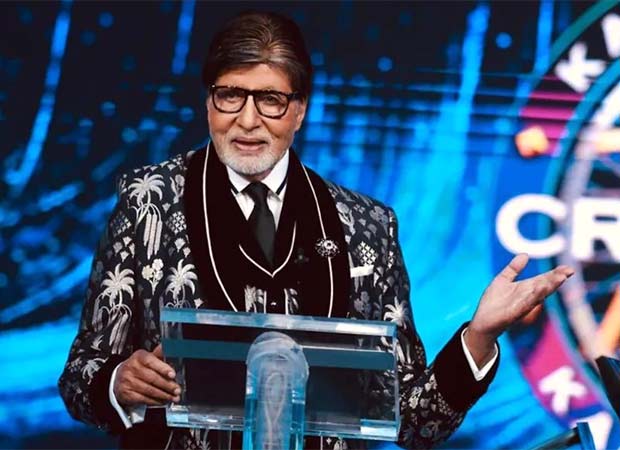
by When Amitabh Bachchan stood on the iconic hot seat stage to deliver his farewell address at the conclusion of Kaun Banega Crorepati Season 17, it was not merely the end of another television season. It was the closing of a chapter that has run parallel to the modern history of Indian television—and to a significant portion of his own life.
The grand finale, which aired on January 2, 2026, was imbued with a rare emotional gravity. Bachchan, a figure synonymous with resilience, authority, and gravitas, appeared visibly moved as he reflected on a journey that spans more than two decades. His words were measured, introspective, and deeply personal—less like a farewell speech and more like a quiet conversation with millions of viewers who have grown up watching him ask, “Lock kiya jaye?”
As the lights dimmed on KBC 17, Bachchan acknowledged what many viewers have long felt: Kaun Banega Crorepati is not just a show—it is a shared cultural memory, and for him, it has shaped nearly one-third of his life.
A Farewell Laden with Memory and Meaning
In his closing address, Bachchan spoke with a vulnerability that stood in stark contrast to the commanding presence he is often associated with. His words reflected the bittersweet realization that comes when something deeply familiar reaches its conclusion.
“Sometimes, we live a moment so deeply and get so lost in it that when it reaches its final point, it feels as though it had just begun, and yet it is ending so soon.”
The line resonated because it articulated a universal truth. Time, when experienced meaningfully, collapses. For Bachchan, the years he spent hosting KBC—meeting contestants, listening to their stories, celebrating their triumphs, and empathizing with their struggles—have merged into a singular emotional continuum.
He went on to say:
“Everything feels like it happened just yesterday. As I go through these emotions, I am about to begin the last day of this game. Spending more than one-third of my life, with all of you has been a great fortune for me.”
This acknowledgment transformed the finale from a routine wrap-up into a moment of collective reflection—not just for the host, but for an entire nation.
The Man and the Show: An Inseparable Bond
It is difficult to imagine Kaun Banega Crorepati without Amitabh Bachchan. Since the show’s Indian debut in 2000, Bachchan has served as its emotional anchor, moral compass, and unmistakable face.
At the time, his decision to host a television quiz show was considered risky. Bachchan was already a towering cinematic legend, and television—especially game shows—were not yet viewed as prestigious platforms for film stars. Yet, history would prove that KBC did not diminish Bachchan’s stature; it redefined it.
The show offered audiences something unprecedented: a megastar who listened as intently as he spoke, who treated contestants with dignity regardless of their background, and who allowed their stories to take center stage.
Over the years, Bachchan’s presence became more than symbolic. He did not merely host the show; he inhabited it.
A Show That Reflected India’s Changing Aspirations
Kaun Banega Crorepati arrived at a pivotal moment in India’s socio-economic narrative. As liberalization reshaped aspirations and television entered more households, the show became a mirror to the country’s evolving dreams.
Contestants came from every corner of India—students, farmers, homemakers, daily wage workers, professionals—each carrying stories of struggle, hope, and ambition. Bachchan, seated across from them, became both witness and participant in their journeys.
What made KBC unique was not just the prize money or the quiz format. It was the human connection—the pauses between questions, the gentle encouragement, the shared laughter, and the moments of silence when emotions ran high.
Bachchan acknowledged this reciprocity in his farewell speech:
“Whenever I have come on your TV screens, you have welcomed me with open arms. When I laughed, you laughed with me, and when my eyes filled with tears, your eyes shed tears too.”
This mutual emotional exchange transformed the show into a shared experience rather than a one-way performance.
“If You Exist, This Game Exists”
Perhaps the most profound moment of Bachchan’s address came when he articulated the interdependence between the show, the host, and the audience:
“You have been my companions on this journey, from the beginning to the very end. I can only say this much to you: if you exist, this game exists, and if this game exists, then we exist.”
In a media landscape often driven by metrics and ratings, this statement cut through with remarkable humility. Bachchan placed the audience at the center of the show’s longevity, acknowledging that without their emotional investment, KBC would not have endured.
This philosophy has long defined Bachchan’s relationship with his fans. Unlike many stars who maintain a distance, he has consistently engaged with audiences—through letters, blogs, social media, and public appearances—treating fandom as a dialogue rather than adulation.
Season 17: A Celebration of Stories
KBC 17 stayed true to the show’s foundational ethos while adapting to contemporary sensibilities. The season featured a compelling mix of celebrity guests and everyday contestants, reinforcing the idea that knowledge and courage are not confined to fame or privilege.
Celebrities brought glamour and visibility, but it was the non-celebrity contestants who carried the show’s emotional weight. Their stories—of perseverance against odds, of education as empowerment, of dreams deferred and rediscovered—served as reminders of why KBC continues to matter.
Bachchan’s interactions with these contestants remained unfiltered and sincere. He listened more than he spoke, often allowing moments to breathe rather than rushing the narrative forward.
Hosting as a Moral Act
One of the reasons KBC has retained its credibility over the years is Bachchan’s approach to hosting—not as performance, but as responsibility.
He has consistently emphasized values such as honesty, learning, empathy, and self-belief. His manner of addressing contestants—using respectful language, acknowledging their backgrounds, and validating their emotions—set a standard rarely seen on competitive television.
In many ways, Bachchan’s hosting style became a lesson in civility. He demonstrated that authority does not require dominance, and that respect can coexist with entertainment.
This moral grounding is perhaps why the show has resonated across generations.
One-Third of a Life: The Weight of Time
When Bachchan said that KBC has occupied more than one-third of his life, the statement carried immense weight. It was not merely a calculation of years, but an acknowledgment of emotional investment.
Over this period, Bachchan has experienced personal loss, health challenges, professional reinventions, and the relentless passage of time. Through it all, KBC remained a constant—a space where he returned year after year to connect with people beyond cinema halls and red carpets.
The show evolved, formats changed, technology advanced—but the core relationship between host and audience endured.
A Rare Vulnerability from an Icon
Amitabh Bachchan has spent decades mastering the art of controlled expression. Yet, during the KBC 17 finale, there were moments when emotion overtook restraint.
His eyes welled up. His voice softened. The pauses grew longer.
This vulnerability resonated deeply because it was uncharacteristic—and therefore, authentic. It reminded viewers that behind the legend is a man who feels deeply, who values connection, and who understands the emotional weight of endings.
KBC’s Legacy Beyond Television
Kaun Banega Crorepati has left an indelible mark on Indian popular culture. Phrases from the show have entered everyday language. The hot seat has become a symbol of opportunity. The show has inspired countless individuals to value knowledge and curiosity.
But perhaps its greatest legacy lies in its democratization of hope. By placing ordinary people at the center of prime-time television, KBC reinforced the idea that intellect and integrity matter.
Bachchan’s stewardship of this legacy has been central to its credibility.
What the Farewell Truly Signifies
While Bachchan’s farewell to KBC 17 was emotional, it was not framed as a definitive goodbye to the franchise or to television. Instead, it felt like a pause—a moment of acknowledgment, gratitude, and reflection.
Whether or not future seasons feature Bachchan remains a matter of speculation. What is certain, however, is that his association with KBC has already secured its place in broadcasting history.
An Ending That Felt Like a Beginning
In his own words, Bachchan described the ending as something that felt like it had “just begun.” This paradox captures the essence of KBC itself—a show that, despite its longevity, has always felt immediate, present, and relevant.
As the final episode of Season 17 concluded, viewers were left not with closure, but with a sense of continuity. The memories lingered. The lessons endured. The connection remained.
Conclusion: A Legacy Written in Voices, Not Numbers
Amitabh Bachchan’s farewell to Kaun Banega Crorepati 17 was not about ratings, seasons, or milestones. It was about people—the contestants who dared to dream, the viewers who tuned in faithfully, and the shared moments that transformed a quiz show into a cultural institution.
By acknowledging that the show has shaped one-third of his life, Bachchan offered a rare glimpse into the emotional architecture of a legend. He reminded us that even icons measure success not in awards or acclaim, but in connection.
As the curtain fell on Season 17, one truth stood clear:
KBC may be a game show, but for Amitabh Bachchan—and for millions of Indians—it has always been something far more enduring.