 by
by In the ever-evolving world of celebrity relationships, few narratives travel faster than reconciliation rumors. A single photo, a subtle social media interaction, or even coincidental public appearances can spark widespread speculation—often amplified into a full-blown “love story comeback” by fans and online communities.
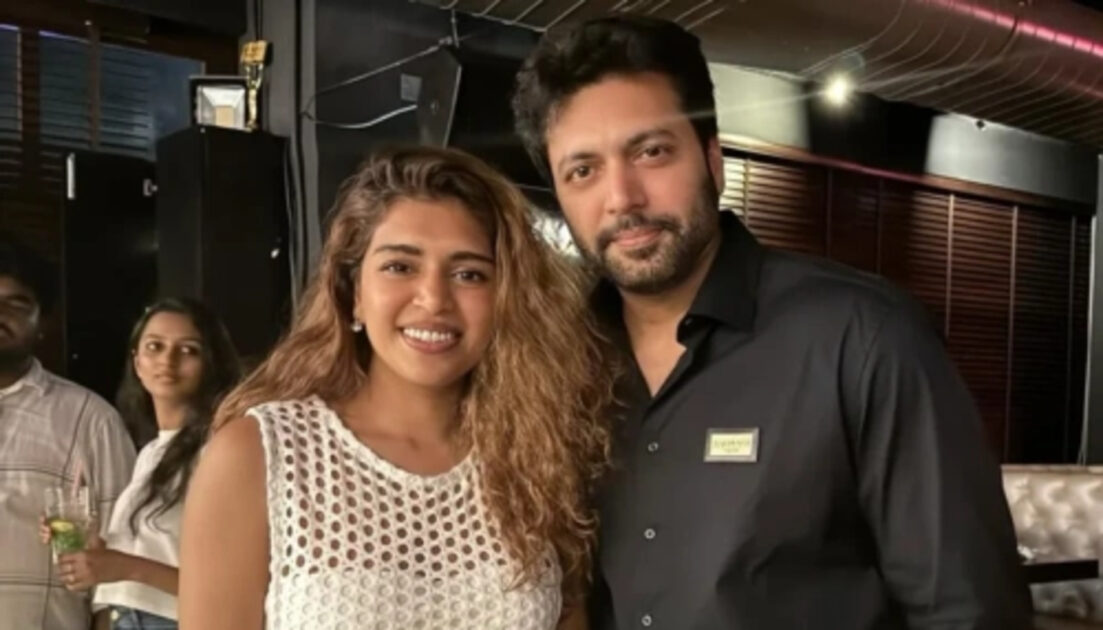
Recently, similar buzz has surrounded Tamil film actor Ravi Mohan and his girlfriend Keneesha Francis. Reports and social media chatter suggest that the pair, who were previously believed to have parted ways, may have reconciled. While no official confirmation has been issued by either party, fan discussions have already framed the situation as a “true love reunion.”
But how much of this narrative is rooted in fact—and how much is shaped by digital fandom culture, emotional projection, and the modern appetite for celebrity romance stories?
This article explores the relationship timeline, the breakup speculation, the alleged reconciliation buzz, and the broader cultural forces that turn private relationships into public storytelling events.
The Relationship That Sparked Public Interest
The relationship between Ravi Mohan and Keneesha Francis initially gained attention not through a formal announcement, but through gradual public visibility. In today’s entertainment ecosystem, celebrity relationships rarely begin with press statements; instead, they emerge through:
- social media appearances
- event sightings
- indirect references
- fan detections of “soft launches”
Ravi Mohan, a well-established actor in Tamil cinema with a strong filmography spanning commercial hits and performance-oriented roles, has long maintained a relatively private personal life. His public image has been shaped primarily by his film career rather than his off-screen relationships.
Keneesha Francis, on the other hand, is associated with wellness-oriented work and public speaking spaces, often engaging in conversations around emotional healing, mindfulness, and personal development. Her presence in public discourse is less about cinema and more about lifestyle and emotional well-being narratives.
This contrast itself became a point of fascination for fans: the pairing of a mainstream film actor with a wellness-focused public figure created a storyline that felt both unexpected and intriguing.
From Speculation to Recognition: How Celebrity Relationships Form in Public View
Unlike earlier eras of cinema where relationships were often officially confirmed before being discussed, today’s celebrity culture operates in reverse.
Relationships are first:
- speculated
- then analyzed
- then assumed
- and only sometimes confirmed
In the case of Ravi Mohan and Keneesha Francis, early discussions began with subtle online observations—shared moments, appearances at similar events, and indirect visibility in each other’s social circles.
Once a narrative takes shape online, it becomes self-reinforcing. Fans begin to interpret neutral behavior—likes, comments, mutual presence in the same city—as relational signals.
This phenomenon is not unique. It is part of a larger global trend where fandom culture actively constructs romantic narratives in real time.
The Breakup Narrative: What Fans Believed Happened
At some point, online discussions began suggesting that the pair had parted ways. Again, it is important to note that much of this information remained unverified and largely based on social media interpretation rather than official statements.
The breakup narrative gained traction due to:
- reduced public interactions
- absence of visible joint appearances
- changes in online engagement patterns
In the digital age, silence is often interpreted as confirmation. When celebrity couples stop appearing together, audiences frequently assume separation—even when no formal announcement exists.
For fans, especially those emotionally invested in celebrity pairings, this perceived breakup often leads to disappointment, debate, and sometimes polarized commentary.
The Reconciliation Buzz: Where It Began
Recently, speculation about reconciliation began circulating again. According to online discussions, fans noticed signs that the two might have reconnected or resumed communication.
These “signs,” as commonly interpreted in celebrity culture, can include:
- overlapping social media activity
- indirect references in posts
- renewed public visibility in similar contexts
- fan-reported sightings or interactions
However, none of these indicators confirm anything conclusively. They remain interpretive cues rather than verified evidence.
Still, in the ecosystem of celebrity fandom, interpretation often carries as much weight as fact.
Why Fans Are Calling It ‘True Love’
One of the most interesting aspects of this entire discussion is not the alleged reconciliation itself, but the emotional framing around it.
Many fans have described the situation as “true love,” a phrase that reflects more about audience psychology than the relationship itself.
This framing emerges from several cultural tendencies:
1. The Desire for Romantic Continuity
Audiences are drawn to narratives where love survives obstacles. A breakup followed by reconciliation fits a classic storytelling arc: separation, realization, reunion.
2. Emotional Investment in Celebrity Lives
Fans often develop parasocial relationships with public figures—one-sided emotional bonds that feel personal despite lacking direct interaction.
3. The Fairytale Structure
Modern fandom culture often interprets celebrity relationships through cinematic logic:
- meet-cute
- conflict
- separation
- reunion
- resolution
When reality appears to align with this structure, it is labeled “true love.”
4. Social Media Amplification
Platforms reward emotionally charged narratives. The idea of “true love reunited” spreads faster than neutral or uncertain updates.
The Role of Social Media in Shaping the Narrative
Social media is not just a reporting tool—it is an active participant in shaping celebrity narratives.
In this case, platforms like Instagram, X (Twitter), and fan pages have become spaces where:
- every post is analyzed for hidden meaning
- every absence is treated as evidence
- every interaction is magnified
Even small details—such as posting timing, captions, or background elements—are interpreted as clues.
This creates a feedback loop:
- Fans speculate
- Content spreads
- Media reports on speculation
- More fans engage
- Narrative becomes “common belief”
At no point does the story necessarily require confirmation to gain traction.
Celebrity Privacy in the Age of Constant Interpretation
One of the underlying tensions in this story is the question of privacy.
For public figures like Ravi Mohan, maintaining a boundary between personal and professional life is increasingly difficult. Even when individuals do not publicly confirm or deny relationship status, audiences often fill in the gaps.
This raises important questions:
- Do celebrities owe the public clarity about their relationships?
- Or does constant speculation blur ethical boundaries?
- At what point does curiosity become intrusion?
In many cases, silence is misinterpreted as consent to speculation, even when it may simply be a desire for privacy.
The Psychology Behind “On-Off” Celebrity Love Stories
The fascination with breakups and reconciliations is not accidental. Psychologically, humans are drawn to unresolved emotional narratives.
On-off relationships in celebrity culture mirror real-life emotional patterns many people experience or observe. However, when projected onto celebrities, they become amplified into entertainment.
Psychologists often point to several reasons for this appeal:
1. Emotional Catharsis
Watching reconciliation stories provides emotional satisfaction and hope.
2. Narrative Closure
Humans prefer stories with endings. A reunion offers closure after disruption.
3. Relatability
Fans often see fragments of their own experiences reflected in celebrity relationships.
4. Idealization of Love
Celebrity relationships are often idealized as “meant to be,” reinforcing romantic beliefs.
Media Responsibility and the Thin Line of Reporting
Entertainment journalism plays a crucial role in shaping public understanding of such relationships. However, it also walks a fine line between reporting and speculation.
In cases like this, the lack of official confirmation makes it essential to distinguish between:
- verified information
- industry speculation
- fan interpretation
- rumor amplification
When these boundaries blur, narratives can shift from neutral reporting to emotionally charged storytelling that may not reflect reality.
Responsible coverage requires acknowledging uncertainty rather than presenting speculation as fact.
The Cultural Context: Celebrity Relationships in South Indian Cinema
In South Indian cinema, particularly Tamil film culture, actors often maintain a strong boundary between on-screen persona and personal life. However, fan engagement is deeply intense, and stars frequently hold iconic status.
Actors like Ravi Mohan often experience:
- strong fan loyalty
- high emotional investment from audiences
- extensive social media tracking
This makes any personal development—real or rumored—highly visible and widely discussed.
At the same time, public figures like Keneesha Francis, who operate outside mainstream cinema, often become even more intriguing to audiences because they represent a contrast to film industry expectations.
Why This Story Resonates Beyond Gossip
While at first glance this appears to be a typical celebrity rumor cycle, the underlying appeal is deeper.
This story reflects:
- modern digital fandom behavior
- shifting definitions of privacy
- emotional storytelling in online spaces
- the blending of reality and narrative culture
It also highlights how audiences today do not just consume celebrity news—they actively participate in constructing it.
The Risk of Over-Interpretation
One of the challenges with reconciliation narratives is that they often rely heavily on interpretation rather than evidence.
This can lead to:
- misinformation
- pressure on public figures
- distorted public perception
- unnecessary emotional polarization among fans
In many cases, what begins as harmless curiosity can evolve into a narrative that overshadows the actual individuals involved.
Conclusion: Between Fact, Feeling, and Fandom
At present, the question of whether Ravi Mohan and Keneesha Francis have reconciled remains unconfirmed. What exists instead is a layered mixture of speculation, fan interpretation, and emotional storytelling.
The phrase “true love,” widely circulated by fans, reflects less about verified reality and more about the desire for romantic resolution in a world that often feels uncertain.
Whether or not the pair have reunited, the conversation itself reveals something significant about contemporary celebrity culture: relationships are no longer private experiences alone—they are narrative spaces shaped by millions of observers.
In the end, the story is not just about two individuals. It is about how modern audiences construct meaning, seek emotional closure, and turn fragments of visibility into complete love stories.
And as long as celebrity culture continues to thrive in digital spaces, stories like this will remain less about confirmation—and more about interpretation.